Mastering the Necklace Theme: Fixing Clashing Layered Looks
Discover how to fix tangling, metal corrosion, and visual clutter. Master the necklace theme with our expert troubleshooting framework.

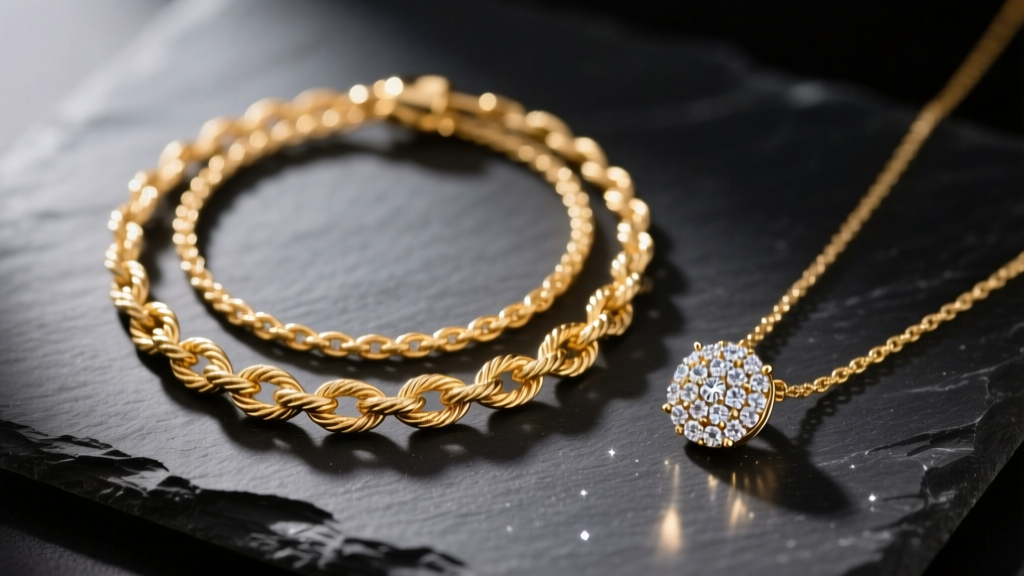
Curating a layered jewelry stack is an art form, but without a strategic approach, it quickly devolves into a tangled, scratched, and visually chaotic mess. As modular and personalized jewelry trends dominate 2026, establishing a cohesive aesthetic is only half the battle. The true challenge lies in the structural and metallurgical compatibility of your pieces. When you define the necklace theme for your daily wardrobe, you must troubleshoot not just the visual weight of the pendants, but the physical friction between the chains.
A poorly executed layering strategy leads to three primary failure modes: galvanic corrosion from mixed metals, micro-abrasion from conflicting chain geometries, and clasp imbalances that cause pendants to constantly flip. This guide serves as your master troubleshooting manual to diagnose and fix these issues, ensuring your layered look remains pristine and functional.
The Anatomy of a Failed Necklace Theme
Before we can fix a clashing stack, we must understand why necklaces fail when worn together. Many collectors assume that if pieces share a similar color palette, they will layer seamlessly. However, the necklace theme extends far beyond color coordination; it encompasses link geometry, metal hardness, and drop-zone spacing. When these elements clash, the result is physical damage to your investment pieces.
The Galvanic Corrosion Trap
One of the most insidious issues in layered jewelry is galvanic corrosion. This occurs when two dissimilar metals—such as 925 sterling silver and 14k yellow gold—rest against each other in the presence of an electrolyte (like human sweat or high humidity). The less noble metal (silver or copper alloys) acts as an anode and begins to degrade, leading to pitting, discoloration, and a metallic odor on the skin.
According to the metallurgical data provided by Rio Grande's Metal Properties Chart, the electrochemical potential difference between sterling silver and high-karat gold is significant enough to trigger this reaction over prolonged contact. To troubleshoot this within your necklace theme, you must introduce physical barriers. Use leather or woven silk cord spacers between mixed-metal chains, or apply a microscopic layer of clear jewelry shield coating to the contact points of the lesser metal.
Diagnosing Chain Tangling: Link Geometry vs. Friction
Nothing ruins a curated look faster than a knotted cluster of chains. Tangling is rarely a matter of bad luck; it is a predictable outcome of mismatched link geometries. Chains with high surface friction or protruding edges will act like micro-gears, catching on the smooth links of adjacent chains.
| Chain Link Type | Surface Profile | Tangling Risk (1-5) | Best Structural Pairing |
|---|---|---|---|
| Box Chain | Angular, flat planes | 4 | Cable or Wheat (with spacer) |
| Rope Chain | Helical, high friction | 5 | Wear solo or with thick Curb |
| Cable Chain | Smooth, uniform ovals | 2 | Figaro or Bead Chains |
| Curb Chain | Flat, interlocking | 1 | Any delicate pendant chain |
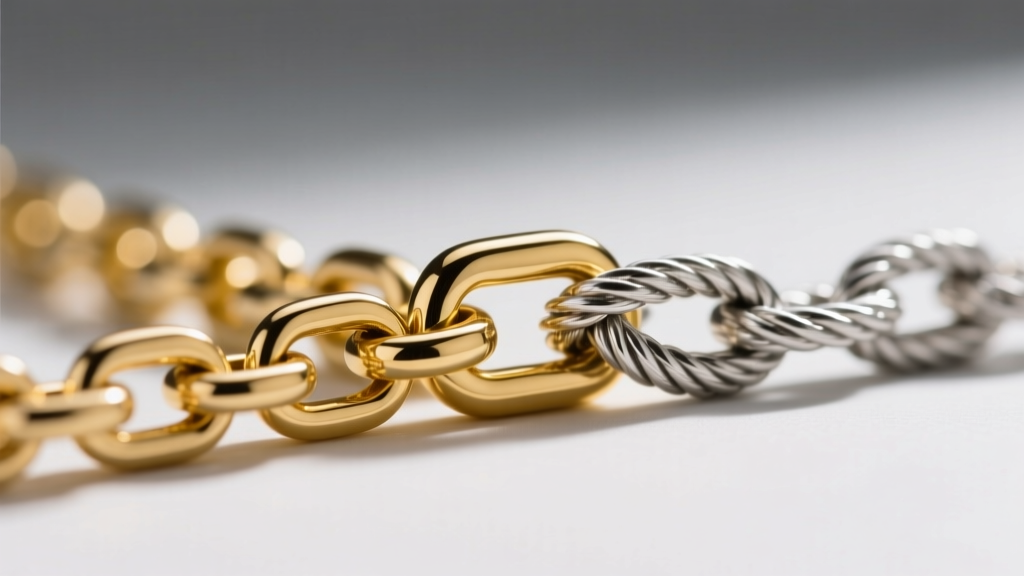
Notice that diamond-cut chains—while brilliant—feature micro-bevels that act like tiny saw blades against softer metals. If your necklace theme relies on mixing a diamond-cut rope chain with a soft, high-polish 22k gold cable chain, the harder diamond-cut edges will permanently scratch the softer gold. Always pair diamond-cut chains with metals of equal or higher Vickers Hardness (HV).
The 2mm Rule and Clasp Weight Imbalances
A common troubleshooting complaint is the 'pendant flip,' where a centerpiece constantly slides to the back of the neck or rests at a crooked angle. This is almost always a failure of the bail-to-chain ratio. For a pendant to hang correctly and anchor your necklace theme, the inner diameter of the bail must be at least 2mm larger than the width of the chain. If you force a 3mm box chain through a 3.5mm bail, the friction will cause the pendant to catch and flip every time you move.
Furthermore, standard 7x12mm lobster clasps are often too heavy for delicate 1mm to 1.5mm chains. The clasp acts as a counterweight, pulling the chain around to the front of your collarbone. To fix this, upgrade your hardware to 5mm or 8mm lightweight spring rings, or switch to ultra-lightweight magnetic neodymium clasps that weigh less than a gram.
Rebuilding Your Necklace Theme: A 4-Step Troubleshooting Framework
If your current stack is failing, dismantle it and rebuild using this structural framework endorsed by master jewelers and stylists.
'A successful layered stack relies on negative space as much as the metal itself. If the drop zones overlap by less than an inch, you aren't layering; you are bundling.' — GIA Jewelry Care Guidelines
Step 1: Establish the Anchor Drop
Begin with your heaviest, most substantial piece. This is usually a 20-inch or 22-inch curb or figaro chain featuring a solid medallion or heavy gemstone pendant. This anchor dictates the visual weight and metallurgical baseline for the rest of the stack.
Step 2: Calculate the Spacing Intervals
To prevent the chains from braiding themselves together, enforce a strict 2-inch minimum gap between lengths. If your anchor is 20 inches, your next chain must be no longer than 18 inches, and your choker or collar must be 16 inches or shorter. This spacing ensures the pendants occupy distinct visual zones on the sternum.
Step 3: Vary the Link Widths Exponentially
Visual clutter occurs when chains share the same millimeter width. If your anchor chain is 4mm, your secondary chain should be 2mm, and your tertiary chain should be 1mm. This exponential decrease in width creates a cascading optical illusion that draws the eye downward, elongating the neckline and giving the necklace theme a deliberate, architectural feel.
Step 4: Standardize the Metal Temper
Mixing annealed (soft) metals with work-hardened (stiff) metals leads to the softer chains warping under the tension of the stiffer ones. Ensure that if you are layering multiple gold chains, they share similar karat weights. 14k gold (approx. 135 HV) will slowly abrade and weaken 18k gold (approx. 125 HV) if they are subjected to daily friction.
Maintenance and Hardware Upgrades
The final step in troubleshooting your layered jewelry is auditing the hardware. The weakest point of any necklace is the jump ring connecting the clasp to the chain. Mass-produced jewelry often uses 22-gauge or 24-gauge open jump rings that easily pull apart when layered chains catch on one another.
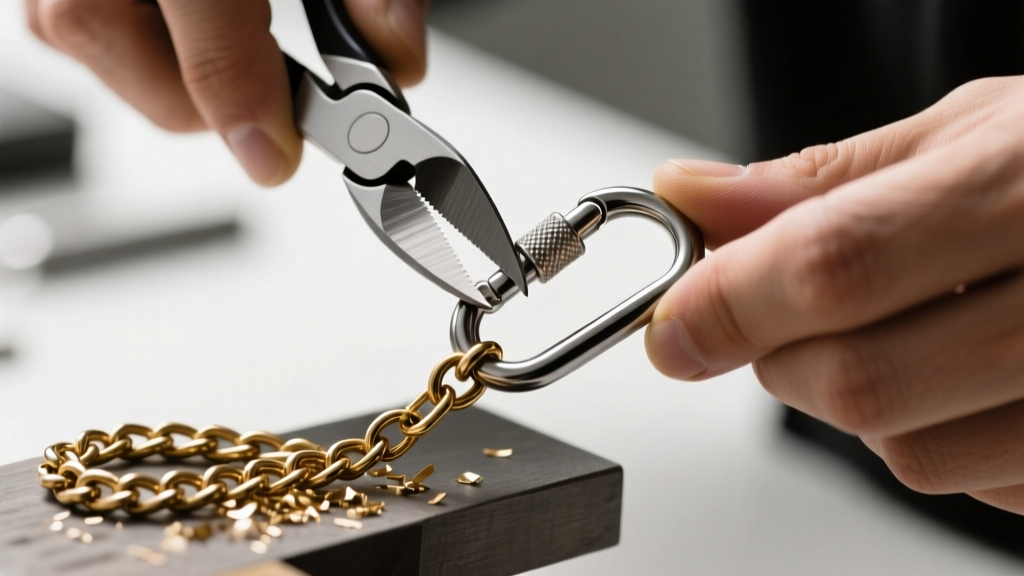
Take your stack to a bench jeweler and request that all open jump rings be replaced with 18-gauge or 20-gauge soldered rings. For a modern, utilitarian aesthetic that fits perfectly into a contemporary necklace theme, consider swapping traditional clasps entirely for Grade 5 Titanium locking carabiners. These micro-carabiners (often used in high-end paracord and tactical gear) offer a secure, screw-lock mechanism that completely eliminates the risk of accidental unclasping when chains tangle.
By treating your jewelry stack as an engineered system rather than a random assortment of accessories, you eliminate the daily frustrations of tangling and damage. Mastering the structural nuances of your pieces ensures that your personal style remains as resilient as it is striking.


