Choosing a Flower Beaded Necklace: Material Properties Guide
Compare glass, clay, and gemstone materials for your flower beaded necklace. Learn hardness, weight, and stringing specs for lasting durability.

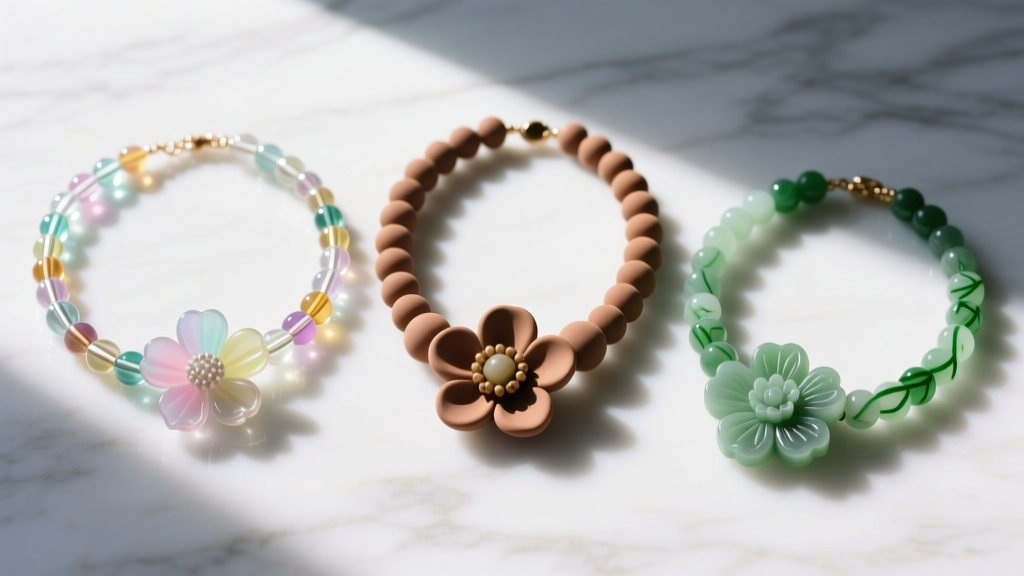
The humble flower beaded necklace has evolved from a simple craft project into a sophisticated staple of modern jewelry layering. However, the aesthetic appeal of a floral motif is only as enduring as the materials used to construct it. When selecting or designing a flower beaded necklace, understanding the physical properties, Mohs hardness, and structural weight of different bead materials is critical. A necklace that looks stunning on a display bust may snap under its own weight or degrade from UV exposure if the wrong materials are paired with inadequate stringing frameworks.
This guide breaks down the material science behind the most popular floral bead types, providing actionable data on durability, weight distribution, and the specific hardware required to make them last.
Glass Seed Beads: Light Refraction and Tension
Glass remains the gold standard for intricate floral bead weaving, particularly for peyote or brick-stitch flower pendants. The two dominant players in this space are Japanese manufacturers Miyuki and Toho. While both offer exceptional consistency, their physical properties differ slightly, affecting the final drape of a flower beaded necklace.
Cylindrical vs. Round Profiles
Miyuki Delica beads are cylindrical, featuring a larger hole-to-glass ratio (typically a 0.8mm hole on a 1.6mm bead). This allows for multiple thread passes, which is essential when creating the tight tension required for rigid, structured flower petals. Conversely, Toho Round seed beads have slightly softer edges and a more organic, rounded profile, making them ideal for floral designs that require a softer, fabric-like drape.
Expert Insight: Avoid vintage or unverified glass beads for floral weaving. Modern Japanese glass is lead-free and possesses a Mohs hardness of 5.5 to 6. Older, decorative glass beads may contain lead oxide to increase the refractive index, but they are significantly softer (Mohs 4.5) and prone to chipping at the drill holes when subjected to the high tension of floral beadwork.
Polymer Clay vs. Ceramic: Weight and Curing Dynamics
For bold, oversized floral statement pieces, artisans frequently turn to polymer clay or ceramic. While both can be molded into stunning botanical shapes, their structural integrity and weight profiles are vastly different.
The Polymer Clay Advantage
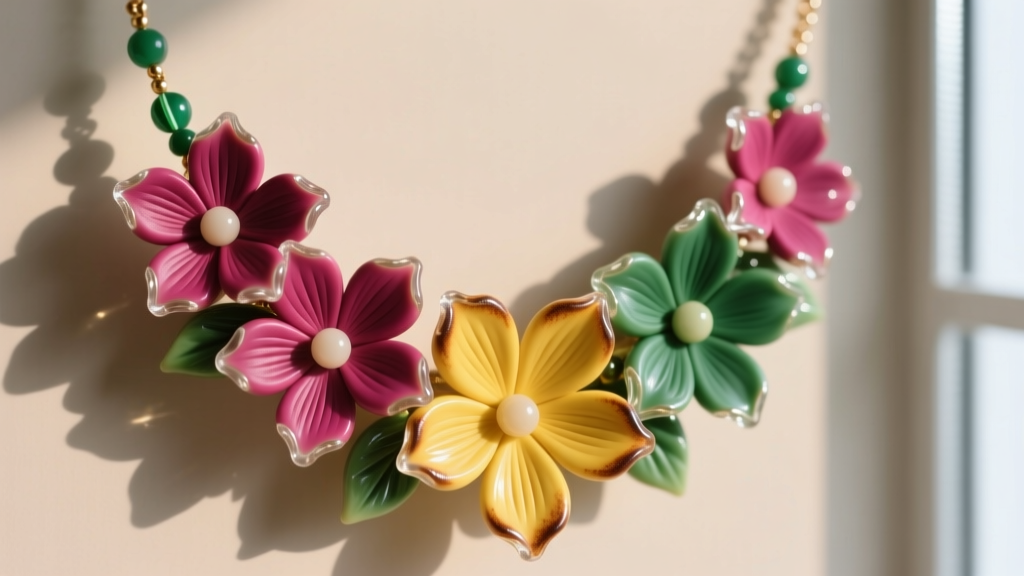
Polymer clay (such as Fimo or Sculpey) cures at a low temperature of 275°F (135°C), making it highly accessible. Its primary advantage for a flower beaded necklace is its flexibility. Once cured, thin petals of polymer clay possess a slight give, meaning they will bend rather than shatter if dropped. However, polymer clay is highly susceptible to UV degradation. Untreated white or pastel clay flowers will yellow within 6 to 12 months of daily sun exposure. To combat this, artisans must seal the beads with a flexible, UV-resistant polyurethane coating; rigid sealants like cyanoacrylate (Super Glue) will crack when the clay flexes.
The Ceramic Reality
Ceramic floral beads are kiln-fired at temperatures exceeding 1,800°F (980°C), resulting in a Mohs hardness of 7 or higher. They are completely UV stable and impervious to moisture. The trade-off is weight and brittleness. A single large ceramic hibiscus bead can weigh upwards of 15 grams. If used in a multi-strand floral collar, the total weight can easily exceed 150 grams, requiring heavy-duty clasps and reinforced stringing to prevent neck strain and hardware failure.
Natural Gemstone Floral Carvings
Carved gemstone flowers—typically fashioned from jade, rose quartz, or turquoise—offer unparalleled prestige and natural light play. However, treating a gemstone flower beaded necklace requires a strict understanding of mineral porosity and hardness.
- Jade (Nephrite/Jadeite): With a Mohs hardness of 6.5 to 7, jade is exceptionally tough due to its interlocking fibrous structure. It is the safest gemstone for intricate, thin-petal floral carvings.
- Rose Quartz: Hardness of 7, but it lacks cleavage planes, making it brittle. Thinly carved quartz petals are prone to snapping if subjected to lateral pressure.
- Turquoise: A porous stone with a Mohs hardness of just 5 to 6. Natural turquoise flowers will absorb skin oils and lotions, darkening over time. For daily-wear floral necklaces, always specify stabilized turquoise, which has been impregnated with a clear epoxy resin to lock in the color and increase structural hardness.
According to the Gemological Institute of America (GIA), understanding the porosity of gemstones is vital for long-term care, as porous stones like turquoise and opal should never be cleaned with ultrasonic jewelry cleaners, which can cause internal fracturing.
Material Comparison Matrix
Use the following data table to select the optimal bead material based on your specific design requirements and wearability needs.
| Material | Mohs Hardness | Avg. Weight (per 18" strand) | UV Resistance | Best Stringing Method | Estimated Price Range |
|---|---|---|---|---|---|
| Glass Seed Beads (Miyuki) | 5.5 - 6.0 | 25 - 35g | Excellent | WildFire Nylon Thread | $4 - $12 per tube |
| Polymer Clay (Cured) | 2.0 - 3.0 | 15 - 25g (varies by size) | Poor (Requires UV Sealant) | SoftFlex 49-Strand Wire | $1 - $5 per artisan bead |
| Kiln-Fired Ceramic | 7.0+ | 80 - 150g (heavy statement) | Excellent | Multi-strand Beading Wire | $3 - $15 per artisan bead |
| Carved Jade | 6.5 - 7.0 | 40 - 60g | Excellent | Knotted Silk or SoftFlex | $15 - $80+ per carved flower |
The Hidden Framework: Stringing Materials and Hardware
The most common failure point in a flower beaded necklace is not the bead itself, but the stringing material snapping at the clasp connection. The choice of stringing material must be matched to the bead material's weight and the hole diameter.
Beading Wire vs. Thermally Bonded Thread
For heavy ceramic or gemstone floral beads, a 49-strand stainless steel beading wire is mandatory. Brands like SoftFlex recommend their 0.019-inch (medium weight) wire for most standard gemstone and glass applications. The 49-strand construction provides a supple drape that prevents the necklace from kinking, a common issue with cheaper 7-strand or 19-strand wires.
For lightweight glass seed bead flower weaving, wire is too rigid and will destroy the drape. Instead, use a thermally bonded, high-tensile thread like WildFire (0.008-inch diameter). Unlike traditional nylon threads (like Nymo), WildFire is waterproof, stretch-resistant, and can be cleanly cut and sealed with a simple thread burner, eliminating bulky knot ends inside delicate seed bead petals.
Crimp Tube Sizing
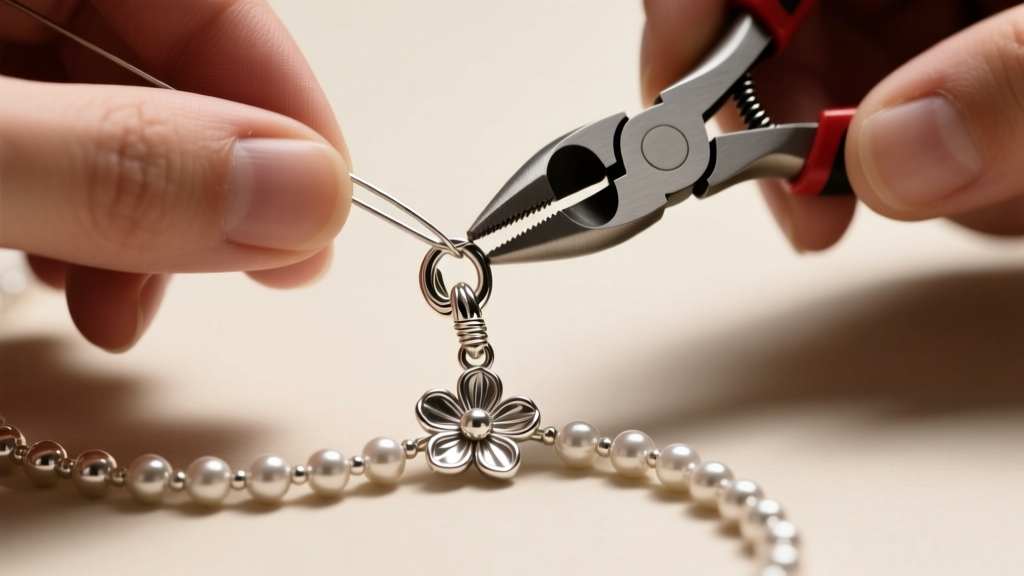
When finishing the ends of a wire-strung floral necklace, crimp tube sizing is critical. A 2x2mm sterling silver crimp tube is the exact specification for 0.019-inch wire. Using a crimp tube that is too large will result in the wire slipping out under the weight of the beads; using one that is too small will prevent the wire from passing through twice, compromising the loop integrity.
Maintenance and Longevity Protocols
Proper storage is just as important as material selection. Glass and gemstone flower beaded necklaces should be stored flat or hung on padded hooks. Storing them in loose piles allows heavier ceramic or stone floral beads to crush softer polymer clay or glass seed bead components. Furthermore, always remove polymer clay and porous gemstone floral necklaces before swimming; chlorine and saltwater will rapidly degrade the protective sealants on clay and alter the chemical composition of stabilized turquoise.
By aligning the physical properties of your chosen floral beads with the correct stringing framework and hardware, you transform a fragile accessory into a resilient, heirloom-quality piece of jewelry.


