Flower Rose Gold Necklace Trends: 2026 Style Guide
Explore the 2026 flower rose gold necklace trend. Discover alloy grades, enamel techniques, pricing tiers, and expert styling frameworks.

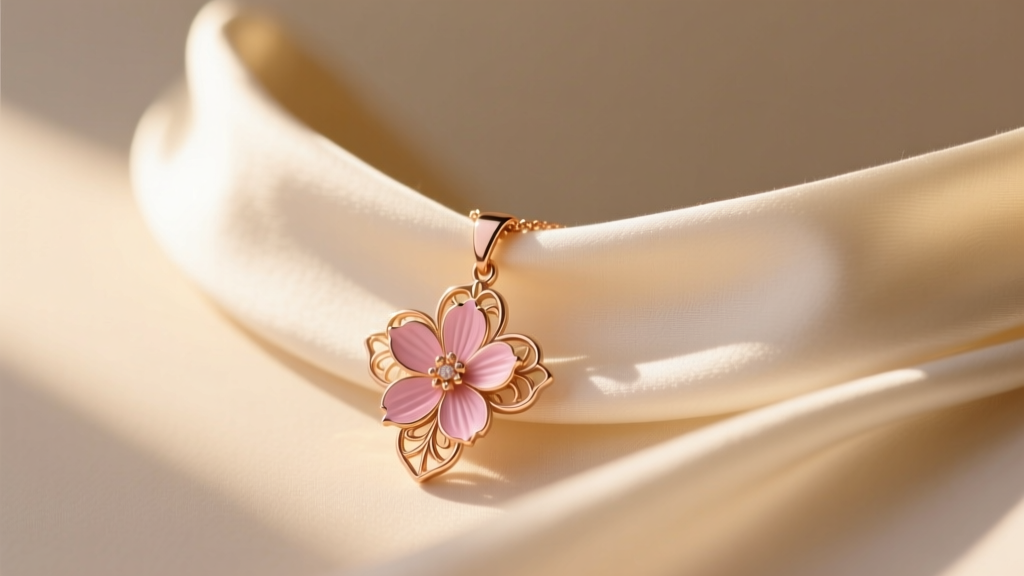
The Resurgence of Botanical Motifs in 2026
The jewelry landscape of 2026 has decisively pivoted away from the ultra-minimalist, geometric aesthetics that dominated the early 2020s, embracing a romantic, hyper-detailed revival of nature-inspired designs. At the forefront of this movement is the flower rose gold necklace, a piece that perfectly bridges vintage nostalgia with modern metallurgical advancements. The floral motif is not merely a seasonal spring trend this year; it has evolved into a staple of fine jewelry wardrobes, driven by a consumer desire for organic shapes and emotionally resonant, talismanic accessories.
Historically, botanical jewelry has always surfaced during periods of cultural shift. As noted by the Victoria and Albert Museum, floral motifs in jewelry often symbolize a collective yearning for nature and grounding during times of rapid technological or societal change. In 2026, as digital fatigue peaks, the tactile, intricate petals of a rose gold floral pendant offer a physical connection to the natural world. However, today's iterations are far from the heavy, opaque castings of the Victorian era. Modern designs prioritize negative space, asymmetrical petal arrangements, and ultra-lightweight chains that move fluidly with the wearer.
Metallurgy Matters: 14K vs. 18K Rose Gold Alloys
To truly understand the appeal and durability of a flower rose gold necklace, one must examine the metallurgy. Rose gold is not a naturally occurring metal; it is an alloy of pure yellow gold, copper, and a small amount of silver. The copper is what imparts the signature pinkish-red hue, but it also fundamentally alters the metal's structural integrity—a critical factor when crafting delicate floral petals that must resist bending and warping.
According to the Gemological Institute of America (GIA), the karatage of rose gold dictates both its color depth and its tensile strength. For intricate floral pendants, jewelers must carefully balance the warmth of the color with the hardness required for detailed casting.
| Alloy Grade | Gold Content | Copper Content | Silver/Zinc | Best Use in Floral Jewelry |
|---|---|---|---|---|
| 18K Rose Gold | 75.0% | ~22.25% | ~2.75% | High-jewelry pieces with diamond pavé; offers a softer, peach-pink hue but requires thicker petal casting to prevent bending. |
| 14K Rose Gold | 58.3% | ~33.5% | ~8.2% | Everyday wear and ultra-thin, realistic petal edges; the higher copper content yields a deeper pink and significantly higher Vickers hardness. |
For the 2026 consumer, 14K rose gold is largely the preferred choice for daily-wear floral pendants. The higher copper content not only provides that highly sought-after, vivid blush tone but also increases the alloy's durability, allowing artisans to cast petal edges as thin as 0.4mm without compromising the structural integrity of the piece.
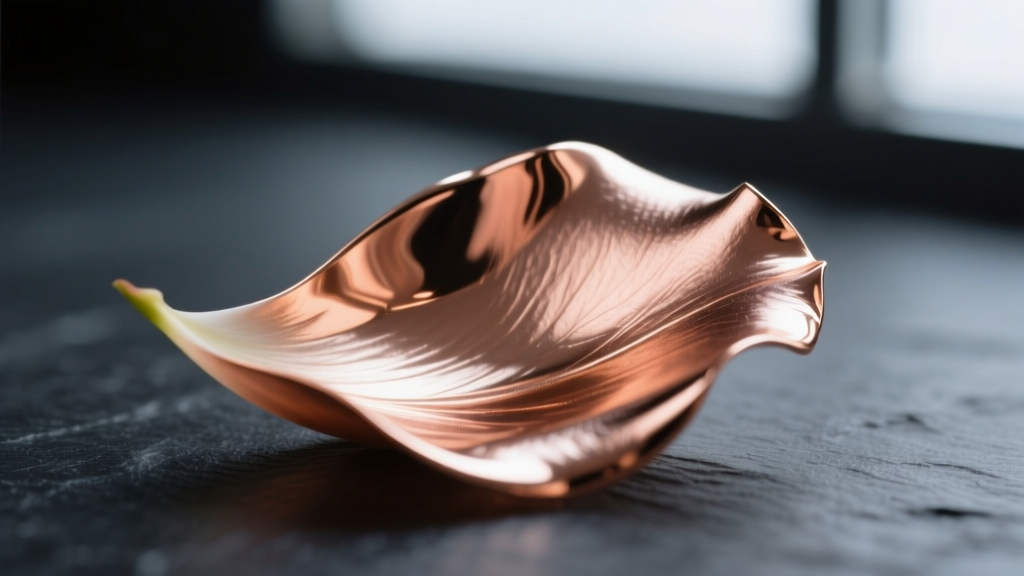
Artisan Techniques Elevating the Floral Pendant
The modern flower rose gold necklace relies on advanced artisan techniques to achieve a lifelike, multidimensional appearance. Flat, stamped metal flowers have been entirely replaced by dynamic, textured designs that mimic the imperfections of real flora.
Plique-à-Jour and Guilloché Enamel
The most significant trend in high-end floral necklaces this year is the integration of plique-à-jour enamel. This technique, which translates to "letting in daylight," involves fusing translucent enamel into a rose gold wire framework without a metal backing. The result is a flower petal that looks like stained glass, capturing and refracting light beautifully against the skin. When paired with the warm undertones of rose gold, translucent enamels in shades of celadon, pale lavender, and champagne create an ethereal, almost bioluminescent effect.
Additionally, guilloché engraving—a technique where precise, repetitive patterns are carved into the metal before applying translucent enamel—is being used on the leaves and stems of floral pendants to mimic the natural venation of foliage, adding a layer of microscopic detail that rewards close inspection.
The 2026 Styling Framework: Necklines and Layering
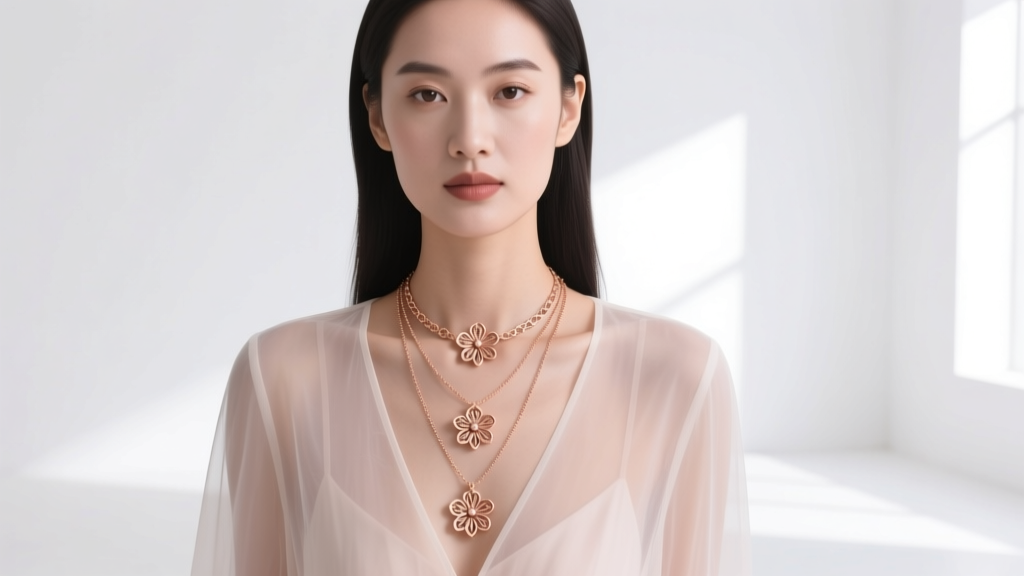
Styling a flower rose gold necklace in 2026 requires a strategic approach to layering and neckline pairing. The goal is to create an organic, curated look rather than a uniform, matched set. Here is the expert framework for styling floral pendants this year:
- The Asymmetrical Sheer Blouse: Pair a 16-inch princess-length rose gold wildflower pendant with an asymmetrical, sheer organza blouse. The negative space of the neckline allows the intricate metalwork to rest directly on the collarbone, while the sheer fabric echoes the delicate nature of the jewelry.
- The Mixed-Metal Layering Stack: Break the monochromatic rule. Layer a 15-inch 14K rose gold floral choker with an 18-inch yellow gold paperclip chain and a 20-inch white gold snake chain. The rose gold flower acts as the warm, romantic focal point, grounded by the structural contrast of the yellow and white gold chains.
- The Deep V-Neck Knit: For autumn and winter, opt for a heavier 18-inch box chain featuring a larger, enameled rose gold blossom. The weight of the box chain complements the texture of fine-gauge merino wool, while the deep V-neckline frames the pendant perfectly without competing with fabric ruffles or collars.
Investment Tiers: Market Pricing in 2026
The market for botanical jewelry has stratified into distinct tiers, catering to both fashion-forward trend adopters and serious fine jewelry collectors. Understanding these pricing brackets is essential for making an informed purchase.
Entry-Level & Vermeil ($85 - $250)
At this tier, you will primarily find gold vermeil (a thick layer of rose gold plated over sterling silver) or 10K solid rose gold. The floral designs are often cast from standard molds, featuring high-polish finishes and minimal texture. While beautiful, vermeil floral pendants require careful maintenance, as the thin edges of the petals are prone to wearing through to the silver base over time.
Mid-Tier Artisan Solid Gold ($450 - $1,200)
This is the sweet spot for the modern consumer. Pieces in this range are crafted from solid 14K rose gold and feature hand-finished details, such as matte-brushed petal centers or milgrain edges. Chains are typically upgraded to durable 0.8mm cable or rope chains with secure lobster clasps. Many independent jewelers operate in this space, offering customizable flower types (e.g., peonies, cherry blossoms, or wildflowers).
High Jewelry & Master Craftsmanship ($3,500 - $15,000+)
The apex of the floral necklace market features 18K rose gold, master-level plique-à-jour enamel work, and accent stones. In these pieces, the rose gold serves as an architectural scaffold for rare gemstones, such as padparadscha sapphires or argyle pink diamonds, set into the stamen or dewdrop details of the flower. These are heirloom-grade investments that appreciate in value due to the scarcity of the artisan skills required to produce them.
"The modern consumer no longer views a floral pendant as a fleeting seasonal accessory. In 2026, a well-crafted rose gold botanical piece is acquired as a permanent, emotional anchor in a jewelry wardrobe, demanding the same metallurgical respect as a traditional diamond solitaire."
Final Verdict on the Botanical Revival
The flower rose gold necklace has successfully transcended its historical associations with purely sentimental or juvenile jewelry. Through the application of advanced alloy science, historical enameling techniques, and modern, asymmetrical styling frameworks, the botanical pendant has claimed its place as a sophisticated cornerstone of 2026 fashion. Whether you opt for the durable, vivid blush of a 14K wildflower casting or the stained-glass mastery of an 18K enameled rose, investing in this trend is an investment in wearable, enduring artistry.