How to Clean and Maintain Your G Initial Necklace Properly
Expert cleaning and maintenance tips for your g initial necklace. Learn to protect vermeil, silver, and solid gold pendants from tarnish.

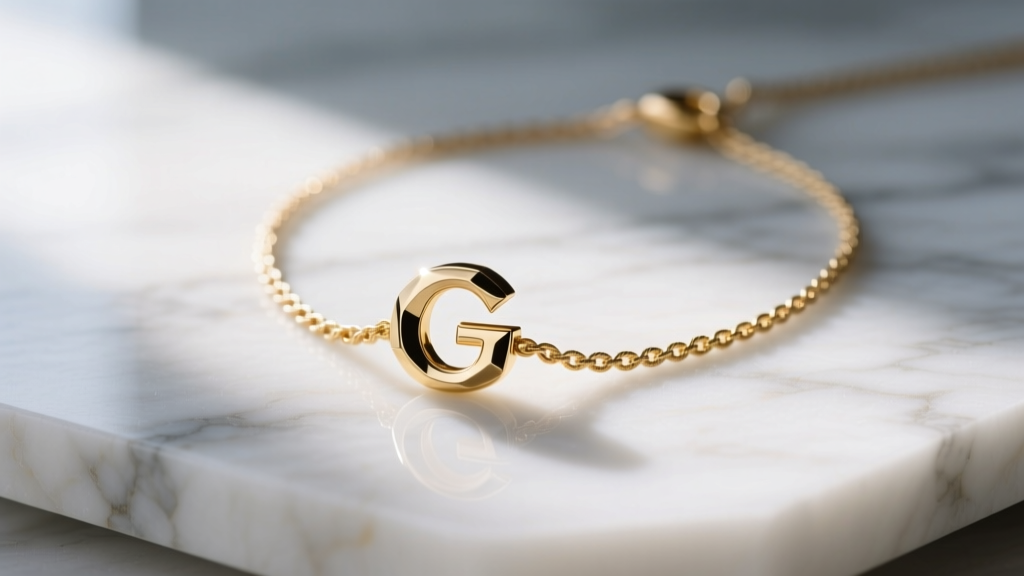
A personalized piece of jewelry is more than just an accessory; it is a wearable narrative. The g initial necklace is a profoundly popular choice, often representing names, guardians, or significant milestones. However, the intricate typography of the letter G—especially in serif, script, or diamond-pave fonts—creates microscopic crevices where sebum, dead skin cells, lotions, and environmental pollutants accumulate. Over time, this buildup not only dulls the metal's luster but can also accelerate tarnishing and degrade delicate gemstone settings.
To keep your initial pendant looking pristine, you must move beyond generic jewelry advice and adopt a targeted care regimen. This comprehensive guide breaks down the exact metallurgical realities of your necklace and provides actionable, professional-grade cleaning protocols to ensure your piece survives daily wear.
Understanding the Metallurgy of Your G Initial Necklace
Before applying any cleaning solution, you must identify the exact material composition of your pendant and chain. The cleaning protocol for solid gold will destroy gold vermeil, and the polish used for sterling silver will strip plated finishes. According to the Federal Trade Commission (FTC), jewelry markings and material standards are strictly regulated, so check your clasp or bail for hallmarks like '14k', '925', or 'Vermeil'.
Solid Gold (14k and 18k)
Solid gold is an alloy. Pure 24k gold is too soft for daily-wear initial pendants, so it is mixed with copper, zinc, or silver. While 14k and 18k gold will not tarnish in the traditional sense, the alloyed metals can react to harsh chemicals. The primary enemy of solid gold is chlorine, which causes 'stress corrosion cracking' in the prongs holding diamond accents or the delicate links of the chain.
Gold Vermeil
Vermeil (pronounced ver-may) is not standard gold plating. It requires a sterling silver base coated with a minimum of 2.5 microns of gold. The highest friction point on any g initial necklace is the bail—the small loop where the letter G connects to the chain. Constant metal-on-metal rubbing here will wear away the gold layer over time, exposing the silver beneath. Vermeil requires the gentlest cleaning approach to avoid stripping the micron layer.
Sterling Silver (925)
Sterling silver contains 92.5% pure silver and 7.5% copper. The copper is what makes the metal durable enough for a pendant, but it is also what causes the metal to react with sulfur in the air and on your skin, creating silver sulfide—the blackish layer we recognize as tarnish.
Step-by-Step Cleaning Protocols by Material
The Gemological Institute of America (GIA) recommends tailored cleaning methods based on material hardness and gemstone porosity. Follow these specific steps for your necklace.
Protocol A: Solid Gold and Diamond Pave
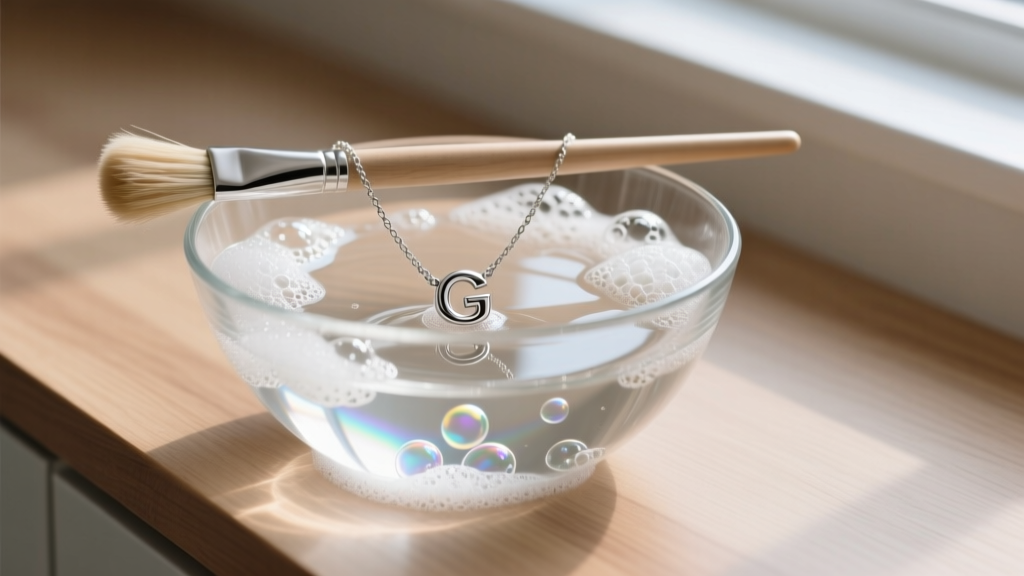
- The Soak: Mix a few drops of mild, phosphate-free dish soap (like Dawn Original) into a bowl of lukewarm water. Submerge your solid gold g initial necklace for 15 to 20 minutes. This softens the sebum trapped in the curves of the letter G.
- The Agitation: Use an extra-soft baby toothbrush. Gently brush the crevices of the initial, the back of the pendant (which rests against the skin), and the clasp mechanism. Never use a standard toothbrush, as the stiff bristles will leave micro-scratches on high-polish gold.
- The Rinse: Rinse thoroughly under lukewarm running water. Ensure the drain is plugged or use a mesh strainer to prevent catastrophic loss.
- The Dry: Pat dry with a lint-free microfiber cloth. Avoid paper towels, as their wood-pulp fibers can scratch polished gold.
Protocol B: Gold Vermeil and Enamel Accents
Never soak vermeil. Prolonged water exposure weakens the bond between the silver base and the gold layer.
- Dampen a microfiber cloth with a tiny amount of warm water and a drop of mild soap.
- Gently wipe the surface of the G pendant, avoiding aggressive rubbing on the bail and chain links.
- Use a dry cotton swab to carefully clean out the tight inner curves of the letter G where dirt collects.
- Immediately buff dry with a clean, dry microfiber cloth to prevent water spots.
Protocol C: Sterling Silver
For tarnished silver, skip the soap and water. Instead, use a treated jeweler's cloth (such as a Sunshine Polishing Cloth). These cloths are impregnated with micro-abrasives and anti-tarnish agents. Rub the silver G pendant gently in one direction. Do not use this cloth on diamond pave or gemstones, as the polishing compound can build up around the stone settings and dull their sparkle.
The Danger Zone: Common Maintenance Mistakes
Many well-intentioned jewelry owners ruin their favorite pieces by relying on outdated or overly aggressive cleaning hacks. Below is a breakdown of the most common failure modes associated with initial necklaces and how to avoid them.
| Dangerous Practice | Metallurgical Consequence | The Expert Solution |
|---|---|---|
| Ultrasonic Cleaners | High-frequency vibrations can shatter enamel inlays, loosen the adhesive in pearl settings, and rattle micro-pave diamonds out of their prongs. | Stick to manual soaking and soft-bristle brushing for all initial pendants. |
| Liquid Silver Dips (e.g., Tarn-X) | These contain thiourea and strong acids that strip the silver's natural patina, leaving a porous, matte surface that tarnishes twice as fast upon re-exposure to air. | Use mechanical polishing via a treated micro-abrasive jeweler's cloth. |
| Wearing in Swimming Pools | Chlorine reacts with the copper and zinc alloys in 14k gold, causing stress corrosion cracking. The bail or chain links can snap without warning. | Remove your necklace before entering any chlorinated water or hot tub. |
| Applying Perfume While Wearing | Alcohol and essential oils in fragrances degrade the gold layer on vermeil and leave a cloudy, stubborn film on diamonds and gemstones. | Follow the golden rule: 'Jewelry is the last thing you put on, and the first thing you take off.' |
Archival Storage for Longevity
How you store your g initial necklace when it is not on your body is just as critical as how you clean it. Leaving your necklace on a bathroom counter or tossed into a communal jewelry box guarantees premature tarnishing and physical damage.
Humidity and Sulfur Control
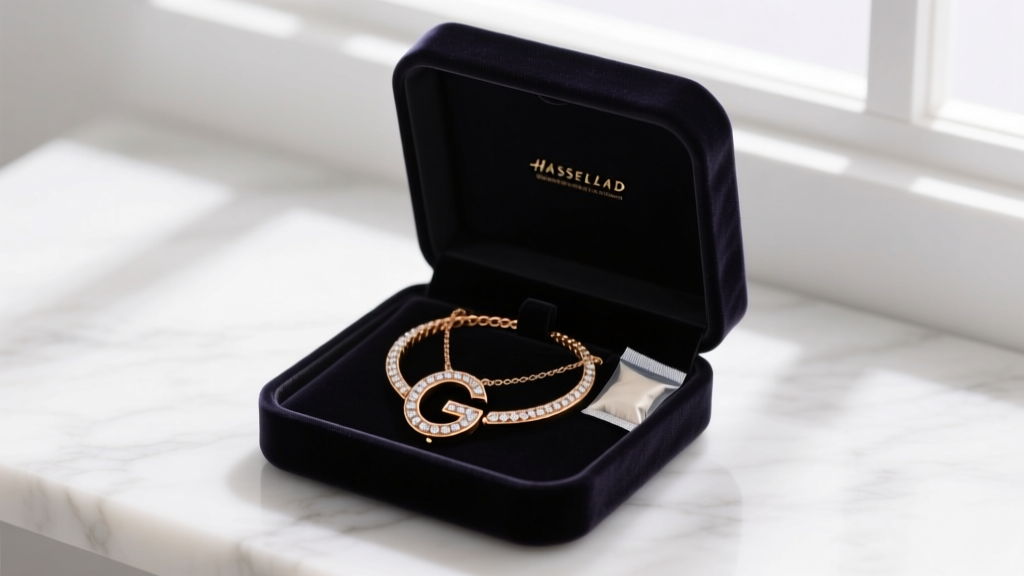
Silver sulfide formation requires moisture and sulfur. To combat this, store your necklace in an airtight polyethylene zip-lock bag. Squeeze out as much air as possible before sealing. For added protection, drop a 3M anti-tarnish strip and a small silica gel desiccant packet into the bag. The silica gel absorbs ambient moisture, while the anti-tarnish strip acts as a sacrificial anode, absorbing airborne sulfur compounds before they can reach your silver or vermeil pendant.
Preventing Chain Tangles and Bail Wear
The delicate cable or box chains used for initial necklaces are notorious for tangling. When a chain tangles, the friction can weaken the links. Always fasten the clasp before storing the necklace to prevent the chain from threading through the bail of the G pendant. If you use a jewelry box, ensure the necklace is laid flat in a dedicated velvet slot, or hang it on a padded hook to maintain the chain's structural integrity.
When to Seek Professional Maintenance
While daily and weekly cleaning can be managed at home, your g initial necklace requires professional attention every 12 to 18 months. If your pendant features diamond pave, a jeweler needs to inspect the micro-prongs under magnification to ensure the stones are secure. Furthermore, if your vermeil necklace has experienced heavy wear at the bail or along the clasp, a professional jeweler can safely re-plate the piece, restoring the 2.5-micron gold layer and extending the life of your cherished initial pendant for years to come.
By understanding the specific material science of your jewelry and avoiding harsh, generalized cleaning methods, your personalized necklace will remain a brilliant, enduring symbol of your unique story.


