The Garnet and Gold Necklace: 2026 Style & Trend Analysis
Discover 2026 trends for the garnet and gold necklace. Explore Tsavorite, Rhodolite, and Almandine pairings, setting styles, and layering techniques.

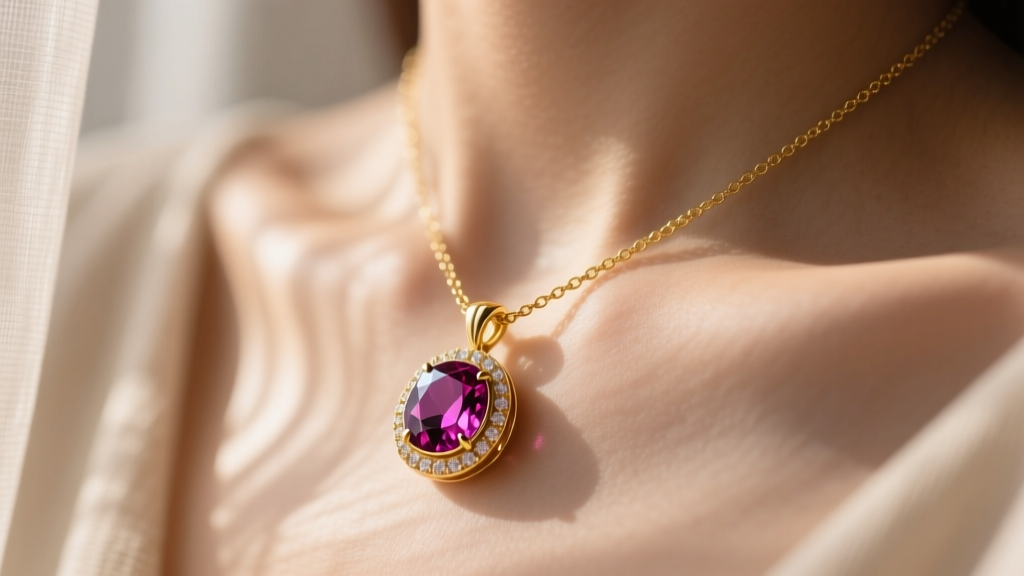
The jewelry landscape of 2026 has decisively pivoted away from the hyper-minimalism of the early 2020s, embracing a neo-vintage aesthetic that prioritizes rich color, historical resonance, and bespoke craftsmanship. At the epicenter of this movement is the garnet and gold necklace. Once relegated to the realm of Victorian reproduction or affordable birthstone trinkets, garnet has been reclaimed by high jewelry houses and independent artisans alike. Today, we analyze the gemological, metallurgical, and stylistic factors driving the resurgence of the garnet and gold necklace, offering a definitive guide for collectors, stylists, and enthusiasts navigating this vibrant market.
The 2026 Renaissance: Why Garnet is Reclaiming the Spotlight
For decades, the garnet and gold necklace was synonymous with deep, opaque crimson stones set in heavy, ornate yellow gold. While that classic look retains a niche following, the 2026 trend cycle is defined by transparency, unusual color zoning, and modernized architectural settings. According to the Gemological Institute of America (GIA), the garnet family is not a single gemstone, but a complex group of silicate minerals that share a common crystal structure but vary wildly in chemical composition. This gemological diversity is precisely what modern designers are exploiting.
Consumers in 2026 are actively seeking 'quiet luxury' pieces that offer high visual impact without the ostentation of traditional diamonds. A well-cut garnet boasts a refractive index (RI) ranging from 1.714 to 1.888, giving it a fiery brilliance that rivals sapphire, yet it remains accessible enough to allow for bold, substantial carat weights in everyday necklace pendants.
Beyond Deep Red: A Gemological Breakdown of 2026's Top Garnets
To understand the current market, one must look past the generic 'red garnet' label. The most sought-after garnet and gold necklace designs this year feature specific varieties, each demanding distinct gold pairings and setting techniques.
Almandine & Pyrope: The Classic Crimson
Almandine (iron aluminum silicate) and Pyrope (magnesium aluminum silicate) are the traditional red garnets. Almandine often presents with a slightly brownish or purplish undertone and a high specific gravity (around 4.0), making it feel remarkably heavy in the hand. In 2026, designers are cutting these stones into elongated emerald and kite shapes rather than traditional ovals, setting them in matte-finished 18k yellow gold to emphasize their moody, blood-red depth.
Tsavorite & Demantoid: The High-End Green Surge
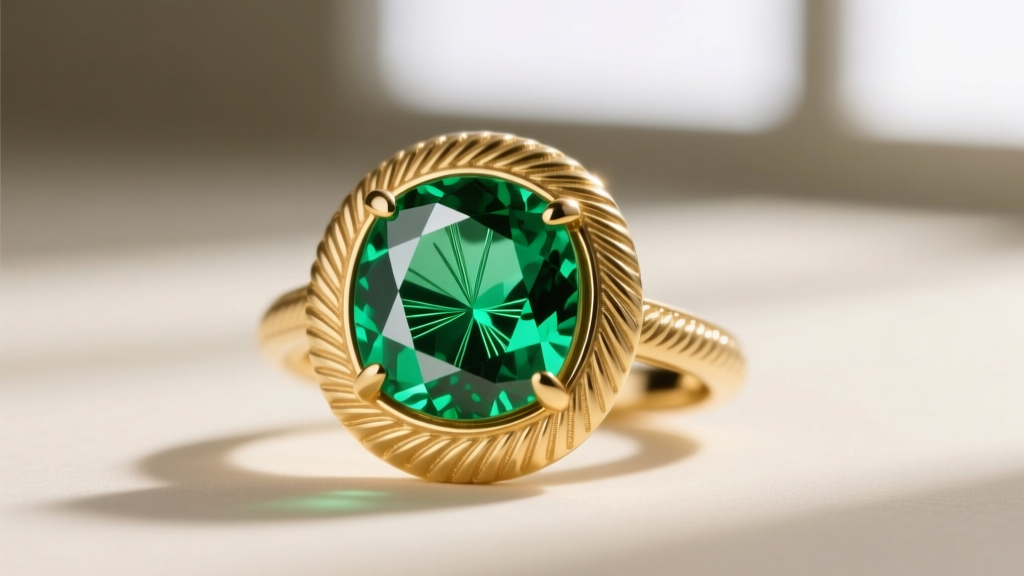
The most explosive trend in the garnet and gold necklace sector is the rise of green garnets. Tsavorite (a vanadium-bearing grossular garnet) offers a vivid, electric green that challenges emerald, but with superior durability due to its lack of cleavage. Demantoid (an andradite garnet) is prized for its 'horsetail' inclusions and exceptional dispersion, which gives it a diamond-like fire. These rare green stones are almost exclusively paired with high-karat yellow gold (20k or 22k) to create a striking, warm-cool contrast.
Rhodolite: The Purplish-Pink Compromise
A hybrid of Pyrope and Almandine, Rhodolite garnet exhibits a highly desirable purplish-red or raspberry hue. It is the undisputed workhorse of the 2026 garnet and gold necklace market, offering exceptional clarity and brilliance at a mid-tier price point. Rose gold is the preferred metal for Rhodolite, as the copper alloys in the gold amplify the stone's natural pinkish undertones.
| Garnet Variety | Mohs Hardness | Refractive Index | Avg. Price per Carat | Ideal Gold Pairing |
|---|---|---|---|---|
| Almandine | 7.0 - 7.5 | 1.76 - 1.82 | $20 - $150 | Matte 18k Yellow Gold |
| Tsavorite | 7.0 - 7.5 | 1.74 - 1.75 | $500 - $2,500+ | Polished 22k Yellow Gold |
| Rhodolite | 7.0 - 7.5 | 1.74 - 1.76 | $50 - $300 | 14k or 18k Rose Gold |
| Demantoid | 6.5 - 7.0 | 1.88 - 1.89 | $1,000 - $5,000+ | 18k White or Yellow Gold |
Metallurgy & Settings: Choosing the Right Gold and Mount
The structural integrity of a garnet and gold necklace relies heavily on the intersection of gemological brittleness and metallurgical hardness. Garnets lack true cleavage (unlike diamonds or topaz), meaning they do not split along defined planes. However, they are notoriously brittle and prone to chipping at the girdle (the outer edge) if subjected to hard impacts.
- The Bezel Setting: The dominant setting style for 2026. A full bezel encases the girdle in a rim of gold, offering maximum protection against edge chipping. The trade-off is a slight reduction in light entry, which can darken an already deep Almandine stone. To counter this, jewelers are using 'open-back' or 'windowed' bezels that allow light to enter from the pavilion.
- The Prong Setting: Ideal for high-value, light-colored stones like Tsavorite or Demantoid where maximizing brilliance is paramount. A 4-prong or 6-prong V-tip setting is recommended. Failure Mode Warning: Avoid standard round prongs on the sharp corners of kite or pear-cut garnets; the point pressure during setting can easily fracture the stone.
- The Tension Setting: Avoid entirely. The immense PSI required to hold a stone in a tension setting will almost certainly shatter a garnet due to its high specific gravity and brittle nature.
Regarding gold purity, 14k gold (58.5% pure) offers the highest durability for daily-wear chains, resisting stretching and clasp deformation. However, for the pendant mount itself, 18k gold (75% pure) provides a richer color saturation that better complements the complex optical properties of the garnet family.
Chain Gauges and Layering Architectures
A common failure point in vintage and contemporary garnet and gold necklaces is the mismatch between pendant weight and chain gauge. Garnets are dense; a modest 15mm x 10mm oval Almandine cabochon can easily weigh over 8 carats (1.6 grams), not including the gold setting.
The 16-Inch Choker Baseline
For pendants weighing under 5 grams, a 1.0mm to 1.2mm cable or box chain is sufficient. The 2026 trend favors the 1.2mm box chain for its geometric, modern aesthetic that contrasts beautifully with the organic curves of a rose-cut garnet. Ensure the clasp is a reinforced lobster clasp; spring ring clasps on 1.0mm chains are notorious for failing under the pendulum stress of a heavy pendant.
The 20-to-24-Inch Lariat Drop
For statement pieces featuring 10-carat+ garnets or intricate halo settings, the chain must be upgraded to a minimum of 2.0mm. Rope chains and wheat chains are preferred in this tier because their interlocking links distribute tensile stress evenly, preventing the localized stretching that plagues standard cable chains.
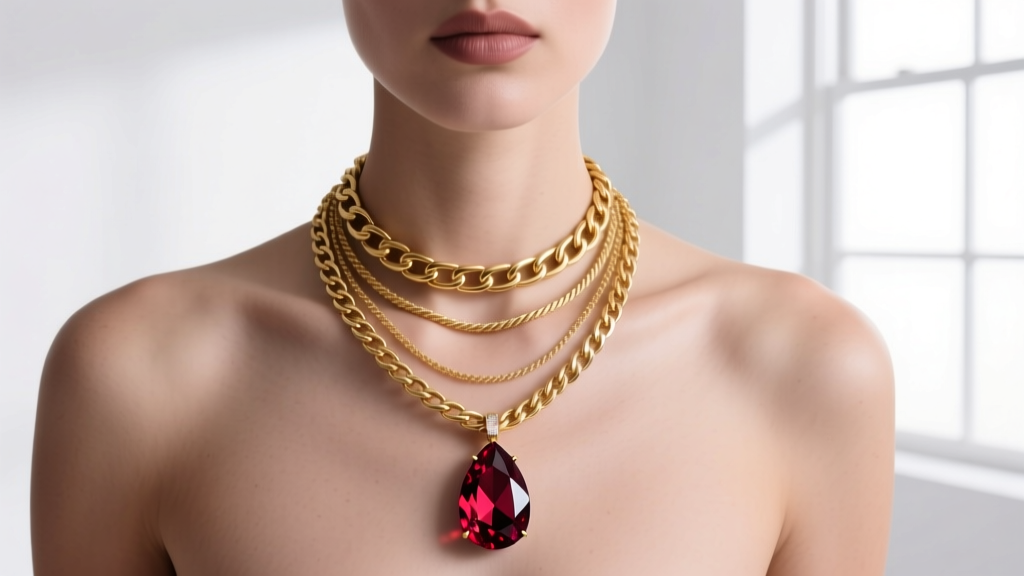
Layering Protocol: The most sophisticated way to wear a garnet and gold necklace in 2026 is through asymmetrical layering. Anchor the neck with a 14-inch, 2.5mm solid gold herringbone choker (no pendant). Follow with a 16-inch 1.2mm box chain holding a small, 3-carat Rhodolite solitaire. Finally, drop a 22-inch 1.5mm rope chain featuring a substantial, bezel-set Tsavorite or Almandine pendant. This creates a cascading visual weight that draws the eye downward, elongating the neckline while showcasing the varied optical properties of the garnet family.
Sourcing and Authenticity: Avoiding Synthetic Traps
As the demand for the garnet and gold necklace surges, so does the proliferation of synthetic simulants. While synthetic garnets (like YAG - Yttrium Aluminum Garnet) have existed since the mid-20th century, modern lab-created stones are becoming increasingly difficult to spot with the naked eye. Furthermore, the market is flooded with red glass and cubic zirconia mislabeled as 'hydrothermal garnet'—a term that is entirely fictitious in gemology.
To ensure authenticity and ethical sourcing, buyers should demand documentation from reputable gemological laboratories. The Responsible Jewellery Council (RJC) provides rigorous frameworks for supply chain transparency, ensuring that the gold and gemstones in your necklace are free from conflict and environmentally destructive mining practices. When purchasing high-value Tsavorite or Demantoid garnet and gold necklaces, always insist on a GIA or AGL (American Gemological Laboratories) report that details any heat treatment or fracture filling, though it is worth noting that natural garnets are almost never treated, making them a favorite among purists.
"The true luxury of the modern garnet and gold necklace lies in its unadulterated nature. Unlike sapphires or rubies, which are routinely heated to enhance color, a fine Tsavorite or Rhodolite garnet is presented exactly as the earth formed it. Paired with the enduring warmth of high-karat gold, it represents an honest, unfiltered connection to the natural world."
Whether you are investing in a rare Demantoid lariat or styling a moody Almandine choker for evening wear, the garnet and gold necklace remains one of the most versatile, historically rich, and visually captivating categories in contemporary fine jewelry. By understanding the specific gemological traits and structural requirements of these pieces, you can curate a collection that is not only trend-forward for 2026 but built to last for generations.