Garnet Necklace Silver Settings: Stone & Metal Grade Guide
Discover how to choose the perfect garnet necklace silver setting. Compare almandine vs rhodolite stones and sterling vs argentium metals.

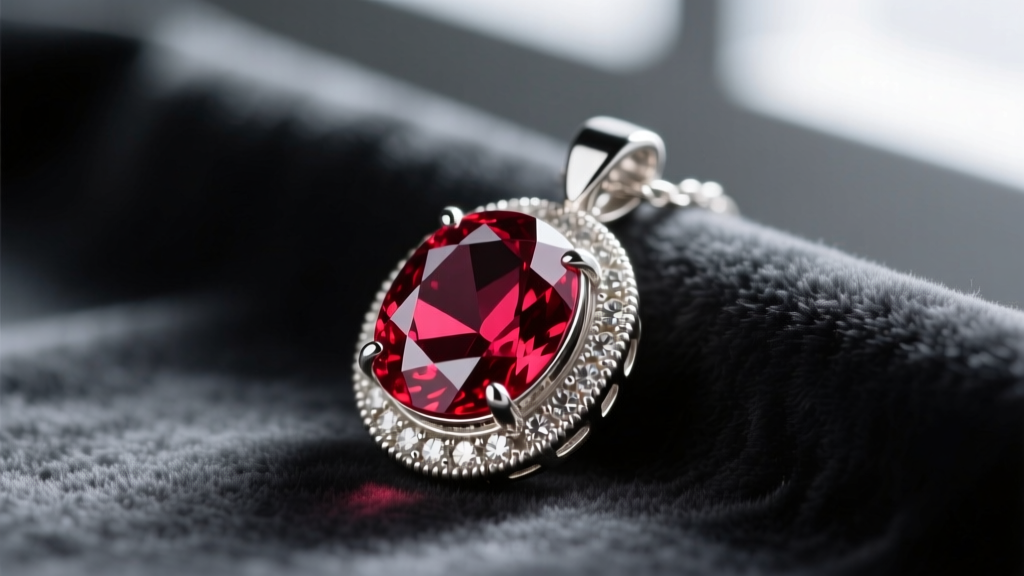
When shoppers search for a garnet necklace silver setting, they often assume they are looking at a single, uniform product. In reality, the intersection of garnet gemology and silver metallurgy offers a vast spectrum of quality, durability, and pricing. A mass-produced sterling silver pendant with an opaque almandine garnet behaves entirely differently—and ages much differently—than a bespoke argentium silver piece set with a brilliant rhodolite. Understanding these material properties is the key to making an informed purchase that balances aesthetic beauty with lifelong wearability.
Decoding Garnet Varieties: Beyond the Standard Red
The term 'garnet' does not refer to a single mineral, but rather a group of silicate minerals that share a common crystal structure. According to the Gemological Institute of America (GIA), garnets are singly refractive, meaning light passes through them without splitting, which gives them their signature deep, glowing color. However, the chemical composition dictates the exact hue, clarity, and value of the stone in your necklace.
Almandine vs. Pyrope vs. Rhodolite
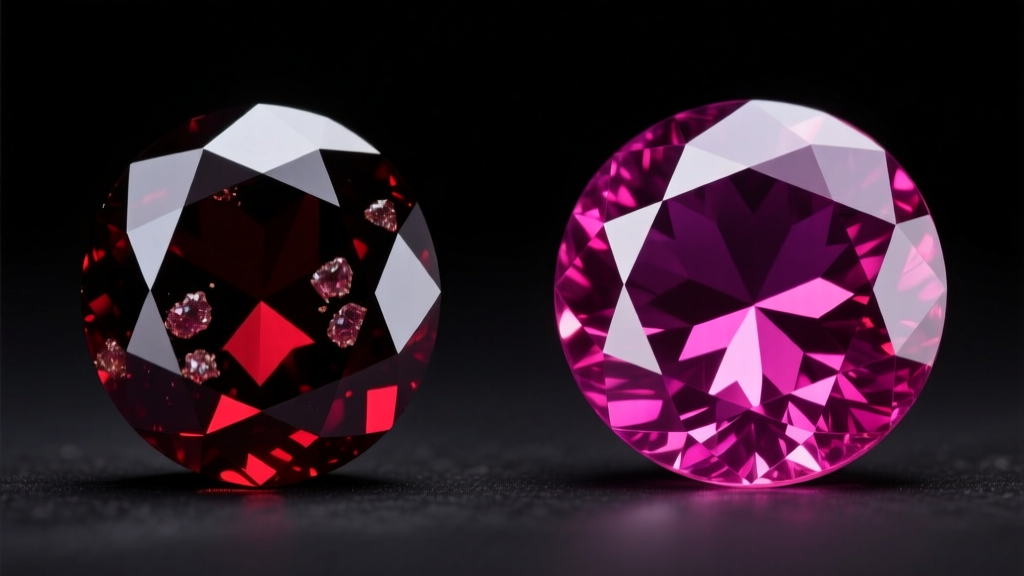
- Almandine (Fe3Al2(SiO4)3): The most common and affordable garnet variety. It tends to be very dark, sometimes bordering on black in thick cuts. To compensate, lapidaries often cut almandine with a domed top and a hollowed-out back (known as a carbuncle cut) to allow light to enter. It sits at 7 to 7.5 on the Mohs hardness scale.
- Pyrope (Mg3Al2(SiO4)3): Known for its classic 'blood red' color. Pyrope is generally lighter in tone than almandine and is highly prized for its vivid saturation. It is frequently found in smaller carat weights, making large pyrope pendants quite rare and expensive.
- Rhodolite: A highly valued hybrid mixture of pyrope and almandine. Rhodolite exhibits a stunning purplish-red or raspberry hue. Because it is naturally lighter and more brilliant, it requires no hollowed-out backing, making it the superior choice for high-end silver pendants where light return is paramount.
Silver Metallurgy: Sterling vs. Argentium vs. Fine
The metal holding your garnet is just as critical as the stone itself. Pure silver is too soft for jewelry, so it must be alloyed. The Silver Institute outlines several standards, but three dominate the fine jewelry market. Choosing the right alloy dictates how your necklace will withstand daily wear, humidity, and skin chemistry.
| Silver Alloy | Composition | Vickers Hardness (HV) | Tarnish Resistance | Best Setting Style |
|---|---|---|---|---|
| Sterling (925) | 92.5% Silver, 7.5% Copper | ~65 HV | Low (Tarnishes easily) | Bezel, heavy prongs |
| Argentium (935/960) | Silver, Copper, Germanium | ~95 HV (when heat-treated) | High (Highly resistant) | Intricate prongs, wirework |
| Fine (999) | 99.9% Pure Silver | ~25 HV | Moderate | Bezel (too soft for prongs) |
The Tarnish Factor and Skin Chemistry
Sterling silver tarnishes because the copper alloy reacts with sulfur compounds in the air and human sweat, forming silver sulfide. If you live in a humid climate or have highly acidic skin chemistry, a 925 sterling silver garnet necklace may require weekly polishing. Argentium silver, which replaces some copper with germanium, forms a transparent germanium dioxide layer on the surface that actively prevents tarnish. For a necklace meant to be worn daily against the skin, Argentium is a vastly superior, albeit slightly more expensive, choice.
Structural Integrity: Setting Mechanics and Failure Modes
Garnets possess no cleavage, meaning they do not split along flat planes like diamonds or topaz. However, they are brittle and can chip or abrade at the girdle (the outer edge) if struck against a hard surface. The setting design must mitigate this risk while accounting for the specific tensile strength of the silver alloy used.
Expert Insight: A common failure mode in budget-friendly garnet necklaces is prong fatigue. Sterling silver prongs thinner than 0.8mm will eventually bend outward when snagged on clothing, leading to stone loss. Always inspect the prong thickness and ensure the jeweler has work-hardened the metal after setting the stone.
Bezel vs. Prong Settings
For active lifestyles, a bezel setting—where a rim of silver completely encircles the garnet's girdle—is the safest option. It protects the stone's edges from impact. However, bezels block light from entering the sides of the stone. If you have chosen a dark almandine garnet, a bezel setting will make it look nearly black. In this case, a four-prong or six-prong setting in Argentium silver is preferable, as the stronger alloy allows for secure, yet minimalist, prongs that maximize light exposure.
Identifying Treatments: The Hidden Risks
One of the greatest advantages of buying a garnet necklace is that the vast majority of garnets are completely untreated. Unlike rubies or sapphires, which are routinely heat-treated or fracture-filled, garnets are typically cut and polished directly from the earth.
However, there is an exception. Some lower-grade, heavily included almandine garnets are occasionally fracture-filled with a lead-glass resin to improve apparent clarity. This treatment drastically lowers the value and introduces a severe vulnerability: the filling is highly susceptible to mild acids. Many commercial silver cleaning dips contain thiourea or mild acidic compounds. If you submerge a fracture-filled garnet in silver dip, the chemicals will etch the glass filling, leaving the stone with a cloudy, pitted, and ruined appearance. Always verify with the jeweler that your garnet is untreated before using chemical silver polishes; stick to mechanical polishing with a microfiber cloth instead.
Pricing Framework: What Should You Actually Pay?
Pricing a silver garnet necklace requires decoupling the metal weight from the gemstone quality. Use this framework to evaluate market listings:
- Budget Tier ($50 - $150): Features commercial-grade almandine garnets (often with visible inclusions or heavy color zoning) set in lightweight (2g - 4g) 925 sterling silver. Often mass-cast with thin, uniform prongs. Ideal for occasional wear.
- Mid-Range Tier ($200 - $450): Features well-cut pyrope or standard rhodolite garnets with excellent color saturation, set in medium-weight (5g - 10g) sterling or Argentium silver. Prongs are hand-finished and work-hardened. The stone will exhibit strong brilliance.
- Premium Tier ($500 - $1,200+): Features top-tier, custom-cut rhodolite or rare color-change garnets, set in heavy (10g+) Argentium or mixed-metal (silver with 14k gold prongs) settings. Includes artisanal metalwork, such as hand-engraved galleries or granulation.
Care and Maintenance Protocol
To maintain the optical brilliance of the garnet and the reflective surface of the silver, follow a strict, non-destructive cleaning protocol:
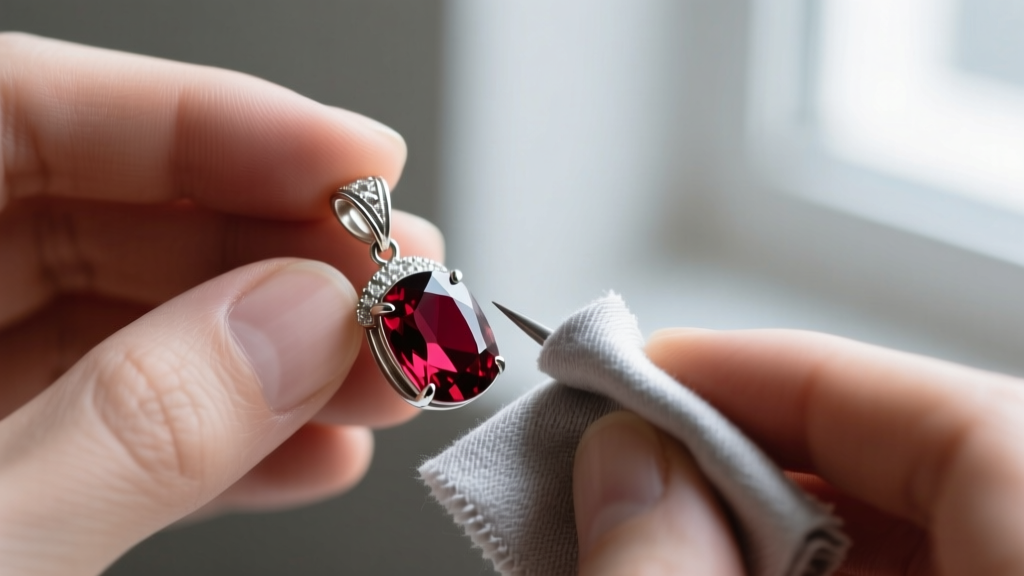
- Daily Wipe: After wearing, gently wipe the silver chain and pendant bail with a dry, untreated microfiber cloth to remove skin oils and sulfur compounds before they initiate tarnishing.
- Deep Cleaning: Mix a few drops of pH-neutral dish soap in lukewarm water. Use a soft-bristled baby toothbrush to gently scrub the back of the garnet (the pavilion), where lotion and dead skin cells accumulate and block light.
- Drying: Pat dry with a lint-free towel. Never air-dry, as water spots can form on the silver and dull the finish.
- Storage: Store the necklace in an anti-tarnish flannel bag or a sealed ziplock bag with a silica gel packet and a 3M anti-tarnish strip. Keep it away from direct sunlight and rubber bands, as the sulfur in rubber will rapidly blacken sterling silver.
By understanding the specific gemological and metallurgical properties at play, you can confidently select a garnet necklace silver piece that is not only visually stunning but structurally engineered to last a lifetime.


