A Buyer's Guide to Choosing a Mother of Pearl Necklace
Discover how to evaluate nacre thickness, backing materials, and settings in our expert mother of pearl necklace buying guide for lasting elegance.

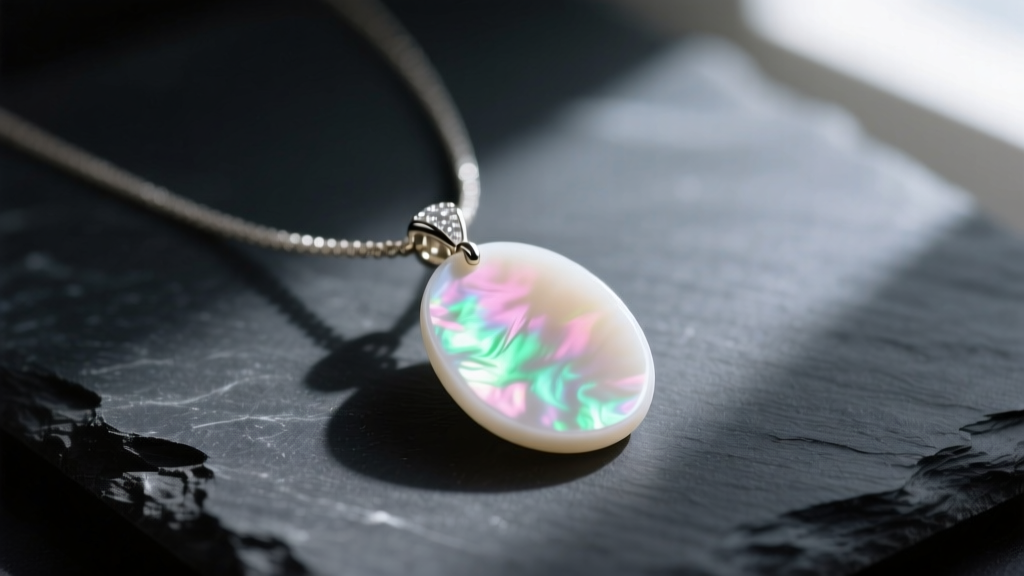
Understanding Nacre: The Heart of Mother of Pearl
When shopping for a mother of pearl necklace, you are not just buying a piece of jewelry; you are investing in a biological marvel. Mother of pearl, scientifically known as nacre, is the iridescent inner lining of mollusk shells, primarily harvested from the Pinctada maxima (silver-lipped oyster) and Pinctada margaritifera (black-lipped oyster). Unlike pearls, which are spherical and formed around an irritant, mother of pearl is the flat, layered coating that protects the mollusk's soft tissue.
The mesmerizing luster of a high-quality mother of pearl pendant comes from its microscopic structure. Nacre is composed of hexagonal platelets of aragonite (a form of calcium carbonate) bound together by conchiolin, an organic elastic polymer. When light hits these microscopic layers, it refracts and interferes, creating the signature play-of-color known as orient. According to the Gemological Institute of America (GIA), the thickness and regularity of these aragonite layers directly dictate the depth of the iridescence. When evaluating a necklace, look for a deep, multi-dimensional glow rather than a flat, chalky white surface, which indicates poor nacre quality or excessive polishing that has stripped the top layers.
Genuine vs. Faux: How to Spot the Difference
The market is flooded with convincing imitations made from glass, plastic, or synthetic resins coated with pearlescent pigments. Because mother of pearl is an organic gemstone with a relatively low Mohs hardness of 2.5 to 4.5, it possesses distinct physical properties that synthetics cannot perfectly replicate. Before purchasing, employ these three field tests to verify authenticity.
The Temperature and Weight Test
Genuine mother of pearl is a dense, calcified material. When you hold a real pendant against your cheek or the inside of your wrist, it will feel distinctly cool to the touch and will take several seconds to warm up to your body temperature. Glass imitations may also feel cool, but plastic and resin fakes will feel room-temperature or warm immediately. Furthermore, real nacre has a specific gravity of approximately 2.6 to 2.8, giving it a satisfying, substantial heft that lightweight plastic alternatives lack.
The Tooth Test
Gently rub the edge of the pendant against the biting edge of your front tooth. Genuine mother of pearl will feel slightly gritty or sandy due to the microscopic crystalline structure of the aragonite platelets. Conversely, glass, plastic, and coated resin will feel perfectly smooth and slippery. Be cautious not to press too hard, as nacre can scratch.
Visual Inspection Under Magnification
Using a 10x jeweler's loupe, examine the edges and any carved crevices of the pendant. Genuine mother of pearl will show natural growth lines, subtle wavy patterns, and variations in color. Faux pieces often display a perfectly uniform, repetitive swirl pattern (often called the 'pearl essence' effect) or reveal a clear coated layer peeling away from a white core.
| Characteristic | Genuine Nacre | Glass Imitation | Plastic/Resin Imitation |
|---|---|---|---|
| Temperature to Touch | Cool, warms slowly | Cool, warms moderately | Warm or room temperature |
| Surface Texture (Tooth Test) | Slightly gritty/sandy | Perfectly smooth | Perfectly smooth |
| Weight/Heft | Substantial, dense | Heavy, overly dense | Noticeably lightweight |
| Magnification (10x) | Wavy growth lines, natural orient | Bubbles, uniform coating | Mold lines, uniform pigment |
Evaluating the Backing and Setting Materials
One of the most critical, yet frequently overlooked, aspects of buying a mother of pearl necklace is evaluating how the nacre is supported. Because nacre is brittle and prone to cleavage along its growth layers, it is rarely used as a standalone, unsupported stone in fine jewelry. The structural integrity of the backing and the type of adhesive used are paramount to preventing delamination—the most common failure mode in MOP jewelry.
Backing Stones and Structural Support
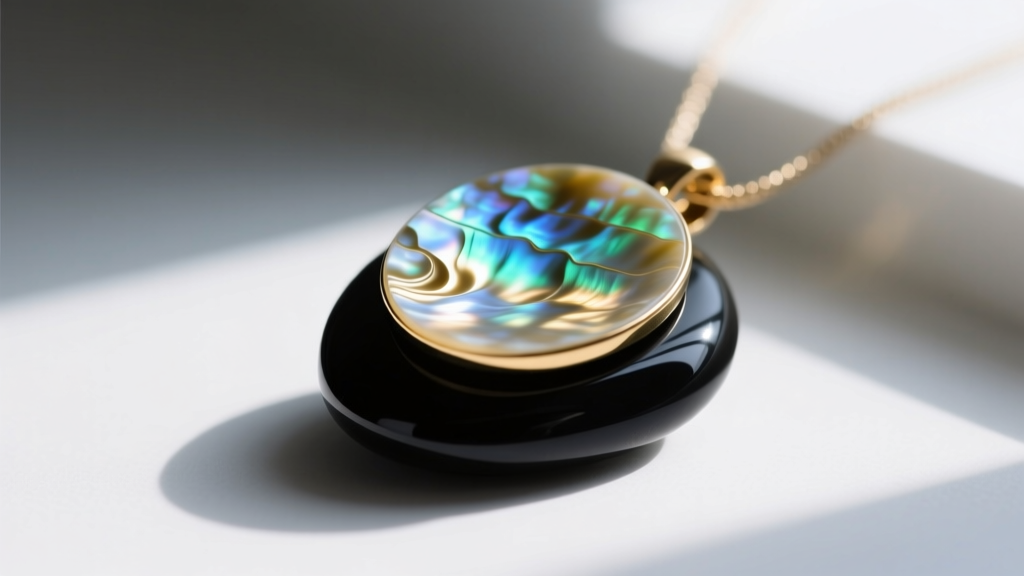
High-end mother of pearl pendants are almost always backed by a darker, harder stone to provide structural rigidity and enhance the visual contrast of the nacre's overtones. Black onyx, black agate, and dark spinel are the industry standards. A dark backing not only prevents light from passing through and washing out the color, but it also absorbs shock if the pendant is bumped against a hard surface. Avoid pendants where the mother of pearl is glued directly to a thin sheet of base metal without a stone buffer, as the differing thermal expansion rates of metal and organic nacre will eventually cause the glue to fail.
Adhesives: Epoxy vs. Cyanoacrylate
If you are buying a pendant that features inlaid or backed mother of pearl, inquire about the adhesive. Mass-produced, low-cost jewelry often uses cyanoacrylate (superglue), which becomes brittle over time and degrades when exposed to moisture and skin oils, leading to the nacre popping off. Reputable jewelers use two-part jeweler's epoxy or UV-cured resins, which maintain a slight flexibility and create a permanent, waterproof bond. If you see a cloudy, white residue around the seam where the nacre meets the bezel, it is a strong indicator of cheap glue application.
Pricing Tiers: What Should You Actually Pay?
The price of a mother of pearl necklace varies wildly based on the origin of the nacre, the carving complexity, and the precious metals used in the setting. Understanding these tiers will protect you from overpaying for fashion jewelry disguised as fine jewelry.
- Fashion Tier ($20 - $75): Typically features thin, flat-cut nacre glued to brass or sterling silver with basic adhesives. The nacre is often heavily processed, bleached, or dyed to achieve uniform whiteness. Expect simple bezel settings and lightweight cable chains.
- Mid-Tier / Artisan ($80 - $250): Features thicker nacre, often hand-carved into cameos, floral motifs, or geometric shapes. Backings are usually solid black onyx or agate. Settings are crafted from solid 925 sterling silver or 10k/14k gold vermeil, utilizing secure mechanical bezels rather than just glue.
- Fine / Designer Tier ($300 - $1,500+): Utilizes premium, unbleached nacre from specific regions (like Australian silver-lipped oysters) exhibiting rare pink or green overtones. Set in solid 14k or 18k gold, often accented with diamond pavé. The carving is done by master lapidaries, and the structural engineering of the pendant ensures generational longevity.
Chain Selection and Clasp Hardware
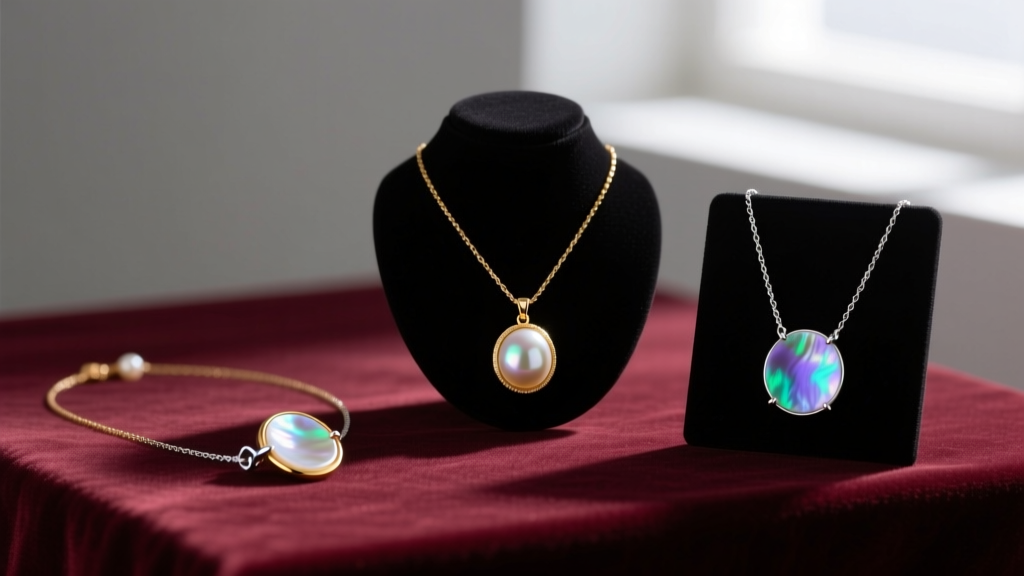
A common mistake buyers make is focusing entirely on the pendant while ignoring the chain. Mother of pearl pendants, especially those backed with onyx and set in solid gold, can be surprisingly heavy. A delicate 1mm chain is insufficient and poses a high risk of snapping. For pendants weighing over 5 grams, opt for a chain with a minimum thickness of 1.5mm to 2mm. Box chains, wheat chains, and rope chains offer superior tensile strength compared to standard cable or snake chains, which are prone to kinking and snapping under pendulum-like stress.
Furthermore, inspect the clasp. Spring ring clasps are notoriously difficult to operate and feature a tiny internal spring that frequently fails. Always look for a lobster clasp or a secure barrel clasp, ensuring the jump ring connecting the clasp to the chain is soldered closed, not just pinched shut.
Care and Maintenance to Prevent Degradation
Because mother of pearl is an organic gemstone, it is highly susceptible to chemical damage. The GIA recommends keeping nacre away from harsh chemicals, including perfumes, hairsprays, and household cleaners. The aragonite structure is easily dissolved by mild acids, meaning even the natural acidity of human sweat can dull the luster over time if the piece is not wiped down after wear.
Expert Warning: Never place a mother of pearl necklace in an ultrasonic jewelry cleaner. The high-frequency vibrations will shatter the brittle nacre layers and instantly dissolve the epoxy adhesives holding the backing stone in place. Always clean MOP with a soft, damp microfiber cloth and mild, non-detergent soap.
By prioritizing nacre thickness, demanding proper structural backings, and verifying the authenticity of the material, you can confidently select a mother of pearl necklace that offers both breathtaking iridescence and lifelong durability. Whether you are drawn to the stark contrast of white nacre on black onyx or the subtle, creamy overtones of an unbleached Australian shell, a meticulous approach to buying ensures your investment remains a staple in your jewelry collection for decades.


