Globe Necklace Materials: Silver, Gold, and Steel Compared
Discover the best metals for your globe necklace. We compare sterling silver, 14k gold, and 316L steel for durability, weight, and tarnish resistance.

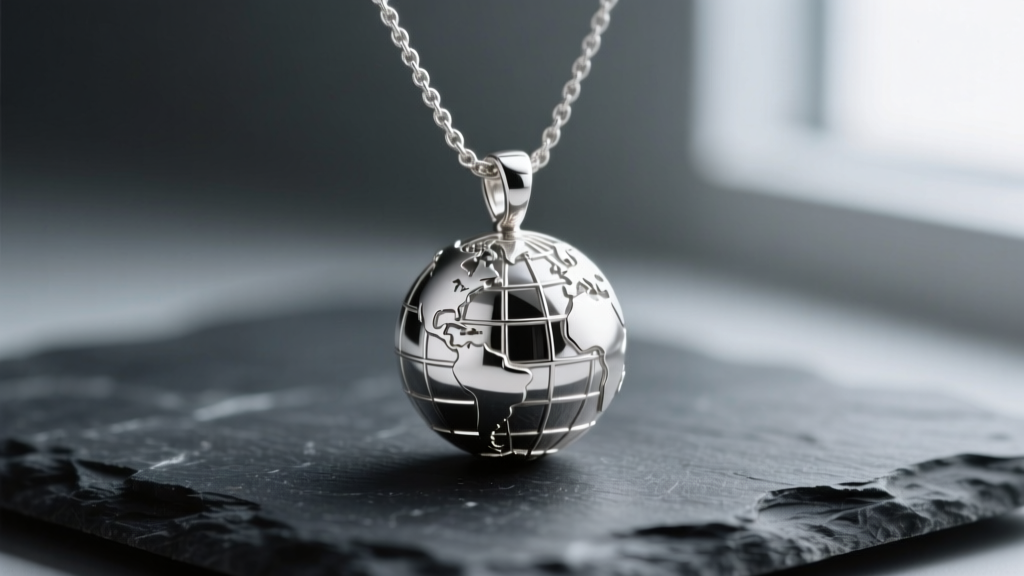
The Anatomy of a Globe Pendant: Why Material Dictates Longevity
A globe necklace is more than a symbol of wanderlust; it is a structural marvel in miniature jewelry design. Whether you are selecting a solid spherical bead, a hollow engraved orb, or a hinged globe locket, the metal you choose dictates its structural integrity, weight distribution, and resistance to daily wear. Spherical pendants endure unique mechanical stresses. They roll against the skin, catch on clothing, and, if hollow, are highly susceptible to denting. When evaluating metals for a globe necklace, we must look beyond mere aesthetics and examine metallurgical properties such as Vickers hardness (HV), tensile strength, and oxidation rates. In this comprehensive material comparison, we break down the exact performance metrics of sterling silver, 316L stainless steel, and solid gold alloys to help you choose the perfect sphere for your collection.
Sterling Silver (925): The Classic Choice for Intricate Engraving
Sterling silver, stamped as 925, consists of 92.5% pure silver and 7.5% alloying metals, typically copper. This composition provides a Vickers hardness of roughly 60 to 70 HV in its annealed state, which can be work-hardened up to 110 HV during the manufacturing process. For globe necklaces featuring deeply etched latitude and longitude lines or world map contours, silver is the premier choice. Its relatively soft nature allows jewelers to achieve crisp, high-resolution engravings that harder metals simply cannot replicate without expensive laser etching.
The Denting and Tarnish Factors
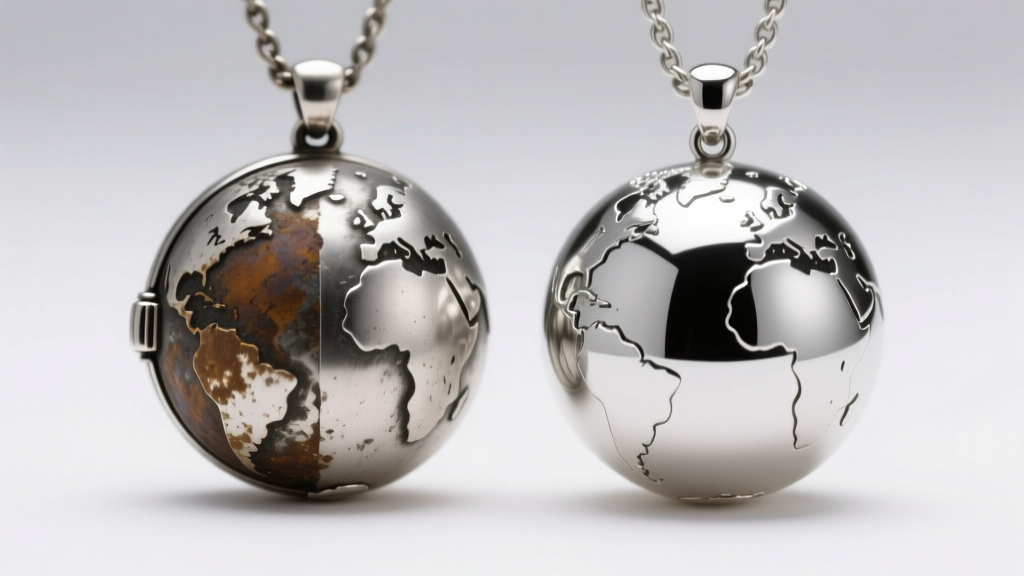
The primary vulnerability of a 925 silver globe pendant is denting. If you are purchasing a hollow silver globe, ensure the wall thickness is at least 0.8mm to 1.0mm. Anything thinner will easily deform if dropped on a hard surface. Furthermore, the copper content in sterling silver makes it prone to sulfide tarnishing. According to metallurgical resources like Ganoksin, applying a micro-thin layer of rhodium plating over the silver not only prevents tarnish but also increases the surface hardness, providing a brilliant, white-metal finish that mimics platinum. If you prefer the warm, vintage patina of un-plated silver, be prepared to polish your globe pendant regularly with a microfiber cloth.
316L Surgical Stainless Steel: The Ultimate Travel Companion
For travelers who want a globe necklace they never have to take off, 316L marine-grade stainless steel is the undisputed champion. The 'L' stands for low carbon, which enhances its corrosion resistance. With a Vickers hardness ranging from 150 to 190 HV, 316L steel is significantly harder than sterling silver. This means a hollow steel globe can be manufactured with thinner walls (around 0.6mm) while maintaining the exact same crush resistance as a thicker silver counterpart, resulting in a lighter, more comfortable pendant.
Hypoallergenic Properties and Weight
While steel contains nickel, the 316L alloy traps the nickel within its crystalline matrix, resulting in a nickel release rate that is virtually undetectable and well within EU hypoallergenic standards. Solid steel globe pendants are heavy; a 15mm solid steel sphere can weigh upwards of 18 grams, necessitating a robust chain. However, its imperviousness to saltwater, sweat, and humidity makes it the ultimate low-maintenance material for an active lifestyle.
Solid Gold (14k vs. 18k): Heirloom Quality and Hardness Metrics
When investing in a solid gold globe necklace, understanding karatage is critical for structural longevity. Pure 24k gold is far too soft (approx. 25 HV) for jewelry. Therefore, gold is alloyed with metals like zinc, copper, and silver. According to the Gemological Institute of America (GIA), 18k gold contains 75% pure gold and has a hardness of roughly 90 to 110 HV. While 18k offers a richer, deeper yellow hue, it is more prone to scratching and denting.
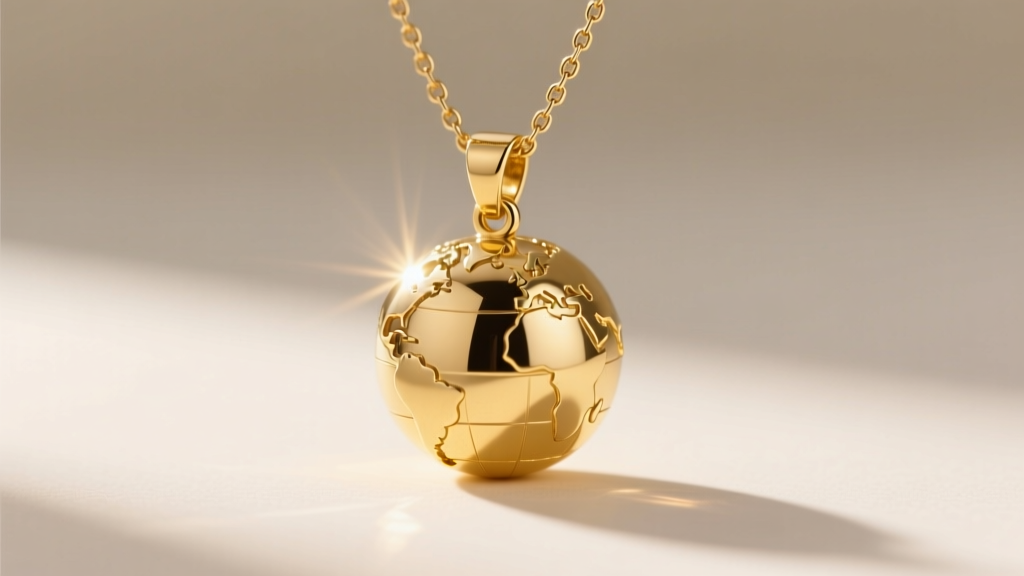
Conversely, 14k gold (58.5% pure gold) boasts a higher hardness rating of 120 to 150 HV. For a hollow globe locket with a working hinge and clasp mechanism, 14k gold is vastly superior. The hinge pin and the snap closure require high tensile strength to prevent warping over years of opening and closing. If you are buying a solid, heavy globe pendant where structural stress on moving parts is not a factor, 18k gold is a luxurious, heirloom-quality choice that will develop a beautiful, soft patina over decades of wear.
Material Comparison Matrix: Globe Pendant Performance
| Metal Alloy | Vickers Hardness (HV) | Ideal Globe Style | Tarnish Resistance | Relative Price Point |
|---|---|---|---|---|
| 925 Sterling Silver | 60 - 110 HV | Intricately engraved solid or thick-walled hollow globes | Low (Requires polishing or rhodium plating) | $ |
| 316L Stainless Steel | 150 - 190 HV | Thin-walled hollow globes, minimalist polished spheres | Extremely High (Impervious to moisture) | $ |
| 14k Solid Gold | 120 - 150 HV | Hinged globe lockets, mechanical opening spheres | High (Will not tarnish, may scratch) | $$$ |
| 18k Solid Gold | 90 - 110 HV | Solid, heavy heirloom globes without moving parts | High (Develops a soft vintage patina) | $$$$ |
Chain Pairing and Bail Hardware for Spherical Pendants
The material of your globe necklace must be matched with an appropriate chain and bail. Spherical pendants have a concentrated center of gravity that pulls downward, which can cause delicate chains to snap or stretch over time. For a solid silver or gold globe pendant weighing between 8 and 15 grams, avoid delicate cable or curb chains under 1.0mm. Instead, opt for a 1.2mm to 1.5mm box chain or rope chain. These styles offer multidimensional structural support and resist kinking when the spherical pendant rolls against the chest.
Furthermore, pay close attention to the bail (the loop connecting the globe to the chain). If you are buying a 316L steel globe, ensure the bail is welded seamlessly to the sphere. Soldered joints on steel can be brittle if not done with specialized laser welding equipment. For silver and gold globes, a solid cast bail integrated into the pendant's mold is always superior to a glued or lightly soldered jump ring.
Final Verdict on Choosing Your Globe Metal
Selecting the right material for your globe necklace ultimately depends on your lifestyle and design preferences. If you value intricate, map-accurate engravings and a classic aesthetic, rhodium-plated 925 sterling silver offers the best canvas. If you want an indestructible, waterproof piece for daily adventures, 316L stainless steel provides unmatched structural hardness at an accessible price. Finally, for a generational keepsake or a hinged locket meant to hold a tiny photograph, the tensile strength and prestige of 14k solid gold remain the gold standard in fine jewelry metallurgy. By understanding the specific hardness and weight properties of these metals, you can ensure your globe necklace remains perfectly spherical and beautiful for a lifetime.


