Gold Bead Necklace Buying Guide: Karats, Sizes & What to Look For
Discover how to choose the perfect gold bead necklace. Our expert buying guide covers karat weights, bead sizes, clasps, and pricing for 2026.

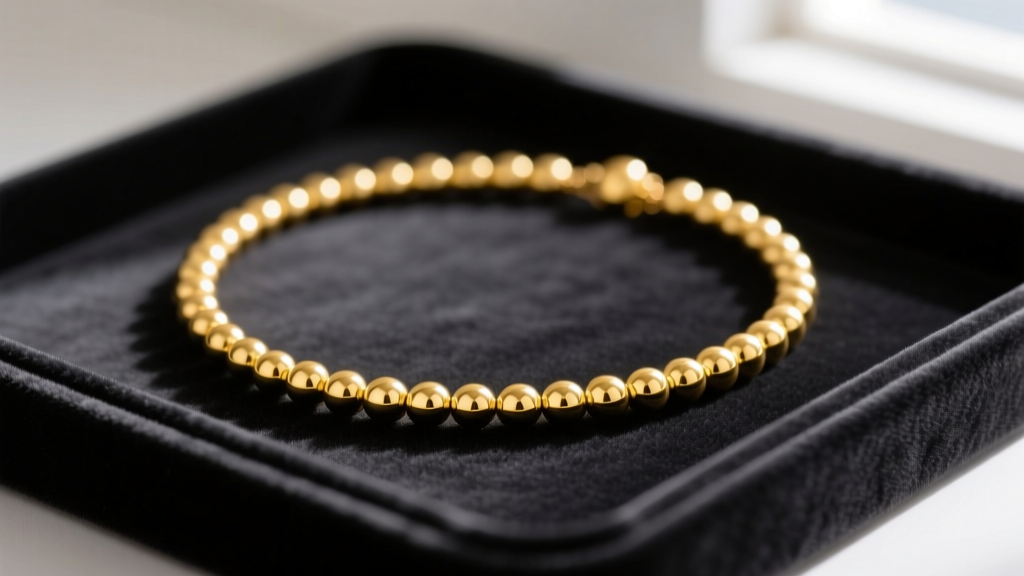
The Anatomy of a Gold Bead Necklace
A gold bead necklace is a timeless staple in any jewelry collection, offering a versatile blend of elegance and simplicity. However, not all beaded gold necklaces are created equal. The difference between a piece that lasts a lifetime and one that degrades within a year lies in the manufacturing techniques, alloy composition, and stringing materials used. When evaluating a gold bead necklace, the first detail to inspect is the bead construction: seamless versus soldered.
Seamless beads are created by stamping and drawing gold sheet into a perfect sphere, leaving no visible solder line. This technique requires advanced precision and results in a structurally superior bead that reflects light uniformly. Soldered beads, while more affordable, are made from two half-spheres joined together. If you look closely under a jeweler's loupe, you will spot a microscopic seam. Over time, this seam can snag on delicate fabrics or weaken under tension. For a premium investment piece, always demand seamless beads.
Solid vs. Hollow: The Weight and Durability Factor
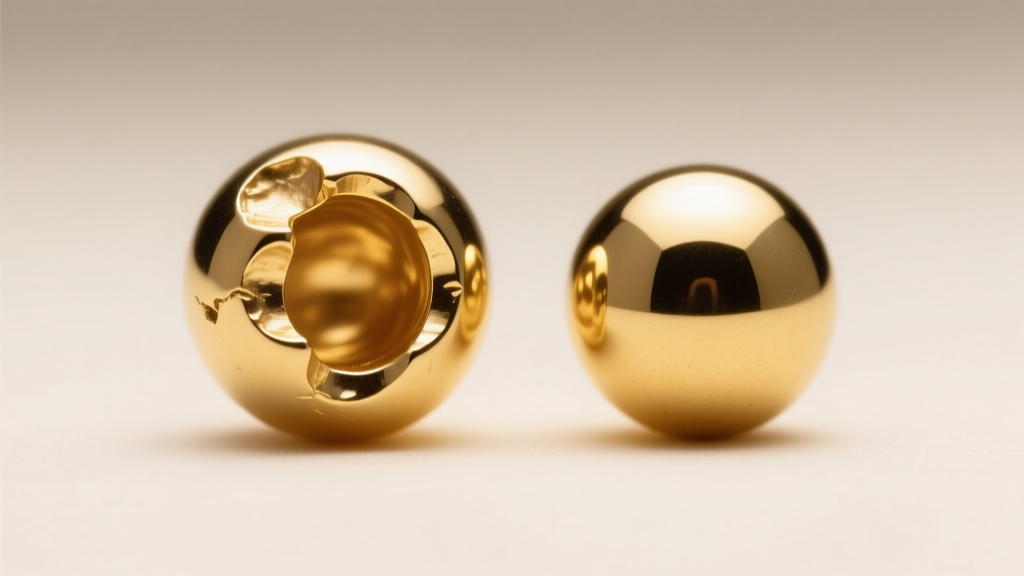
One of the most critical decisions when buying a gold bead necklace is choosing between solid and hollow beads. This choice drastically impacts the necklace's weight, drape, price, and longevity. Hollow beads are manufactured using a wax core that is melted out after the gold is cast or electroformed. While this reduces the gold content—and therefore the price—it creates a fragile shell.
To put this into perspective, a solid 4mm 14k gold bead weighs approximately 0.15 grams, whereas a hollow version weighs barely 0.04 grams. While the hollow bead reduces the upfront cost by nearly 60%, it is highly susceptible to crushing from everyday impacts. Catching a hollow bead necklace on a door handle or dropping it on a hard tile floor can result in irreparable dents. According to the Federal Trade Commission (FTC) Jewelry Guides, retailers must accurately represent the construction of precious metals, but it is up to the consumer to understand the practical implications of hollow gold. For beads larger than 3mm intended for daily wear, solid gold is the only logical choice.
Karat Purity and Alloy Composition
Gold purity, measured in karats, dictates both the color and the structural integrity of your necklace. Pure 24k gold is far too soft for beaded jewelry; the drill holes would warp, and the beads would easily deform. Therefore, gold is alloyed with metals like copper, silver, and zinc. The Gemological Institute of America (GIA) notes that the specific alloy mix not only changes the karat weight but also determines the final hue of the gold, from warm yellows to cool whites and romantic roses.
| Karat | Gold Purity | Durability | Best Use Case |
|---|---|---|---|
| 10k | 41.7% | Excellent | High-impact daily wear, budget-conscious buyers |
| 14k | 58.5% | Very Good | The industry standard for everyday fine jewelry |
| 18k | 75.0% | Good | Special occasions, rich color, sensitive skin |
| 22k | 91.6% | Poor | Cultural heirlooms, investment, occasional wear |
For a standard gold bead necklace, 14k offers the optimal balance of rich color and scratch resistance. If you have metal allergies or prefer a deeper, more saturated yellow tone, 18k is superior, provided you treat the necklace with care.
Sizing, Proportions, and Surface Finishes
Bead diameter completely changes the visual weight and formality of the necklace. A 2mm to 3mm bead creates a delicate, liquid-gold effect that sits close to the collarbone, perfect for layering or wearing with V-necklines. A 4mm to 5mm bead offers a classic, standalone presence ideal for crew necks and office wear. Beads 6mm and above transition into bold statement pieces that require heavier clasps and stronger stringing materials.
Beyond size, the surface finish of the bead dictates how it interacts with light and how well it hides wear. High-polish beads offer a mirror-like shine but will show micro-scratches over time. Matte or brushed finishes provide a modern, understated glow and are exceptional at masking surface abrasions. Diamond-cut beads feature faceted surfaces carved into the gold, creating intense sparkle without the need for gemstones. Diamond-cut finishes are highly recommended for 18k gold, as the faceting distracts the eye from the softer metal's natural tendency to scuff.

Stringing Materials, Clasps, and Hardware
A gold bead necklace is only as strong as the material holding it together. Never buy heavy gold beads strung on basic silk thread or monofilament. The microscopic edges of the gold bead drill holes act like tiny saws, eventually fraying and snapping organic threads. The industry standard for premium beaded necklaces is 49-strand micro-woven stainless steel wire coated in nylon (often branded as Soft Flex). This material drapes like silk but possesses the tensile strength of steel.
Equally important is the clasp and the transition hardware. Look for a solid lobster clasp or a box clasp with a figure-eight safety catch. The area where the wire loops through the clasp is a high-friction zone. High-end jewelers use French wire (a coiled metal guard) or solid gold crimp beads covered by crimp covers to protect the stringing wire from snapping at the clasp connection. If you see a bare wire looped directly through a thin jump ring, walk away.
Expert Tip: When testing a strung gold bead necklace in-store, gently drape it over your hand. The beads should move fluidly without stiff gaps. If the necklace feels rigid, the internal wire is too thick for the bead drill holes, or the crimp beads were crushed too tightly, restricting natural movement and putting undue stress on the wire.
2026 Pricing Framework and Inspection Checklist
With gold spot prices hovering near historic highs in 2026, understanding the pricing framework is essential to avoid being overcharged. The price of a solid gold bead necklace is calculated using a straightforward formula: (Spot Price per Gram × Gold Purity Multiplier × Total Gram Weight) + Labor/Hardware Markup. For example, a solid 14k 4mm bead necklace (18 inches) requires roughly 14 grams of gold. If the spot price of pure gold is $75 per gram, the raw 14k gold value is approximately $615. A fair retail markup for artisan stringing, a solid gold clasp, and seamless bead manufacturing typically adds 40% to 80%, placing a fair retail price between $860 and $1,100.
Before finalizing your purchase, run through this essential inspection checklist:
- Loupe the Beads: Check for seams (soldered) or smooth spheres (seamless).
- Check the Drill Holes: Ensure the holes are cleanly drilled with no jagged burrs that could damage the stringing wire.
- Verify the Stamp: Look for a clear karat stamp (e.g., 14K, 585) on the clasp or a dedicated tag.
- Test the Clasp: Ensure the spring mechanism is snappy and the jump ring is soldered shut, not just pushed together.
- Request the Gram Weight: A reputable jeweler will gladly weigh the piece in front of you on a calibrated digital scale to justify the price.
By prioritizing seamless construction, appropriate karat weights, and professional stringing materials, you will secure a gold bead necklace that remains a resilient, luminous fixture in your wardrobe for decades to come.


