Gold Bunny Necklace Guide: 14k, 18k, and Vermeil Compared
Discover how to choose the perfect gold bunny necklace by comparing 14k, 18k, vermeil, and gold-filled materials for durability and style.

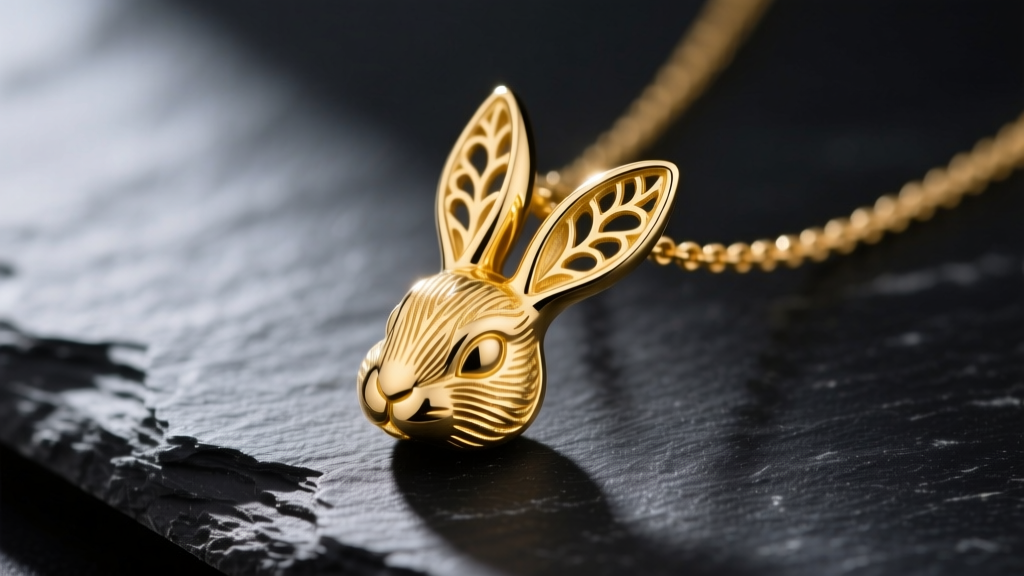
When searching for the perfect animal motif jewelry, a gold bunny necklace stands out as a timeless symbol of agility, luck, and playful elegance. However, the whimsical anatomy of a rabbit—specifically its elongated ears, protruding tail, and intricate facial features—presents unique structural challenges that generic pendants do not face. A material that works perfectly for a simple geometric disc might fail catastrophically when cast into the delicate, cantilevered shape of a bunny's ear.
As we navigate the jewelry market in 2026, consumers are increasingly prioritizing longevity and material transparency over fast-fashion trends. Whether you are investing in a solid gold heirloom piece or a budget-friendly everyday accessory, understanding the metallurgical properties of your jewelry is critical. This guide breaks down the exact material grades, casting methods, and failure modes associated with bunny motif pendants, helping you make an informed, structurally sound purchase.
The Structural Challenge of Animal Motif Jewelry
To understand why material choice dictates the lifespan of a gold bunny necklace, we must look at the physics of the pendant's design. Unlike a smooth, low-profile heart or circle, a 3D bunny pendant features high-stress protrusions. The ears act as levers; if they catch on a sweater or towel, the force applied to the tip of the ear is multiplied at the base where it meets the head.
If the metal alloy is too soft, the ear will permanently bend or warp. If the alloy is too brittle—often a result of poor casting techniques or high zinc content in lower-karat white gold—the ear can snap off entirely. Furthermore, intricate details like the bunny's fur texture or whiskers require a metal that can capture microscopic mold details during the manufacturing process without becoming porous or pitted. This is where the distinction between casting methods and metal purity becomes paramount.
Solid Gold Showdown: 14k vs. 18k for Delicate Pendants
Solid gold remains the gold standard for fine jewelry, but the karat weight drastically alters the mechanical properties of the piece. According to the Gemological Institute of America (GIA), pure 24k gold is far too soft for daily wear, necessitating the addition of alloy metals like copper, silver, and zinc to increase hardness and alter color.
14k Gold: The Durability Champion
Composed of 58.5% pure gold and 41.5% alloy metals, 14k gold offers a Vickers hardness rating of approximately 120 to 140. This increased tensile strength makes 14k the superior choice for a 3D gold bunny necklace with tall, slender ears. The alloy matrix provides a rigid internal structure that resists bending and withstands the micro-impacts of daily wear. Additionally, 14k gold captures the sharp edges of lost-wax castings beautifully, ensuring that the intricate fur textures of the bunny remain crisp over decades of use. Expect to pay between $150 and $450 for a quality solid 14k bunny pendant, depending on the weight and brand.
18k Gold: The Color Purist's Choice
With 75% pure gold content, 18k gold offers a noticeably richer, warmer yellow hue that many collectors covet. However, this comes at a mechanical cost. The Vickers hardness drops to roughly 90 to 110, making the metal significantly more malleable. While an 18k gold bunny necklace is undeniably luxurious, the delicate ear tips are highly susceptible to warping if snagged. If you opt for 18k, look for designs where the ears are folded back against the body or reinforced with a thicker structural base. Pricing for 18k alternatives typically ranges from $350 to over $900.
Evaluating the Alternatives: Vermeil, Gold-Filled, and Plated
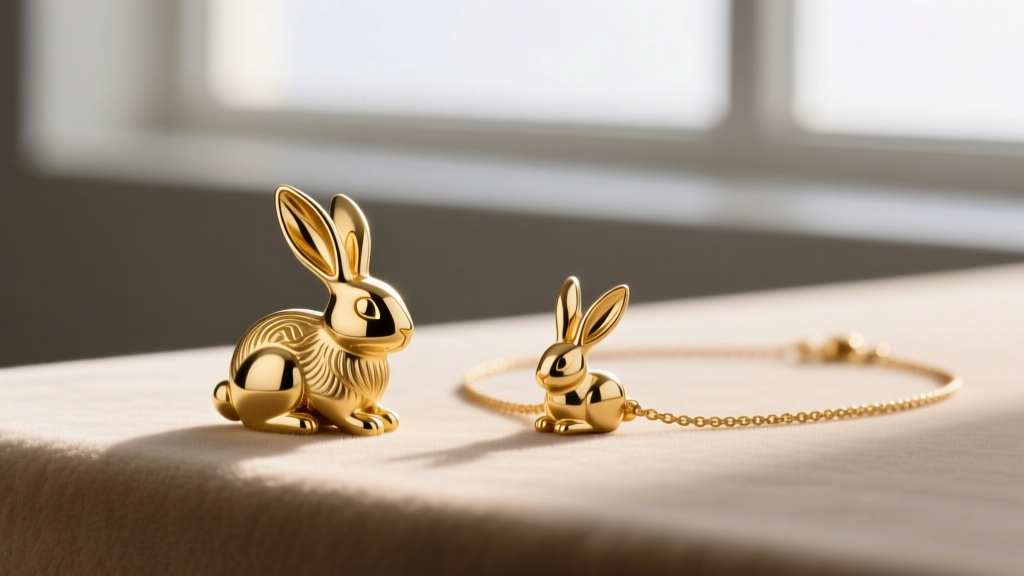
For those seeking the aesthetic of a gold bunny necklace without the investment-grade price tag, alternative materials offer viable solutions—provided you understand their manufacturing limitations. The Federal Trade Commission (FTC) maintains strict guidelines on how these materials can be marketed, particularly regarding the thickness of the gold layer and the base metal used.
| Material Type | Base Metal | Gold Layer / Purity | Casting Capability | Average Price Range |
|---|---|---|---|---|
| Solid 14k Gold | None (Homogeneous Alloy) | 58.5% Pure Gold | 3D Lost-Wax Casting | $150 - $450 |
| Solid 18k Gold | None (Homogeneous Alloy) | 75.0% Pure Gold | 3D Lost-Wax Casting | $350 - $900+ |
| Gold Vermeil | Sterling Silver (925) | ≥ 2.5 microns (10k-24k) | 3D Lost-Wax Casting | $80 - $180 |
| Gold-Filled | Jeweler's Brass | 5% by weight (usually 14k) | 2D Sheet Stamping Only | $40 - $90 |
| Gold-Plated | Brass or Copper | < 0.5 microns | 3D Cast or Stamped | $15 - $40 |
The Vermeil Advantage for 3D Motifs
Gold vermeil (pronounced ver-may) is the highest quality alternative to solid gold. By law, it must feature a sterling silver base coated with a minimum of 2.5 microns of gold. Because the base is castable silver, jewelers can use the lost-wax method to create highly detailed, 3D bunny pendants with realistic textures. Vermeil is also hypoallergenic, making it a safe choice for sensitive skin. However, the high-stress points (like the jump ring loop on the bunny's back) will eventually wear through the gold layer, revealing the silver beneath.
The Gold-Filled Limitation
Gold-filled material consists of a brass core mechanically bonded with a thick layer of gold (at least 5% of the total weight). While incredibly durable and resistant to tarnish, gold-filled metal cannot be melted and poured into a 3D mold. Therefore, a gold-filled bunny necklace will almost always be a flat, 2D silhouette stamped from a sheet of metal. If you want a sculpted, three-dimensional rabbit, gold-filled is not an option.
Hardware and Chain Pairings: The Hidden Failure Points
The pendant itself is only half the equation; the hardware connecting your gold bunny necklace to the chain is a frequent point of failure. Because animal motifs are often slightly heavier and more asymmetrical than standard charms, the jump ring (the small loop connecting the pendant to the chain) endures significant friction and torque.
- Jump Ring Gauge: Ensure the jump ring attached to the bunny's back is at least 20-gauge (0.8mm) or 18-gauge (1.0mm) wire. Anything thinner risks pulling open under the pendant's weight.
- Soldered vs. Unsoldered: For solid gold pieces, always request a soldered jump ring. This means the seam of the ring is fused shut with a laser or torch, making it impossible to pull apart. Unsoldered rings rely on tension and will eventually gap open, leading to a lost pendant.
- Chain Selection: Pair the pendant with a chain that matches its visual weight. A 1.2mm to 1.5mm cable or rope chain provides enough structural support to hold a 3D bunny pendant without overwhelming its delicate aesthetic.
Maintenance and Cleaning Intricate Castings
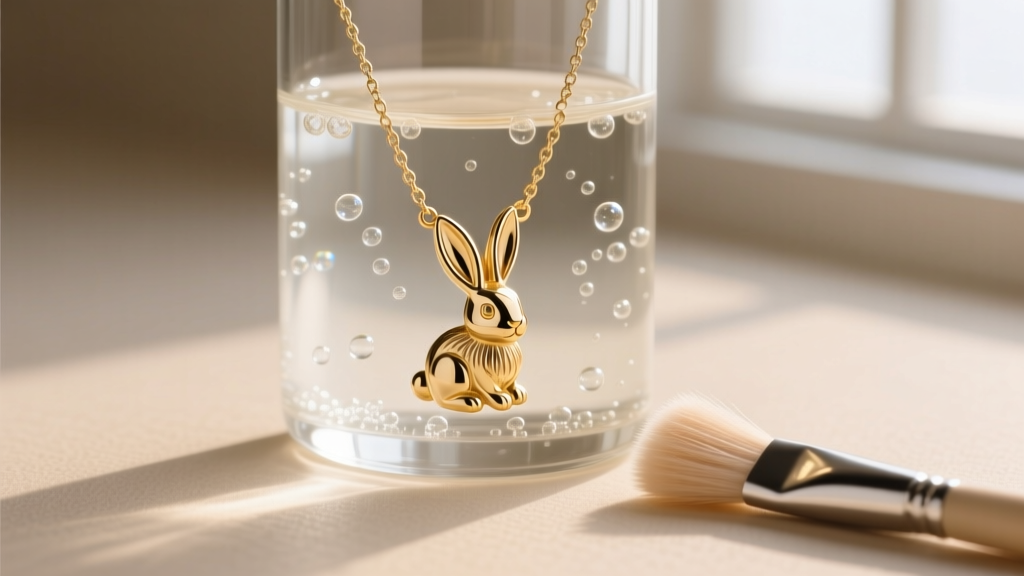
The crevices that give a 3D gold bunny necklace its charm—such as the inner ears, the curve of the tail, and the facial features—are also traps for skin oils, lotions, and environmental dust. Over time, this buildup can dull the metal and, in the case of vermeil or plated pieces, accelerate the degradation of the gold layer.
For solid 14k and 18k gold, an ultrasonic cleaner is generally safe for removing deep-set grime from intricate castings, provided the piece does not contain fragile gemstone accents. For gold vermeil, ultrasonic waves can strip the micron-thick gold layer. Instead, soak the vermeil bunny in a solution of warm water and a few drops of mild, phosphate-free dish soap for five minutes. Use an extra-soft baby toothbrush to gently agitate the crevices around the ears and paws. Rinse with distilled water and pat dry with a microfiber cloth; never rub aggressively, as this wears away the gold plating over time.
Final Verdict: Which Material Should You Choose?
Selecting the right gold bunny necklace ultimately depends on your budget, your lifestyle, and the specific design of the pendant. If the design features tall, freestanding ears and intricate 3D fur textures, solid 14k gold is the undisputed champion, offering the perfect balance of rich color and structural rigidity. If you prefer a warmer hue and are willing to handle the piece with extra care, 18k gold provides unmatched luxury. For those on a budget who still demand a 3D sculpted look and hypoallergenic properties, gold vermeil is the superior alternative, provided you commit to gentle, non-abrasive cleaning routines. By matching the metallurgical properties of the gold to the physical demands of the bunny motif, you ensure your necklace remains a cherished, intact staple in your jewelry collection for years to come.


