The Ultimate Gold Chain Pearl Necklace Material & Durability Guide
Discover how to choose a durable gold chain pearl necklace. We compare 14k vs 18k gold and Akoya vs Freshwater pearls for the perfect everyday piece.

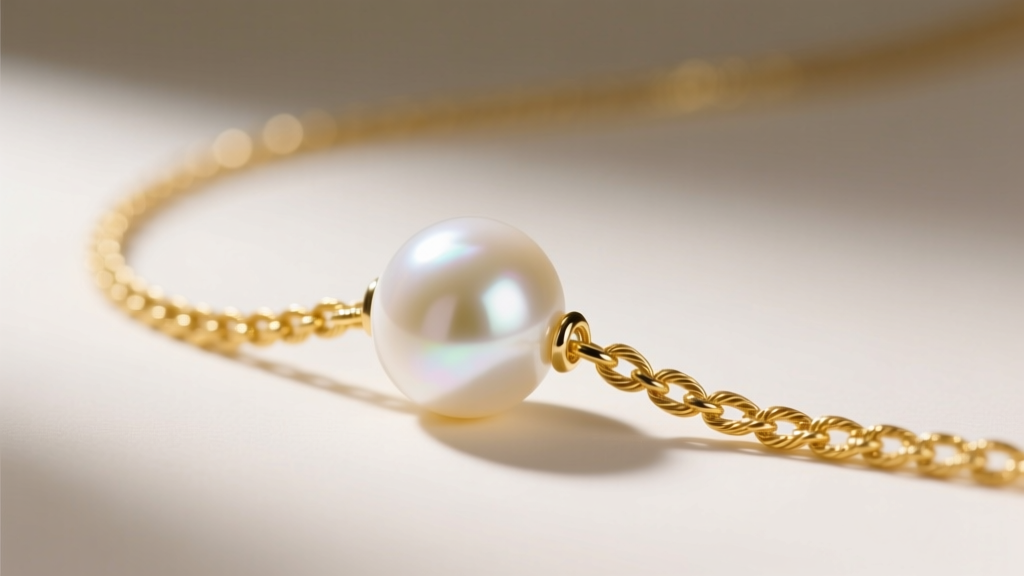
The Anatomy of a Dual-Material Masterpiece
A gold chain pearl necklace represents one of the most elegant, yet structurally complex pairings in jewelry design. When you wear this combination, you are pairing a forged metallic alloy with a delicate organic gemstone. This creates unique structural dynamics that demand a deep understanding of material science to ensure longevity. In 2026, as consumers increasingly prioritize heirloom-quality construction over fast fashion, knowing the exact metallurgical and gemological properties of your jewelry is essential.
Unlike a solid metal chain or a simple string of pearls, a gold chain pearl necklace requires balancing the tensile strength of gold with the Mohs hardness of pearl nacre. Misjudging this balance leads to accelerated wear, nacre degradation, and catastrophic clasp failures. This guide breaks down the exact material grades, failure modes, and structural specifications you need to make an informed investment.
Decoding the Gold Chain: 14K vs. 18K vs. Vermeil
The foundation of your gold chain pearl necklace is the metal itself. Pure 24K gold is far too soft for jewelry, possessing a Vickers hardness (HV) of merely 25. To create a durable chain, gold is alloyed with metals like copper, silver, and zinc. According to the Gemological Institute of America (GIA), the ratio of these alloys drastically alters the chain's tensile strength, tarnish resistance, and friction profile.
| Gold Type | Purity | Vickers Hardness (HV) | Price Range (Per Gram) | Durability Profile |
|---|---|---|---|---|
| 14K Solid Gold | 58.5% Gold | 140 - 160 HV | $45 - $85 | Highly resistant to bending; ideal for daily wear and heavy pendants. |
| 18K Solid Gold | 75.0% Gold | 120 - 135 HV | $65 - $120 | Soother, richer color; prone to micro-scratching; best for occasional wear. |
| Gold Vermeil | 92.5% Silver Base | 60 - 100 HV | $8 - $25 | Minimum 2.5 microns of gold plating; will eventually wear through to silver. |
Chain Link Styles and Their Impact on Pearl Wear
The physical shape of the gold chain directly impacts the pearl. Pearls rank at a mere 2.5 to 3.0 on the Mohs hardness scale. If a pearl slides freely along a textured chain, the metal acts as a micro-abrasive.
- Cable Chains: Featuring simple, smooth oval links, cable chains generate the least amount of friction against pearl nacre. They are the safest choice for free-floating pearls.
- Box Chains: Composed of square, interlocking links with sharp 90-degree edges. Box chains can act like a micro-file against a pearl's surface, slowly wearing away the nacre over years of daily wear.
- Rope Chains: While beautiful, the twisted grooves of a rope chain trap sebum, dead skin cells, and cosmetics. These acidic oils can transfer to the porous pearl, dulling its luster and causing irreversible chemical etching.
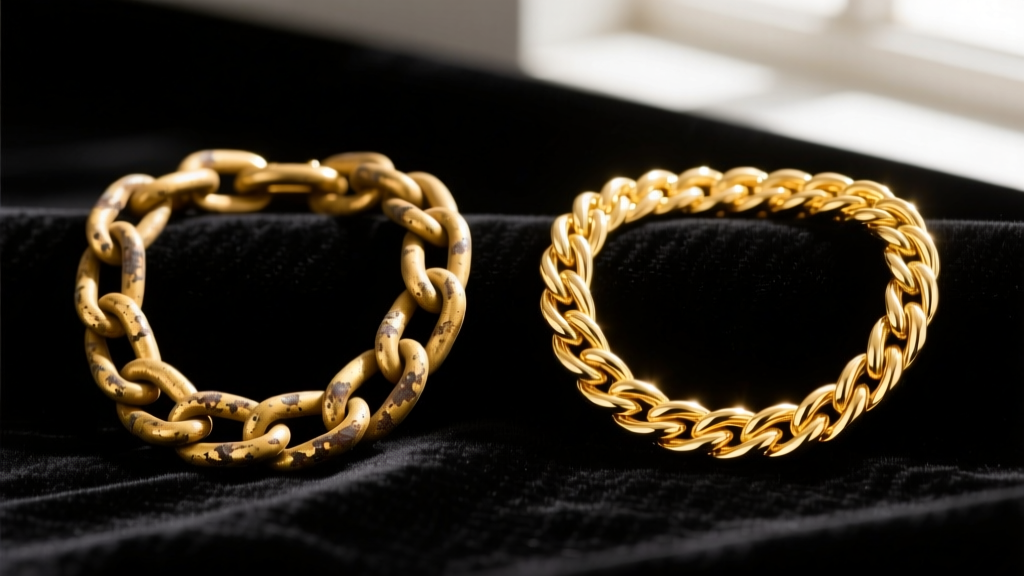
Pearl Varieties: Matching Nacre Quality to Your Gold
The pearl is the focal point of the necklace, but not all pearls are created equal. The GIA's Pearl Quality Guidelines emphasize nacre thickness as the primary determinant of a pearl's durability and optical performance. When pairing a pearl with a gold chain, you must match the pearl's structural integrity to the chain's weight and intended use.
Freshwater vs. Akoya vs. South Sea
Freshwater Pearls: Modern tissue-nucleated freshwater pearls are often solid nacre, making them incredibly durable against chipping. However, they typically lack the sharp, mirror-like luster of saltwater varieties. They pair beautifully with 14K gold chains for affordable, high-durability everyday necklaces.
Akoya Pearls: The gold standard for classic elegance. Akoya pearls possess a nacre thickness ranging from 0.5mm to 1.0mm over a mother-of-pearl bead nucleus. Their exceptional luster is best showcased on delicate 18K gold chains, where the rich yellow hue of the gold reflects off the pearl's surface, enhancing its orient.
South Sea Pearls: Boasting a massive nacre thickness of 2.0mm to 4.0mm, these pearls are large, heavy, and feature a soft, satiny luster. Because of their weight (often exceeding 15 grams per pearl), they require heavy-gauge gold chains (16-gauge or thicker) to prevent the chain from stretching or snapping under the pendant's load.
Expert Insight: Never pair a heavy South Sea pearl with a lightweight 22-gauge gold chain. The dynamic stress of the pearl swinging during walking will cause work-hardening in the gold links, leading to sudden, catastrophic tensile failure.
The Hidden Failure Modes: Where Necklaces Break
When a gold chain pearl necklace fails, it rarely breaks in the middle of a solid gold link. Failures occur at the structural intersections where organic and inorganic materials meet.
1. The Drill Hole and Bail Friction
If your pearl is top-drilled and hangs from a gold wire bail, the friction between the gold wire and the inside of the pearl's drill hole can slowly widen the hole. Over a decade, a 1.5mm drill hole can expand to 2.0mm, compromising the pearl's structural integrity and causing it to crack under minor impacts.
2. Silk Thread Rot in Knotted Designs
Some gold chain pearl necklaces feature a short strand of knotted pearls attached to a gold chain via jump rings. If traditional silk thread is used, exposure to humidity, perfume, and sweat causes the silk to rot and lose tensile strength within 24 to 36 months. Always opt for synthetic, marine-grade nylon threads like PowerPro for mixed-material designs.
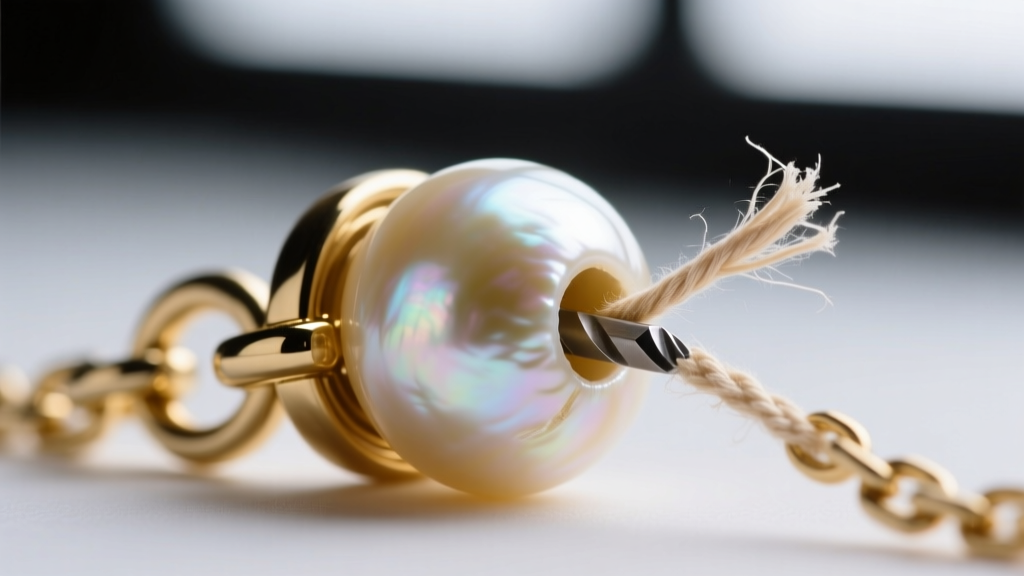
3. Galvanic Corrosion at the Clasp
If a gold chain is paired with a base-metal pearl clasp (such as brass or copper disguised with a thin gold wash), exposure to saltwater or sweat creates a galvanic cell. The less noble metal (the clasp) will rapidly corrode, snapping the necklace. Always ensure the clasp, jump rings, and chain are of the exact same karat purity.
Care and Maintenance Protocols for Dual-Material Jewelry
Cleaning a gold chain pearl necklace requires navigating a minefield of incompatible chemical treatments. What cleans gold will destroy a pearl, and what cleans a pearl will tarnish gold.
- Never Use Ultrasonic Cleaners: The high-frequency cavitation bubbles in ultrasonic cleaners will shatter the crystalline aragonite structure of the pearl, causing the nacre to peel or craze.
- Avoid Commercial Gold Dips: Acidic gold cleaning solutions will strip the pearl's luster and eat into the calcium carbonate matrix.
- The Microfiber Protocol: After every wear, gently wipe the pearl with a damp, untreated microfiber cloth to remove skin oils. Use a separate, dry jewelry polishing cloth treated with mild jeweler's rouge to buff only the gold chain links, carefully avoiding contact with the pearl.
Expert Verdict: Building Your Investment Piece
The perfect gold chain pearl necklace is an exercise in material harmony. For a daily-wear piece that can withstand the rigors of modern life, select a 14K solid gold cable chain paired with a high-grade, solid-nacre freshwater pearl or a thick-nacred Akoya. Secure the pearl with fixed silicone O-rings to prevent micro-abrasion from sliding.
For an heirloom investment or formal statement piece, elevate to an 18K gold rope or box chain featuring a lustrous South Sea pearl, ensuring the chain gauge is thick enough to support the gemstone's mass without work-hardening. By respecting the distinct physical properties of both gold and pearl, you ensure your necklace remains a flawless, enduring staple in your collection for decades to come.


