Gold Chevron Necklace Guide: Comparing Karats & Alloys
Discover how to choose the best gold chevron necklace by comparing 10k, 14k, 18k, and gold-filled alloys for durability, color, and vertex strength.

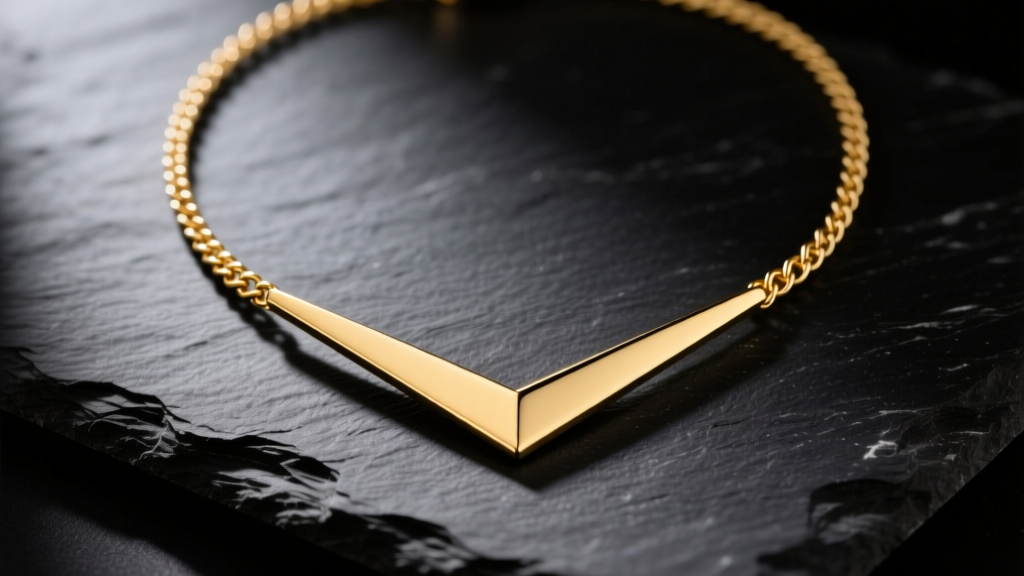
The geometric elegance of a gold chevron necklace makes it a staple in modern jewelry layering and minimalist styling. However, the distinctive V-shape is not merely an aesthetic choice; it presents a unique structural challenge. The sharp vertex at the bottom of the pendant acts as a natural stress concentrator. When subjected to the daily tension of wearing, snagging, or layering, the material properties of the gold alloy dictate whether the chevron will maintain its crisp lines or succumb to bending, warping, or the dreaded 'vertex snap.'
Choosing the right metal grade requires balancing color warmth, budget, and metallurgical hardness. In this comprehensive guide, we break down the material properties of solid gold karats, gold-filled alternatives, and vermeil, providing a data-driven framework to help you select a chevron necklace that will endure.
The Anatomy of a Chevron: Why Material Properties Matter
Unlike circular or oval pendants that distribute kinetic energy evenly, a chevron pendant funnels physical stress directly into its lowest point—the vertex. The durability of this focal point depends heavily on two factors: the alloy's Vickers Hardness (HV) and the manufacturing method used to create the piece.
Stamped vs. Cast Chevrons
Before evaluating the karat, it is crucial to understand how the chevron was formed. Cast chevrons are created by pouring molten gold into a mold. The sharp V-corner is notoriously difficult to cast perfectly; it often traps microscopic gas bubbles or cools at an uneven rate, leading to crystalline porosity right at the vertex. Stamped chevrons, on the other hand, are die-cut from a continuously rolled sheet of gold. This process aligns the metal's grain structure, resulting in a significantly higher tensile strength and a vertex that is highly resistant to snapping. When shopping for a delicate gold chevron necklace, always inquire if the piece is stamped or cast.
Solid Gold Karats Compared: 10k vs. 14k vs. 18k
Pure 24k gold is far too soft (approx. 25-30 HV) for jewelry, meaning it would bend out of shape under its own weight. Therefore, gold is alloyed with metals like copper, silver, zinc, and nickel to increase durability. According to the Gemological Institute of America (GIA), the ratio of these alloying metals drastically alters the pendant's structural integrity and color profile.
| Karat | Gold Purity | Approx. Hardness (HV) | Vertex Durability | Color Profile | Avg. Price Range |
|---|---|---|---|---|---|
| 10k Gold | 41.7% | 160 - 180 HV | Exceptional (Highly rigid) | Pale, slightly brassy yellow | $80 - $180 |
| 14k Gold | 58.3% | 130 - 150 HV | Optimal (Strong yet workable) | Warm, classic yellow | $150 - $450 |
| 18k Gold | 75.0% | 110 - 125 HV | Moderate (Prone to micro-bending) | Deep, rich buttery yellow | $350 - $900+ |
The 14k Sweet Spot: For a gold chevron necklace, 14k gold is widely considered the metallurgical sweet spot. It provides enough hardness to keep the V-shape perfectly rigid when paired with a lightweight chain, while retaining the rich, hypoallergenic yellow hue that gold lovers desire. 18k gold is luxurious but requires a thicker gauge (at least 1.2mm) at the vertex to prevent warping over time.
The Verdict on Alternatives: Gold-Filled vs. Vermeil
If solid gold falls outside your budget, the market offers two primary alternatives. However, their structural viability for a chevron pendant varies wildly.
Gold-Filled (The Budget Champion)
The Federal Trade Commission (FTC) strictly regulates the term 'gold-filled.' By law, a gold-filled item must have a solid gold layer that constitutes at least 1/20th (5%) of the total weight of the metal, mechanically bonded to a brass or copper core under extreme heat and pressure. Because the outer layer is typically 12k or 14k solid gold, a gold-filled chevron necklace offers nearly identical surface durability and tarnish resistance to solid gold. The brass core also provides excellent rigidity, making it highly resistant to vertex bending. Expect to pay between $45 and $95 for a high-quality gold-filled chevron.
Gold Vermeil (The Delicate Option)
Vermeil (pronounced ver-may) consists of a sterling silver base plated with a minimum of 2.5 microns of gold (usually 14k or 18k). While sterling silver is a premium base metal, it is inherently softer and more prone to oxidation than the brass used in gold-filled pieces. If a vermeil chevron necklace is subjected to heavy layering or frequent friction, the gold plating at the high-contact vertex will eventually wear away, revealing the bright silver beneath. Vermeil is best reserved for occasional wear or lightweight, minimalist chevron designs.
Chain Pairings: Matching Weight and Tensile Strength
A chevron pendant is only as strong as the chain that supports it. The geometry of the V-shape requires a chain that allows the pendant to lay flat without twisting, which can induce torque on the bail (the loop connecting the pendant to the chain).
- Box Chains: The flat, interlocking square links of a box chain provide a stable, non-twisting foundation. This is the ideal pairing for medium-to-large stamped chevrons, as the chain's rigidity mirrors the geometric lines of the pendant.
- Cable Chains: The classic oval-link cable chain offers excellent flexibility and allows small, delicate chevrons to glide freely. However, ensure the wire gauge is at least 0.8mm to support the pendant's weight without stretching.
- Snake Chains: While visually sleek, snake chains are tightly wound and prone to kinking. They are generally not recommended for chevron pendants, as the stiff nature of the chain can force the chevron to sit at an awkward angle, putting lateral stress on the bail.
Maintenance and Failure Modes: Preventing the 'Chevron Snap'
Even the most robust 14k gold chevron necklace requires specific care to maintain its structural integrity over decades of wear. The most common failure mode is 'metal fatigue' at the vertex, caused by repetitive micro-bending.
Expert Troubleshooting Tip: If you notice your chevron pendant losing its sharp 45-degree angles and bowing outward, do not attempt to bend it back into shape with your fingers. Repeated manual bending work-hardens the gold alloy, making it brittle and guaranteeing a future snap. Instead, take it to a professional jeweler who can use a soft-jawed mandrel and a rawhide mallet to gently reshape the metal without compromising its crystalline structure.
To prevent premature wear, always remove your chevron necklace before sleeping. The lateral pressure of rolling over in bed is the primary culprit for bent vertices and stretched bail loops. Furthermore, store the necklace flat or hanging; tossing it into a jewelry box can cause the sharp points of the chevron to scratch softer gemstones or become tangled in other chains.
Final Sizing and Layering Framework
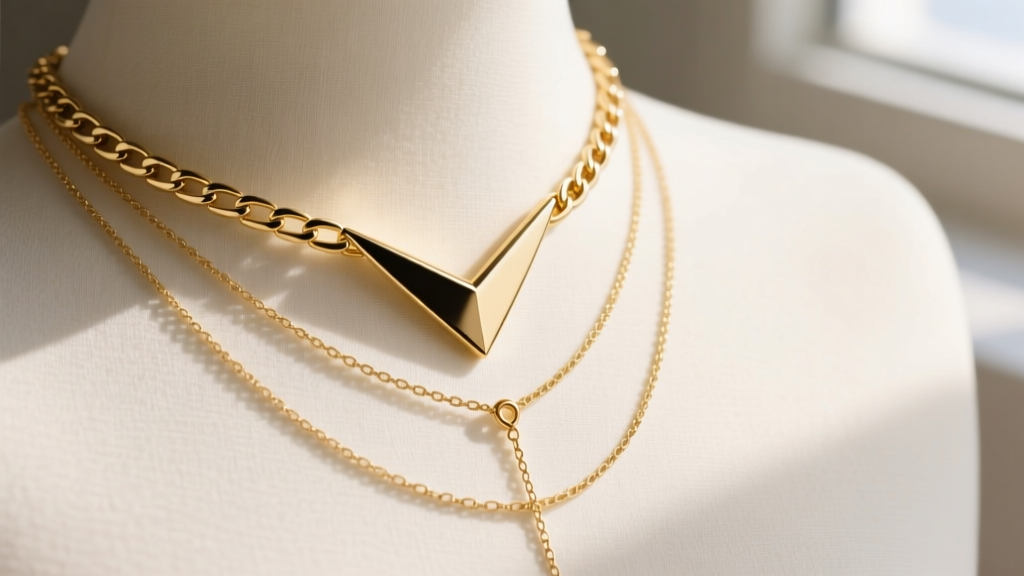
When integrating a gold chevron necklace into a curated stack, the length of the chain dictates the visual impact of the V-shape. A 16-inch choker-length chain forces the chevron to sit high on the clavicle, creating a wide, shallow 'V' that broadens the appearance of the neckline. Conversely, an 18-inch or 20-inch chain allows the pendant to rest lower, elongating the neck and creating a sharper, more dramatic arrow-like silhouette.
For a flawless layered look, pair a 16-inch solid 14k gold chevron on a delicate cable chain with an 18-inch gold-filled lariat or a 20-inch snake chain featuring a small diamond solitaire. By understanding the metallurgical properties, manufacturing methods, and structural demands of the chevron shape, you can confidently invest in a piece that offers both striking geometry and lifelong durability.


