The Ultimate Care Guide for a Gold Filled Charm Necklace
Learn how to clean, store, and maintain your gold filled charm necklace. Expert tips on preventing tarnish and protecting delicate charm details.

Understanding the Metallurgy of Your Gold Filled Charm Necklace
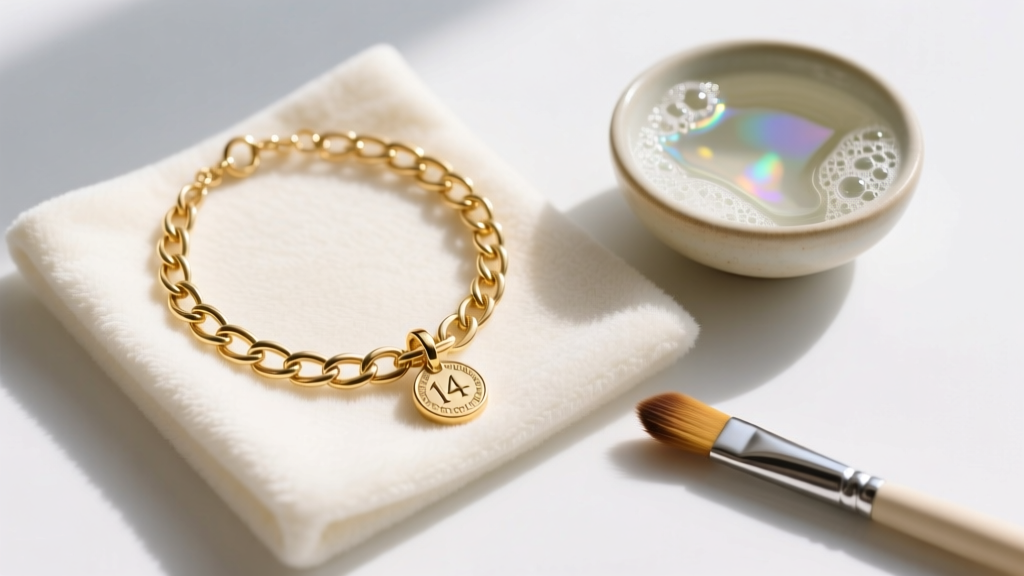
To properly care for a gold filled charm necklace, you must first understand its unique metallurgical construction. Unlike gold-plated jewelry, which features a microscopic layer of gold applied via electroplating, gold-filled (GF) jewelry is created through a mechanical bonding process. According to the Federal Trade Commission (FTC) Jewelry Guides, an item must contain at least 5% (or 1/20th) of its total weight in 14k or 12k gold to be legally stamped as 'gold filled'. This thick outer layer of karat gold is heat- and pressure-bonded to a core metal, which is almost always jeweler's brass (an alloy of roughly 70% copper and 30% zinc).
This construction makes your necklace highly durable and resistant to everyday wear, but it is not invincible. The primary vulnerability lies in the charm details and mechanical connections. Deep scratches, friction from jump rings, or exposure to harsh chemicals can wear through the 0.05-micron to 0.1-micron gold layer, exposing the brass core beneath. Once exposed, the copper in the brass reacts with sulfur and moisture in the air, leading to localized tarnish and the dreaded 'green skin' effect.
Daily Wear Rules and Preventative Maintenance
Prevention is vastly superior to restoration when it comes to gold-filled metals. Human sweat has a pH ranging from 4.5 to 7.0, and when mixed with the lactic acid and salts naturally produced by your body, it can slowly degrade the gold layer over time, especially in high-friction areas like the clasp and charm bail.
- The 'Last On, First Off' Rule: Always put your necklace on after applying perfumes, lotions, sunscreens, and hairspray. The alcohols and emulsifiers in cosmetics can create a cloudy film on textured charms and degrade the metal over time.
- Avoid Chlorine and Saltwater: Never wear your necklace in swimming pools or the ocean. Chlorine is highly reactive and can cause microscopic pitting in the gold layer, while saltwater accelerates the oxidation of the brass core if any micro-abrasions exist.
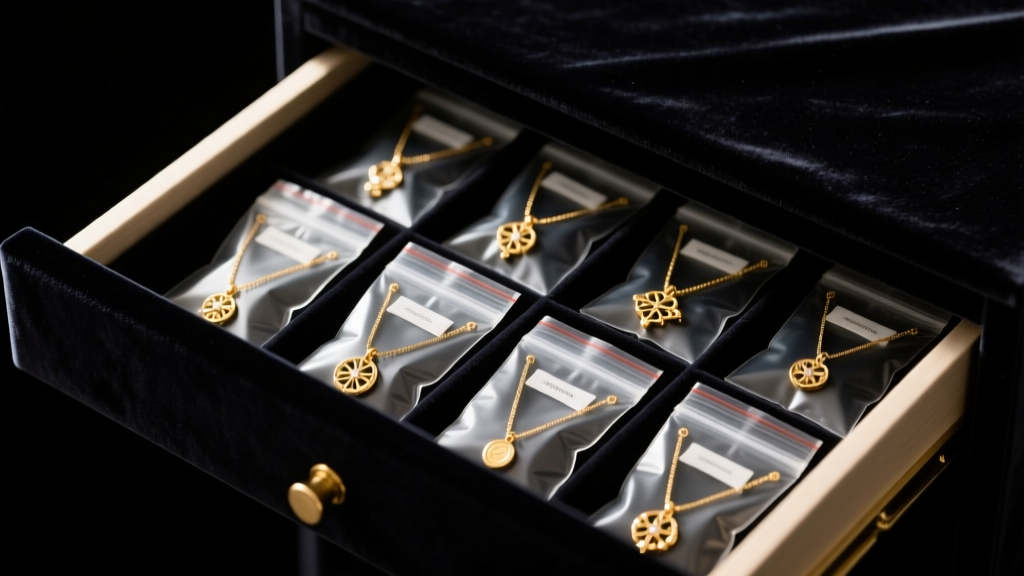
- Proper Storage Metrics: Store your necklace in an airtight polyethylene ziplock bag. Include a 3M anti-tarnish strip, which absorbs sulfur compounds from the trapped air. Keep the storage environment below 50% relative humidity to prevent moisture-induced oxidation.
The Step-by-Step Cleaning Protocol for Textured Charms
Charms with intricate textures, stamped letters, or milgrain edges are notorious for trapping sebum, dead skin cells, and environmental dust. This buildup not only dulls the sparkle of the gold but can also trap moisture against the metal, accelerating tarnish. Follow this precise cleaning protocol every 3 to 4 weeks:
- Prepare the Solution: Fill a small glass bowl with lukewarm water (around 85°F or 29°C). Add two drops of a phosphate-free, mild dish soap (like Dawn or a dedicated jewelry wash). Avoid hot water, which can expand micro-fractures in any gemstone accents on the charms.
- The Brief Soak: Submerge the necklace for exactly 3 to 5 minutes. This softens the sebum and debris trapped in the charm crevices without risking prolonged water exposure to the mechanical joints.
- Targeted Agitation: Using an extra-soft baby toothbrush (the bristles must be feather-soft to avoid micro-scratching the 14k gold layer), gently brush the textured areas of the charms. Brush in a single direction rather than in circles to prevent swirling marks.
- The Distilled Rinse: Rinse the necklace under a gentle stream of distilled water. Tap water contains dissolved minerals like calcium and magnesium that will leave hard water spots on the gold surface as it dries.
- Thorough Drying: Pat the necklace dry with a lint-free microfiber cloth. Use a wooden toothpick wrapped in a microfiber tip to gently absorb moisture from deep charm crevices and the inside of the jump rings. Never use paper towels, as their wood pulp fibers will cause microscopic scratches.
Chemical Compatibility: What to Use and What to Avoid
The internet is full of DIY jewelry cleaning hacks that are actively destructive to gold-filled metals. Because the gold layer is bonded to a brass core, treating a gold-filled piece like solid gold or sterling silver will ruin it. Refer to the compatibility chart below before applying any substance to your necklace.
| Cleaning Agent | Safe for GF? | Scientific Reasoning |
|---|---|---|
| Mild Dish Soap | Yes | Neutral pH degreases oils without stripping the mechanically bonded gold layer. |
| Baking Soda Paste | No | Highly abrasive. Scratches the 14k gold layer, exposing the brass core to oxidation. |
| Silver Dip / Gold Dip | No | Contains harsh thiourea chemicals that strip the gold bond and cause immediate dulling. |
| Ultrasonic Cleaners | Caution | Safe for plain chains, but high-frequency vibrations will shatter enamel or loosen gemstone settings on charms. |
| Isopropyl Alcohol | Spot Only | Safe for sanitizing the clasp, but prolonged exposure dries out porous gemstones (like pearls or turquoise) often found on charms. |
Inspecting Mechanical Connections: Jump Rings and Clasps
The most common point of failure and tarnish on a gold filled charm necklace is the hardware. Charms are typically attached to the chain via jump rings. If your necklace uses split jump rings (which have a tiny gap to allow the charm to slide on), that gap is a prime trap for lotion and sweat.
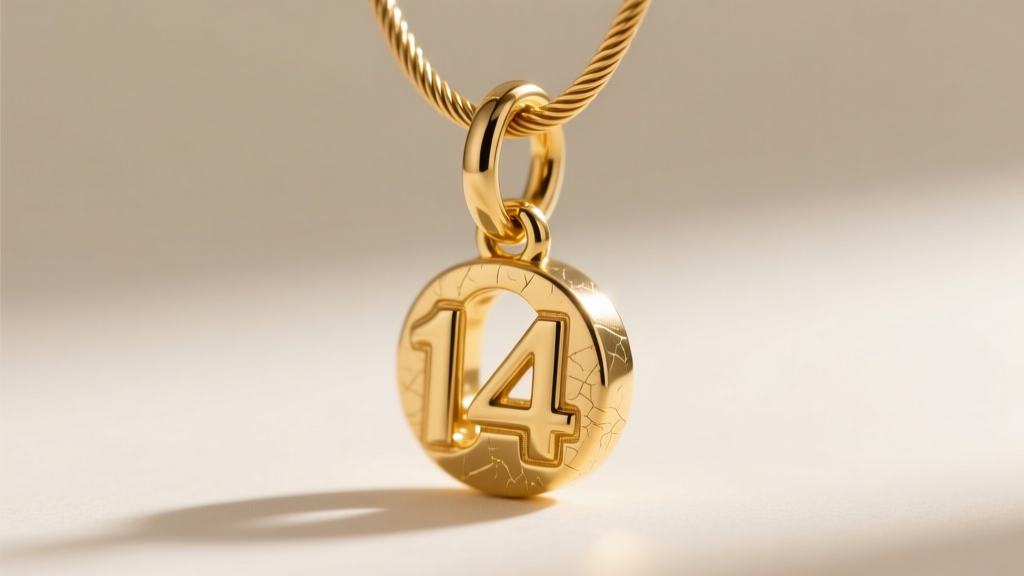
During your cleaning routine, pay special attention to the inside of the lobster clasp and the spring ring. The internal steel spring inside a gold-filled clasp is usually made of base metal or stainless steel. If moisture gets trapped inside the clasp mechanism, it can rust, causing the clasp to stick or snap. To prevent this, always blow compressed air (from a safe distance) or use a hair dryer on the 'cool' setting to ensure the inside of the clasp is 100% dry before storing the necklace.
Troubleshooting: Tarnish, Green Skin, and Loose Charms
Even with meticulous care, issues can arise. Here is how to troubleshoot the most common problems associated with gold-filled charm necklaces, drawing on best practices outlined by the Gemological Institute of America (GIA) regarding gold alloys and metal care.
1. Localized Dark Tarnish Spots
If you notice a dark, almost black spot on the edge of a charm or near the clasp, the brass core has been exposed and has oxidized. Do not use silver polish. Instead, use a specialized brass polishing cloth (like a Sunshine cloth) to gently buff the exact spot. The mild polishing compound will remove the copper oxide. Once the tarnish is gone, apply a microscopic layer of clear jeweler's wax or Renaissance Wax to seal the exposed brass from the air.
2. The 'Green Skin' Reaction
If your neck turns green, it is not a sign of 'fake' gold; it is a chemical reaction between the acidic salts in your sweat and the exposed copper in the brass core, usually occurring at the back of the charms or the clasp. To fix this, clean the necklace thoroughly, dry it completely, and apply a thin coat of clear nail polish or a specialized jewelry shield to the back of the charms and the clasp. Reapply this barrier every few months.
3. Loose or Spinning Charms
If a charm is spinning wildly or hanging at an awkward angle, the bail (the loop connecting the charm to the jump ring) may have bent. Use two pairs of smooth-jawed nylon pliers to gently squeeze the bail back into a uniform oval shape. Never use serrated metal pliers, as they will instantly bite through the gold-filled layer and leave permanent, tarnish-prone gouges in the metal.
By respecting the unique metallurgy of your gold filled charm necklace and adhering to these precise maintenance protocols, you can preserve its brilliant 14k luster and intricate charm details for decades of daily wear.


