The Anatomy of a Gold Floating Heart Necklace: An Expert Guide
Discover the technical engineering, gold alloy grades, and chain mechanics behind the perfect gold floating heart necklace in this expert guide.

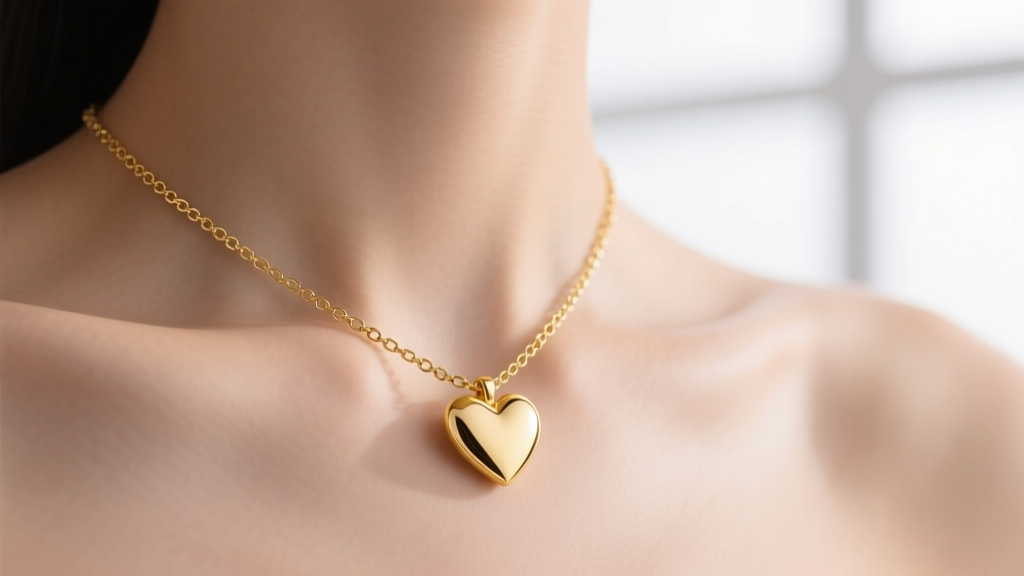
The gold floating heart necklace is a masterclass in minimalist jewelry design, relying on optical illusions and precision micro-engineering to create the appearance of a solitary heart resting directly on the skin. While the aesthetic is undeniably romantic, the structural reality of these pieces demands rigorous technical scrutiny. As a domain expert, I frequently see consumers purchase these necklaces based solely on visual appeal, only to experience premature chain snapping, clasp failure, or pendant spinning. This deep dive dissects the metallurgical choices, tension mechanics, and structural failure points inherent in the modern gold floating heart necklace, providing you with the actionable data needed to make an informed, high-value purchase.
The Engineering Behind the Illusion
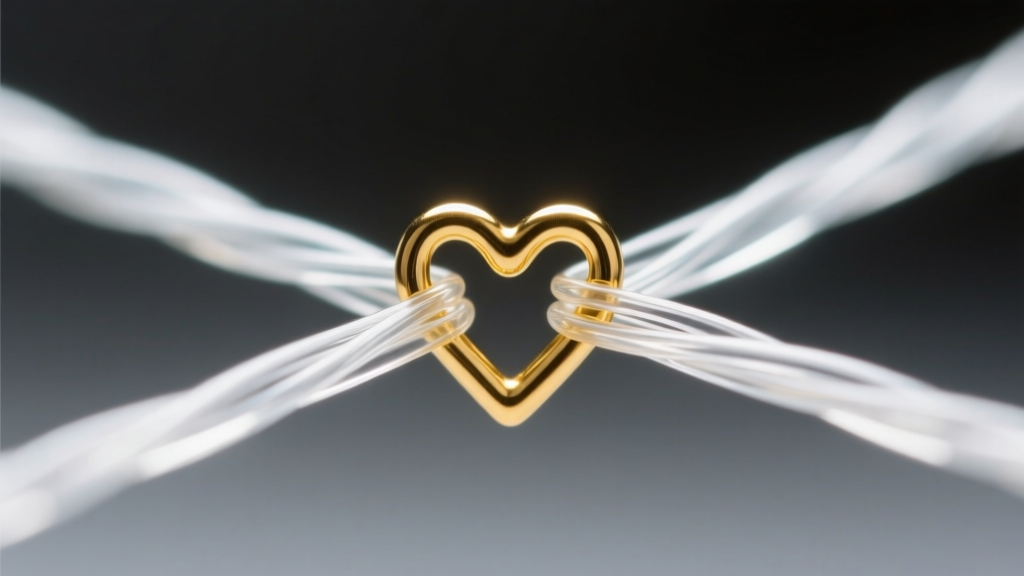
To achieve the 'floating' effect, jewelers historically relied on invisible illusion wire. Today, the engineering has bifurcated into two distinct structural pathways: fluorocarbon monofilament and ultra-fine micro-cable chains. Understanding the difference is critical for assessing the longevity of your jewelry.
Fluorocarbon Monofilament vs. Micro-Cable
Traditional illusion wires are crafted from extruded fluorocarbon or polyamide. High-end jewelers often utilize specialized fluorocarbon lines with a refractive index of approximately 1.42, which closely mimics the refractive properties of water and skin oils, rendering the wire nearly invisible under ambient light. However, fluorocarbon is susceptible to UV degradation and lipid absorption. Over 18 to 24 months of daily wear, the wire will inevitably yellow and become brittle, leading to catastrophic tensile failure.
The superior modern alternative is the micro-cable or micro-box chain, typically measuring between 0.4mm and 0.6mm in diameter. By utilizing a matte or sandblasted finish on the gold links, manufacturers reduce the chain's light reflectivity. This tricks the eye into ignoring the chain while providing the structural integrity of solid metal. According to the World Gold Council, advancements in micro-drawing dies have allowed for the creation of 0.3mm gold chains that retain enough tensile strength to support pendants weighing up to 2.5 grams.
Gold Purity and Alloy Selection for Tension Mechanics
The karat weight of the gold used in a floating heart necklace is not merely a matter of color or prestige; it dictates the structural viability of the micro-solder joints and the pendant's resistance to deformation. The heart pendant itself is usually stamped from a single sheet of gold or cast via lost-wax casting, but the connection points endure immense localized stress.
| Gold Alloy | Vickers Hardness (HV) | Tensile Strength | Suitability for Floating Mechanisms |
|---|---|---|---|
| 14k Yellow Gold | 120 - 140 HV | High | Excellent. Ideal for micro-clasps and high-stress solder joints. Resists bending. |
| 18k Yellow Gold | 110 - 125 HV | Medium-High | Very Good. The luxury standard. Offers rich color but requires slightly thicker gauge wire for structural parity. |
| 22k Yellow Gold | 70 - 90 HV | Low | Poor. Too malleable. Micro-solder joints will pull apart under the dynamic tension of a floating pendant. |
As noted by the Gemological Institute of America (GIA), the alloying metals (copper, silver, zinc) introduced to create 14k and 18k gold fundamentally alter the metal's crystalline lattice. For a floating heart necklace, where the pendant is often suspended by a single micro-soldered jump ring or a tension-set track, 14k or 18k gold is mandatory. 22k gold, while prized in certain cultural markets, will deform under the kinetic energy generated by the wearer's movement, eventually causing the heart to slip off its suspension axis.
Chain Gauge, Clasp Mechanics, and Failure Points
The most common point of failure in any fine chain necklace is the clasp. When dealing with chains under 0.8mm, the hardware must be miniaturized, which introduces severe mechanical vulnerabilities.
The Spring Ring Problem
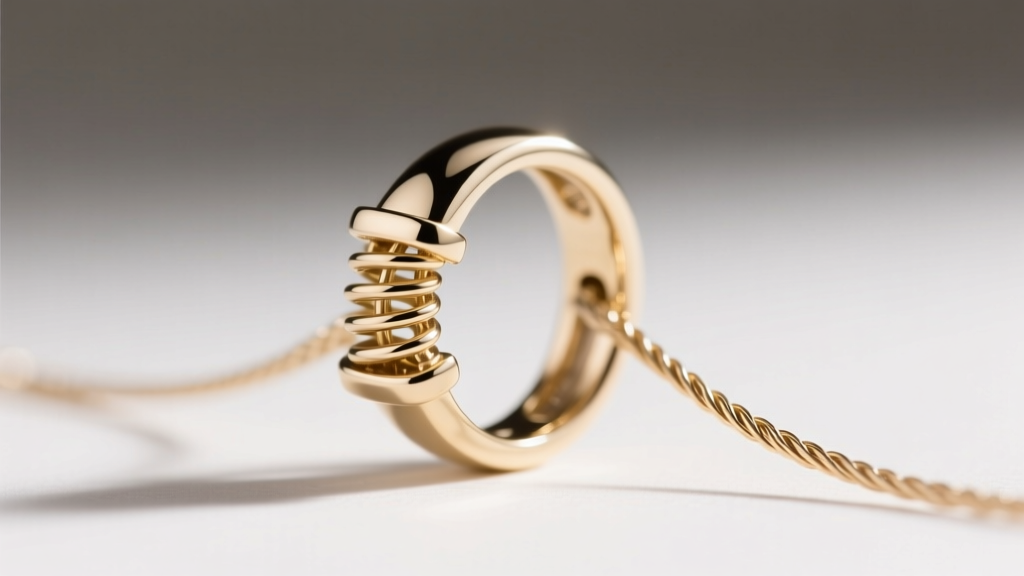
Most mass-market floating heart necklaces utilize a 5mm or 6mm spring ring clasp. Inside this tiny sphere is a microscopic steel or gold tension spring. When exposed to cosmetics, perfumes, and natural skin oils, this internal spring frequently calcifies or corrodes, resulting in a clasp that fails to snap shut. Furthermore, the hollow nature of budget spring rings makes them prone to crushing if the chain is snagged.
The Expert Solution: Neodymium Magnetic Clasps
For chains ranging from 0.4mm to 0.7mm, the optimal technical solution is a micro-magnetic clasp housing an N52 grade neodymium magnet. N52 is the highest commercially available grade of neodymium, providing a shear force strong enough to hold the necklace securely during normal wear, while allowing the wearer to easily detach the chain without picking at a microscopic spring ring lever. High-end manufacturers encase these magnets in 14k or 18k gold sleeves with a secondary safety catch (a tiny figure-eight lever) to prevent accidental detachment if the magnetic field is disrupted.
Gemstone Integration: Maintaining the Silhouette
When diamonds or colored gemstones are introduced to a floating heart, the setting technique must preserve the delicate silhouette of the piece. Traditional prong settings add bulk and catch on clothing, defeating the purpose of a seamless 'floating' aesthetic.
- Micro-Pavé: Stones under 1.5mm are set using micro-beads of gold pushed over the girdle. This requires a heart face of at least 8mm to prevent the metal from warping during the setting process.
- Flush / Gypsy Setting: The stone is embedded directly into the gold face. This is the most durable option for daily wear, as the diamond's table is level with the gold surface, eliminating snag points.
- Bezel Setting: A single solitaire diamond (typically 0.05ct to 0.10ct) is wrapped in a continuous rim of gold. While secure, it adds visual weight, which can cause the pendant to spin if the chain is too flexible.
Pricing Tiers and Value Assessment
Evaluating the price of a gold floating heart necklace requires looking past the brand name and analyzing the raw material weight and engineering complexity.
'A consumer should expect to pay a premium not for the gold weight—which is often less than 1.5 grams in these delicate pieces—but for the micro-soldering labor and the precision of the chain drawing.' — Master Bench Jeweler Assessment
Mass Market ($150 - $400): Typically features 10k or 14k gold, hollow spring ring clasps, and nylon illusion wire that will require replacement within two years. The hearts are often stamped from thin 0.3mm sheet metal, making them prone to denting.
Fine Jewelry ($500 - $1,500): Solid 14k or 18k gold, micro-box chains (0.5mm), and secure lobster or magnetic clasps. Gemstones are ethically sourced and flush-set. This is the sweet spot for durability and aesthetic value.
Haute Joaillerie ($2,000+): Features custom alloy formulations for specific color tones, hand-forged chains, and invisible tension settings that require hundreds of hours of bench labor.
Expert Maintenance Protocols
To ensure the longevity of your gold floating heart necklace, implement the following maintenance protocols:
- Ultrasonic Avoidance: Never place a necklace with fluorocarbon illusion wire or micro-magnetic clasps in an ultrasonic cleaner. The high-frequency vibrations will shatter the internal magnets and degrade the polymer wire.
- Chemical Isolation: Apply all perfumes, hairsprays, and lotions at least 15 minutes before donning the necklace. The alcohol and emulsifiers in cosmetics rapidly break down the protective rhodium plating on white gold variants.
- Storage Tension: Store the necklace flat or hanging with a slight weight at the bottom to maintain the memory of the chain links. Coiling ultra-fine micro-cable chains tightly in a box will introduce micro-kinks that are nearly impossible for a jeweler to remove without snapping the links.
By understanding the metallurgical and mechanical realities of the gold floating heart necklace, you transition from a passive consumer to an informed collector. Prioritize structural integrity, demand high-quality clasp mechanics, and select the appropriate gold alloy to ensure your piece remains a timeless, floating masterpiece for decades to come.


