Evaluating Gold Necklace Chains: Budget & Value Guide
Discover if solid gold necklace chains are worth the investment. Compare hollow, gold-filled, and solid options with 2026 pricing and value metrics.

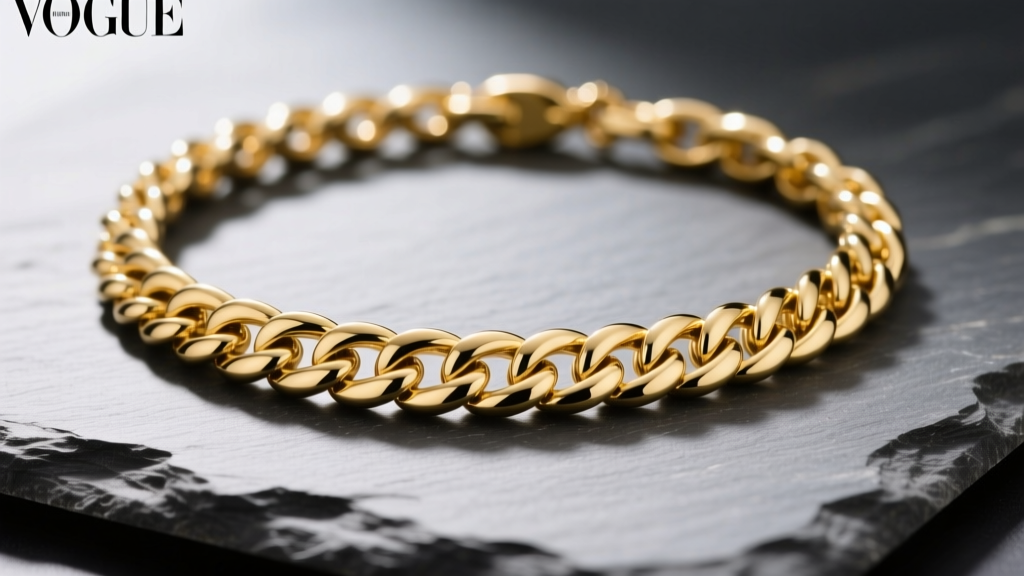
As gold spot prices continue their upward trajectory in 2026, consumers and collectors alike are scrutinizing their jewelry purchases with a more analytical eye. When evaluating necklace chains, the dilemma is no longer just about aesthetics; it is a rigorous exercise in budget and value assessment. Should you invest $3,500 in a solid 14k gold Cuban link, or does a $180 heavyweight gold-filled alternative offer a comparable drape and lifespan? Furthermore, the structural integrity of necklace clasps and the long-term requirements of necklace care play massive roles in the true cost of ownership.
In this comprehensive value assessment, we strip away the marketing fluff and examine the metallurgical, structural, and economic realities of buying gold chains today. Whether you are looking at delicate cable chains for pendants or heavy rope chains for standalone wear, understanding the cost-per-wear and repairability metrics is essential for making a financially sound decision.
The Anatomy of Chain Construction: Solid vs. Hollow vs. Layered
To accurately assess value, you must first understand how the chain is manufactured. The physical construction dictates not only the initial price but the chain's tensile strength, susceptibility to kinking, and ultimate lifespan.
Solid Gold Chains
Solid chains are crafted from fully dense wire that is drawn, cut, and linked. Because the metal is uniform throughout, these chains possess high tensile strength and can withstand daily friction. According to the Gemological Institute of America (GIA), the alloy mix in 14k solid gold (58.3% pure gold mixed with copper, silver, and zinc) provides an optimal balance of rich color and structural durability, making it the benchmark for fine jewelry investments.
Hollow and Electroformed Chains
Hollow chains are manufactured using a base metal core that is later dissolved in acid (electroforming) or by folding thin sheets of gold into tubing. They offer the voluminous look of a heavy chain at a fraction of the gram weight. However, they are notoriously fragile. Once a hollow link is crushed or dented, it is virtually impossible for a bench jeweler to reshape or solder without collapsing the surrounding links.
Gold-Filled and Vermeil (Layered Options)
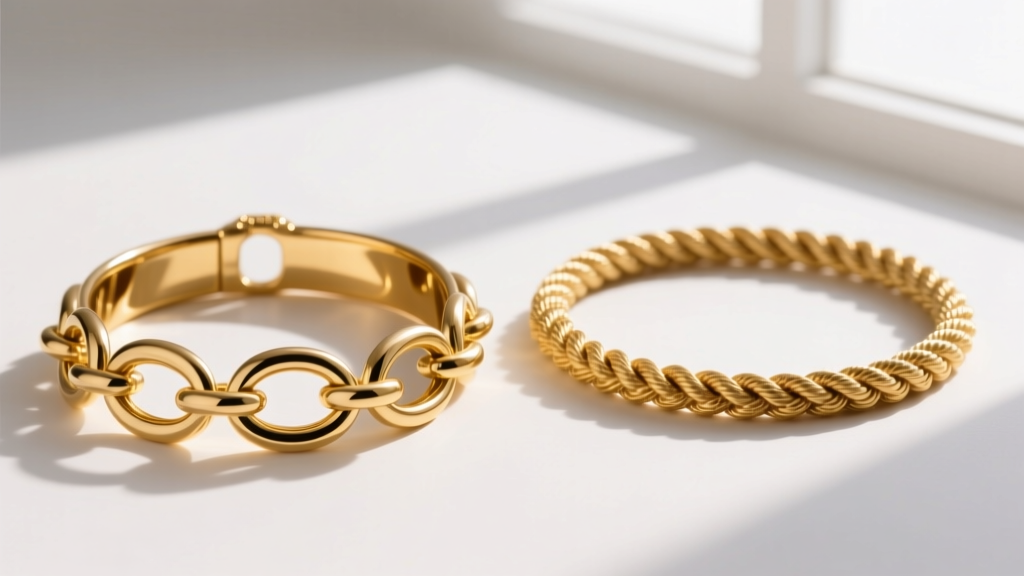
For budget-conscious buyers, layered metals are the primary alternative to solid gold. It is crucial to understand the legal definitions enforced by the Federal Trade Commission (FTC):
- Gold-Filled: Must contain a layer of 10k, 12k, or 14k gold that constitutes at least 1/20th (5%) of the total weight of the metal product. It is mechanically bonded to a brass core, offering exceptional durability that can last decades with proper care.
- Gold Vermeil: Must be a sterling silver base coated with a minimum of 2.5 microns of fine gold. While more valuable than standard gold-plated brass, the thin gold layer will eventually wear through with heavy daily friction.
The 2026 Market Pricing Matrix: What You Should Actually Pay
Retail pricing for solid gold chains is typically calculated using a "melt multiplier." This multiplier accounts for the cost of the raw gold, plus the labor, machinery, and retail overhead required to craft the links. In 2026, with 14k scrap gold hovering around $42 per gram, machine-made chains generally carry a 2.5x to 3.5x multiplier, while complex, hand-assembled chains can reach 5x to 8x.
Below is a realistic pricing matrix comparing common chain styles across different material grades. These estimates reflect a standard 18-inch length.
| Chain Style | Weight (g) | 14k Gold-Filled (Est.) | 14k Solid (Machine-Made) | 14k Solid (Hand-Finished) |
|---|---|---|---|---|
| Cable (1.5mm) | 3.5g | $45 - $65 | $160 - $220 | $280 - $350 |
| Curb (4.0mm) | 12.0g | $110 - $150 | $550 - $700 | $850 - $1,100 |
| Figaro (5.0mm) | 18.5g | $160 - $210 | $850 - $1,050 | $1,400 - $1,800 |
| Rope (6.0mm) | 32.0g | $240 - $320 | $1,500 - $1,900 | $2,500 - $3,200 |
| Cuban Link (10.0mm) | 65.0g | $380 - $500 | $3,100 - $3,800 | $5,500 - $7,500 |
Bench Jeweler Insight: "When clients bring in a heavy Cuban link chain for appraisal, the first thing I check is the interior of the links. Many budget brands use semi-solid or 'puffed' links to reduce gram weight while maintaining the visual width. A true solid 10mm Cuban should feel exceptionally dense and cold to the touch."
Metallurgy, Clasps, and the Weakest Link
A chain is only as strong as its weakest component, which is almost always the clasp and the accompanying jump rings. When assessing the value of a necklace, inspect the necklace clasps closely.
Spring Ring vs. Lobster Claw
Delicate chains (under 2.0mm) typically use spring ring clasps. While inexpensive, the internal steel spring can rust if exposed to moisture, and the thin gold casing is prone to snapping under tension. Lobster claw clasps are vastly superior for chains over 3.0mm. However, not all lobster clasps are created equal. Cast lobster clasps are brittle and can snap under sudden lateral force, whereas stamped and folded lobster clasps offer superior structural integrity.
The Soldered Jump Ring
The jump ring connecting the chain to the clasp must be soldered shut. If you see a tiny slit where the jump ring closes, it is an open ring. Over time, the friction of the clasp moving against an unsoldered jump ring will act like a saw, eventually cutting through the metal and resulting in a lost chain and pendant. Always factor the $15-$30 cost of having a jeweler laser-solder open jump rings into your initial budget assessment.
Repairability and Longevity Metrics
True value in jewelry is intrinsically tied to repairability. The Jewelers of America organization frequently highlights that the inability to repair a piece is the primary reason it ends up in a landfill or melted down for scrap.
Laser Welding vs. Traditional Torch Soldering
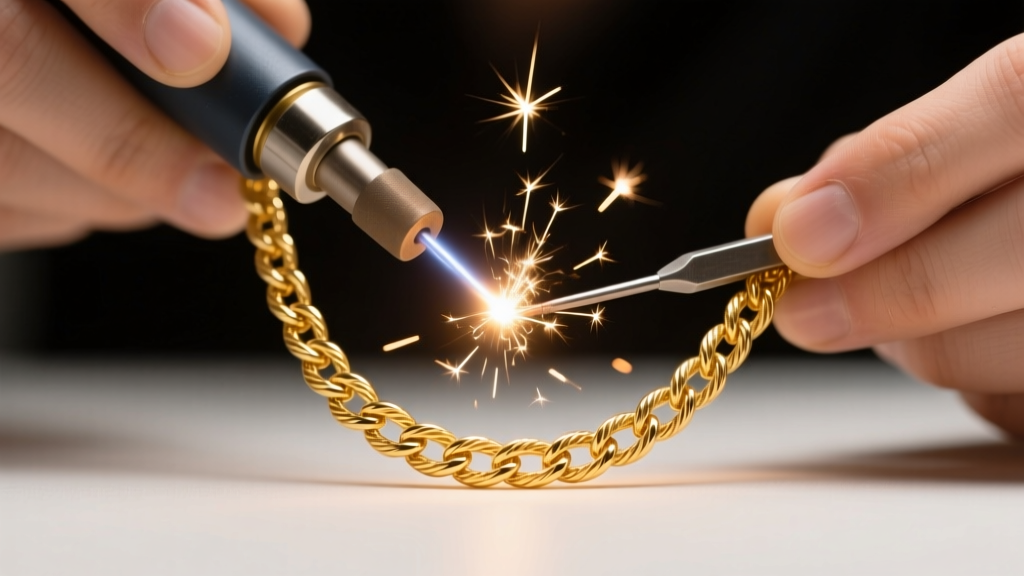
Modern jewelry repair relies heavily on laser welding, which uses concentrated light to fuse metal without heating the surrounding area. This is crucial for chains. If a solid 14k gold cable chain breaks, a laser welder can fuse the microscopic link back together seamlessly for about $35 to $50.
Conversely, if a hollow chain or a gold-filled chain breaks, the repair options are severely limited. Applying a traditional torch to a hollow chain will cause the trapped air inside to expand, blowing the link apart. Applying heat to a gold-filled chain will melt the outer gold layer into the brass core, creating a permanent, discolored scar. Therefore, the "budget" savings of a hollow or plated chain are instantly negated the moment it snaps.
The "Cost Per Wear" Framework for Fine Jewelry
To objectively assess whether a higher upfront budget yields better value, apply the Cost Per Wear (CPW) framework.
- The Fast Fashion Chain ($60 Gold-Plated Brass): Worn 50 times before the plating rubs off, exposing the brass which turns your skin green and tarnishes. CPW: $1.20 per wear. Total lifespan: 6 months.
- The Heavyweight Gold-Filled Chain ($150): Worn 300 times over 4 years. The 14k gold layer is thick enough to withstand daily showers and friction, though it cannot be easily polished or soldered if it breaks. CPW: $0.50 per wear. Total lifespan: 4 years.
- The Solid 14k Gold Chain ($850): Worn 2,000 times over 15 years. It requires occasional professional ultrasonic cleaning and polishing. If it breaks, it is easily soldered. It retains 40% of its retail value as scrap gold. CPW: $0.42 per wear (and effectively lower if you factor in residual scrap value). Total lifespan: Generational.
Final Verdict: Where Should Your Budget Go?
If your budget is strictly under $100, avoid hollow gold chains entirely. Instead, invest in a high-quality sterling silver chain or a verified 14k gold-filled cable chain. Proper necklace care—such as removing the chain before sleeping to prevent micro-kinks and storing it flat to avoid tangling—will extend the life of layered metals significantly.
If your budget allows for $500 to $1,500, prioritize solid 14k gold in machine-made styles like the rope, figaro, or curb. These styles offer the highest tensile strength and the best melt-to-retail ratio. Avoid paying exorbitant brand premiums for basic solid chains; the value lies in the gram weight, the alloy quality, and the precision of the laser-welded links, not the logo stamped on the clasp. By focusing on structural density and repairability, you transform a simple jewelry purchase into a lasting, financially sound asset.


