How to Choose a Gold Necklace Custom Name: Material Guide
Compare 10k, 14k, and 18k gold for your gold necklace custom name order. Learn about durability, solder joints, and pricing for nameplates.

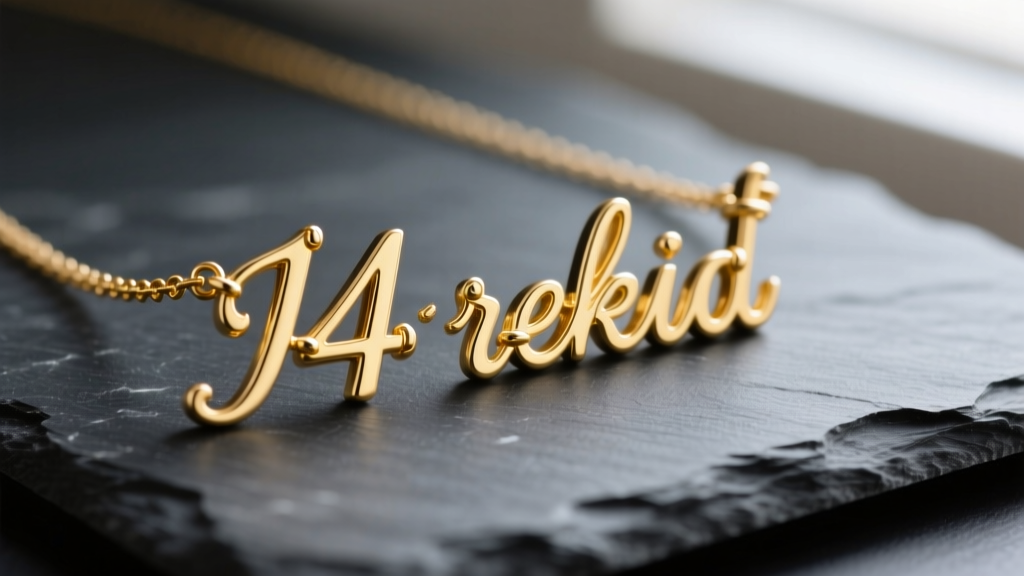
Personalized jewelry has transcended fleeting trends to become a permanent staple in modern wardrobes. However, when commissioning a gold necklace custom name designs demand a rigorous balance of metallurgy and structural engineering. Unlike a solid cast pendant or a simple geometric charm, a nameplate necklace is a complex web of negative space, acute angles, and fragile connecting bridges. Choosing the wrong gold karat for your specific name design can result in bent letters, snapped solder joints, and premature wear.
In this comprehensive 2026 material guide, we break down the exact properties of 10k, 14k, and 18k gold, evaluate the structural vulnerabilities of nameplate pendants, and provide actionable frameworks for selecting the right chain and hardware to ensure your custom piece lasts a lifetime.
The Structural Vulnerability of Nameplate Jewelry
To understand why material choice is paramount, we must first examine how custom name necklaces are manufactured and where they fail. Most high-quality nameplates are not cast in molds; they are cut from flat sheets of gold using precision lasers or CNC routers. After cutting, the piece is polished, and a bail (the loop that connects the pendant to the chain) is laser-welded to the top center or sides of the name.
The primary failure points in a gold necklace custom name pendant are the interstitial bridges between cursive letters. If your name includes letters like 'i', 'j', or 't', the crossbars and dots are micro-soldered or laser-fused to the main body of the letter. Furthermore, the sweeping tails of letters like 'y', 'g', or 'z' act as levers. If the gold alloy is too soft, catching the pendant on a sweater can permanently bend these extremities. According to the Gemological Institute of America (GIA), the tensile strength and malleability of gold are entirely dictated by its alloy composition, making karat selection a matter of structural integrity, not just color preference.
10k vs. 14k vs. 18k Gold: A Metallurgical Breakdown
Pure 24k gold is far too soft for any daily-wear jewelry, let alone a delicate nameplate. Therefore, it is alloyed with metals like copper, silver, zinc, and sometimes nickel or palladium to increase its hardness. Here is how the standard karat weights compare when subjected to the stresses of a nameplate design.
| Karat Weight | Gold Purity | Vickers Hardness (Approx.) | Tarnish Resistance | Best Use Case |
|---|---|---|---|---|
| 10k Gold | 41.7% | 210 - 230 HV | Low (Prone to oxidation) | Chunky, thick nameplates; high-impact wear |
| 14k Gold | 58.3% | 150 - 170 HV | High | Standard cursive nameplates; optimal balance |
| 18k Gold | 75.0% | 125 - 140 HV | Very High | Thick, block-letter nameplates; occasional wear |
The 10k Gold Reality
10k gold is exceptionally rigid. While it will not bend easily, its high copper and zinc content makes it susceptible to tarnishing, especially in humid environments or when exposed to cosmetics. More importantly, 10k gold lacks the deep, warm luster associated with fine jewelry. For a delicate custom name necklace, 10k is generally not recommended unless the nameplate is cut exceptionally thick (over 1.2mm gauge), which adds significant weight and cost.
The 18k Gold Dilemma
18k gold offers a breathtaking, rich yellow hue and is highly hypoallergenic. However, its lower Vickers hardness makes it a liability for intricate cursive scripts. If an 18k nameplate features thin connecting bridges (under 0.8mm), the metal will stretch and deform under its own weight over time, especially when paired with a heavy chain.
Why 14k Gold is the Industry Standard for Custom Names
For the vast majority of gold necklace custom name orders, 14k gold is the undisputed champion. Comprising 58.3% pure gold and 41.7% alloy metals, 14k gold hits the "Goldilocks zone" of jewelry metallurgy. It possesses enough pure gold to maintain a luxurious color and resist tarnish, while the alloy matrix provides the necessary rigidity to hold laser-cut edges crisp and keep micro-soldered joints secure.
"When engineering a nameplate with sweeping cursive loops, we rely on the tensile memory of 14k gold. It can absorb minor impacts and spring back to its original shape, whereas 18k gold will simply yield and stay bent." — Master Bench Jeweler
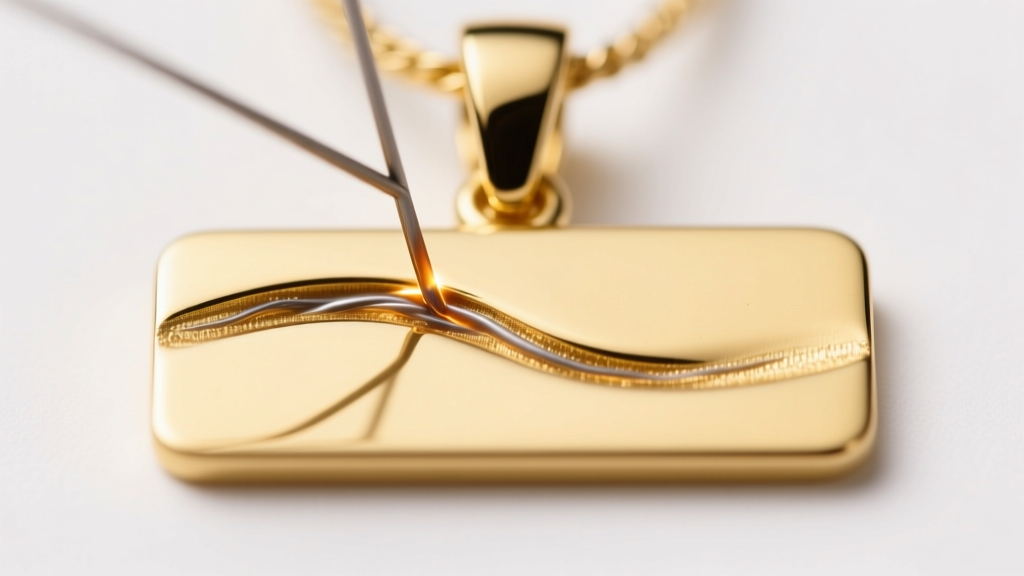
Furthermore, modern 14k gold alloys often include trace amounts of silicon or boron. These deoxidizers improve the flow of the metal during the casting of the bail and ensure a cleaner, stronger laser-weld where the bail meets the nameplate. This prevents the bail from snapping off the pendant, which is the second most common failure point in custom name jewelry.
The Problem with Gold Vermeil and Gold-Filled Alternatives
Driven by budget constraints, many consumers opt for gold vermeil or gold-filled name necklaces. While these are acceptable for simple geometric pendants, they are highly problematic for custom nameplates. The Federal Trade Commission (FTC) Jewelry Guides dictate that gold vermeil must consist of a sterling silver base coated with at least 2.5 microns of gold.
The issue lies in the bail and the connecting links. A custom nameplate swings and pivots constantly against the chain. This friction acts like fine sandpaper. On a vermeil name necklace, the gold layer at the bail and the top loops of the chain will wear away entirely within 6 to 12 months of daily wear, exposing the oxidizing sterling silver beneath. Gold-filled alternatives (which feature a much thicker mechanical bond of gold, usually 5% to 10% of the total weight) fare better, but the laser-cutting process used to create custom names often slices through the gold layer at the edges, exposing the brass core and leading to rapid localized tarnishing.
Chain Selection and Clasp Hardware
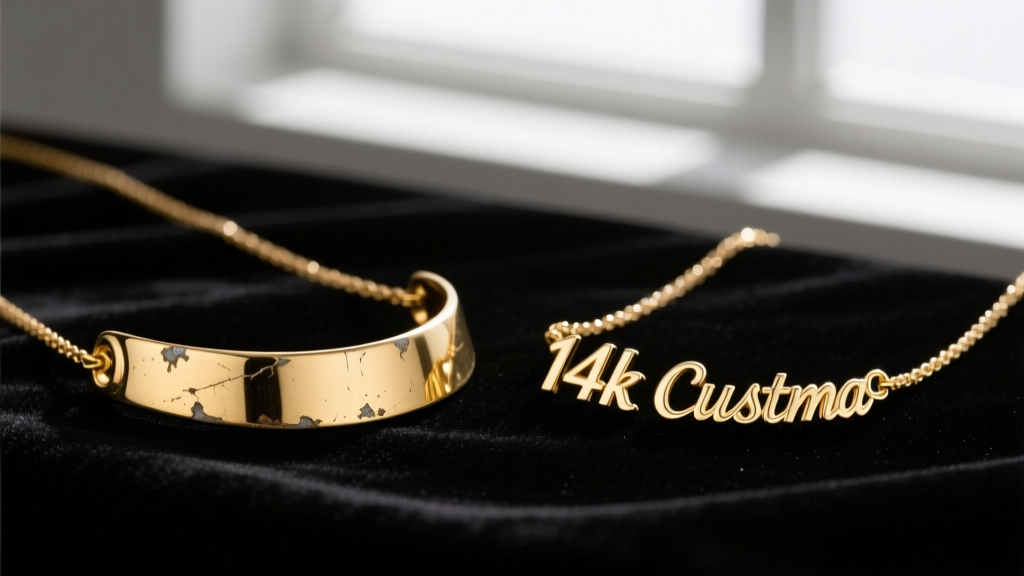
The material of your pendant is only half the equation; the chain you pair it with dictates the overall lifespan of the piece. A common mistake is pairing a heavy, multi-letter 14k gold nameplate with a delicate 0.5mm cable chain. The weight of the pendant will cause the thin chain links to stretch, distort, and eventually snap.
Optimal Chain Profiles for Nameplates
- Box Chains (0.9mm - 1.2mm): The geometric, interlocking squares of a box chain distribute the weight of a nameplate evenly. They resist kinking and provide a modern, structured backdrop to cursive scripts.
- Rope Chains (1.0mm - 1.5mm): The twisted links offer immense tensile strength and a high degree of light reflection, complementing the flat surface of a laser-cut nameplate.
- Wheat/Spiga Chains (1.0mm - 1.2mm): Woven in a continuous, braided pattern, wheat chains are incredibly resistant to pulling and snapping, making them ideal for heavier, longer names.
Clasp Mechanics
Never use a standard spring-ring clasp for a custom name necklace. The internal spring mechanism is prone to failure, and the small soldered ring on the clasp is a weak point. Always upgrade to a lobster clasp or a push-lock box clasp with a figure-eight safety latch. Ensure the clasp is cast in the same karat weight as the chain to prevent galvanic corrosion where the metals meet.
2026 Pricing Expectations and Final Verdict
With gold spot prices maintaining historic highs into 2026, the cost of solid gold custom jewelry has shifted significantly. When budgeting for a gold necklace custom name piece, expect the following baseline pricing for a standard 6-to-8 letter cursive nameplate (approx. 35mm wide, 0.9mm thick) including a 16-to-18-inch chain:
- 10k Solid Gold: $250 - $400
- 14k Solid Gold: $450 - $850
- 18k Solid Gold: $900 - $1,600+
The Final Verdict: For an heirloom-quality piece that balances rich color, structural integrity, and long-term value, 14k solid gold remains the definitive choice for custom name necklaces. It provides the necessary Vickers hardness to protect delicate cursive bridges while maintaining the luxurious appeal of fine jewelry. Avoid vermeil for daily-wear nameplates, and always match your chain gauge to the physical weight of your custom-cut pendant to ensure a lifetime of wear.


