Best Metals for a You & I Necklace: Material Guide
Discover the best metals for a you & i necklace. Compare solid gold, platinum, and titanium for durability, tarnish resistance, and daily wear.

The Anatomy of a You & I Necklace: Why Material Matters
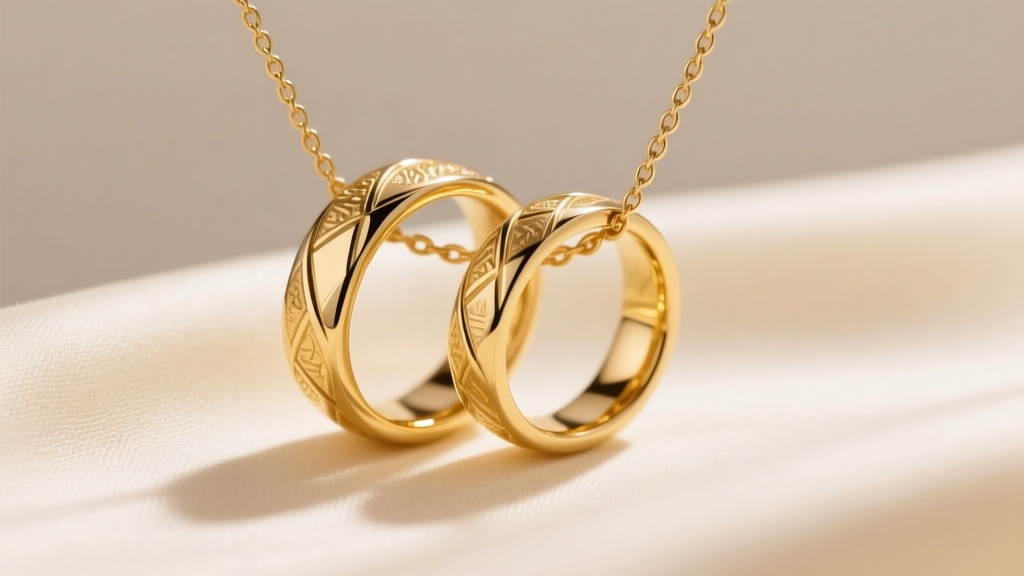
The 'you & i necklace' has become a definitive symbol of connection, typically featuring two interlocking rings, complementary puzzle pieces, or intertwined initials. Unlike a standard solitaire pendant, this specific design introduces a unique mechanical challenge: constant kinetic friction. Because the two central components are perpetually moving, rubbing, and colliding against one another, the material you choose dictates the lifespan of the piece. A metal that performs beautifully as a static pendant may fail rapidly in an interlocking configuration due to a metallurgical phenomenon known as fretting wear. In this comprehensive 2026 material guide, we break down the exact alloys, hardness ratings, and structural properties required to ensure your sentimental jewelry survives daily life.
Solid Gold vs. Gold Vermeil: The Fretting Wear Factor
Many entry-level you & i necklace designs are crafted from gold vermeil—a base of sterling silver coated with a minimum of 2.5 microns of gold. While vermeil is an excellent choice for static earrings or rings, it is fundamentally unsuited for interlocking pendants. The continuous friction between the two pieces acts like micro-sandpaper, stripping the gold layer away from the high-contact edges within three to six months of daily wear. Once the sterling silver core is exposed, it rapidly oxidizes and tarnishes, creating a dark, unsightly friction mark that cannot be polished out without removing more of the plating.
For a permanent piece, solid gold is non-negotiable. However, not all solid gold is created equal when it comes to friction resistance. According to the Gemological Institute of America (GIA), the alloy composition drastically alters the metal's structural integrity.
Karat Breakdown: 14k vs. 18k for Interlocking Pendants
- 14k Gold (58.5% Pure Gold): With a Vickers Hardness (HV) rating of approximately 140-160, 14k gold offers the ideal balance of malleability and scratch resistance. The higher proportion of alloy metals (like copper and zinc) creates a tighter crystalline lattice that resists the micro-abrasions caused by interlocking pendants.
- 18k Gold (75% Pure Gold): Softer and richer in color, 18k gold sits around 120-130 HV. While it boasts a deeper yellow hue and higher intrinsic value, it is more prone to developing deep friction grooves where the two pendants continuously rub together.
Expert Recommendation: Opt for solid 14k gold for the interlocking components to minimize material loss, but consider an 18k gold chain if you prefer a warmer color contrast against the skin.
Platinum and Palladium: The Hypoallergenic Heavyweights
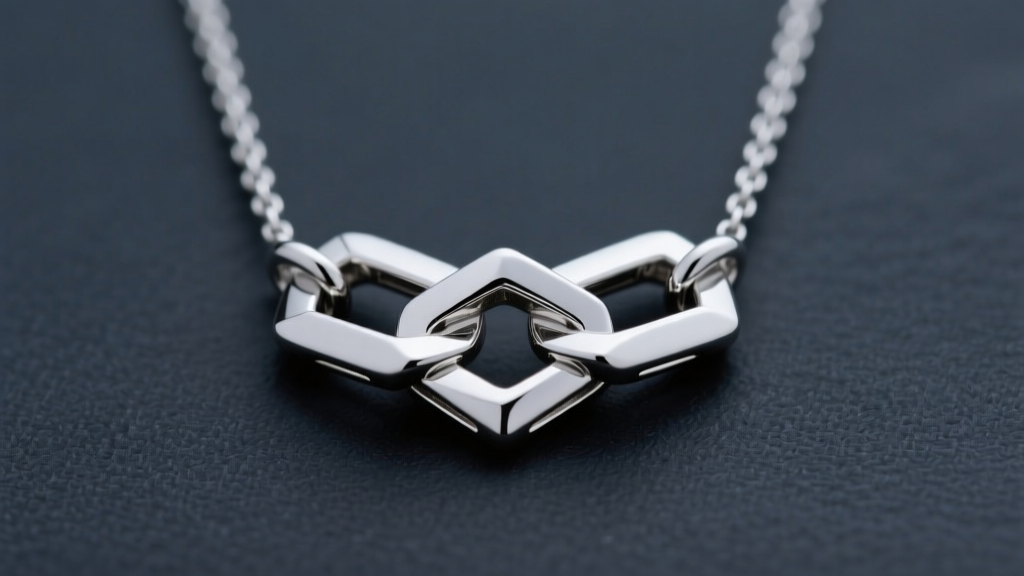
If skin sensitivity is a primary concern, platinum is the undisputed champion. Typically alloyed at 95% purity (Platinum 950) with 5% ruthenium or iridium, it is entirely hypoallergenic. But its true advantage in a you & i necklace lies in its unique wear characteristics. Unlike gold, which sheds microscopic particles when scratched, platinum merely displaces.
When the two interlocking platinum rings rub together, the metal shifts rather than flakes away. Over time, this develops a soft, satiny 'patina' that many collectors prize. Furthermore, platinum's high density (21.45 g/cm³) gives the pendants a satisfying, premium heft that prevents them from tangling as easily as lighter metals. Palladium, a sister metal in the platinum group, offers similar hypoallergenic benefits at a lower weight and price point, though it is slightly more brittle and harder to polish if deep friction grooves do eventually form.
Titanium and Tungsten: Modern Alternatives for Active Lifestyles
For those who work with their hands or lead highly active lifestyles, traditional precious metals may warp or scratch excessively. Aerospace-grade titanium (specifically Grade 5, or Ti-6Al-4V) offers an incredible strength-to-weight ratio. A titanium you & i necklace is virtually impervious to fretting wear, will never tarnish, and is completely biocompatible.
However, titanium comes with a critical caveat: it cannot be easily soldered or resized. If the bail (the loop connecting the pendant to the chain) experiences a stress fracture, traditional jewelers lack the equipment to repair it. Tungsten carbide is even harder (rating an 8-9 on the Mohs scale), making it entirely scratch-proof, but its extreme brittleness means it can shatter if the interlocking pendants are caught on heavy machinery and subjected to sudden blunt force.
Material Comparison Matrix: You & I Necklace Durability
Use this matrix to evaluate which metal aligns with your lifestyle, budget, and maintenance preferences.
| Material | Vickers Hardness (HV) | Friction Wear Behavior | Tarnish Resistance | Relative Cost |
|---|---|---|---|---|
| 14k Solid Gold | 140 - 160 | Moderate shedding; polishes well | High | $$$ |
| 18k Solid Gold | 120 - 130 | Higher shedding; prone to grooves | High | $$$$ |
| Platinum 950 | 110 - 130 (Work-hardens) | Displaces metal; forms patina | Absolute | $$$$$ |
| Gold Vermeil | ~100 (Base dependent) | Rapid plating loss at friction points | Low (Silver core) | $ |
| Grade 5 Titanium | 340 - 360 | Negligible wear; cannot be soldered | Absolute | $$ |
Chain Gauge and Clasp Mechanics for Dynamic Stress
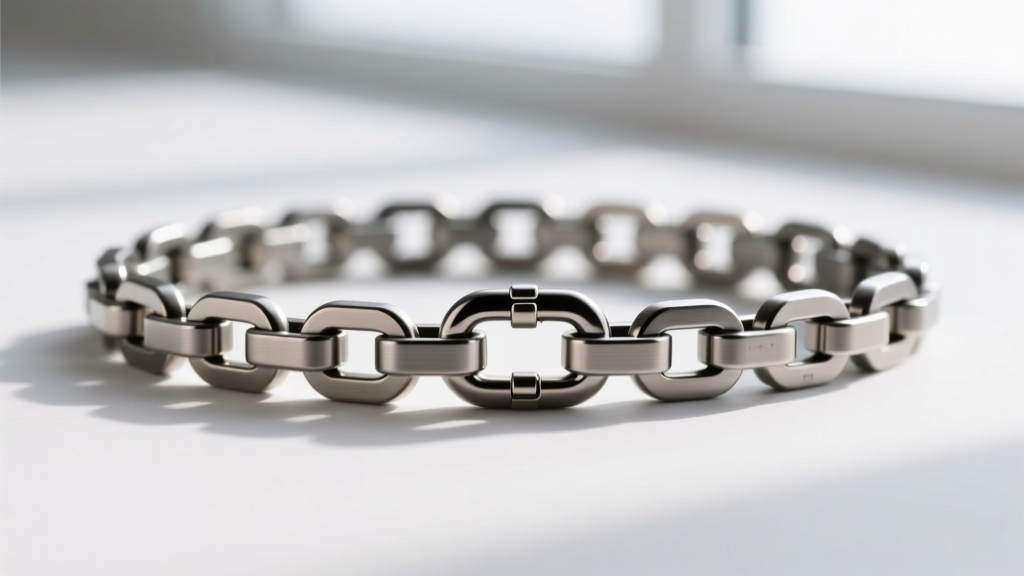
The pendants are only half the equation; the chain supporting a you & i necklace endures severe dynamic stress. Because the two interlocking pieces swing, pivot, and occasionally pull in opposite directions, the chain's bail and the connecting jump rings experience lateral torque that a single pendant never would.
According to manufacturing standards outlined by Rio Grande Jewelry Supply, chains thinner than 1.0mm are highly susceptible to link deformation under these conditions. For an interlocking pendant setup, you must select a chain with a minimum gauge of 1.2mm to 1.5mm. Rolo chains and flat cable chains are superior to box chains or snake chains, as their rounded, articulated links allow the bail to pivot freely without kinking. Furthermore, ensure the jump ring connecting the clasp to the chain is soldered shut. An unsoldered jump ring will inevitably pull apart under the lateral tension created by the dual-pendant design.
Galvanic Corrosion and Skin pH Interactions
A frequently overlooked factor in material selection is how your unique body chemistry interacts with the metal. Sweat is mildly acidic, and when it acts as an electrolyte between two different metals (for example, if you pair a sterling silver chain with a gold-plated pendant), it triggers galvanic corrosion. This accelerates the degradation of the less noble metal.
To prevent this, maintain metallurgical consistency. If your interlocking pendants are 14k yellow gold, ensure the chain, jump rings, and clasp are also solid 14k gold. Mixing karats or metal families introduces microscopic galvanic cells that will rapidly deteriorate the finish of your necklace, particularly in the humid microclimate between the collarbone and the pendant.
Final Verdict: Choosing Your Forever Piece
Selecting the right metal for a you & i necklace requires looking past the initial showroom shine and evaluating the piece through the lens of mechanical engineering. For the vast majority of buyers, solid 14k gold remains the optimal choice, providing the necessary Vickers hardness to withstand years of interlocking friction while maintaining its structural integrity. For those with severe metal allergies or a preference for a heavier, heirloom-quality drape, Platinum 950 is a generational investment that embraces wear rather than succumbing to it. By pairing your chosen metal with a properly gauged 1.2mm rolo chain and avoiding the false economy of vermeil, you ensure that the symbol of your connection remains as unbroken as the bond it represents.
For further reading on precious metal durability and care, consult the educational resources provided by Jewelers of America.


