Gold Red Heart Necklace Guide: Enamel Types, Karats & Chain Specs
Discover the technical anatomy of a fine gold red heart necklace. Compare 14k vs 18k alloys, vitreous vs cold enamel, and chain gauge specs.

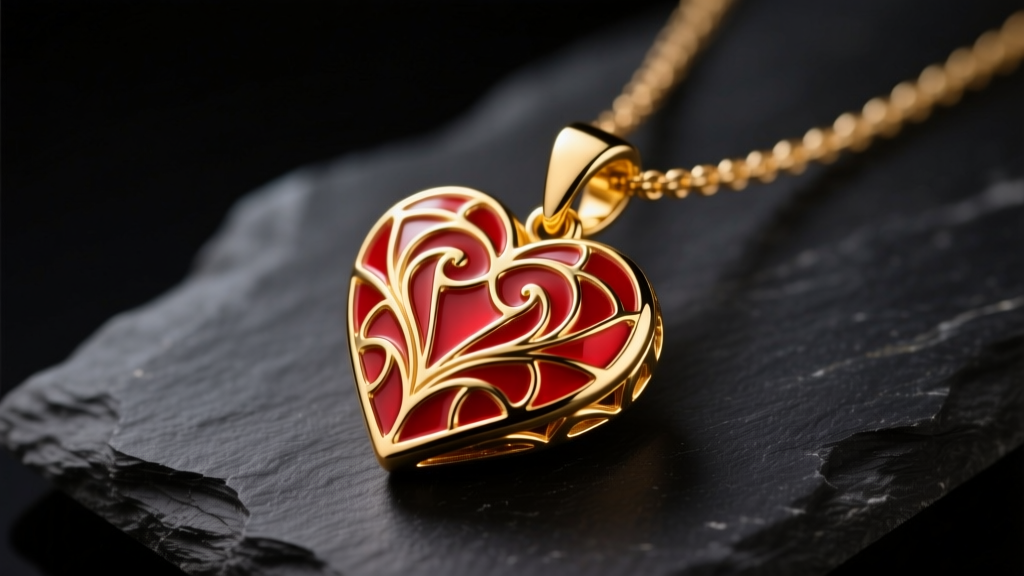
The quintessential gold red heart necklace remains one of the most enduring motifs in fine jewelry. However, beneath the romantic aesthetic lies a complex intersection of metallurgy, thermal dynamics, and mechanical engineering. In 2026, the market is heavily saturated with mass-produced pendants that utilize cheap epoxy resins and hollow-cast alloys, masquerading as heirloom-quality pieces. For the discerning collector or the technically minded buyer, understanding the exact material grades, enameling processes, and chain tensile strengths is critical to making an informed investment.
This expert deep dive deconstructs the anatomy of a high-quality gold red heart necklace, moving beyond superficial design to examine the Vickers hardness of gold alloys, the chemical volatility of red vitreous enamel, and the precise chain gauges required to support varying pendant weights without catastrophic failure.
The Metallurgy: Choosing the Right Gold Karat
The structural integrity of a heart pendant begins with its base metal. Pure 24-karat gold is far too malleable (measuring roughly 25 on the Vickers hardness scale) to securely hold enamel or resist daily deformation. Therefore, alloying is mandatory. According to the Gemological Institute of America (GIA), the karatage dictates not only the color but the structural viability of the piece.
14k Gold (58.5% Pure Gold)
14k gold is the workhorse of commercial jewelry. Alloyed with copper, silver, and zinc, it achieves a Vickers hardness of approximately 135 HV. This makes it highly resistant to scratching and ideal for heart pendants that feature intricate prong-set gemstone borders alongside the enamel. However, the higher copper content can sometimes cause a slight reaction with highly acidic skin pH levels over prolonged contact.
18k Gold (75% Pure Gold)
18k gold offers a richer, deeper yellow hue and is the preferred standard for high-end vitreous enameling. With a hardness of about 125 HV, it is slightly softer than 14k but provides a superior chemical bond with hot enamel. The higher purity reduces the risk of metal oxidation interfering with the enamel firing process, ensuring the red pigment remains vibrant and unclouded.
Decoding the 'Red': Enameling Techniques Explained
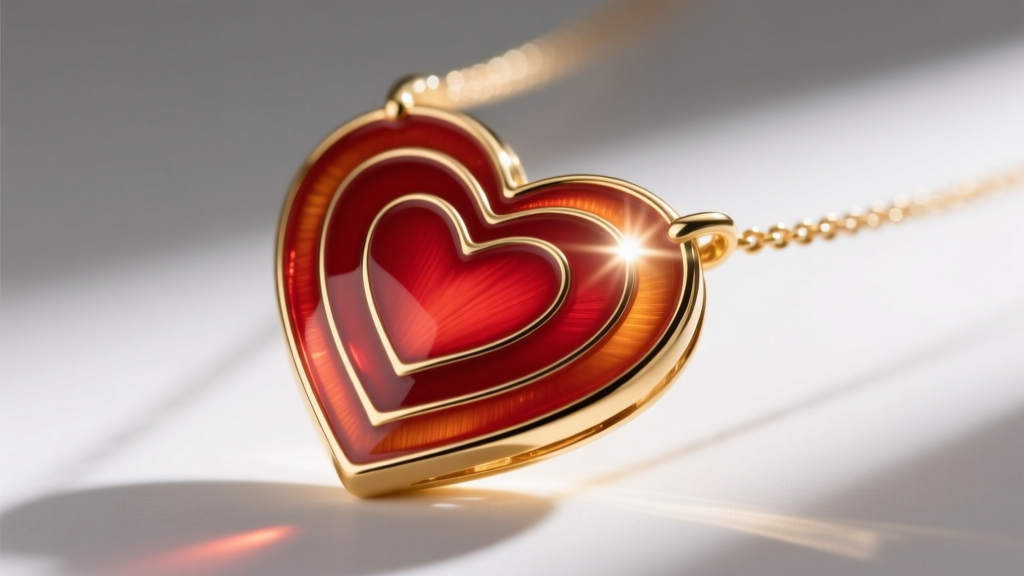
Achieving a true, vibrant red in fine jewelry is notoriously difficult. The term 'enamel' is frequently abused in the industry, so it is vital to distinguish between true vitreous enamel and synthetic alternatives.
Vitreous (Hot) Enamel vs. Cold Enamel
Vitreous enamel is essentially finely ground glass (silica) mixed with metal oxides for color, fused to the gold base in a kiln at temperatures between 750°C and 850°C. Red is the most volatile color in this process. It relies on specific oxides, such as copper or selenium/cadmium sulfides. If the kiln is even slightly too hot, the red will burn, turning muddy brown or black. If too cool, the glass will not properly fuse to the gold, leading to immediate flaking. This high failure rate is why genuine vitreous red enamel commands a premium price.
Conversely, 'cold enamel' is a two-part epoxy resin. It is painted into the gold recesses and cures at room temperature. While it can produce a bright, opaque red, it lacks the optical depth, refractive index, and archival longevity of fired glass. Cold enamel will inevitably yellow, scratch, and degrade when exposed to UV light and cosmetics over a 5-to-10-year period.
The Guilloché Multiplier
In the finest examples of a gold red heart necklace, the gold beneath the translucent red vitreous enamel is engine-turned—a technique known as guilloché. This precise mechanical engraving creates geometric patterns that catch and refract light through the translucent red glass, giving the heart an illusion of internal luminescence that flat, opaque cold enamel simply cannot replicate.
Chain Mechanics: Gauge, Links, and Clasp Engineering
A heavy 18k gold and enamel heart pendant requires a chain engineered for tensile strength, not just visual delicacy. The most common point of failure in necklaces is the clasp mechanism or the jump ring connecting the pendant to the chain. Below is a technical matrix for pairing chains with heart pendants.
| Chain Style | Wire Gauge (mm) | Max Pendant Weight | Durability & Mechanics |
|---|---|---|---|
| Cable (Standard) | 0.8mm - 1.0mm | Up to 4 grams | Low durability; prone to kinking and link separation under stress. |
| Box Chain | 1.0mm - 1.5mm | Up to 12 grams | High durability; interlocking square links distribute weight evenly. |
| Wheat (Spiga) | 1.2mm - 1.8mm | Up to 15 grams | Exceptional durability; woven oval links resist pulling and snapping. |
| Rope Chain | 1.5mm - 2.0mm | Up to 20+ grams | Very high durability; twisted links hide wear but are difficult to repair if broken. |
Clasp Specifications
For any gold red heart necklace exceeding 5 grams, the standard spring-ring clasp is mechanically inadequate. The internal spring mechanism degrades quickly under constant tension. You must specify a lobster clasp with a minimum internal wire thickness of 1.2mm, or a fold-over safety clasp for chains exceeding 2.0mm in gauge. Always inspect the solder point on the jump ring; it should be laser-welded or smoothly flowed with hard solder, not merely pinched closed.
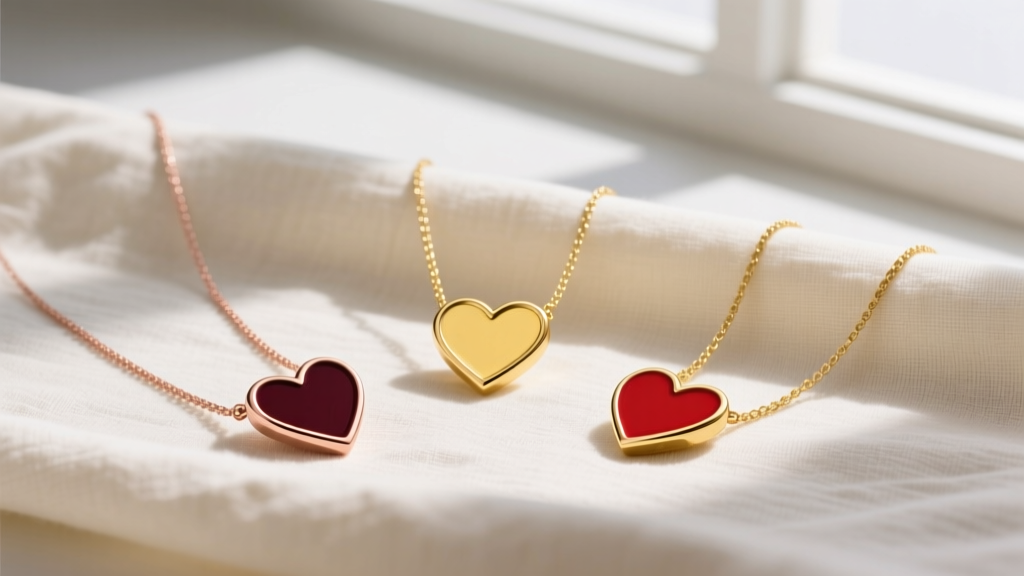
Market Pricing and Sourcing Matrix
Understanding the manufacturing realities allows you to accurately assess pricing in the current market. A piece that is underpriced is almost certainly utilizing hollow-casting (electroforming) and cold enamel.
- Mass-Market / Fashion Grade ($150 - $350): Typically 10k or 14k gold-plated brass or hollow-cast 14k gold. Utilizes opaque cold epoxy resin for the red fill. Lightweight chains (0.6mm).
- Fine Jewelry Commercial ($600 - $1,200): Solid 14k gold with basic translucent cold enamel or single-layer vitreous enamel. Standard cable or box chains (0.9mm).
- Artisan / Heirloom Grade ($2,500 - $6,000+): Solid 18k gold, hand-finished guilloché engraving, multiple layers of transparent vitreous red enamel fired in a kiln. Heavy wheat or rope chains (1.5mm+) with secure lobster clasps.
Maintenance: Preventing Enamel Fractures and Gold Tarnish
Expert Warning: Never place a vitreous enamel necklace in an ultrasonic cleaner. The high-frequency acoustic cavitation creates micro-vibrations that will shatter the glass-to-metal bond, causing the red enamel to craze and flake off irreparably.
Proper maintenance of a fine gold red heart necklace requires a nuanced approach, as you are caring for two entirely different materials simultaneously. The Goldsmiths' Company Assay Office notes that while gold is highly resistant to tarnish, the alloy metals (like copper and silver) can oxidize when exposed to sulfur in the air or chlorine in swimming pools.
To clean the piece safely, use a solution of warm distilled water and a few drops of pH-neutral dish soap. Soak the necklace for no more than three minutes. Use a remarkably soft, baby-bristle toothbrush to gently agitate dirt from the chain links and the bail (the loop connecting the heart to the chain). Do not scrub the enamel surface. Rinse thoroughly with distilled water to prevent hard water spotting on the glass enamel, and pat dry with a lint-free microfiber cloth. Store the necklace flat in a tarnish-resistant anti-tarnish pouch to prevent the chain from kinking and to protect the enamel from scratching against harder gemstones.
By demanding transparency regarding karatage, insisting on vitreous over cold enamel, and verifying chain gauge specifications, you ensure that your gold red heart necklace is not merely a fleeting accessory, but a structurally sound, archival-quality piece of wearable engineering.


