How to Choose the Right Gold Ring for Necklace Pendants
Learn how to choose the perfect gold ring for necklace pendants. Compare jump rings, split rings, and karat grades to keep your jewelry secure.

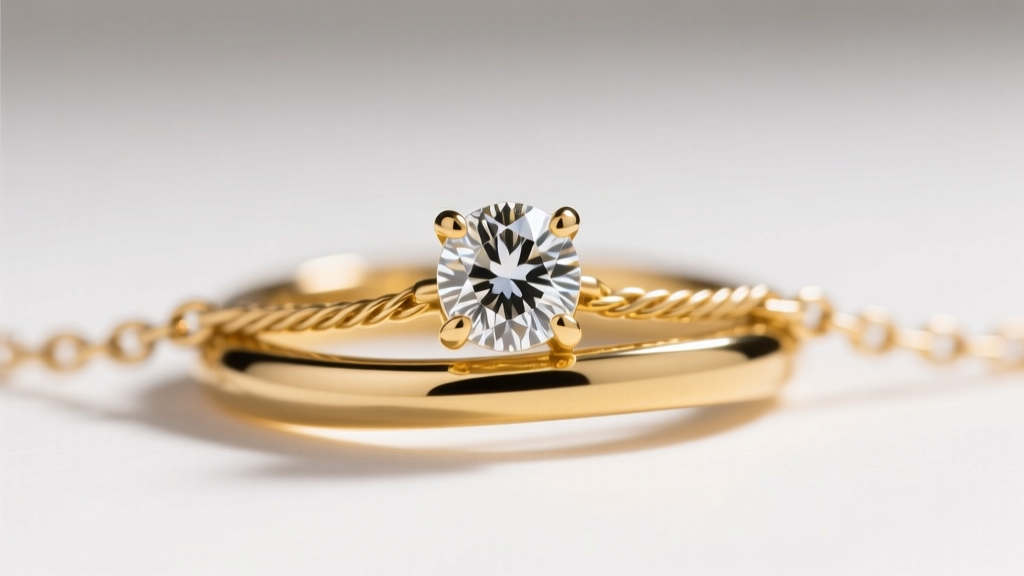
When you invest in a beautiful gold pendant, the focal point is usually the gemstone or the intricate metalwork. However, the true unsung hero of your jewelry is the humble connector. Finding the right gold ring for necklace attachments is a critical decision that dictates the security, drape, and longevity of your piece. Whether you are replacing a broken connector, upgrading a flimsy factory bail, or threading a sentimental finger ring onto a chain, understanding the mechanics of jewelry rings is essential for any collector.
In this beginner-friendly guide, we will break down the exact specifications, material grades, and structural types of connector rings. By the end, you will know exactly how to secure your pendants with professional-grade precision.
Why the Connector Ring Matters More Than You Think
The connection point between a chain and a pendant experiences the highest amount of mechanical stress on the entire necklace. Every time you move, the pendant swings, creating friction and lateral tension on the ring. If you use a gold ring that is too soft, too thin, or improperly closed, the metal will eventually fatigue, pull apart, and drop your pendant.
Many mass-market jewelry brands cut costs by using ultra-thin, unsoldered jump rings made from low-karat gold alloys. These rings can easily catch on a sweater and pull open. Upgrading to a properly sized, high-quality gold ring for necklace use is the cheapest insurance policy you can buy for an expensive diamond or gemstone pendant.
Jump Rings vs. Split Rings: Which Style is Best?
Not all rings are created equal. The two most common connector styles are jump rings and split rings. Here is how they compare in real-world scenarios:
| Ring Type | Structure | Security Level | Best Use Case | Avg. Price Range |
|---|---|---|---|---|
| Standard Jump Ring | Single wire loop with a flush cut slit | Medium (Low if unsoldered) | Lightweight pendants, delicate chains | $5 - $15 each |
| Soldered Jump Ring | Single wire loop, seam welded shut | Very High | Heavy pendants, permanent chain links | $15 - $35 each |
| Split Ring | Double wire loop (like a tiny keychain) | High | Heavy charms, frequent pendant swapping | $8 - $20 each |
Expert Insight: If you frequently swap pendants between different chains, a split ring is your best option. Because it requires the pendant bail to pass over two separate coils of wire, it is virtually impossible for the pendant to accidentally slip off, even if the ring is slightly deformed. However, split rings can be bulky and may scratch soft gemstones if they rub against the pendant face.
Karat Matching and Friction Wear
One of the most common beginner mistakes is mixing gold karats between the chain and the connector ring. While it might seem purely aesthetic, mixing karats introduces a mechanical issue known as friction wear.
Gold purity directly impacts the metal's hardness on the Vickers scale. Pure 24k gold is incredibly soft. As you add alloy metals (like copper, silver, and zinc) to create 18k, 14k, or 10k gold, the metal becomes significantly harder.
- 14k Gold: ~58.5% pure gold. Harder, more durable, highly resistant to bending.
- 18k Gold: ~75% pure gold. Softer, richer color, more prone to scratching and warping.
- 22k Gold: ~91.6% pure gold. Very soft, easily deformed under tension.
The Friction Wear Rule: If you hang a heavy pendant using a soft 18k gold split ring on a harder 14k gold cable chain, the harder chain links will act like a microscopic file. Over years of daily wear, the 14k chain will slowly saw through the softer 18k ring, eventually causing it to snap. Always match your karats, or ensure the connector ring is of an equal or higher hardness (lower karat) than the chain. According to the Gemological Institute of America (GIA), understanding alloy compositions is vital for long-term jewelry care and structural integrity.
Sizing Your Gold Ring for Necklace Chains
When shopping for a replacement ring, you will encounter two critical measurements: Gauge (thickness) and Diameter. Getting these wrong means the ring either won't fit through your pendant bail, or it won't slide onto your chain.
Understanding Gauge (Wire Thickness)
Gauge measures the thickness of the wire itself. Counterintuitively, a lower gauge number means a thicker wire.
- 22-Gauge to 20-Gauge (0.6mm - 0.8mm): Too thin for most pendants. Use only for ultra-lightweight pearl or gemstone drops on silk threads.
- 18-Gauge (1.0mm): The industry standard for most commercial gold pendants. Offers a great balance of strength and discretion.
- 16-Gauge to 14-Gauge (1.3mm - 1.6mm): Heavy-duty. Required for solid gold medallions, heavy cross pendants, or thick signet rings.
The 'Slide Test' for Diameter
Diameter is measured in millimeters (mm). You must pay attention to the Inner Diameter (ID), not the Outer Diameter (OD). The ID dictates how much space is inside the ring for your chain to pass through.
The Slide Test: Take your thickest chain link and measure its widest point. Add at least 1.5mm to that measurement to find your minimum required Inner Diameter. If your chain is 2mm wide, you need a jump ring with an ID of at least 3.5mm to allow the chain to drape naturally without kinking at the connection point.
How to Safely Open and Close a Gold Jump Ring
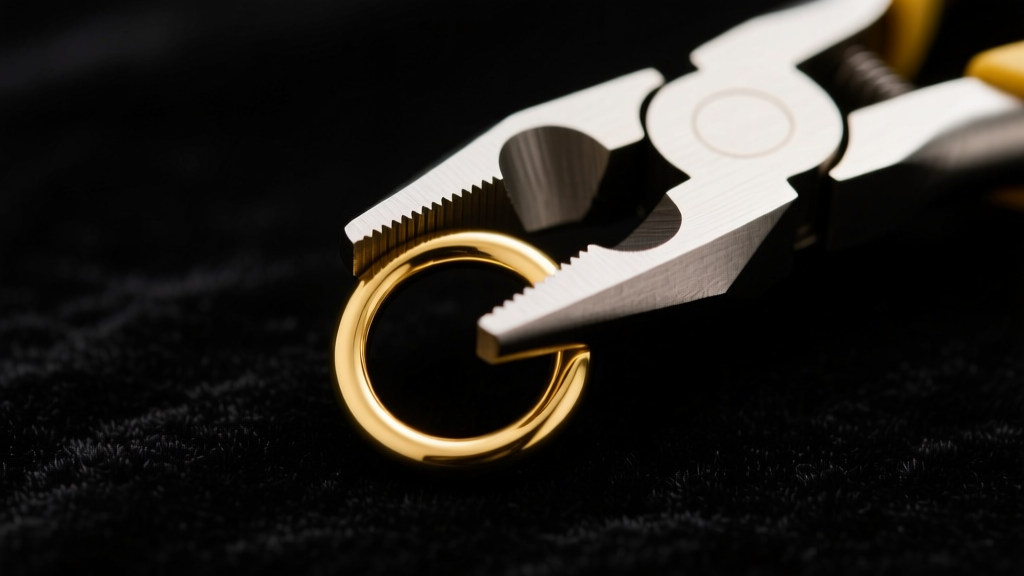
If you are using an unsoldered jump ring, you must open and close it correctly to maintain its structural integrity and perfect circular shape. Never pull the ends of the ring apart laterally (outward). This stretches the metal, weakens the wire, and makes it impossible to close flush.
The Twist Method: Hold the ring with two pairs of flat-nose pliers, one on each side of the slit. Twist one hand toward you and the other away from you. To close, twist them back until the ends click together perfectly flush. Run your fingernail over the seam; if it catches, the ring isn't closed tightly enough.
Pro-Tip: If you are working with 18k or 22k gold, wrap the tips of your steel pliers in masking tape, or use nylon-jaw pliers. High-karat gold scratches and mars incredibly easily under steel pressure.
Wearing a Finger Ring as a Necklace Pendant
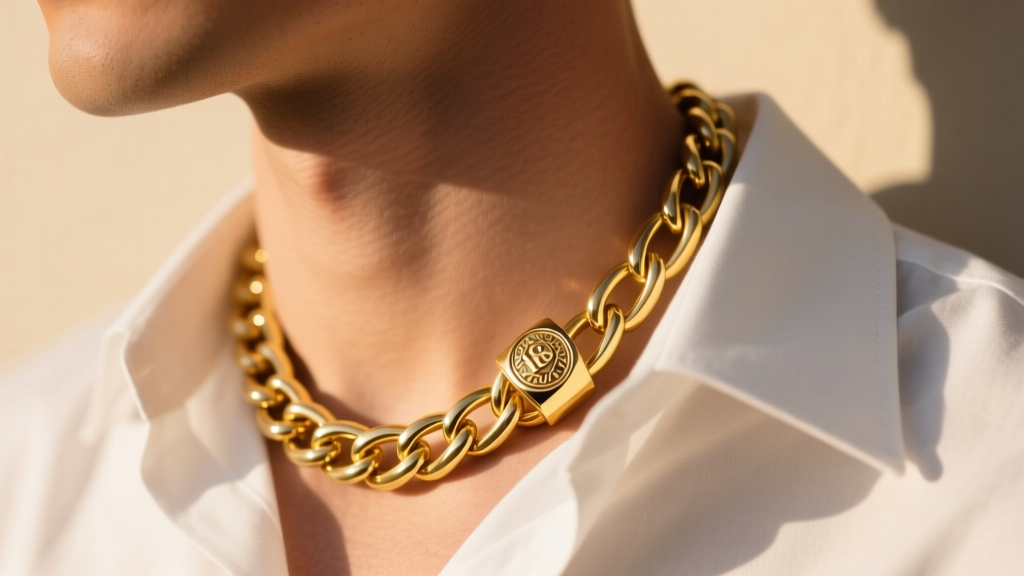
The phrase 'gold ring for necklace' is also frequently searched by individuals looking to wear a sentimental finger ring—such as a wedding band, a family signet, or an heirloom pinky ring—as a pendant.
Threading a finger ring onto a chain requires specific chain selection. Standard cable or box chains often kink when forced through the narrow, flat profile of a wedding band. Instead, opt for flexible chains like the Omega, Snake, or Herringbone styles, which slide seamlessly through the center of a ring. Alternatively, a heavy Rope chain or Cuban link provides enough rigidity to keep a wide signet ring hanging perfectly face-forward. The Jewelers of America recommends inspecting the inner rim of older heirloom rings for sharp edges that could slowly abrade and weaken a delicate gold chain over time.
Final Thoughts on Necklace Security
Choosing the correct gold ring for necklace use is a blend of physics, material science, and practical design. By matching your karats to prevent friction wear, selecting the appropriate gauge for your pendant's weight, and utilizing the proper opening techniques, you ensure your jewelry remains secure for a lifetime. Whether you are securing a diamond solitaire or threading a vintage signet ring onto a Cuban chain, the right connector ring guarantees your style remains intact and your investments stay safely around your neck.


