Best GoPro Necklace Materials: Durability Guide 2026
Compare silicone, paracord, and titanium for your GoPro necklace. Discover material properties, UV resistance, and hardware failure modes for 2026.

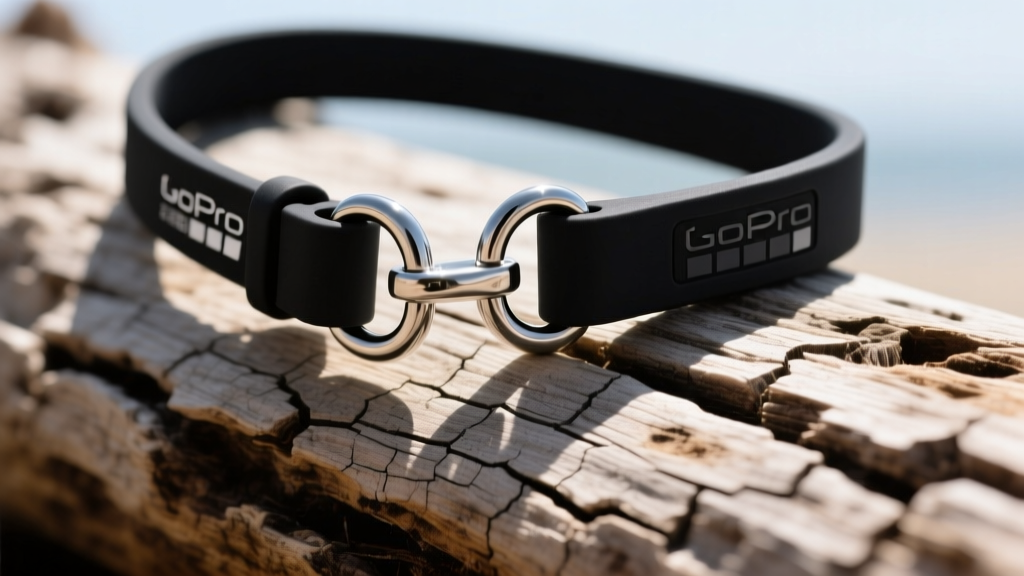
The Material Evolution: Beyond the Basic Lanyard
The GoPro necklace has evolved from a niche surf accessory into an essential piece of wearable tech for POV vloggers, mountain bikers, and travel documentarians. As action cameras like the GoPro Hero 13 Black push higher bitrates and demand ultra-stable chest-level perspectives, the lanyard holding your $400+ camera must be engineered for failure prevention. In 2026, treating your camera mount as an afterthought is a costly mistake. The intersection of jewelry-style wearables and tactical gear requires a deep understanding of material science, specifically how polymers and metals react to sweat, UV radiation, and sudden kinetic shocks.
Whether you are navigating crowded city streets or hiking exposed alpine ridges, the structural integrity of your GoPro necklace dictates both the safety of your gear and your personal well-being. Let us break down the exact material properties that separate premium wearable mounts from cheap, disposable lanyards.
Platinum-Cured Silicone vs. Peroxide-Cured PVC
The market is flooded with inexpensive "silicone" GoPro necklaces, but a vast majority are actually formulated from PVC (Polyvinyl Chloride) softened with phthalate plasticizers. When exposed to the acidic pH of human sweat (typically 4.5 to 7.0) and high UV indexes, these plasticizers leach out. The result is a phenomenon known as polymer embrittlement, where the lanyard stiffens, yellows, and eventually snaps under the 154-gram dead weight of a modern action camera.
True premium GoPro necklaces utilize platinum-cured medical-grade silicone. This material boasts a Shore A hardness of 50-60, providing a supple drape that mimics a heavy chain necklace without the thermal conductivity (it won't burn your chest in the summer or freeze to your skin in the winter). Platinum-cured silicone is entirely impervious to saltwater corrosion and maintains its tensile elasticity across temperature ranges from -40°C to 200°C.
550 Paracord and the Kernmantle Advantage
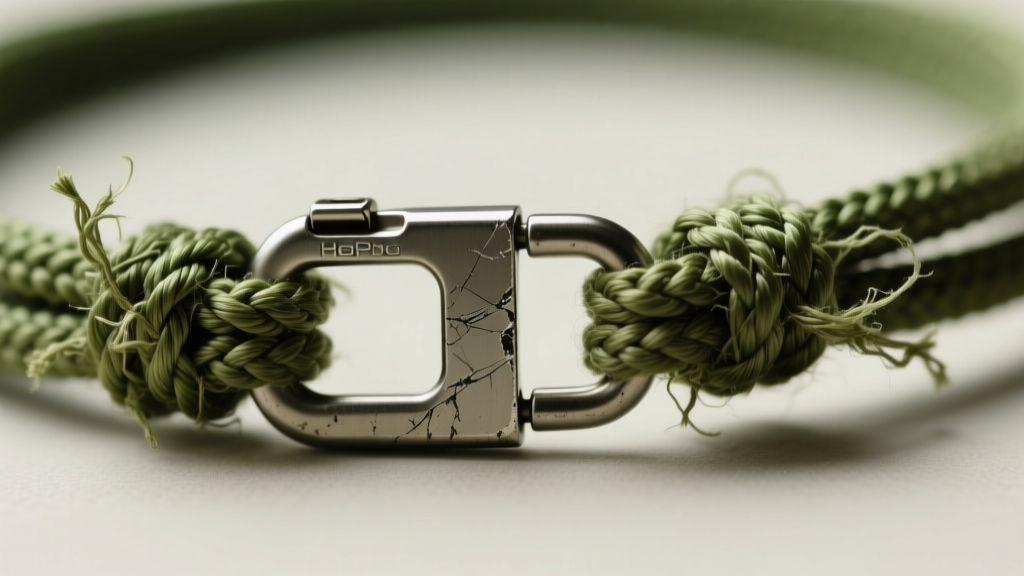
For outdoor enthusiasts who prefer a rugged, tactical aesthetic, Type III 550 Paracord remains the gold standard for textile-based GoPro necklaces. According to material data from the Engineering Toolbox, nylon 6,6 fibers offer exceptional abrasion resistance and a high strength-to-weight ratio. The 550 paracord features a kernmantle structure: a braided outer sheath (mantle) protecting seven inner yarns (kern). This dual-layer construction means that even if the outer sheath is abraded by a rock scramble or a stray tree branch, the inner core retains a minimum breaking strength of 550 pounds.
Environmental Stressors and Polymer Degradation
Choosing the right GoPro necklace requires matching the material's chemical resistance to your primary shooting environment. Below is a comparative analysis of how standard necklace materials degrade under extreme conditions.
| Material Profile | Tensile Yield | UV Degradation Rate | Saltwater Tolerance | Primary Failure Mode |
|---|---|---|---|---|
| Platinum Silicone (Shore 60A) | 1,500 psi | Negligible (10+ yrs) | Impervious | Tearing at the J-hook punch hole |
| Type III 550 Paracord | 550 lbs (2400 N) | Moderate (Fading) | High (if rinsed) | Sheath abrasion / Inner yarn rot |
| TPU (Thermoplastic Polyurethane) | 4,500 psi | High (Yellowing) | Moderate | Polymer creep (stretching) |
| 316L Marine Stainless Chain | 70,000 psi | None | Excellent | Clasp spring fatigue |
Note: TPU is frequently used in budget sports gear due to its high initial tensile strength, but it suffers from "creep"—a slow, permanent deformation under the constant static load of a GoPro camera, eventually causing the necklace to hang dangerously low.
The Hardware Weak Link: J-Hooks and Clasp Mechanics
A GoPro necklace is only as strong as its mounting hardware. The connection point between the flexible lanyard and the rigid camera chassis is where catastrophic failures occur. Understanding the metallurgy and plastic engineering of these components is critical for gear retention.
The Sub-Zero Polycarbonate Problem
The standard GoPro J-hook buckle is typically injection-molded from ABS or Polycarbonate plastics. While these thermoplastics offer high impact resistance at room temperature, their glass transition properties make them highly susceptible to brittle fracture in sub-zero environments. If you are snowboarding or ice climbing, a standard plastic J-hook can shatter upon a minor chest impact. For winter sports, upgrading to an anodized 6061-T6 aluminum or Grade 5 Titanium J-hook is mandatory to prevent losing your camera in deep powder.
Breakaway Safety Standards
Wearing any non-yielding cord around your neck poses a severe strangulation hazard. A premium GoPro necklace must incorporate a magnetic or mechanical breakaway clasp calibrated to release between 15 and 25 pounds of lateral force. If your camera snags on a chairlift, a low-hanging branch, or a door handle, the clasp must detach instantly. Avoid necklaces that utilize heavy-duty lobster clasps without a secondary breakaway inline module; the tensile strength of a standard steel lobster clasp far exceeds the crushing force required to damage human tracheal cartilage.
2026 Buyer's Framework: Matching Material to Environment
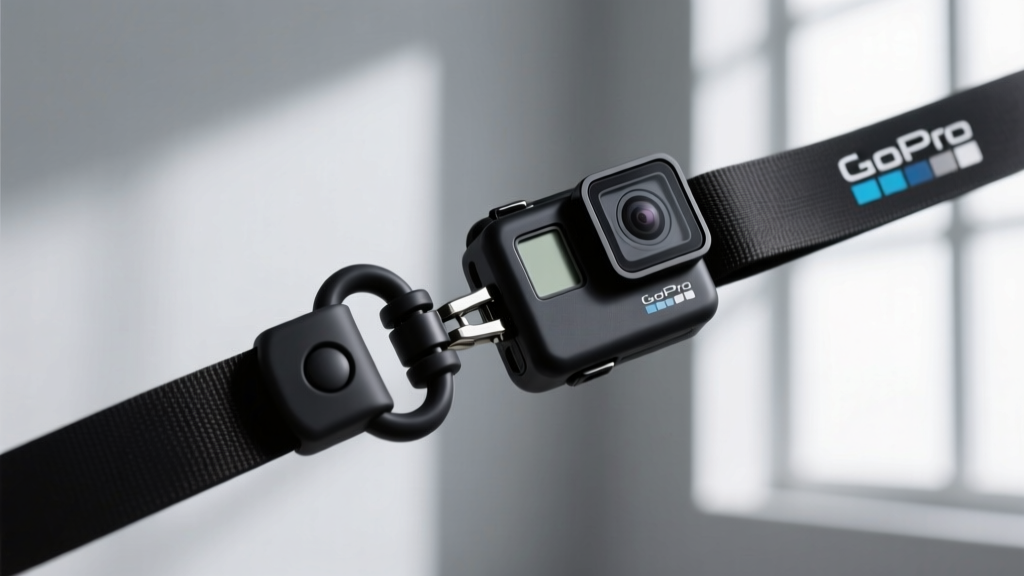
To finalize your selection, use this scenario-based framework to align material properties with your shooting habits. As documented in GoPro's official accessory guidelines, ensuring a secure tether is the first step in hands-free filming.
- The Urban Commuter & Travel Vlogger: Opt for a 316L Marine Stainless Steel ball chain with a silicone dampener sleeve. It offers the aesthetic of a streetwear pendant, resists degradation from city humidity and sweat, and prevents the camera from bouncing against your sternum while walking.
- The Marine & Surf Cinematographer: Platinum-cured silicone is non-negotiable. It can be rinsed in fresh water, will not harbor bacteria or salt crystals, and provides enough friction against a wetsuit to prevent the camera from flipping upside down in the surf.
- The Mountain Biker & Trail Runner: Choose a 550 Paracord setup equipped with a leather chafe-guard at the J-hook connection point. The kinetic bouncing of trail riding will saw through standard nylon webbing over time, but the kernmantle structure of paracord, combined with a leather buffer, ensures long-term survivability.
"The true cost of a GoPro necklace isn't measured in dollars, but in the replacement cost of the camera it protects and the irreplaceable footage it secures. Invest in material science, not just a string."
By prioritizing platinum-cured polymers, marine-grade metals, and calibrated breakaway safety clasps, you transform your GoPro necklace from a simple tether into a reliable piece of professional cinematography equipment.