Graduation Necklace Money Trends: Troubleshooting Leis & Pendants
Master the graduation necklace money trend. Troubleshoot DIY cash lei tearing, tape damage, and learn to style fine jewelry money pendants.


The 'Graduation Necklace Money' Phenomenon: Leis vs. Fine Jewelry
The graduation necklace money trend has completely dominated commencement seasons leading up to 2026. What started as a niche cultural tradition has exploded into a mainstream gifting staple. However, as jewelry experts, we see two distinct categories emerge under this search term: the viral DIY cash lei (a literal necklace made of folded currency) and the fine jewelry money-motif pendant (dollar signs, money bags, and coin pendants). Both present unique structural and stylistic challenges. A poorly constructed cash lei will tear and stain before the ceremony ends, while a cheaply made money pendant will tarnish and look tacky against a graduation gown. This guide troubleshoots the exact failure modes of both styles and provides actionable, expert-level solutions to ensure your graduation gift survives the walk across the stage.
Troubleshooting the DIY Cash Lei: Preventing Tears and Tape Damage
Constructing a money necklace out of physical currency seems simple, but it is fraught with material science pitfalls. United States currency is not paper; it is a specialized fabric blend of 75% cotton and 25% linen, according to the U.S. Bureau of Engraving and Printing. While durable, the repetitive stress of folding and the chemical composition of standard adhesives can ruin the bills, rendering them difficult to spend later.
The Acid-Free Tape Rule
The most common failure mode in DIY money leis is the use of standard Scotch tape or generic craft adhesives. These tapes use acidic, rubber-based adhesives that degrade the cotton-linen fibers over time, leaving permanent yellow stains and a sticky residue that attracts dirt. If the graduate wants to unfold and spend the money after the ceremony, acidic tape will cause the bills to tear at the creases.
- The Fix: Use only pH-neutral, archival-quality adhesives. We recommend Lineco Archival Mounting Corners or 3M Scrapbooking Tape. According to the Library of Congress Preservation Guidelines, acrylic-based archival tapes do not yellow or degrade textile fibers, ensuring the currency remains in pristine, spendable condition.
- Pro-Tip: Never apply tape directly to the front or back face of the bill. Fold the bill first, and apply the tape only to the overlapping folded edges.

Weight Distribution and Clasp Failures
A standard US bill weighs exactly one gram. A modest 50-bill graduation money necklace weighs 50 grams, and once you add glass beads, silk ribbons, and metal clasps, the total weight easily exceeds 85 grams. Standard cotton strings and cheap 5mm spring-ring clasps will snap under the dynamic swinging weight as the graduate walks.
- Cord Selection: Ditch the cotton twine. Use a 1.5mm braided nylon cord or a 2mm silk thread. Nylon has a tensile strength that easily supports up to 15 pounds, preventing mid-ceremony snaps.
- Clasp Upgrades: Replace the spring ring with a 10mm or 12mm stainless steel lobster clasp. For a seamless look, a heavy-duty neodymium magnetic clasp rated for 100+ grams provides security without the bulk.
Upgrading to Permanence: Money-Motif Pendants
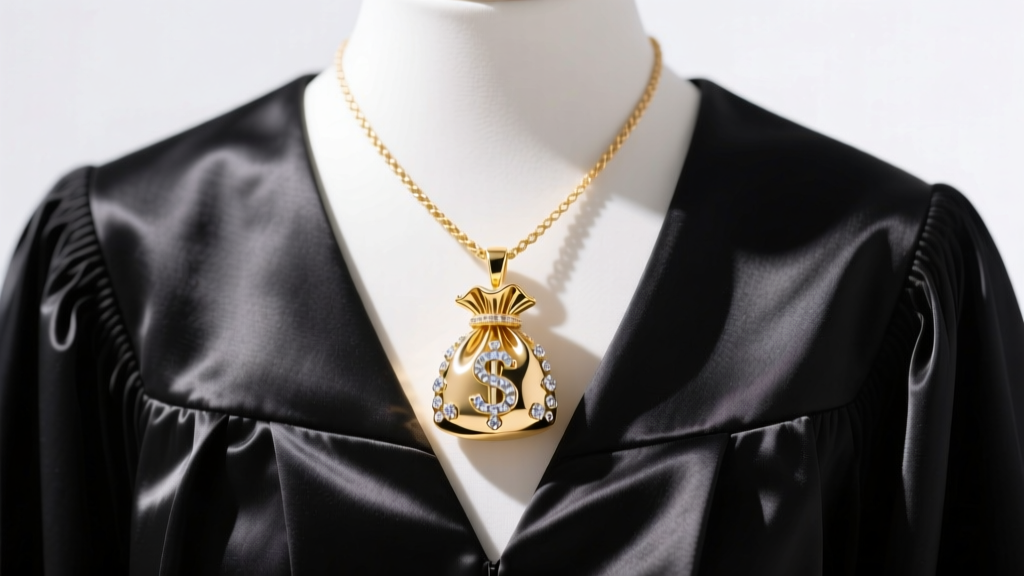
For those who want the 'money' aesthetic without the DIY hassle, fine jewelry money pendants (like a diamond-studded money bag or a minimalist dollar-sign medallion) are a sophisticated alternative. However, the market is flooded with low-quality pieces that fail the 'tacky' test.
Choosing the Right Metal Grade
Graduation ceremonies are long, hot, and involve a lot of sweating. Hollowed-out, gold-plated brass pendants will quickly oxidize, turning the graduate's skin green and the pendant a dull brown. When investing in a permanent graduation necklace money piece, metal purity is non-negotiable.
"For daily wear and high-sweat environments like graduation ceremonies, always opt for solid 14k or 18k gold, or rhodium-plated 925 sterling silver. Avoid gold-filled or heavily plated base metals, as the friction from the gown's neckline will accelerate wear." — Gemological Institute of America (GIA) Metal Guidelines.
Chain Pairing and Length Troubleshooting
A heavy solid gold money pendant requires a chain that can support its weight without kinking. Delicate cable chains will snap. Instead, opt for a 1.2mm to 1.5mm rope chain or a box chain. The interlocking links of a rope chain provide superior tensile strength and catch the light beautifully against a dark graduation gown.
Data Table: Cash Lei vs. Money Pendant Comparison
| Feature | DIY Cash Lei (Money Necklace) | Fine Jewelry Money Pendant |
|---|---|---|
| Average Cost | $50 - $200 (Face value of cash + supplies) | $250 - $1,500+ (Depending on karat & gems) |
| Weight | 50g - 120g (Heavy, requires thick cord) | 5g - 25g (Lightweight, requires sturdy chain) |
| Longevity | Temporary (Unfolded and spent post-graduation) | Permanent (Heirloom-quality if solid 14k+ gold) |
| Primary Failure Mode | Tearing at folds, acidic tape stains, clasp snapping | Plating wearing off, chain kinking, clasp failure |
| Gown Compatibility | Requires 24-30 inch length to sit below the lapel | Requires 20-22 inch length with a 2-inch extender |
Styling & Wardrobe Troubleshooting
The graduation gown itself is a styling obstacle. Most gowns are made of a shiny, synthetic polyester blend with a deep V-neck or a zip-up front. The high-contrast, often bright colors of the gown's trim can clash with both neon cash leis and delicate gold chains.
Neckline Pairings and Length Adjustments
The biggest mistake gifters make is choosing a standard 16-inch or 18-inch necklace length. Underneath a graduation gown, an 18-inch chain will sit directly on the collarbone, completely hidden by the gown's heavy fabric lapels.
- For the Cash Lei: You need a drop length of at least 26 to 30 inches. The money necklace should rest comfortably over the outside of the gown, acting as a statement piece similar to a sash or honor cord. Ensure the bottom loop of the lei does not hang lower than the graduate's waistline, or it will interfere with their hands when receiving the diploma.
- For the Fine Pendant: A 20-inch chain with a 2-inch extender is the sweet spot. This allows the pendant to rest just below the collarbone, visible in the V-neck opening of the gown without getting tangled in the zipper or fabric folds. Pair a yellow gold money pendant with a crisp white collared shirt underneath the gown for a classic, high-contrast look that photographs beautifully.
Expert Verdict
Whether you are meticulously folding crisp bills with archival tape or selecting a solid 14k gold money bag pendant, the key to mastering the graduation necklace money trend lies in structural integrity and material awareness. By avoiding acidic adhesives, upgrading your clasps to handle dynamic weight, and choosing the correct drop length for the graduation gown, you ensure the piece looks exceptional in photos and functions flawlessly on commencement day. Invest in the right materials, and your graduation gift will be remembered long after the caps are thrown into the air.


