Green Tourmaline Necklace Value Guide: Pricing & Quality (2026)
Discover the true value of a green tourmaline necklace. Our 2026 pricing guide covers chrome vs. standard grades, settings, and chain pairings.

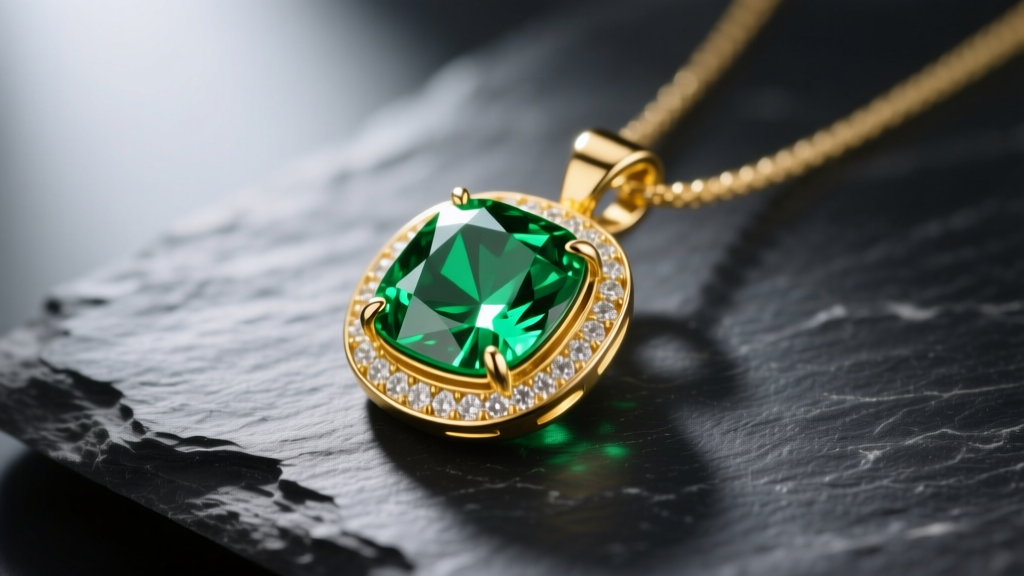
When evaluating a green tourmaline necklace, buyers are often caught between the allure of an emerald alternative and the confusing reality of gemological pricing. Unlike diamonds, which have a rigid, universally standardized pricing matrix, tourmaline values fluctuate wildly based on trace elements, origin, and color saturation. As we move through 2026, the market for colored gemstones has become increasingly sophisticated, meaning overpaying for a commercial-grade stone disguised as a fine gem is a genuine risk for the uninformed buyer.
This budget and value assessment strips away the retail markup rhetoric. We will dissect the exact gemological factors that dictate price, outline what your budget should realistically secure, and provide structural guidelines to ensure your necklace setting protects your investment for decades.
The Anatomy of Green Tourmaline Value
Not all green tourmaline is created equal. The primary driver of value in a green tourmaline necklace is the chemical origin of its color, which splits the market into two distinct categories: standard green tourmaline and chrome tourmaline.
Standard Green vs. Chrome Tourmaline
Standard green tourmaline derives its color from iron and titanium. These stones often exhibit a secondary brown or yellowish modifier, especially in larger carat weights. While beautiful, they are relatively abundant. Chrome tourmaline, on the other hand, is colored by chromium and vanadium—the same elements that give emeralds their legendary hue. According to the Gemological Institute of America (GIA), chrome tourmaline exhibits a richer, more saturated green without the muddying brown modifiers, making it exponentially rarer and more valuable.
The Chelsea Filter Test: If you are paying chrome tourmaline prices, demand verification. Under a Chelsea color filter, true chrome tourmaline will flash red or pink, whereas standard iron-based green tourmaline will remain green or appear dark.
Clarity and Pleochroism
Tourmaline is a Type II clarity gemstone, meaning minor inclusions are expected and acceptable. However, for a premium pendant, the stone must be 'eye-clean.' Avoid stones with surface-reaching fractures or heavy liquid veils that compromise structural integrity. Furthermore, tourmaline is highly pleochroic (showing different colors from different angles). A master cutter will orient the stone so the most vibrant green faces up, rather than the darker, sometimes blackish c-axis. Poor orientation is a hallmark of cheap, mass-cut commercial stones.
2026 Pricing Tiers: What Your Budget Actually Buys
To accurately assess a green tourmaline necklace, you must separate the cost of the center stone from the precious metal setting. Below is a realistic 2026 market breakdown for a standard 2.5 to 3.0-carat pendant.
| Grade Tier | Color Profile | Clarity Standard | Price Per Carat (Approx.) | Total Pendant Budget (w/ 14k Setting) |
|---|---|---|---|---|
| Commercial | Yellow-green to brownish-green; dark extinction | Visible inclusions, heavy needles | $40 - $120 | $250 - $600 |
| Fine (Standard) | Mint green to medium forest green; excellent brilliance | Eye-clean, minor internal silk | $150 - $350 | $800 - $1,800 |
| Extra-Fine (Chrome) | Vivid, saturated emerald-like green; high brilliance | Loupe-clean to eye-clean | $500 - $1,500+ | $2,500 - $6,000+ |
Expert Insight: Be highly skeptical of 'neon' green tourmaline sold at commercial prices. True neon greens are usually cuprian (copper-bearing) tourmalines from Mozambique or Nigeria, which command Paraíba-like premiums. If it looks neon but costs $300, it is likely synthetic glass or a doublet.
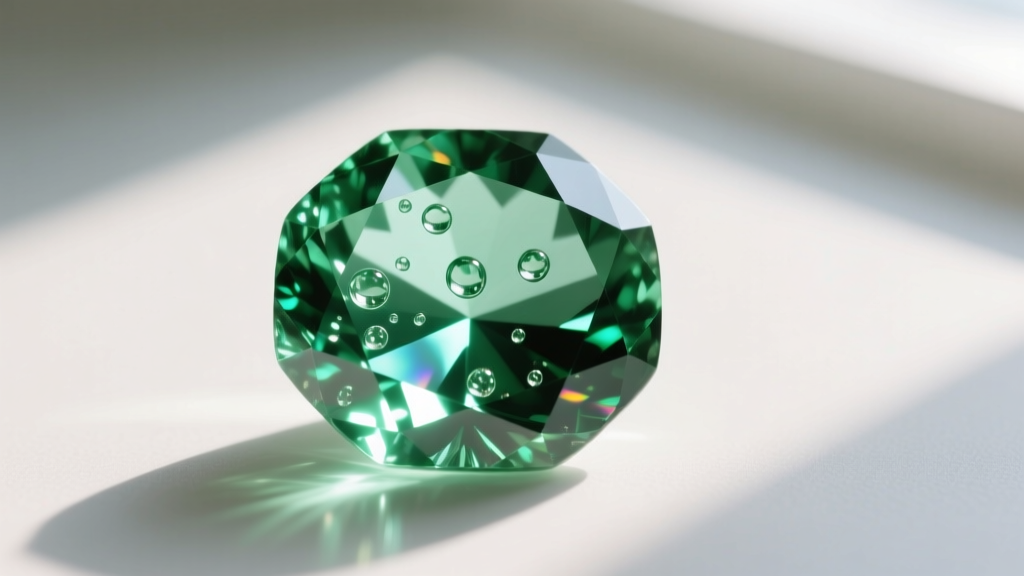
Setting and Chain Pairings: Protecting Your Investment
A common failure mode in gemstone jewelry is ignoring the physical limitations of the stone. Tourmaline ranks between 7 and 7.5 on the Mohs hardness scale. While this is sufficient for a necklace (which suffers fewer impacts than a ring), tourmaline has distinct cleavage planes and can chip if struck against a hard surface like a granite countertop.
Setting Selection: Bezel vs. Prong
For daily-wear green tourmaline necklaces, a full bezel setting is the optimal choice. A bezel wraps a continuous rim of metal around the girdle of the stone, protecting the vulnerable edges from lateral impacts. If you prefer the light performance of a prong setting, ensure the jeweler uses V-prongs at the corners (especially for emerald or pear cuts) and a low-profile gallery. High-set, cathedral-style pendant settings look dramatic but act as levers, increasing the torque on the stone's girdle if the pendant is snagged.
Chain Metallurgy and Gauge
A 3-carat tourmaline in a solid gold setting can easily weigh 4 to 6 grams. Many budget necklaces fail not at the stone, but at the chain.
- Avoid: 0.8mm rope chains or hollow-cored links. These will stretch, kink, and eventually snap under the pendulum weight of a gemstone pendant.
- Select: A 1.2mm to 1.5mm solid 14k or 18k gold box chain, wheat chain, or solid cable chain. These structures offer high tensile strength and resist kinking.
- The Bail: Ensure the bail (the loop connecting pendant to chain) is soldered solid, not merely pinched closed. A seamless, soldered bail prevents the chain from slowly sawing through the metal over years of friction.
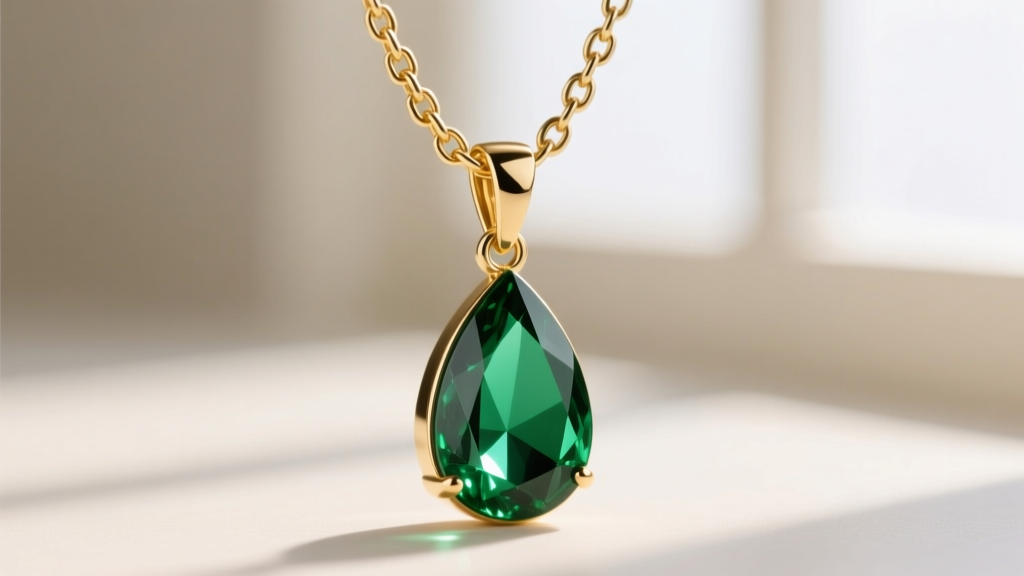
Red Flags and Synthetic Traps
When assessing value, knowing what to avoid is just as critical as knowing what to buy. The International Gem Society notes that while tourmaline is rarely synthesized in labs due to its complex chemical composition, it is frequently imitated or poorly treated.
Treatment Disclosures
Standard green tourmaline is almost never heat-treated; its color is stable and natural. However, some very dark, opaque green stones may be subjected to mild irradiation to lighten their tone. This is generally stable but must be disclosed by the seller. If a vendor claims a deeply saturated, light-toned stone is 'completely unheated' without lab documentation, proceed with caution.
The Doublet Deception
A prevalent trap in the budget market is the tourmaline doublet. This involves a thin slice of pale or colorless tourmaline (or even glass) glued over a green substrate, or a green glass base topped with a clear quartz dome. Viewed from the top, they mimic fine tourmaline. Always examine the stone from the side (profile view) under magnification. A distinct, perfectly flat glue line along the girdle is the immediate giveaway of a composite stone, which holds virtually zero resale or intrinsic value.
The Verdict: Your Value-Maximization Checklist
To ensure you are paying a fair market price for a green tourmaline necklace in 2026, run your prospective purchase through this final diagnostic checklist:
- Verify the Modifier: Does the green lean brown/yellow (commercial value), or is it pure mint/forest/chrome (fine value)?
- Demand the Profile View: Refuse to buy based solely on a top-down face-up photo. The profile reveals windowing (light leakage), poor cut proportions, and hidden glue lines.
- Audit the Metal Weight: A quality pendant setting for a 3-carat stone should contain at least 1.5 to 2.5 grams of solid gold. Ultra-lightweight settings indicate mass-produced castings prone to bending.
- Match the Chain to the Mass: Confirm the included chain is at least 1.2mm in diameter and features a sturdy, spring-ring or lobster clasp with a solid soldered jump ring.
By anchoring your purchasing decision in gemological realities rather than retail aesthetics, you can secure a green tourmaline necklace that not only retains its structural integrity but stands as a genuine store of value in your jewelry collection.


