Troubleshooting Your Grey Agate Necklace: Care & Repair
Learn how to troubleshoot common grey agate necklace problems, from dye bleeding and dullness to restringing and styling fixes.

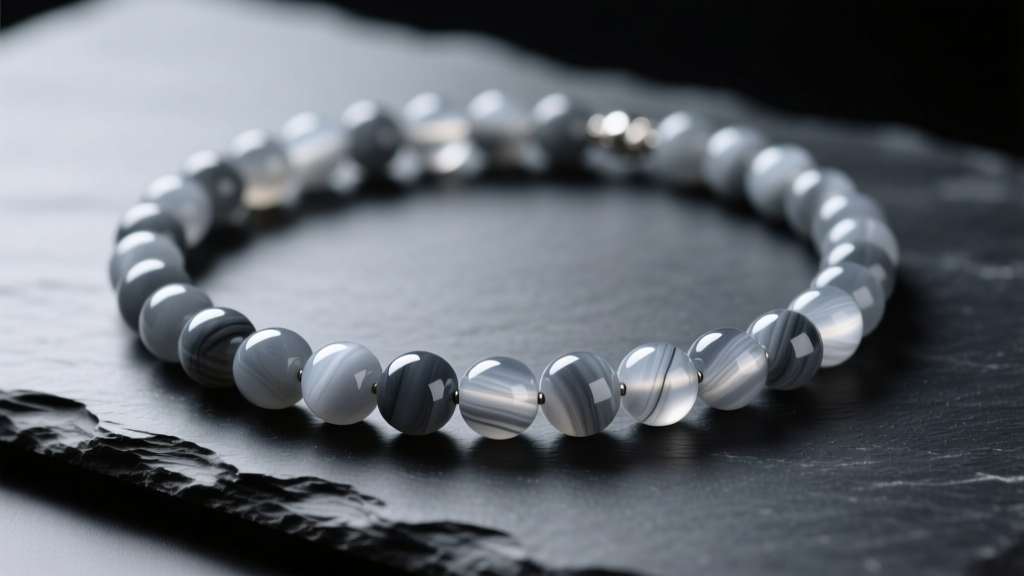
A grey agate necklace is a staple of understated elegance, offering a sophisticated, neutral palette that bridges the gap between casual and formal wear. However, beneath its polished surface lies a microcrystalline quartz structure that presents unique gemological challenges. Whether your necklace has suddenly lost its luster, is bleeding color onto your collarbone, or has suffered a catastrophic stringing failure, troubleshooting these issues requires an understanding of agate's physical properties. This comprehensive guide addresses the most common problems owners face with grey agate jewelry in 2026, providing actionable, expert-level solutions to restore and protect your investment.
Diagnosing Dullness and Surface Grime
Agate ranks between 6.5 and 7 on the Mohs hardness scale, making it relatively resistant to everyday scratching. However, it is a porous material. Over time, microscopic surface pores absorb sebum, lotions, and environmental pollutants, creating a cloudy, dull film that no amount of simple wiping will remove. According to the GIA Care and Cleaning Guide, improper cleaning is the leading cause of permanent surface damage in chalcedony-family gems.
The Problem: Your grey agate beads look matte, chalky, or lack their original vitreous luster.
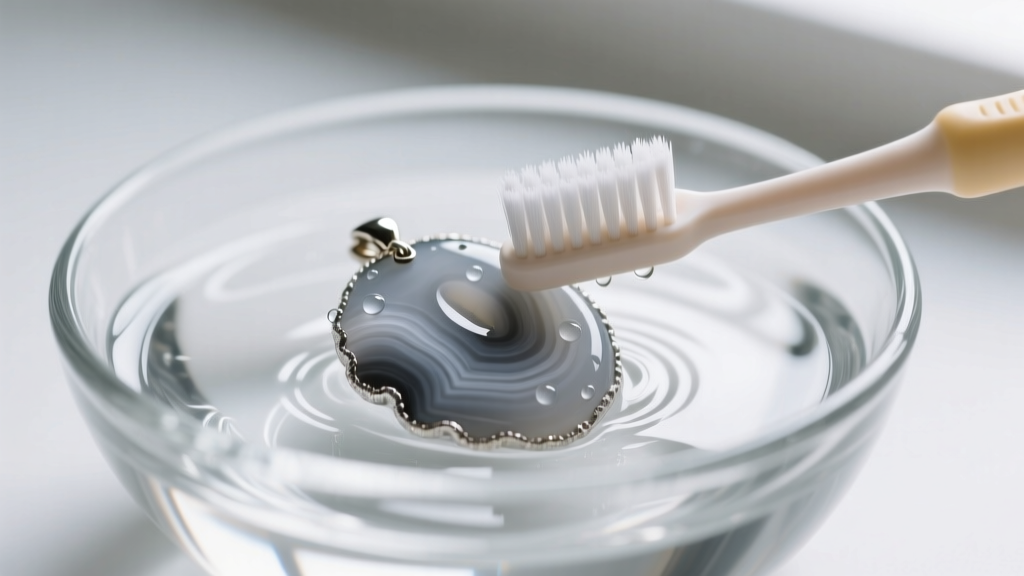
The Solution: Never use ultrasonic cleaners or steamers. The high-frequency vibrations can propagate microscopic natural fractures within the agate bands, leading to catastrophic cracking. Instead, prepare a lukewarm bath of distilled water and a few drops of pH-neutral, unscented castile soap. Submerge the necklace for exactly 10 minutes. Use a soft-bristled baby toothbrush to gently agitate the surface of each bead, paying special attention to the areas around the drill holes where grime accumulates. Rinse thoroughly with distilled water—never tap water, as chlorine and hard water minerals can leave permanent spotting—and pat dry with a lint-free microfiber cloth.
The Dye Dilemma: Is Your Grey Agate Bleeding?
One of the most frequent troubleshooting complaints involves color transfer. It is an open secret in the gemological community that the vast majority of commercial grey agate on the market is not naturally occurring. Natural grey agate is typically pale and banded. To achieve the deep, uniform charcoal or slate-grey hues demanded by modern jewelry trends, pale chalcedony is routinely treated with carbon-based dyes or iron salts. As noted by Mindat.org, these treatments are generally stable, but they can fail under specific conditions.
The Problem: The necklace is leaving grey or black smudges on your skin, clothing, or adjacent pearls.
The Troubleshooting Protocol: First, perform the Acetone Swab Test. Dip a cotton swab in pure acetone (standard nail polish remover often contains oils and conditioners that will ruin the test) and rub it vigorously against an inconspicuous area, such as the inside of a bead's drill hole. If the swab turns grey or black, the dye is unstable and leaching. To seal a bleeding agate necklace, you must restrict its exposure to moisture and acidity. Avoid wearing the necklace while sweating or applying perfume. For a permanent fix, a professional lapidary can apply a micro-thin layer of optically clear, jewelry-grade epoxy resin to seal the pores, though this will slightly alter the stone's refractive index and tactile feel.
Authenticity Troubleshooting: Agate vs. Glass Imitations
With the rise of fast-fashion jewelry, glass and resin imitations of grey agate have flooded the market. If your necklace feels unusually light, scratches easily, or lacks the characteristic thermal conductivity of quartz, you may be dealing with a fake.
Key Diagnostic Metrics
| Property | Genuine Grey Agate | Glass Imitation | Resin/Plastic |
|---|---|---|---|
| Specific Gravity | 2.60 - 2.65 | 2.20 - 2.50 | 1.05 - 1.20 |
| Thermal Conductivity | Cool to the touch | Neutral/Warm | Warm |
| Magnification | Banded microcrystalline structure | Swirl marks, air bubbles | Mold lines, uniform |
| Weight (8mm bead) | ~0.70 grams | ~0.55 grams | ~0.25 grams |
If your necklace fails the thermal test (it warms up instantly in your hand) or you spot spherical air bubbles under a 10x jeweler's loupe, you are likely wearing glass. Glass cannot be restored once scratched, whereas genuine agate can be professionally re-polished using cerium oxide powder.
Troubleshooting Stringing and Clasp Failures
Grey agate beads, particularly in the popular 6mm to 10mm sizes, carry significant weight due to their density. A standard 18-inch strand of 8mm agate beads weighs roughly 35 grams. This concentrated mass puts immense tensile stress on the stringing material, leading to frequent snapping at the clasp junction.

The Problem: The necklace snaps repeatedly near the clasp, or the wire kinks and weakens over time.
The Solution: Abandon traditional silk thread and French wire for heavy agate strands. Silk stretches, degrades when exposed to skin acids, and offers zero protection against the sharp edges of poorly drilled bead holes. Instead, restring your necklace using 49-strand stainless steel beading wire with a 0.018-inch diameter. This specific gauge provides the necessary flexibility to drape elegantly while supporting up to 30 pounds of tensile weight. Always use 2x2mm sterling silver or gold-filled crimp tubes, and secure them with a crimping plier to fold the metal smoothly, preventing it from acting like a razor blade against the wire. Incorporate a wire guardian (French wire) at the clasp loop to eliminate metal-on-metal friction.
Styling Roadblocks: Fixing the 'Washed Out' Look
From a styling perspective, grey agate presents a unique chromatic challenge. Because it lacks the high-contrast saturation of lapis lazuli or the vivid translucency of jade, grey agate can easily blend into cool-toned outfits, making the wearer look washed out or the jewelry look like an afterthought.
The Troubleshooting Framework:
- Contrast is King: Never pair a matte or medium-grey agate necklace with a heather-grey or slate top. The lack of contrast renders the necklace invisible. Instead, layer it over stark white linen, deep charcoal, or rich burgundy to force the eye to register the stone's subtle banding.
- Hardware Swapping: If your grey agate pendant feels flat, the issue may be the setting. High-polish yellow gold often clashes with the cool, earthy undertones of grey chalcedony. Have a jeweler swap the bail or setting for oxidized sterling silver or brushed white gold. The darkened crevices of oxidized silver perfectly mirror the natural shadow lines within the agate's bands.
- The Rule of Three: When layering, grey agate should act as the neutral anchor. Pair a 16-inch grey agate beaded choker with a 20-inch delicate silver chain featuring a single moonstone drop, and a 24-inch oxidized silver lariat. This creates depth without overwhelming the neckline.
Preventative Maintenance Checklist
To ensure your grey agate necklace remains a versatile staple in your collection for decades, implement this strict maintenance protocol:
- Post-Wear Wipe: Always wipe the beads with a dry microfiber cloth immediately after removal to prevent sebum from settling into the pores.
- Chemical Isolation: Apply all perfumes, hairsprays, and lotions at least 15 minutes before putting on the necklace. The alcohol and volatile organic compounds in cosmetics can strip the polish and destabilize carbon dyes.
- Bi-Annual Inspection: Every six months, gently pull the wire near the crimp tube. If you see more than 2mm of exposed wire or notice the wire is stiff and holds a kink, it is time to restring immediately to prevent catastrophic loss of beads.
- Storage: Store the necklace flat in a soft, anti-tarnish pouch. Hanging heavy beaded necklaces on standard jewelry hooks causes unnatural stress on the stringing material and can warp the wire over time.
By understanding the specific gemological and structural vulnerabilities of grey agate, you can transition from reactive repairs to proactive care. Whether you are sealing a leaching dye, upgrading to 49-strand wire, or simply adjusting your wardrobe contrast, these troubleshooting techniques will ensure your grey agate necklace retains its sophisticated edge for years to come.


