How to Authenticate and Clean a Victorian Paste Necklace
Learn how to authenticate, safely clean, and preserve your Victorian paste necklace with our expert step-by-step guide for collectors.

The Allure of Lead Glass: Understanding Victorian Paste
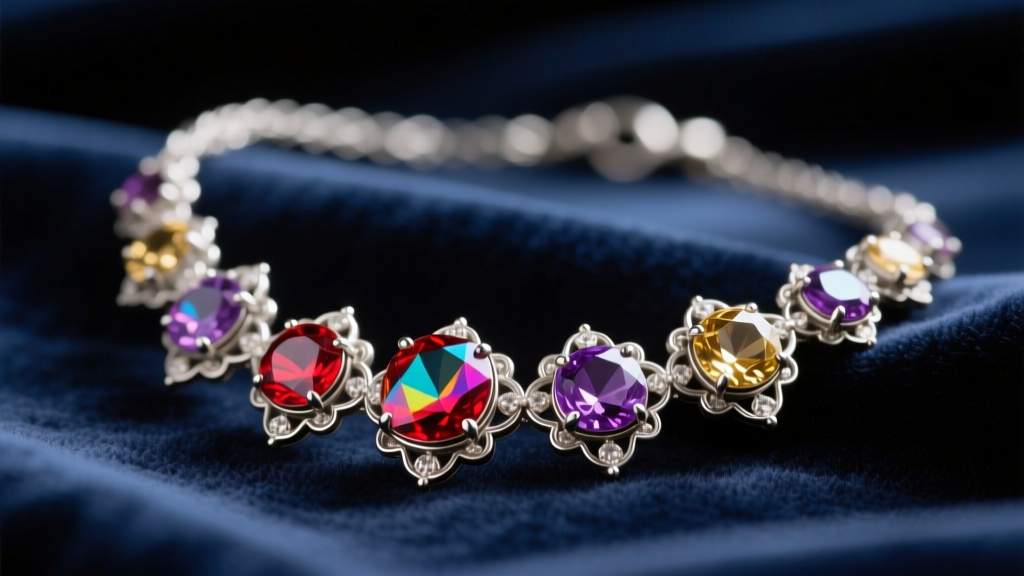
Collecting antique jewelry is a pursuit of history, craftsmanship, and enduring beauty. Among the most coveted pieces for collectors and stylists alike is the Victorian paste necklace. Unlike modern costume jewelry, "paste" in the 18th and 19th centuries referred to a specific type of high-lead glass, originally perfected by Georges Frédéric Strass. This material boasted a refractive index of 1.70 to 1.90—significantly higher than standard glass—allowing it to mimic the fiery brilliance of diamonds under candlelight and early gaslight.
However, the antique market is flooded with modern reproductions, and the fragile nature of 150-year-old foil-backed glass requires highly specialized care. Whether you have inherited a family heirloom or are hunting for an authentic piece at an estate sale, knowing how to properly authenticate and clean a Victorian paste necklace is essential to preserving its structural integrity and financial value.
Step-by-Step Authentication Guide
Authenticating a Victorian paste necklace requires a keen eye and a 10x jeweler's loupe. Modern rhinestones are machine-cut and mass-produced, whereas genuine Victorian pieces exhibit specific hallmarks of hand-craftsmanship and period-correct metallurgy.
Step 1: Examine the Foiling and Backing
The brilliance of early to mid-Victorian paste was heavily reliant on metallic foil placed behind the glass to reflect light. Using your loupe, inspect the back of the settings. Authentic pieces will almost always feature closed-back collet settings to protect the delicate foil from air and moisture. If you can see through the stone to the skin, it is likely a late Victorian piece (where glass-cutting improved and foiling became less necessary) or a modern reproduction. Look closely at the foil itself: silver foil was most common, but as it degrades over a century, it often forms black silver sulfide. Copper foil, used to enhance pink or yellow stones, may show signs of green copper carbonate oxidation.
Step 2: Inspect the Faceting and the Culet
Turn the necklace over and examine the crown (top) of the stones. Hand-cut Victorian paste will show slight asymmetries in facet alignment and polishing marks that are invisible to the naked eye but obvious under 10x magnification. Furthermore, look at the culet (the bottom point of the stone). Because early diamonds were cut with an open culet to prevent chipping, paste makers often painted a tiny "black dot" on the back of the glass or the foil to mimic this optical illusion. Modern machine-cut glass will be perfectly symmetrical and lack this charming historical deception.
Step 3: Evaluate the Clasp and Findings
The findings of a necklace are critical for dating. An authentic early to mid-Victorian paste necklace will typically feature a simple C-clasp without a safety catch, or a barrel clasp. The jump rings connecting the clasp to the chain will often be hand-forged, meaning the seam might be slightly visible or soldered unevenly. If you see a modern lobster clasp, a spring-ring clasp with a tiny trigger, or perfectly uniform, laser-cut jump rings, the piece has either been heavily altered or is a modern reproduction. For deeper insights into historical findings, Lang Antiques' Antique Jewelry University provides an excellent breakdown of period-correct clasps and settings.
Victorian Paste vs. Modern Rhinestones: A Comparison
Understanding the material differences is crucial for accurate appraisal and proper care. Use this quick-reference table when evaluating a potential purchase.
| Feature | Victorian Paste (c. 1837-1901) | Modern Rhinestone | Natural Diamond |
|---|---|---|---|
| Material | High-Lead Strass Glass | Lead-Free Glass / Acrylic | Carbon Crystal |
| Refractive Index | 1.70 - 1.90 | 1.50 - 1.70 | 2.42 |
| Backing | Silver or Copper Foil | Vacuum Metallic Coating | None (Transparent) |
| Setting Style | Rubbed-Over Collet | Glued or Prong | Prong or Bezel |
| Culet Detail | Painted Black Dot | Pointed or Flat | Open or Closed |
How to Safely Clean a Victorian Paste Necklace
The most common mistake new collectors make is treating paste like modern jewelry. Never submerge a foil-backed Victorian paste necklace in water or commercial jewelry dips. Even a single drop of moisture seeping past the collet rim will permanently oxidize the foil, turning it black and destroying the stone's brilliance from the inside out. The Victoria and Albert Museum's jewelry care guidelines strictly advise against wet cleaning for any foil-backed antique.
What You Will Need
- A soft, clean camel-hair or goat-hair makeup brush
- Microfiber polishing cloths
- Wooden toothpicks or orangewood sticks
- A 10x jeweler's loupe
- Isopropyl alcohol (90% or higher) - use with extreme caution
The Dry Cleaning Method (Step-by-Step)
- Inspect First: Use your loupe to check for loose stones, cracked glass, or compromised collet rims. If the metal rim is lifted, skip cleaning and take it to a professional antique jeweler.
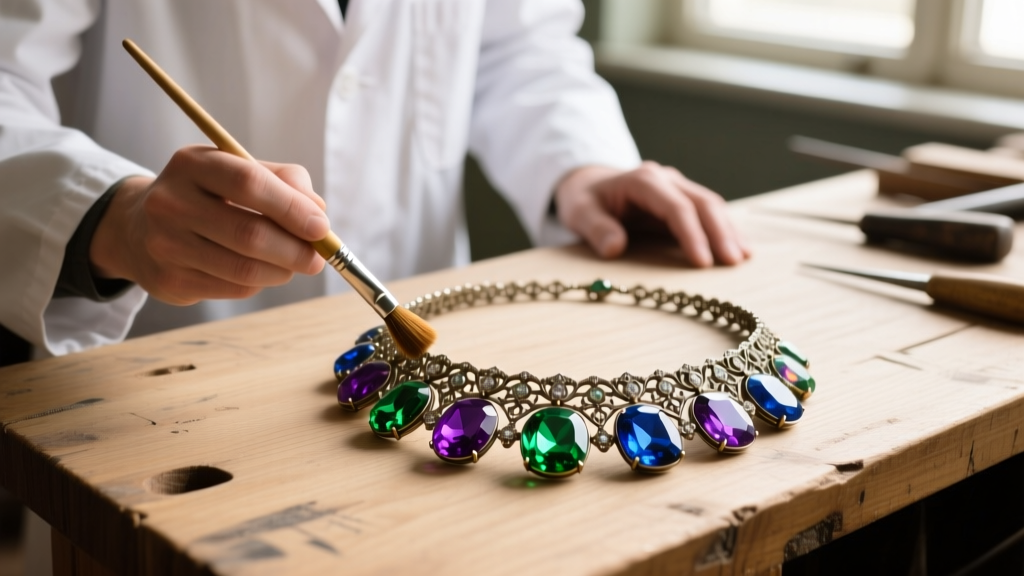
- Dust Removal: Gently sweep the necklace with the camel-hair brush to remove loose dust and skin cells. Always brush in one direction, moving from the center of the stone outward.
- Girdle Scraping: If there is hardened grime trapped where the glass meets the metal collet, gently use the flat side of a wooden toothpick to lift it away. Never use metal needles, as they will scratch the soft lead glass.
- Buffing: Lightly buff the crowns of the stones with a dry microfiber cloth to restore surface luster.
The Damp Wipe Method (For Stubborn Grease)
If the stones are heavily clouded by oils and dry dusting is insufficient, you may use a highly controlled damp method. Dip the very tip of a cotton swab into 90% isopropyl alcohol, then dab it on a paper towel until it is barely damp. Carefully wipe only the top crown of the glass stone, ensuring no liquid touches the metal collet seam. The high-proof alcohol evaporates almost instantly, minimizing the risk of moisture seepage. Immediately follow up with a dry microfiber cloth.
Storage and Preservation Protocols
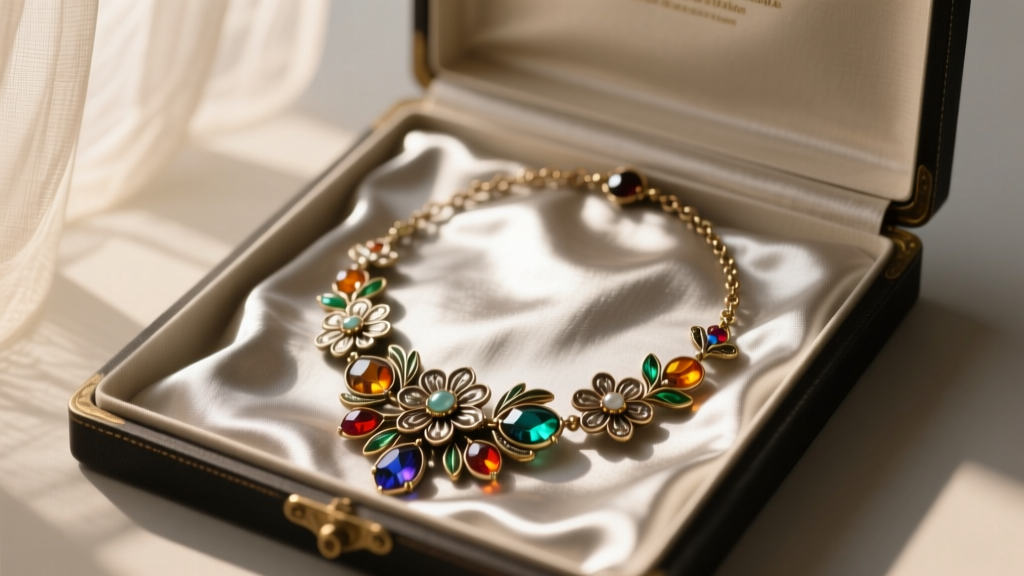
Proper storage is just as critical as proper cleaning. The high lead content in Victorian paste makes the glass slightly softer and more prone to scratching than modern gems, while the silver settings are highly susceptible to sulfur-induced tarnishing.
- Avoid Plastic: Never store antique paste in PVC or standard plastic zip-lock bags, which can trap humidity and emit off-gassing chemicals that degrade the foil and tarnish the silver.
- Use Archival Materials: Wrap the necklace in acid-free, unbuffered tissue paper, then place it in a specialized jewelry box lined with Pacific Silvercloth or a similar sulfur-absorbing fabric.
- Climate Control: Store the piece in a climate-controlled environment with a relative humidity below 50%. High humidity is the primary enemy of foil-backed jewelry.
- Lay Flat: Heavy Victorian collar necklaces should be stored flat rather than hung, as the weight of the glass stones can stress and warp the antique solder joints over time.
Final Thoughts on Antique Paste
A genuine Victorian paste necklace is not merely a diamond substitute; it is a masterclass in 19th-century lapidary art and metallurgical ingenuity. By taking the time to authenticate the foil, the faceting, and the findings, you ensure that you are investing in a true historical artifact. Furthermore, by adhering to strict, moisture-free cleaning protocols, you guarantee that the fiery brilliance of Strass glass will continue to captivate for another century.