Beyond Guy Maupassant The Necklace: Modern Diamond Illusions & Trends
Explore how Guy Maupassant The Necklace predicts today's jewelry trends, from lab-grown diamonds to moissanite and the modern pursuit of authenticity.

The Enduring Legacy of Guy Maupassant's The Necklace
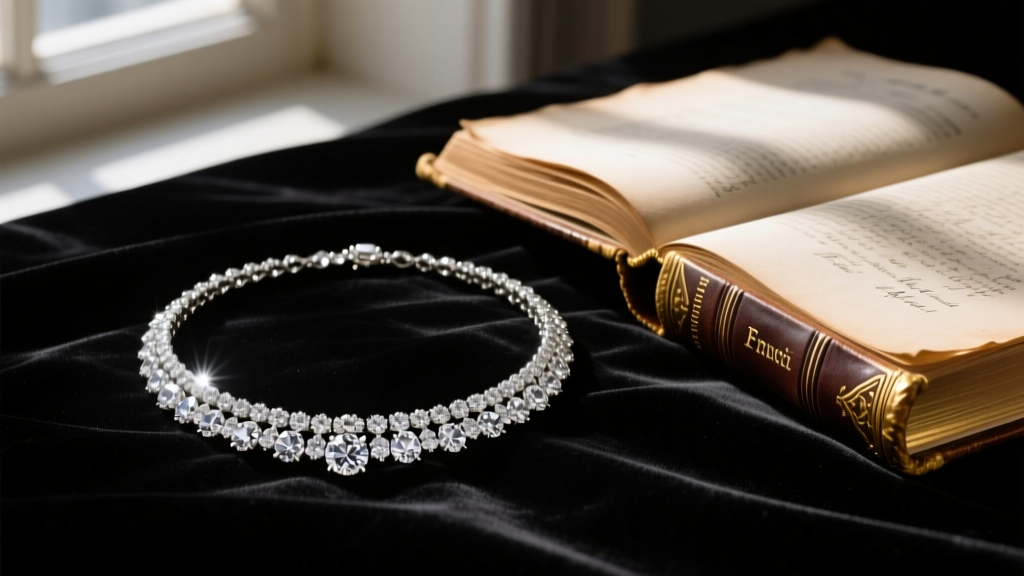
Published in 1884, Guy de Maupassant’s classic short story The Necklace (La Parure) remains one of the most devastating critiques of materialism and social climbing in literary history. The protagonist, Mathilde Loisel, borrows what she believes to be a priceless diamond necklace to attend a high-society ball. After losing it, she and her husband spend ten years in grueling poverty to replace it with a real diamond necklace costing 36,000 francs. The tragic twist? The original borrowed piece was 'paste'—a fake made of glass, worth a mere 500 francs.
While the fashion landscape has evolved drastically since the 19th century, the core psychological themes of Guy Maupassant The Necklace are more relevant in 2026 than ever before. Today, the line between 'real' and 'fake' has blurred beyond what Mathilde could have ever imagined. With the advent of chemically identical lab-grown diamonds, high-refractive moissanite, and ultra-luxury costume jewelry, modern consumers are navigating the exact same illusion of value that doomed the Loisels. As a style and trend analyst, I see the 'Maupassant Effect' playing out daily in how we assign worth, status, and beauty to the gems resting against our collarbones.
The 'Maupassant Effect' in the 2026 Jewelry Market
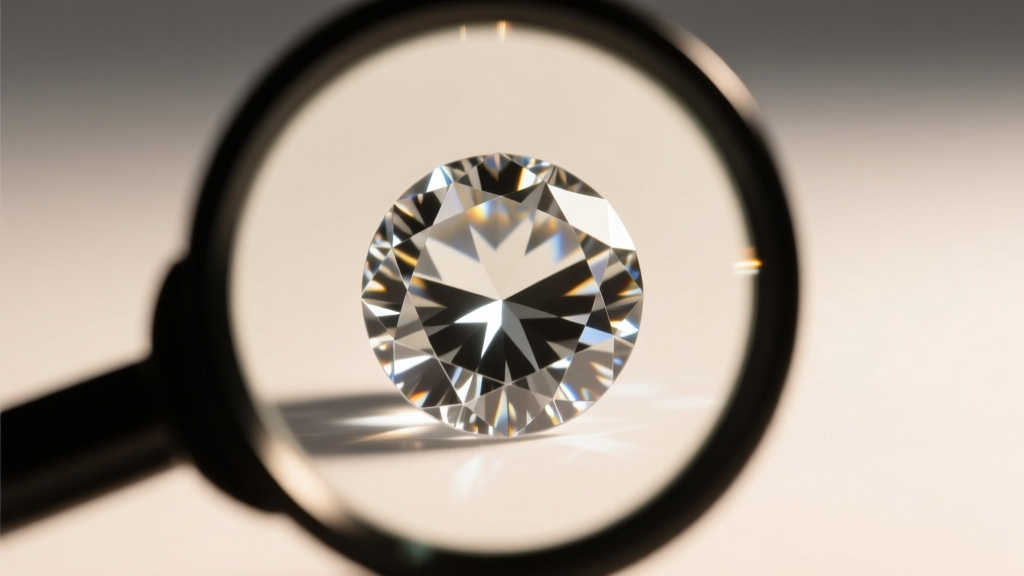
In the 1880s, 'paste' jewelry referred to leaded glass cut to mimic the brilliance of diamonds. It was relatively easy to spot upon close inspection due to its softness and lack of fire. Fast forward to today, and the modern equivalents of paste are lab-grown diamonds and moissanite. However, unlike the glass of Mathilde's era, these modern alternatives possess optical and physical properties that rival—or in some cases, exceed—natural stones.
The modern Maupassant Effect occurs when consumers take on crippling debt to purchase natural, mined diamonds for status, while visually identical lab-grown alternatives exist for a fraction of the cost. According to the Gemological Institute of America (GIA), lab-grown diamonds possess the same chemical composition, crystal structure, and optical properties as natural diamonds. The only difference is their origin. Yet, the secondary market value of a natural diamond remains significantly higher, driven entirely by perceived rarity and aggressive marketing rather than visual superiority.
Material Breakdown: What Would Mathilde Buy Today?
If Mathilde Loisel were shopping for a statement necklace today, she would be faced with a dizzying array of materials. Understanding the gemological data is crucial to avoiding the debt trap of perceived status. Below is a technical comparison of the most common diamond simulants and alternatives dominating the 2026 market.
| Material | Mohs Hardness | Refractive Index | Avg. Price (1ct Equivalent) | Detection Method |
|---|---|---|---|---|
| Natural Diamond | 10 | 2.417 | $5,500 - $8,000 | UV Fluorescence / Inclusions |
| CVD Lab Diamond | 10 | 2.417 | $600 - $1,200 | Spectroscopy (Si-V defects) |
| Moissanite | 9.25 | 2.65 - 2.69 | $200 - $400 | Double Refraction / Electrical |
| High-End CZ (Swarovski) | 8.0 - 8.5 | 2.15 - 2.18 | $10 - $30 | Thermal Conductivity Tester |
Notice the refractive index (RI). Moissanite actually has a higher RI than a natural diamond, meaning it exhibits more 'fire' (rainbow flashes). To the untrained eye at a gala, a moissanite tennis necklace will out-sparkle a natural diamond riviere. The tragedy of the modern consumer is paying a 2,000% premium for a natural stone when the optical performance of a $300 moissanite is arguably superior for evening wear.
The Psychology of Status and the 'Quiet Luxury' Shift
'She had no dresses, no jewels, nothing. And these alone she loved; she felt made for them.' — Guy de Maupassant
Mathilde’s obsession was rooted in overt, flashy status. She wanted to be the most envied woman in the room. In stark contrast, the dominant jewelry trend of 2026 is 'Quiet Luxury'—a movement that rejects ostentatious displays of wealth in favor of intrinsic quality, craftsmanship, and subtlety. The modern style connoisseur knows that true luxury doesn't need to scream.
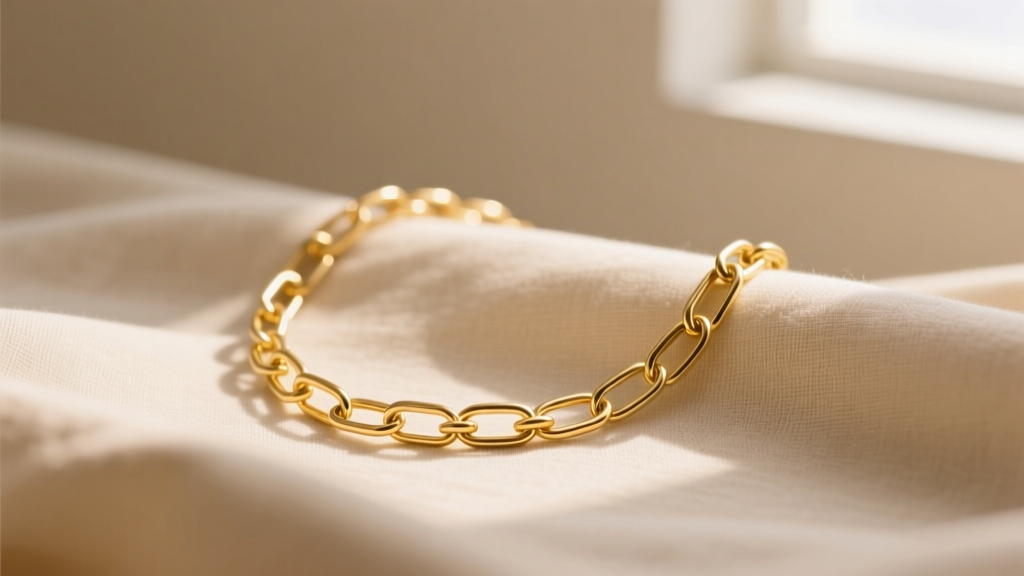
Instead of risking financial ruin on a massive, potentially flawed natural diamond pendant, today’s tastemakers are investing in heavy, solid gold chain necklaces and ethically sourced, modestly sized gemstones. A 4mm solid 18k yellow gold Cuban link chain holds its intrinsic melt value and projects a quiet, undeniable confidence that a massive, debt-financed diamond pendant simply cannot match. The American Gem Society (AGS) frequently highlights the importance of prioritizing cut quality and metal integrity over sheer carat weight, a philosophy that aligns perfectly with the modern rejection of the 'Maupassant trap.'
How to Verify Authenticity and Avoid the Debt Trap
The ultimate lesson of Guy Maupassant The Necklace is the danger of assuming value based on appearance and social context. Mathilde assumed her wealthy friend’s necklace was real simply because of the friend's social standing. In today’s market, you must rely on science, not assumptions. Here is a practical framework for verifying jewelry authenticity before making a significant investment:
- Demand Independent Grading Reports: Never purchase a diamond (natural or lab) over 0.50 carats without a verifiable report from the GIA or IGI. The report number should be laser-inscribed on the stone's girdle, viewable under a 10x jeweler's loupe.
- Understand Thermal vs. Electrical Testing: Standard diamond testers measure thermal conductivity. Because moissanite conducts heat similarly to diamond, basic testers will falsely identify moissanite as a diamond. You must use a multi-tester (like the Presidium Multi-Tester III) that also checks electrical conductivity to differentiate the two.
- Check Metal Hallmarks: A high-end necklace is only as good as its chain. Look for stamped hallmarks on the clasp or end ring. '750' or '18k' indicates 75% pure gold. '925' indicates sterling silver. If a piece claims to be solid gold but lacks a hallmark or features a 'GP' (Gold Plated) or 'GF' (Gold Filled) stamp, its intrinsic value is negligible.
- Beware of the 'Paste' Setting: In both the 19th century and today, counterfeiters often set fake stones in real gold mountings to deceive buyers. Always test the stone independently of the metal setting.
Conclusion: Redefining the 'Real' Necklace
Guy de Maupassant could not have predicted the advent of Chemical Vapor Deposition (CVD) labs or the rise of lab-grown gemstones, but his understanding of human vanity and the illusion of wealth was prophetic. The tragedy of Mathilde Loisel was not that she wore a fake necklace; her tragedy was that she destroyed her life to replace it with a real one, completely missing the point that the original 'fake' served its aesthetic purpose perfectly.
As we navigate the jewelry trends of 2026, the smartest style strategy is to decouple visual beauty from arbitrary market scarcity. Whether you choose a breathtaking lab-grown diamond pendant, a fiery moissanite choker, or a timeless, unadorned 18k gold chain, the value of your jewelry should be measured by the joy it brings you and the financial peace of mind you retain. Don't let the pursuit of an arbitrary 'real' label cost you your decade. Wear what you love, verify what you buy, and never let a necklace own you.


