Hamsa Necklace Anatomy: Metals, Casting & Chain Pairings
Explore the technical anatomy of a fine jewelry hamsa necklace. We cover metal alloys, casting methods, enamel types, and chain pairings.

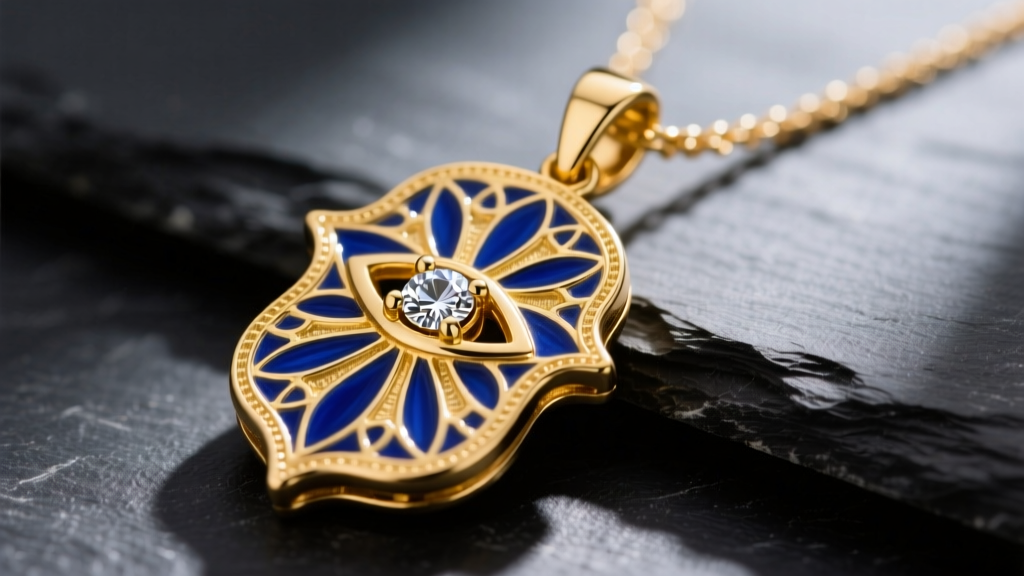
While the hamsa hand has served as a protective amulet across Middle Eastern and North African cultures for centuries, its translation into fine jewelry requires precise metallurgical and structural decisions. When investing in a high-quality hamsa necklace, the aesthetic appeal of the open right hand is only as enduring as the alloys, casting techniques, and chain hardware used to create it. This technical deep dive bypasses basic symbolism to examine the exact manufacturing specifications, metal hardness ratings, and structural pairings that separate heirloom-grade hamsa pendants from mass-produced costume jewelry.
The Metallurgy of the Hamsa: Alloy Selection and Hardness
The structural integrity of a hamsa pendant—particularly the slender fingers and the delicate thumb—relies heavily on the Vickers Hardness (HV) of the chosen metal alloy. Because the hand shape features protruding elements prone to bending or snapping under tensile stress, jewelers must balance malleability for casting with rigidity for daily wear.
14k vs. 18k Gold: Durability vs. Saturation
In the fine jewelry sector, 14k gold (58.5% pure gold) remains the industry standard for intricate hamsa designs. With a Vickers Hardness rating of approximately 140-160 HV, 14k gold provides the necessary rigidity to prevent the pendant's fingers from warping if caught on clothing. Conversely, 18k gold (75% pure gold) offers a richer, warmer color saturation but sits at a softer 120-135 HV. For solid-cast 18k hamsa pendants, master jewelers often increase the thickness of the fingers by 0.3mm to 0.5mm during the CAD (Computer-Aided Design) phase to compensate for the alloy's lower tensile strength.
Platinum and Palladium: The High-Density Alternatives
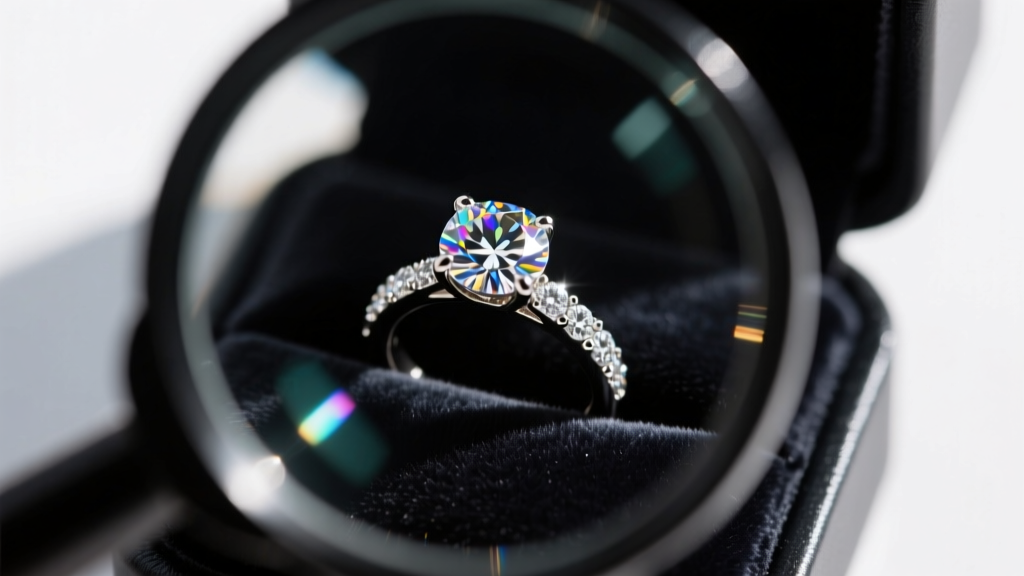
For micro-pavé diamond hamsa necklaces, Platinum 950 (alloyed with 5% ruthenium) is the superior choice. Platinum's density ensures that the tiny prongs holding the pavé diamonds will not wear away over decades of friction. However, platinum requires casting temperatures exceeding 3,200°F, necessitating specialized phosphate-bonded investment powders rather than the standard gypsum-based investments used for gold.
Manufacturing Techniques: Lost-Wax Casting vs. Stamping
The method used to form the hamsa pendant dictates its porosity, weight, and edge definition. According to manufacturing data from Ganoksin, the premier resource for jewelry technology, the two primary methods yield vastly different results.
| Manufacturing Method | Process Details | Pros for Hamsa Pendants | Cons & Limitations |
|---|---|---|---|
| Lost-Wax Casting | Wax model encased in investment, burned out at 1,350°F, and replaced with molten metal via centrifugal or vacuum force. | Allows for deep 3D relief, intricate filigree, and custom sizing. Ideal for heavy, solid pieces. | Prone to gas porosity if burnout is rushed; requires extensive polishing to remove sprue marks. |
| Die Striking / Stamping | Sheet metal is pressed between hardened steel dies under immense pressure (up to 50 tons). | Creates a highly dense, durable, and lightweight pendant with sharp edge definition. Excellent for flat hamsas. | Limited to 2D or shallow 3D designs; high initial tooling cost; cannot accommodate complex undercuts. |
| 3D Sintering (DMLS) | Direct Metal Laser Sintering fuses metal powder layer by layer using a high-powered laser. | Unmatched geometric complexity; zero porosity; no sprue marks to polish. | Requires specialized support structures during printing; surface finish requires post-polishing. |
Surface Treatments: Enameling and Stone Inlay
The palm of the hamsa often serves as a canvas for color, achieved either through vitreous enameling or precision stone inlay. The technical execution of these surfaces dramatically impacts the necklace's longevity.
Guilloché vs. Cold Enamel
High-end hamsa necklaces frequently utilize guilloché enameling, a technique where a mechanical rose engine cuts precise, repetitive geometric patterns into the metal base. Translucent vitreous enamel (ground glass) is then applied and fired in a kiln at roughly 1,400°F. The glass fuses with the metal, creating a scratch-resistant, luminous surface. In contrast, mass-market pendants use 'cold enamel' (epoxy resin). While cold enamel allows for a wider color palette and lower production costs, it has a Mohs hardness of only 2.5 to 3.0, making it highly susceptible to scratching and UV degradation over time.
Calibrating the Central 'Eye'
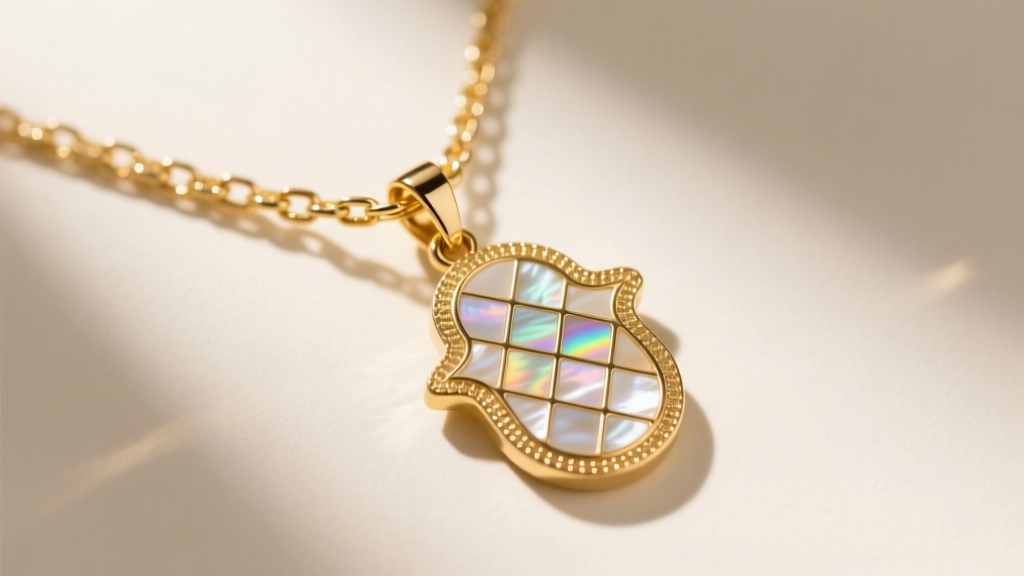
The central eye of the hamsa is typically set with a cabochon (turquoise, lapis lazuli, or mother-of-pearl) or a faceted gemstone. For cabochons, a bezel setting is mandatory to protect the stone's girdle from chipping. The bezel wire must be perfectly annealed and burnished flush against the stone. For faceted diamonds or sapphires, a 4-prong or 6-prong setting is preferred to maximize light return. According to the Gemological Institute of America (GIA), ensuring proper pavilion depth in the central stone is critical, as a shallow stone will exhibit 'windowing,' reducing the protective symbolism and visual impact of the eye.
Structural Chain Pairings for Pendant Weight
A well-crafted hamsa pendant typically weighs between 3.5 and 8.0 grams, depending on the metal and gemstone inclusions. Pairing this weight with an inadequate chain is the leading cause of jewelry failure. The chain must possess sufficient tensile strength and feature a robust clasp mechanism.
- Box Chains (1.0mm - 1.5mm): Composed of square links, box chains offer excellent tensile strength and a smooth surface that prevents hair snagging. A 1.2mm 14k gold box chain can support up to 15 lbs of static weight, making it ideal for medium-weight hamsas.
- Cable Chains (1.2mm - 1.8mm): The classic oval-link chain. While aesthetically traditional, the solder points on each link are potential failure points. Ensure the cable chain is fully soldered (each link individually closed with solder) rather than flash-soldered.
- Rope Chains (1.5mm+): Best suited for heavy, solid platinum or 18k gold hamsa pendants. The twisted helix structure distributes weight evenly, but the intricate links can trap skin oils and require ultrasonic cleaning.
Expert Hardware Note: The jump ring connecting the chain to the pendant's bail is a critical failure point. For a 5-gram hamsa pendant, the jump ring must be forged from at least 18-gauge (1.02mm) wire and feature a flush, soldered seam. An unsoldered or poorly filed jump ring will slowly wear through the bail due to kinetic friction during daily wear.
Sourcing and Hallmark Verification
When evaluating a hamsa necklace, always inspect the hallmark. A legitimate fine jewelry piece will bear a quality mark (e.g., 14K, 18K, 925, PT950) and, in many jurisdictions, a registered maker's mark or trademark. The hallmark is typically laser-engraved or stamped on the back of the pendant or on the flat tag attached to the chain's clasp. Beware of pendants stamped with 'Gold Filled' or 'Gold Plated' if you are seeking a solid alloy piece; the base metal in plated hamsas (often brass or pewter) will eventually oxidize and bleed through the thin gold layer, particularly in the deep crevices of the hand's lifelines and finger joints.
By understanding the metallurgy, casting methodologies, and structural hardware requirements, you can confidently select a hamsa necklace that is not only rich in cultural heritage but engineered to endure as a structural masterpiece of fine jewelry.


