The Engineering of a Hanging Necklace: Weight, Drape, and Chain Gauge
Master the physics of the hanging necklace. Learn chain gauge ratios, bail engineering, and clasp mechanics to prevent flipping and breakage.

The Physics of the Drop: Why Hanging Necklaces Flip and Choke
When evaluating a hanging necklace, the untrained eye focuses exclusively on the carat weight of the center stone or the karat purity of the precious metal. However, from a structural engineering perspective, a long-drop or lariat necklace is a suspended kinetic sculpture. It is subject to constant shear stress, pendulum momentum, and tensile strain. If the ratio between the chain gauge, the bail fulcrum, and the pendant mass is miscalculated, the piece will fail—either by snapping at the weakest link, choking the wearer as it rides up the neck, or continuously flipping the pendant backward.
In this technical deep dive, we deconstruct the mechanical requirements of a properly balanced hanging necklace, providing exact specifications for jewelers, bench technicians, and informed collectors who demand structural longevity alongside aesthetic beauty.
Center of Gravity and the Lariat Problem
The primary failure point in any hanging necklace is the center of gravity. When a pendant exceeds 8 grams, it generates significant kinetic energy with every step the wearer takes. If the chain is too lightweight, the chain links act as microscopic hinges, absorbing the shock but eventually suffering from metal fatigue at the solder points. According to metallurgical guidelines from Rio Grande, a chain must possess enough tensile strength to support at least three times the static weight of the pendant to account for dynamic movement and accidental snags.
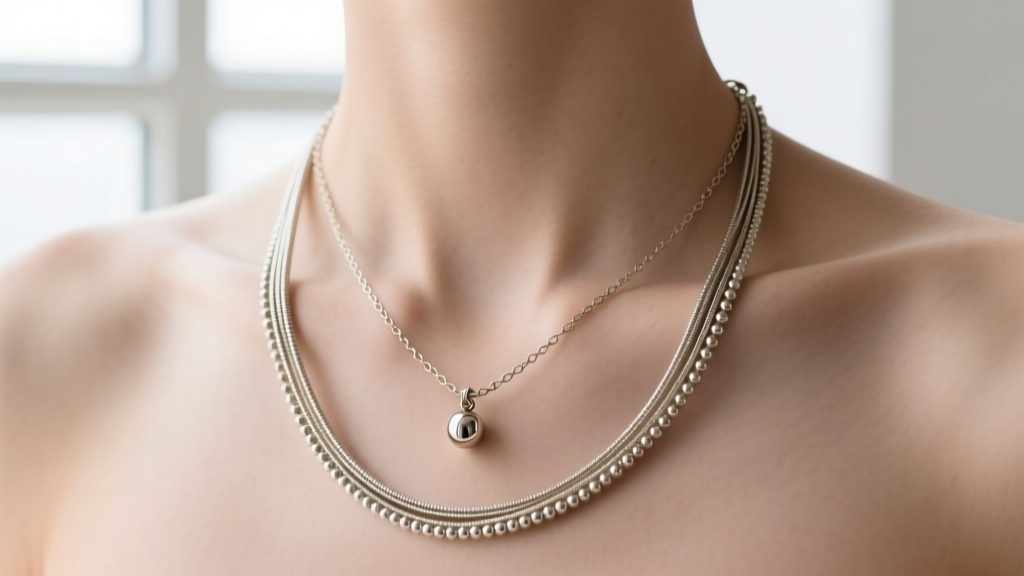
The "lariat problem" is a common frustration with Y-style hanging necklaces. The vertical drop is often heavier than the horizontal chain resting against the nape of the neck. As the wearer moves, the heavier front drop pulls the back chain upward, causing the necklace to choke the wearer and the pendant to flip sideways. The technical solution is not to simply use a thicker chain, but to introduce a counterweight. Soldering a 2-gram to 3-gram decorative bead or clasp tag to the back of the chain, precisely two inches from the clasp, shifts the center of gravity backward. This anchors the necklace against the cervical spine and allows the front drop to hang perfectly plumb.
Chain Gauge to Pendant Weight Ratios (The Golden Rule)
Selecting the correct chain gauge is non-negotiable. A delicate 0.8mm cable chain might look elegant, but its individual links are typically stamped from 0.3mm wire, offering a maximum yield strength of roughly 4 pounds (1.8 kg). When paired with a 12-gram gemstone drop, a sudden jerk will exceed the yield strength, permanently elongating the links or snapping them entirely. Below is the definitive engineering matrix for matching chain thickness to pendant mass in standard 925 sterling silver and 14k gold alloys.
| Chain Style | Gauge (mm) | Wire Thickness | Max Static Pendant Weight | Dynamic Tolerance |
|---|---|---|---|---|
| Cable / Link | 0.8mm | 0.35mm | 3.5 grams | Low (Prone to kinking) |
| Box Chain | 1.2mm | 0.40mm | 8.0 grams | Medium (High shear resistance) |
| Rope Chain | 1.5mm | 0.50mm | 15.0 grams | High (Excellent kinetic absorption) |
| Wheat / Spiga | 2.0mm | 0.60mm | 25.0+ grams | Extreme (Multi-directional weave) |
Bail Engineering: Securing the Hanging Element
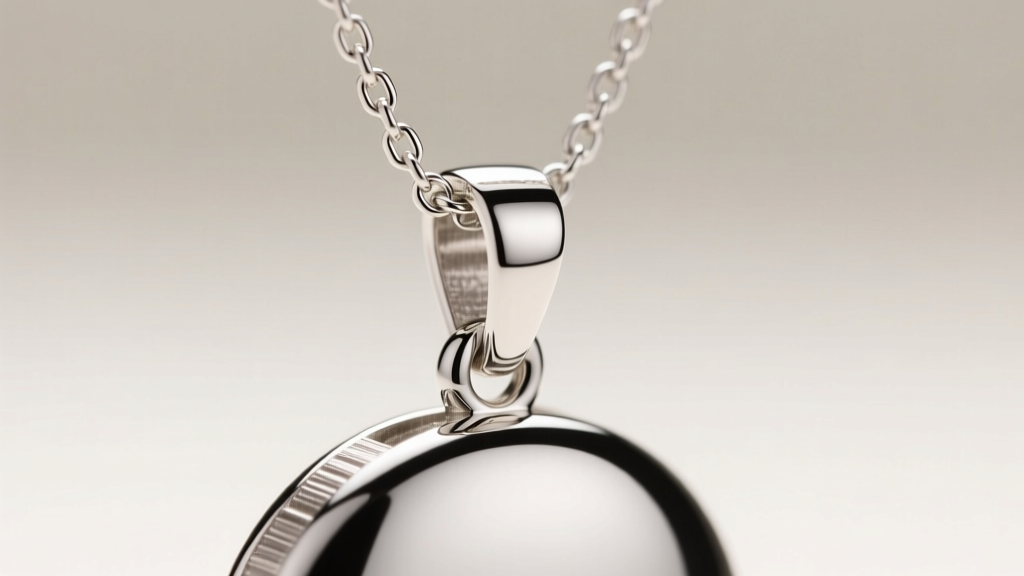
The bail is the mechanical fulcrum of the hanging necklace. It is the single component that translates the vertical pull of gravity into the horizontal tension of the chain. The Gemological Institute of America (GIA) frequently notes that bail failure is the leading cause of lost gemstones in custom jewelry. For drops exceeding 10 grams, glue-on bails utilizing cyanoacrylate or two-part epoxy are strictly prohibited. Human skin oils, cosmetic lotions, and ambient heat cause epoxy resins to plasticize and degrade over a 12-to-18-month lifecycle.
- Soldered Loop Bails: The gold standard for heavy drops. The bail is permanently fused to the pendant mount using hard solder (melting point > 1400°F), creating a continuous metallurgical bond that resists torsional stress.
- Hidden Bails (Tube Bails): Ideal for drilling directly into the top of a cabochon or raw crystal. This requires a diamond-tipped twist bit with a 1.0mm shank, utilizing water as a coolant to prevent thermal shock to the gemstone during the drilling process.
- Pinch Bails: Acceptable only for lightweight, pre-drilled briolettes (under 4 grams). The prongs rely on mechanical tension, which easily fatigues and opens under the pendulum swing of a heavy hanging necklace.
Clasp Mechanics for High-Tension Drops
The clasp is the final structural gatekeeper. Spring ring clasps are ubiquitous in commercial jewelry due to their low manufacturing cost, but they are mechanically inadequate for heavy drops. The internal spring wire in a standard 6mm spring ring is often less than 0.2mm thick. Under the constant micro-tensions of a heavy hanging necklace, this wire deforms, resulting in a clasp that fails to close flush against the jump ring, eventually catching on clothing and snapping open.
Why Spring Rings Fail on Heavy Drops
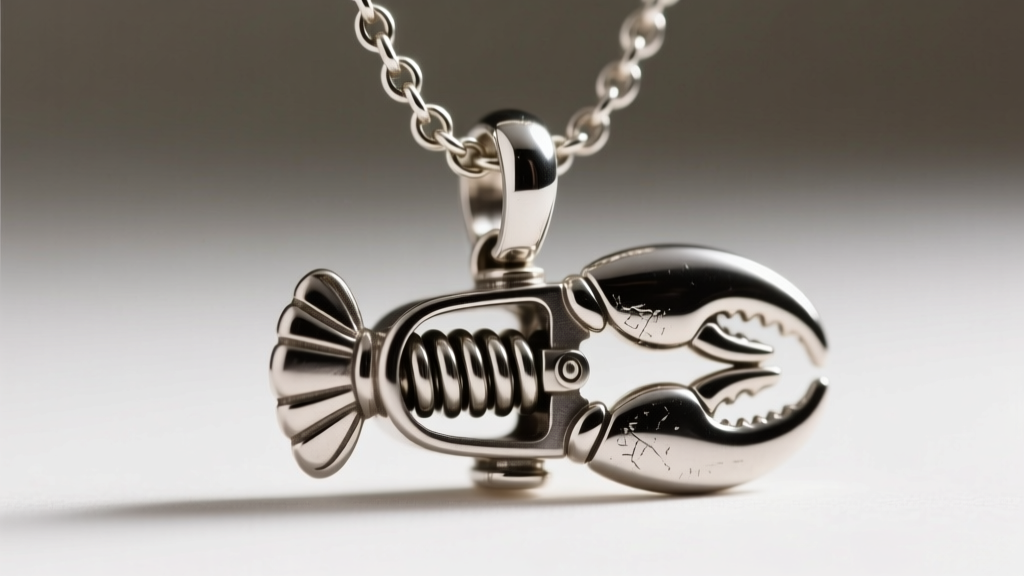
Instead, specify a solid-body lobster clasp with a minimum length of 7mm and a stamped stainless steel internal spring. Furthermore, the jump ring connecting the clasp to the chain must be proportionate. A 1.5mm rope chain requires a minimum 5mm outer-diameter jump ring with a 1.2mm wire thickness to prevent the chain from slipping through the gap or causing localized wear on the clasp loop.
For ultra-heavy artisan pieces (25g+), neodymium magnetic clasps encased in 316L surgical steel provide superior security. Unlike mechanical clasps that rely on a tiny wire spring, neodymium magnets generate a continuous, non-degrading magnetic field that requires a specific lateral shearing force to disengage, completely eliminating the risk of accidental kinetic release.
Troubleshooting Common Hanging Necklace Failures
Even with perfect material selection, environmental factors can compromise the drape of a hanging necklace. If a piece consistently rides up or twists, inspect the jump rings. All jump rings connecting the chain to the clasp and the chain to the bail must be soldered closed. Unsoldered jump rings will naturally twist open along their cut line when subjected to the torsional stress of a swinging pendant.
Perform the "flip test" by holding the clasp and letting the pendant swing like a pendulum to observe the bail rotation. If the bail binds or stutters, the inner diameter of the bail loop is too small for the chain gauge, causing friction and eventual wear-through. The inner diameter of the bail must always be at least 1.5 times the width of the chain to allow for a fluid, frictionless pivot.
"Never rely on the friction fit of an unsoldered jump ring for a pendant over 5 grams. The kinetic energy of a walking stride generates enough torsional force to slowly walk the cut edges of a jump ring apart over a period of weeks." — Master Bench Jeweler Protocols
Ultimately, a masterfully crafted hanging necklace is a triumph of applied physics. By respecting the mathematical relationship between chain gauge, bail integrity, and counterweight distribution, you ensure that the piece not only survives the rigors of daily wear but drapes with the effortless, fluid grace that defines high-end jewelry design.


