What Are Hawaiian Flower Necklaces Called? Lei Jewelry Trends
Discover what Hawaiian flower necklaces are called and explore how traditional lei motifs inspire today's fine botanical jewelry trends and styling.

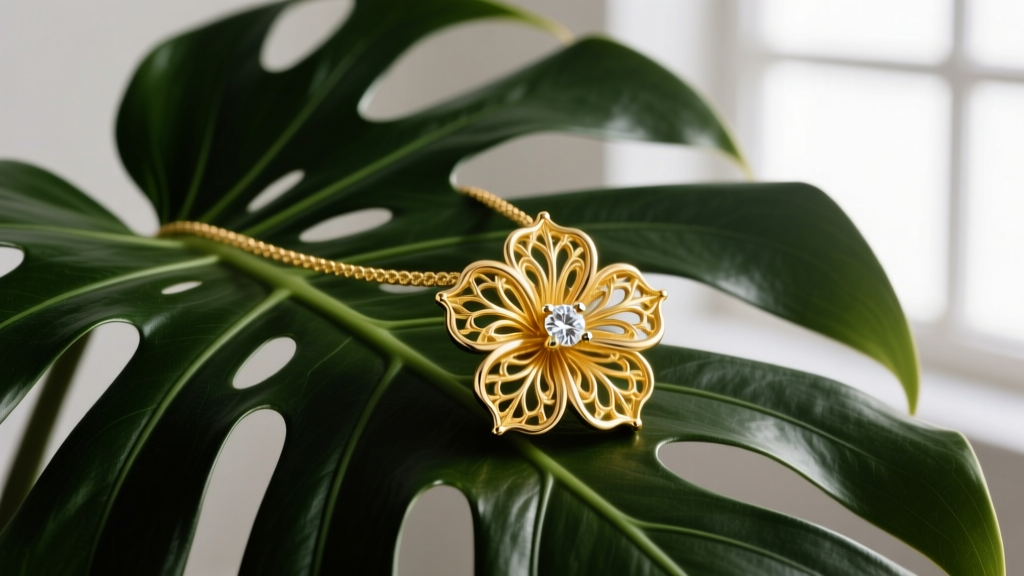
When exploring tropical-inspired fine jewelry, a common question arises among collectors, travelers, and style enthusiasts: what are Hawaiian flower necklaces called? The traditional and most accurate answer is the lei (specifically the lei ʻāʻī, which designates a neck wreath). However, in the realm of high-end fashion and permanent botanical jewelry, these floral tributes have evolved into intricate gold and enamel pendants that capture the spirit of the islands without the fleeting lifespan of fresh orchids and plumerias.
As we navigate the 2026 jewelry landscape, the intersection of cultural heritage and wearable art has never been more prominent. Modern jewelers are translating the ephemeral beauty of the Hawaiian lei into heirloom-quality necklaces. This guide breaks down the cultural origins, the specific botanical motifs dominating the market, and the metallurgical details you need to know before investing in fine Hawaiian-inspired jewelry.
The Cultural Roots: Understanding the Lei ʻĀʻī
To truly appreciate Hawaiian floral jewelry, one must understand its organic origins. The lei is far more than a tourist greeting; it is a profound cultural symbol of aloha (love), respect, and hospitality. According to Britannica's cultural archives, the tradition of crafting and gifting leis dates back to the early Polynesian voyagers who adorned themselves with native flora, shells, and feathers to honor their gods and celebrate significant life events.
While fresh flowers like pikake, tuberose, and maile leaves are woven into temporary necklaces for luaus and graduations, the desire to preserve these symbols led to the creation of permanent jewelry. In the late 19th and early 20th centuries, Hawaiian artisans began casting local flora in precious metals, giving birth to a distinct category of botanical fine jewelry that remains highly coveted today.
Translating Flora to Fine Jewelry: The 2026 Botanical Trend
The 2026 jewelry market has seen a massive resurgence in "hyper-naturalism"—a design philosophy that prioritizes anatomical accuracy in botanical motifs. Rather than stylized, cartoonish flowers, contemporary master jewelers are using 3D wax carving and lost-wax casting to replicate the exact vein structures of a maile leaf or the delicate, ruffled stamen of a hibiscus.
This trend aligns with a broader consumer shift toward meaningful, narrative-driven jewelry. Buyers are no longer just purchasing a gold pendant; they are investing in a talisman that represents resilience, delicate beauty, or a deep connection to the Pacific. Consequently, heritage motifs are being reimagined with modern silhouettes, such as asymmetrical lariat chains and convertible choker-to-princess length necklaces.
Decoding the Motifs: A Jewelry Buyer’s Guide
Not all Hawaiian flowers carry the same weight or meaning. When selecting a botanical necklace, understanding the symbolism and the typical jewelry adaptations can help you choose a piece that resonates with your personal style. Below is a breakdown of the four most prominent motifs in Hawaiian fine jewelry.
| Botanical Motif | Cultural Symbolism | Fine Jewelry Adaptation | Avg. Price Range (14k Gold) |
|---|---|---|---|
| Hibiscus (Pua Aloalo) | Hospitality, delicate beauty, and the fleeting nature of time. | Openwork gold pendants, often featuring a diamond-studded stamen or black rhodium accents. | $650 - $1,800 |
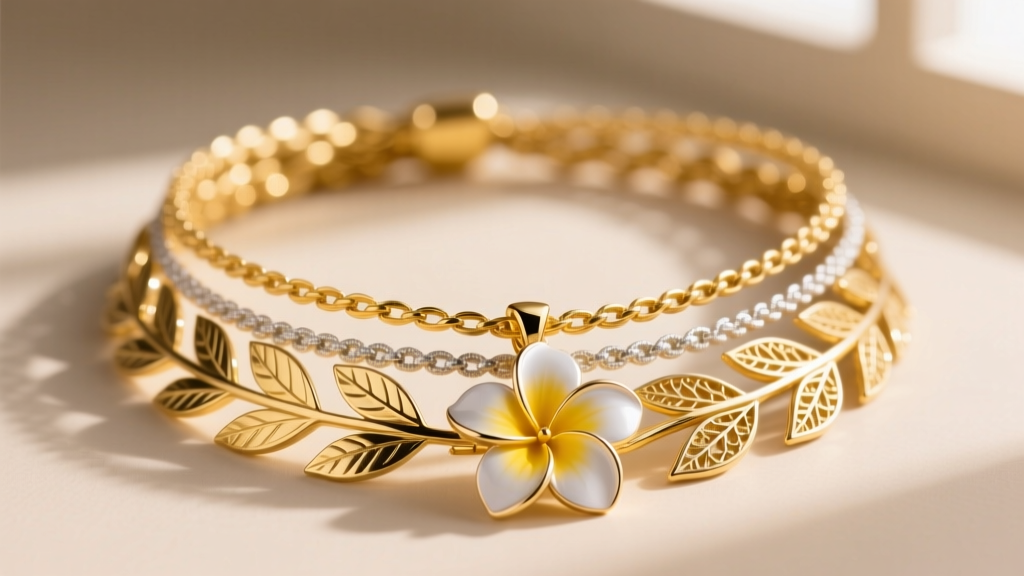
| Plumeria (Melia) | Positivity, new beginnings, and grace. | Solid cast pendants with high-polish finishes; highly popular for stacking and layering. | $350 - $900 |
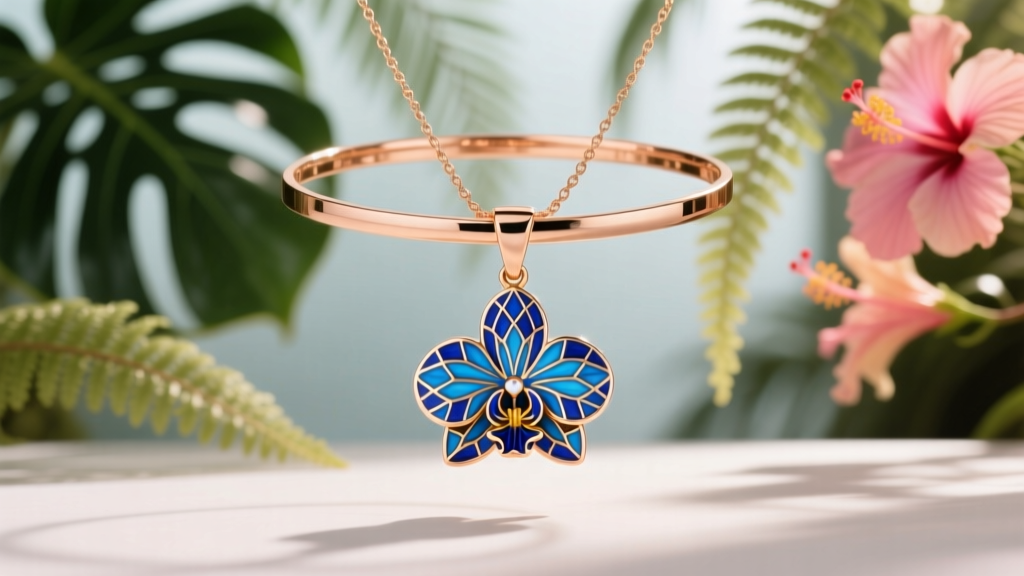
| Orchid (Okika) | Royalty, luxury, and strength. | Intricate guilloché vitreous enamel over carved gold to mimic the flower's vibrant, spotted petals. | $1,200 - $3,500+ |
| Maile Leaf | Peace, respect, and deep spiritual connection (often used in weddings). | Lariat necklaces and woven chain designs featuring interlocking, textured leaf links. | $800 - $2,200 |
Metallurgy and Enamel: Crafting the Perfect Bloom
The durability and visual impact of a Hawaiian flower necklace depend entirely on the materials used. For daily wear, 14k gold (58.5% pure gold) is the industry standard for botanical pendants. The alloy mix (usually copper and silver) provides the tensile strength necessary to hold the delicate, wire-thin prongs of a hibiscus stamen without bending. Conversely, 18k gold (75% pure gold) offers a richer, deeper yellow hue that beautifully mimics the warmth of a plumeria, but it is softer and better suited for pendants that won't endure heavy physical impact.
For colored pieces, the mark of true luxury in 2026 is guilloché vitreous enamel. As detailed by the Gemological Institute of America (GIA), vitreous enamel involves fusing finely ground glass powder to metal at extreme temperatures (around 1,400°F). When applied over a guilloché (engine-turned) gold base, the light refracts through the translucent glass, giving orchid and hibiscus petals a lifelike, luminous depth that cheap epoxy resins simply cannot replicate. When sourcing, always verify that the piece uses fired vitreous enamel rather than cold enamel, which will yellow and chip over time.
The Art of the Tropical Layered Stack
Layering botanical necklaces requires a strategic approach to prevent tangling and ensure each motif is visible. The golden rule of the 2026 layered stack is to vary both the chain gauge and the drop length by at least two inches.
- The Base Layer (16 inches): Start with a lightweight 1.2mm cable chain holding a small, simple plumeria or a single maile leaf. This sits close to the collarbone and acts as an anchor.
- The Focal Point (18 inches): Use a slightly heavier 1.5mm rope or box chain to suspend a larger, more detailed hibiscus or enamel orchid pendant. The rope chain's twisted texture mimics organic vines, complementing the floral theme.
- The Matinee Extension (20-22 inches): For a bohemian, relaxed silhouette, add a Y-style lariat necklace featuring a sliding maile leaf clasp. This draws the eye downward and elongates the neckline, perfect for deep V-neck or open-collar linen shirts.
Sourcing Authentic Hawaiian Heirloom Jewelry
The market is saturated with mass-produced, hollow-cast tourist trinkets that lack structural integrity and cultural reverence. To acquire genuine, heirloom-quality Hawaiian floral necklaces, collectors should look toward heritage brands and specialized botanical jewelers. Institutions documented by the Bernice Pauahi Bishop Museum highlight the historical significance of Hawaiian adornment, a legacy that modern heritage brands like Honora and Maui Divers continue to uphold.
When evaluating a piece, inspect the bail (the loop that connects the pendant to the chain). High-end botanical pendants feature integrated, soldered bails or hidden diamond-cut bails that allow the flower to lay flat against the sternum. Avoid pieces with thin, glued-on bails, which are a primary failure point in lower-tier jewelry. Furthermore, seek out artisans who practice ethical gold sourcing and utilize conflict-free melee diamonds for stamen accents, ensuring your tribute to nature does not come at the expense of the earth.
Ultimately, whether you refer to it as a lei ʻāʻī or a botanical gold pendant, the Hawaiian flower necklace remains a powerful, wearable testament to the islands' enduring beauty. By prioritizing accurate metallurgy, authentic motifs, and thoughtful layering, you can curate a collection that honors the spirit of aloha for generations to come.


