Jade Necklace Significance: How to Choose and Wear It
Discover the true jade necklace significance. Learn how to authenticate Type A jadeite, decode carving motifs, and style your pendant respectfully.

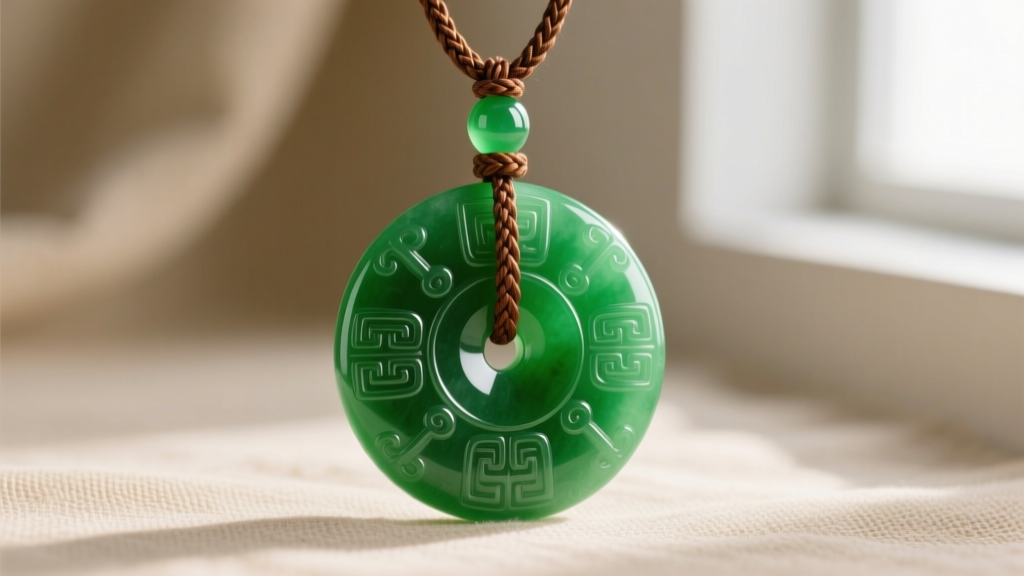
When shopping for gemstone jewelry, few materials carry the historical weight, spiritual depth, and market complexity of jade. Understanding jade necklace significance is not just about appreciating its lush green hues; it requires a deep dive into mineralogy, cultural symbolism, and authentic grading systems. Whether you are seeking protection, prosperity, or simply a striking sartorial anchor, buying jade blindly can lead to costly mistakes. This step-by-step guide will teach you how to decode jade carvings, authenticate natural stones, and style your necklace with both elegance and cultural respect.
Step 1: Differentiate Between Nephrite and Jadeite
The term 'jade' is an umbrella classification for two distinct metamorphic minerals. Before you can grasp the cultural significance of your piece, you must identify its geological foundation. According to the Gemological Institute of America (GIA), both are incredibly tough, but their gemological profiles and price points vary drastically.
Jadeite (Feicui)
Jadeite is the rarer, more valuable variety, primarily sourced from Myanmar (Burma). It possesses a refractive index of 1.66 and a specific gravity of 3.33, giving it a sharp, vitreous luster. 'Imperial Jade'—a translucent, emerald-green jadeite colored by chromium—is the most prized, often commanding upwards of $10,000 per carat at auction.
Nephrite
Nephrite is historically significant, particularly in Chinese antiquity and Māori culture (where it is known as Pounamu). It is a calcium and magnesium-rich amphibole with a lower refractive index (1.62) and a greasy, resinous luster. While 'mutton-fat' white nephrite is highly collectible, nephrite is generally more abundant and accessible, with high-quality carved pendants ranging from $150 to $800.
Step 2: Decode the Carving Motifs and Their Meanings
The true jade necklace significance is heavily tied to its shape. In East Asian traditions, jade is rarely left as a simple faceted gemstone; it is carved into specific talismans. Choosing the right motif aligns the stone's energy with your personal intentions.
| Carving Motif | Cultural Significance | Best Suited For |
|---|---|---|
| Bi Disc (Ping An Kou) | A flat disc with a central hole representing heaven and the cyclical nature of life. It symbolizes peace and safety. | Daily wear, travelers, and those seeking grounding energy. |
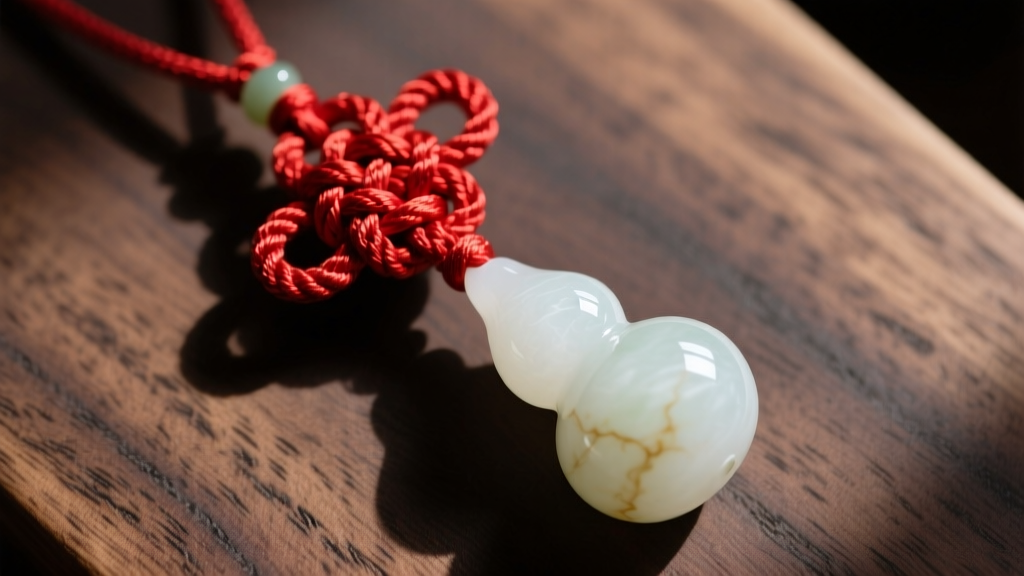
| Gourd (Hu Lu) | Resembles the number '8' (prosperity) and was historically used by healers to store medicine. Symbolizes health and longevity. | Healthcare workers, elders, or those recovering from illness. |
| Pi Xiu | A mythical winged lion that feeds on gold and silver but lacks an anus, meaning wealth flows in but never out. | Entrepreneurs, investors, and business owners. |
| Ru Yi (Scepter) | Translates to 'as you wish.' A curved decorative object representing power and good fortune in career endeavors. | Corporate professionals and those seeking promotions. |
| Bamboo | Represents resilience, as it bends in the wind but does not break, and grows rapidly upward. | Students, athletes, and individuals facing life transitions. |
Step 3: Authenticate Your Jade (The Type A, B, C System)
The market is flooded with treated stones and outright imitations (like dyed quartz or serpentine). To ensure your jade necklace significance isn't negated by a synthetic fake, you must understand the universal grading system outlined by experts like Mason Kay.
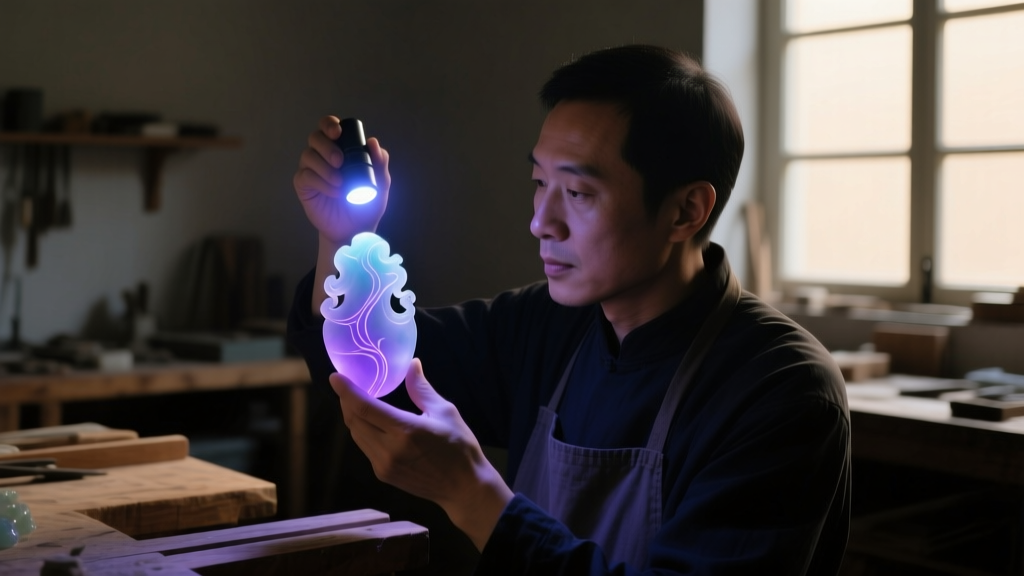
- Type A (Natural): Completely untreated, except for a traditional plum wax polish. This is the only grade that holds investment value and spiritual integrity. It will feel cold to the touch and exhibit natural internal inclusions or 'stone lines' under a 10x loupe.
- Type B (Bleached & Polymer Impregnated): Acid-washed to remove brown/yellow impurities, then injected with polymer resin to improve transparency. While it looks pristine, the resin yellows over time and the stone loses its structural resonance. Under long-wave UV light, Type B jade often exhibits a chalky blue or green fluorescence.
- Type C (Dyed): Artificially colored. The dye concentrates in the micro-fractures of the stone, visible as 'spiderweb' patterns under magnification. Type C jade will fade when exposed to prolonged sunlight or heat.
Pro-Tip: Never rely on the 'scratch test' with a steel knife. While nephrite and jadeite are harder than steel (Mohs 6-7), a steel blade can still leave a metallic residue on the surface that looks like a scratch, potentially damaging the polish of a valuable Type A piece.
Step 4: Select the Right Cord and Knotting Technique
The material holding your jade pendant is just as crucial as the stone itself. In traditional jade jewelry, metal chains are rarely used because metal can abrade the jade's drill hole over time, creating micro-fractures that lead to catastrophic snapping.
Cord Materials
Opt for high-tensile braided silk, nylon, or cotton cords. Nylon is exceptionally durable and water-resistant, making it ideal for daily wear. Silk offers a traditional, luxurious drape but degrades faster when exposed to sweat and perfume.
The Art of the Slip Knot
Authentic jade necklaces typically feature an adjustable macramé slip knot rather than a metal clasp. This serves two purposes: it allows the wearer to adjust the pendant's drop (from collarbone to sternum) to suit different necklines, and it acts as a breakaway safety feature. If the cord is snagged, the knot will slip and loosen rather than snapping the cord or injuring the wearer.
Step 5: Styling and Cultural Appreciation
Wearing jade is an exercise in cultural appreciation. To style your necklace respectfully and effectively, consider the following guidelines:
Pairing with Metals
If your jadeite is set in a metal bail or bezel, match the metal to the stone's undertone. Cool, icy-white or lavender jadeite pairs beautifully with platinum or 18k white gold. Warm, spinach-green nephrite or apple-green jadeite is enhanced by 18k or 22k yellow gold, which amplifies its organic warmth.
Neckline Coordination
- Mandarin or High Collars: Wear a smaller Bi disc (15mm-20mm) on a short 16-inch cord so it rests just above the fabric line, providing a subtle focal point without cluttering the neck.
- V-Necks and Wrap Dresses: Utilize the adjustable slip knot to drop a larger carving (30mm+) directly into the negative space of the V-neck, elongating the torso.
- Layering: Jade is visually heavy. If layering, pair it with ultra-delicate, minimalist gold chains (like a 1mm cable chain) to provide contrast. Avoid layering jade with other chunky gemstone beads, which can cause physical scratching and visual chaos.
Step 6: Cleansing and Energetic Maintenance
Because jade is porous on a microscopic level, it absorbs oils, lotions, and environmental pollutants. Physically clean your necklace every few weeks using lukewarm water and a pH-neutral, unscented soap. Avoid ultrasonic cleaners and harsh chemical jewelry dips, as these can strip the natural wax polish and damage polymer resins in Type B stones.
From a spiritual perspective, jade is believed to absorb negative energy on behalf of the wearer. To reset the stone's energetic significance, place the necklace on a bed of clear quartz clusters or leave it under the light of a full moon overnight. Avoid prolonged direct sunlight, which can dehydrate the stone and cause micro-cracking over decades of wear.
By understanding the mineralogy, respecting the carving motifs, and meticulously authenticating your purchase, you elevate your jewelry from a mere accessory to a profound, generational talisman.


