Hawaiian Seashell Necklace: Shell Species & Stringing Deep Dive
Master the technical details of a genuine Hawaiian seashell necklace. Learn shell species grades, drilling methods, and optimal stringing materials.

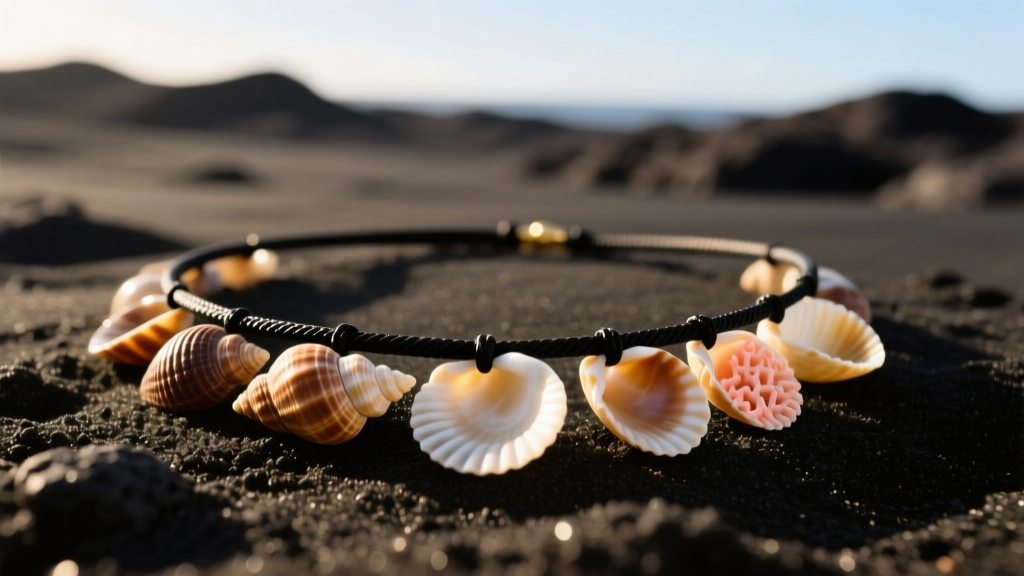
When evaluating a Hawaiian seashell necklace, the untrained eye often sees a simple beach souvenir. The expert jeweler, however, sees a complex matrix of calcium carbonate, structural stress points, and material science. Mass-produced shell jewelry frequently relies on mechanical punching and synthetic coatings that degrade rapidly under environmental stress. In contrast, a master-crafted Hawaiian seashell necklace requires an intimate understanding of malacology, precision lapidary techniques, and advanced polymer stringing materials. This technical deep dive explores the material properties, structural engineering, and ethical sourcing parameters that define authentic, high-grade shell jewelry.
The Crystalline Anatomy of Hawaiian Shells
Shells are biomineralized composites primarily consisting of calcium carbonate (CaCO3) arranged in two distinct crystalline forms: calcite and aragonite. The outer prismatic layer is typically calcite, providing environmental hardness, while the inner nacreous or porcelaneous layer is composed of aragonite platelets, offering toughness and iridescence. Understanding this dual-layer structure is critical when selecting shells for a Hawaiian seashell necklace, as it dictates how the material will respond to friction, drilling, and long-term environmental wear.
Species Identification and Material Grades
Not all shells possess the structural integrity required for daily wear. The most prized species used in high-end Hawaiian jewelry include the Puka (Conus miliaris), Sunrise (Conus granarius), and various Cowrie species (Cypraeidae). According to the Gemological Institute of America (GIA), the porcelaneous structure of cone shells lacks true nacre but features a highly cross-linked aragonite matrix that provides exceptional compressive strength.
| Shell Species | Mohs Hardness | Avg. Thickness | Structural Grade & Best Use |
|---|---|---|---|
| Puka (Conus miliaris) | 3.5 | 2.0 - 3.5mm | High (Dense); Ideal for heavy pendants |
| Sunrise (Conus granarius) | 3.0 | 1.5 - 2.5mm | Medium-High; Best for graduated strands |
| Cowrie (Cypraeidae) | 3.5 - 4.0 | 2.5 - 5.0mm | Very High; Excellent for statement pieces |
| Triton (Charonia) | 2.5 - 3.0 | 1.0 - 2.0mm | Low (Brittle); Decorative use only |
Structural Integrity: Drilling and Failure Modes
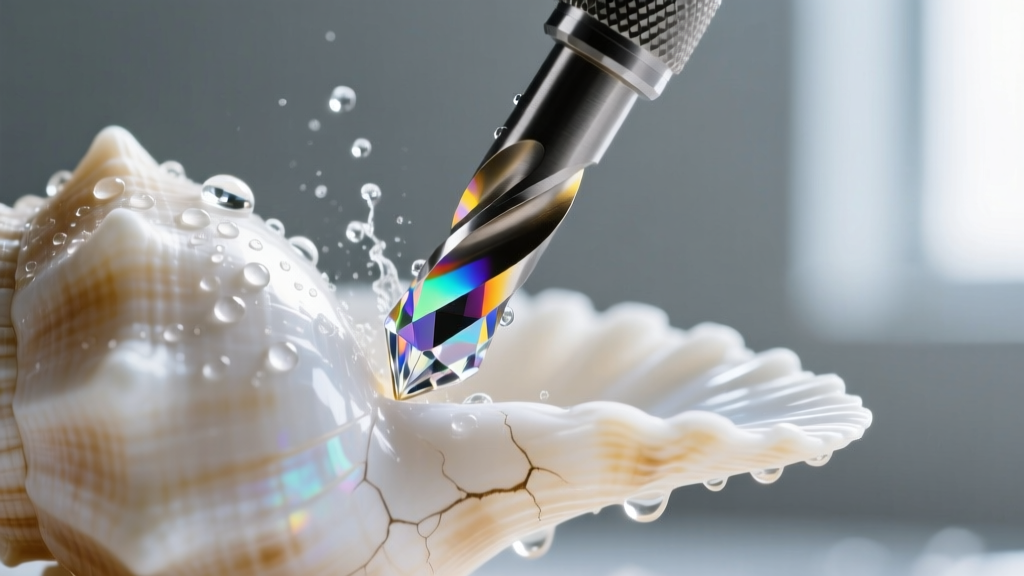
The most common point of catastrophic failure in shell jewelry is the drill hole. Because aragonite is relatively brittle, traditional mechanical punching causes micro-fractures, known as spalling, around the exit wound. These invisible fissures compromise the shell's tensile strength, leading to premature cracking under the tension of the stringing material.
Micro-Drilling vs. Mechanical Punching
Expert lapidaries exclusively use diamond-tipped micro-drill bits (typically 0.8mm to 1.2mm in diameter) operated at high speeds (5,000 to 10,000 RPM) with continuous water cooling. The water serves a dual purpose: it lubricates the cut to prevent the diamond matrix from clogging with shell dust, and it dissipates heat. Excessive heat during drilling can cause the calcium carbonate to undergo thermal shock, resulting in delamination of the crystalline layers. When inspecting a Hawaiian seashell necklace, look for perfectly cylindrical, smooth-walled holes. If the hole exhibits a conical shape or jagged, chalky edges, it was likely punched or drilled dry, indicating inferior craftsmanship and a high risk of future fracture.
Stringing Materials and Tensile Engineering
The stringing material must balance flexibility with high tensile strength while resisting UV degradation and moisture absorption. Traditional silk thread, while historically accurate, is highly susceptible to rot and stretches irreversibly when exposed to humidity. Modern master jewelers rely on advanced synthetic polymers.
- UHMWPE (Ultra-High-Molecular-Weight Polyethylene): Brand names like Dyneema or Spectra offer a tensile strength up to 15 times greater than steel on a weight-for-weight basis. A 0.5mm UHMWPE cord can easily support a 20lb test load, making it impervious to the weight of heavy cowrie shells.
- Braided Nylon (e.g., C-Lon or S-Lon): Excellent for micro-macramé and knotting between beads. It possesses a slight give that absorbs shock, but it must be pre-stretched to prevent the necklace from sagging over time.
- PTFE (Teflon) Coated Stainless Steel: Used for heavy, single-pendant setups where flexibility is less critical than sheer cut-resistance against sharp shell edges.
Knotting Techniques and Adhesives
For knotted designs, the double surgeon's knot is the industry standard due to its high friction coefficient. Because UHMWPE is incredibly slick, standard overhand knots will slip. To secure the knots permanently, experts apply a microscopic drop of low-viscosity cyanoacrylate (CA) adhesive directly to the knot core, wicking into the fibers without creating a brittle outer shell that could crack against the shell's drill hole.
Clasp Integration and Galvanic Corrosion
Hardware selection is frequently overlooked in organic jewelry. When a Hawaiian seashell necklace is worn in coastal environments, salt residue accumulates on the clasp. If base metals or plated brass are used, the saltwater acts as an electrolyte, triggering rapid galvanic corrosion. This not only stains the adjacent shells with green copper oxide but also weakens the jump rings, leading to sudden clasp failure. Always specify 316L marine-grade stainless steel, solid titanium, or minimum 14k solid gold for all findings, jump rings, and clasps to ensure structural longevity in high-salinity environments.
Ethical Sourcing and CITES Compliance
Authenticity extends beyond material science to ecological stewardship. Overharvesting has decimated native shell populations globally. In Hawaii, strict regulations govern the gathering of marine life. The Hawaii Division of Aquatic Resources enforces stringent limits on the collection of live specimens, meaning ethical jewelers must rely exclusively on beach-cast (dead) shells gathered after natural storms or seasonal die-offs. Furthermore, international trade in certain marine species is heavily regulated. Jewelers must consult the Convention on International Trade in Endangered Species (CITES) database to ensure that no protected species, such as the Triton's trumpet or specific rare cone shells, are illegally harvested or imported.
True mastery in shell jewelry isn't just about aesthetic arrangement; it's about respecting the biological origins of the material and engineering the assembly to outlast the environment it was born from.
Maintenance and Degradation Prevention
Calcium carbonate is highly reactive to acids. Human sweat has an average pH of 4.5 to 7.0, but can drop lower during intense physical exertion. Prolonged exposure to acidic sweat will slowly etch the polished surface of the shells, destroying the porcelaneous luster and leaving a dull, chalky finish. To prevent this, advise wearers to gently wipe the shells with a damp, pH-neutral microfiber cloth after wear. Never use ultrasonic cleaners or harsh chemical dips, as the high-frequency cavitation will shatter the aragonite platelets, and acidic cleaners will dissolve the shell's surface structure entirely.


