Heart Clover Necklace Value: 2026 Pricing & Material Guide
Discover the true value of a heart clover necklace in 2026. Compare sterling silver, gold vermeil, and solid gold pricing to avoid overpaying.

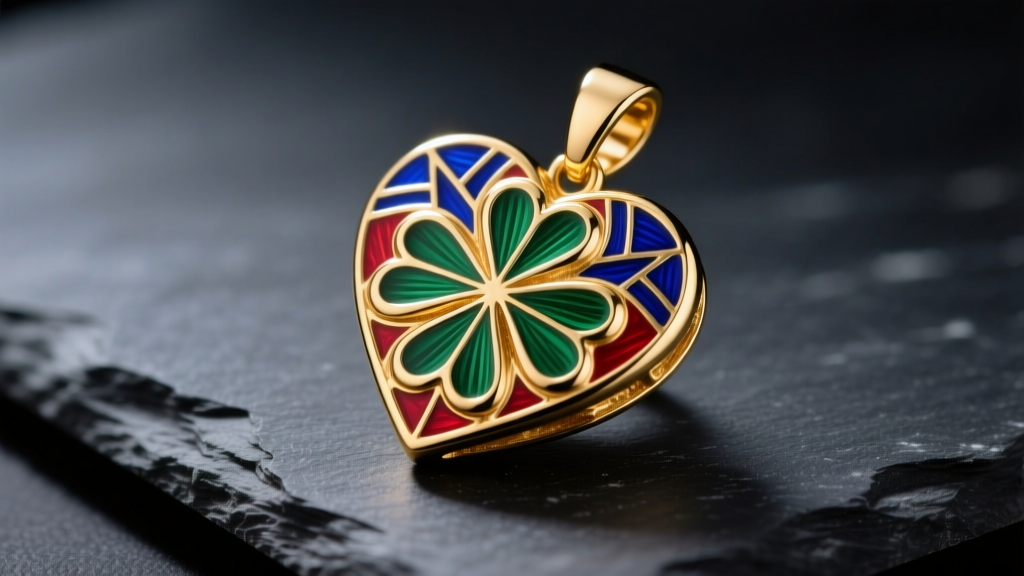
The Intersection of Luck and Love: Assessing the Heart Clover Motif
The heart clover necklace is a unique hybrid in the jewelry market, merging the universal symbol of romance (the heart) with the ultimate talisman of fortune (the four-leaf clover). Whether designed as a heart encasing a clover cutout, or a four-leaf clover where the leaves curve to form a heart silhouette, this motif has surged in popularity. However, as we navigate the 2026 jewelry market, the sheer volume of options—ranging from $15 dropshipped brass pendants to $4,500 designer fine jewelry pieces—makes assessing true value incredibly difficult. As a buyer, you are not just paying for the aesthetic; you are paying for metallurgical integrity, chain construction, and enamel longevity. This guide strips away the marketing fluff to help you evaluate the actual worth of a heart clover necklace based on material grades, manufacturing techniques, and current precious metal spot prices.
2026 Market Pricing: What Should You Actually Pay?
With the sustained elevation of gold spot prices into 2026, the baseline cost for fine jewelry has shifted significantly. A solid 14k gold pendant weighing just 2.5 grams now carries a much higher intrinsic melt value than it did three years ago. When shopping for a heart clover necklace, you must align your budget with the correct material tier. Anything priced below the intrinsic metal value is likely heavily plated base metal, while prices exponentially higher than the melt value plus a standard 30-50% artisan markup indicate severe brand inflation.
| Material Tier | Base Metal | Plating / Finish | Expected Price Range | Longevity & Value Rating |
|---|---|---|---|---|
| Fashion / Costume | Brass or Zinc Alloy | Flash Gold Plating (<0.1 microns) | $15 - $45 | Poor (Tarnishes in months) |
| Demi-Fine (Standard) | 925 Sterling Silver | Gold Vermeil (2.5+ microns) | $85 - $180 | Good (3-5 years with care) |
| Fine Jewelry (Entry) | 10k or 14k Solid Gold | None (Solid throughout) | $350 - $650 | Excellent (Lifetime wear) |
| Designer / Luxury | 18k Solid Gold | Vitreous Enamel & Diamonds | $2,500 - $5,000+ | Excellent (Heirloom value) |
Deconstructing the Chain and Clasp: Hidden Failure Points
When evaluating the budget and value of a heart clover necklace, amateur buyers focus entirely on the pendant. Expert buyers inspect the chain and clasp. A beautiful 14k solid gold clover pendant is rendered worthless if it is suspended on a poorly constructed chain that snaps under the weight of a winter sweater.
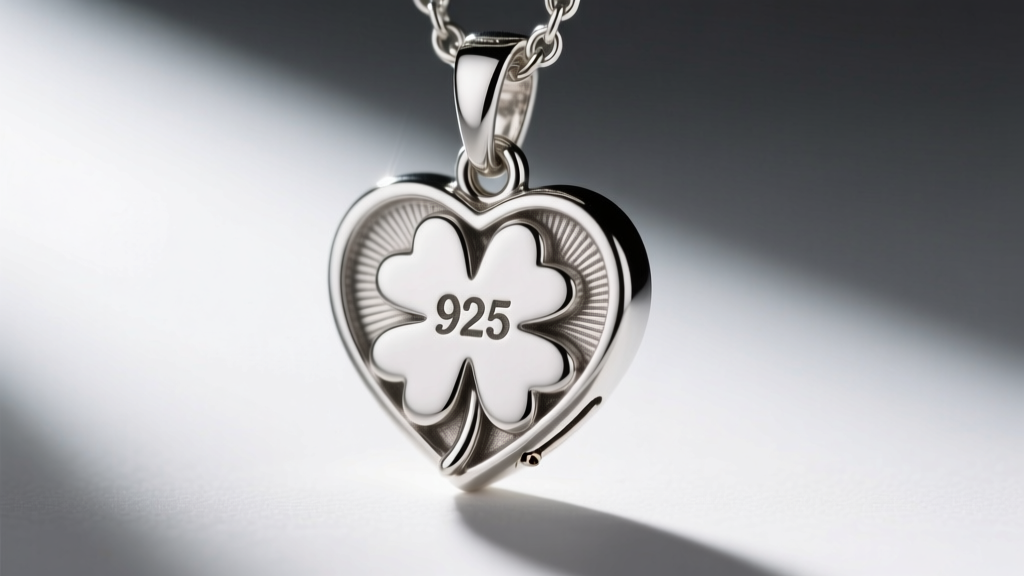
Chain Gauge and Link Construction
Most budget heart clover necklaces utilize a 0.8mm to 1.0mm cable chain. While delicate, these chains are highly prone to tangling and snapping if the pendant exceeds 3 grams. For optimal value and durability, look for a 1.2mm to 1.5mm rolo or paperclip chain. Rolo chains feature interlocking round links that distribute weight evenly and resist kinking. Furthermore, inspect the jump rings (the small circles connecting the chain to the clasp and pendant). They must be soldered closed. If you can see a tiny slit where the wire ends meet, the chain will eventually pull apart.
Clasp Mechanics
Skip the spring-ring clasps commonly found on sub-$100 necklaces. Their internal tension springs fail rapidly, and they are notoriously difficult to operate with one hand. A high-value demi-fine or solid gold heart clover necklace should feature a lobster clasp or a box clasp with a safety figure-eight for heavier pieces. Ensure the lobster clasp has a smooth, snappy return action and bears the appropriate metal hallmark (e.g., '925' or '14k') stamped directly onto the lever body.
The Enamel Trap: Cold Epoxy vs. Vitreous Glass
Many heart clover necklaces incorporate colored enamel to make the motif pop—often using deep greens for the clover leaves and mother-of-pearl or red for the heart center. This is where the most deceptive pricing occurs in the jewelry industry.
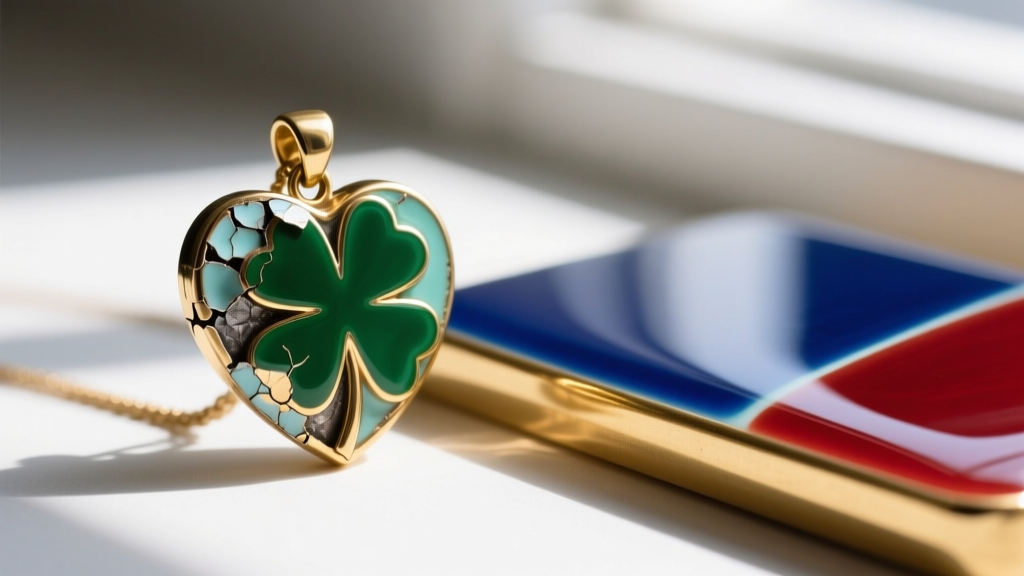
Identifying Cold Enamel (Epoxy Resin)
If you are buying a necklace in the $50 to $150 range, the color is almost certainly achieved using cold enamel, which is essentially a hardened epoxy resin. Cold enamel is painted on and air-dried. While it looks vibrant in the store, it is highly susceptible to UV degradation, chemical breakdown from perfumes, and thermal shock. Within 12 to 24 months of daily wear, cold enamel will yellow, shrink, and begin to peel away from the metal bezel. Paying premium prices for cold enamel is a poor financial decision.
The Value of Vitreous Enamel
True value lies in vitreous enamel. This is finely ground glass that is kiln-fired at temperatures exceeding 1,400°F (760°C), fusing it permanently to the metal base. Vitreous enamel will not yellow, it resists scratching (rating a 5-6 on the Mohs scale), and it maintains its luster for generations. According to the Gemological Institute of America (GIA), vitreous enameling is a hallmark of fine jewelry craftsmanship. If a brand charges over $300 for a heart clover pendant, you must verify whether they are using fired vitreous glass or cheap epoxy resin.
Navigating Hallmarks and FTC Guidelines
To protect your budget, you must understand the legal definitions of jewelry metals. The Federal Trade Commission (FTC) Jewelry Guides strictly regulate how terms like 'Gold Plated' and 'Vermeil' can be used. For a heart clover necklace to be legally sold as 'Gold Vermeil' in the United States, it must meet two strict criteria:
- The base metal must be 925 Sterling Silver (not brass or copper).
- The gold plating must be at least 2.5 microns thick and be a minimum of 10k gold.
Many fast-fashion brands sell 'gold plated sterling silver' for $90, implying it is vermeil. However, if the plating is only 0.5 microns thick (flash plating), it will wear through to the silver base within months of friction against your skin. Always demand a micron thickness specification from the jeweler when purchasing demi-fine pieces. If they cannot provide it, assume it is flash-plated and adjust your maximum budget to $40.
Brand Markup vs. Intrinsic Value: Finding the Sweet Spot
Let us look at a practical value assessment scenario. Imagine you are eyeing a designer heart clover necklace crafted in 18k yellow gold with a malachite clover inlay and a diamond-accented heart border, priced at $4,200. The intrinsic melt value of the 4 grams of 18k gold is roughly $320, and the melee diamonds and malachite add perhaps $150 in raw material costs. You are paying a $3,700 premium for the brand name and retail overhead.
Conversely, a custom bench jeweler can cast the exact same heart clover design in solid 14k gold, set with genuine malachite and VS-clarity melee diamonds, for approximately $850 to $1,100. By stepping away from heavily marketed luxury houses and seeking out independent CAD/CAM jewelers or specialized estate buyers, you can acquire the exact same aesthetic and material longevity for 75% less. According to the GIA's gold education resources, 14k gold (58.5% pure gold) actually offers superior durability and scratch resistance compared to 18k gold, making it the smarter choice for daily-wear pendants that are prone to bumping against desks and doorframes.
The Final Verdict: Your 2026 Buying Checklist
To ensure you are getting genuine value when purchasing a heart clover necklace, run the piece through this final diagnostic checklist before swiping your card:
- Verify the Stamp: Look for '925', '10k', '14k', or '18k' stamped on the pendant bail and the clasp. If it says '18k HGE' (Heavy Gold Electroplate), it is base metal and worth under $30.
- Test the Weight: A solid gold pendant should have a distinct, dense heft. If it feels remarkably light, it is likely hollowed out (electroformed) or cast in low-density brass.
- Inspect the Enamel: Tap the colored sections gently with a fingernail. Vitreous glass feels hard and cold, like a windowpane. Cold epoxy feels slightly warm and yields a dull, plastic-like sound.
- Check the Bail: Ensure the bail (the loop the chain passes through) is thick enough to prevent friction wear. A thin, unplated brass bail will saw through a solid gold chain over time.
By prioritizing metallurgical substance over fleeting brand hype, you can secure a heart clover necklace that serves as a lasting, valuable emblem of luck and love, rather than a depreciating fashion accessory destined for the landfill.


