Heart Diamond Tennis Necklace: The Ultimate Buying Guide
Discover expert tips for buying a heart diamond tennis necklace. Learn about cut ratios, prong settings, pricing, and clasp safety for your investment.

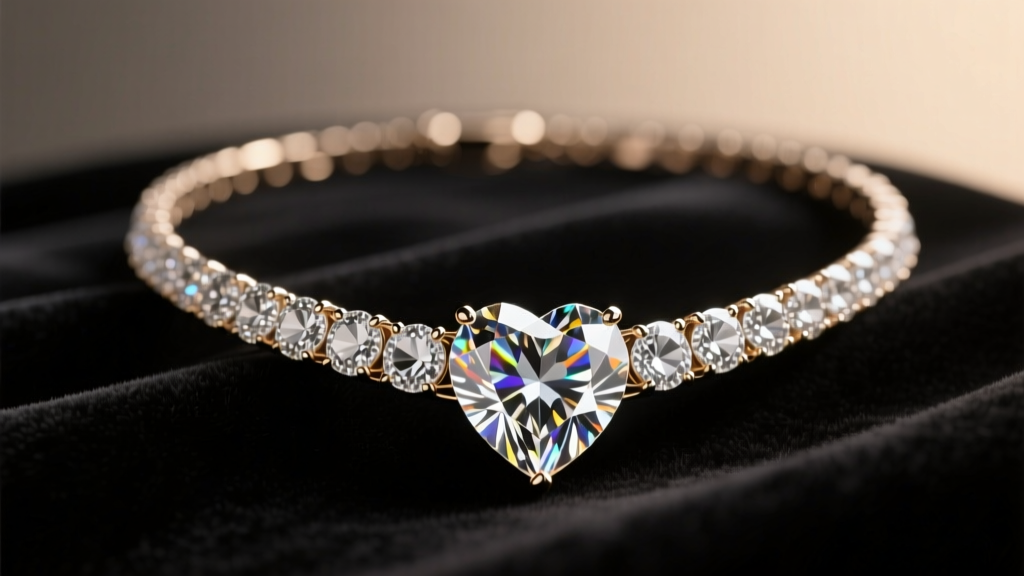
Defining the Heart Diamond Tennis Necklace
The heart diamond tennis necklace represents a masterclass in both lapidary precision and romantic symbolism. Unlike a traditional round-brilliant tennis necklace, which relies on uniform geometric repetition, a heart diamond tennis necklace introduces complex faceting and distinct silhouettes into a continuous line. When shopping for this high-ticket piece, buyers generally encounter two distinct variations: the continuous heart-cut strand, where every single link features a heart-shaped diamond, and the hybrid slider, which utilizes a round-brilliant tennis chain anchored by a prominent, oversized heart-shaped centerpiece. This guide focuses primarily on the continuous heart-cut strand, as it demands the highest level of gemological matching and structural engineering.
Purchasing a continuous heart diamond tennis necklace is not merely about selecting a carat weight; it is an exercise in symmetry matching, tension management, and metal fatigue prevention. Because the human eye is exceptionally adept at recognizing facial and organic symmetry, even a millimeter of variance between adjacent heart stones will create a jarring, disjointed visual flow across the collarbone. Below, we break down the exact specifications, structural requirements, and pricing metrics you need to evaluate before making a five-figure investment.
Diamond Specifications: Cut, Symmetry, and Ratios
The heart cut is a modified brilliant cut, typically featuring 56 to 58 facets. However, its complex shape makes it highly susceptible to the dreaded 'bow-tie effect'—a dark, shadowy band that stretches across the center cleft when light leaks out of the pavilion. To avoid this, you must evaluate the stones in diffused, natural lighting rather than relying solely on the intense spot lighting used in jewelry showrooms.
The Crucial Length-to-Width Ratio
For standalone engagement rings, a heart diamond length-to-width ratio between 0.90 and 1.10 is generally acceptable. However, for a continuous tennis necklace, this tolerance is far too wide. If adjacent stones vary between a 0.92 (chubby) and a 1.08 (elongated) ratio, the necklace will look chaotic. According to gemological standards outlined by the Gemological Institute of America (GIA), symmetry is paramount for fancy shapes. For a tennis necklace, you must demand a strict ratio variance of no more than 0.05 across the entire strand. Ideally, every stone should sit between a 0.98 and 1.02 ratio, ensuring the wings and clefts align in a seamless, unbroken rhythm.
Color and Clarity Thresholds
Heart-shaped diamonds retain color slightly more than round brilliants due to their deeper pavilions. Therefore, a minimum color grade of G or H is recommended when setting the stones in platinum or 18k white gold to prevent a yellowish tint from reflecting off the white metal. For clarity, the large, open table of a heart cut makes inclusions highly visible. A baseline of VS2 clarity ensures that no carbon spots or feathers are visible to the naked eye, particularly near the delicate cleft.
Setting Styles and Metal Choices
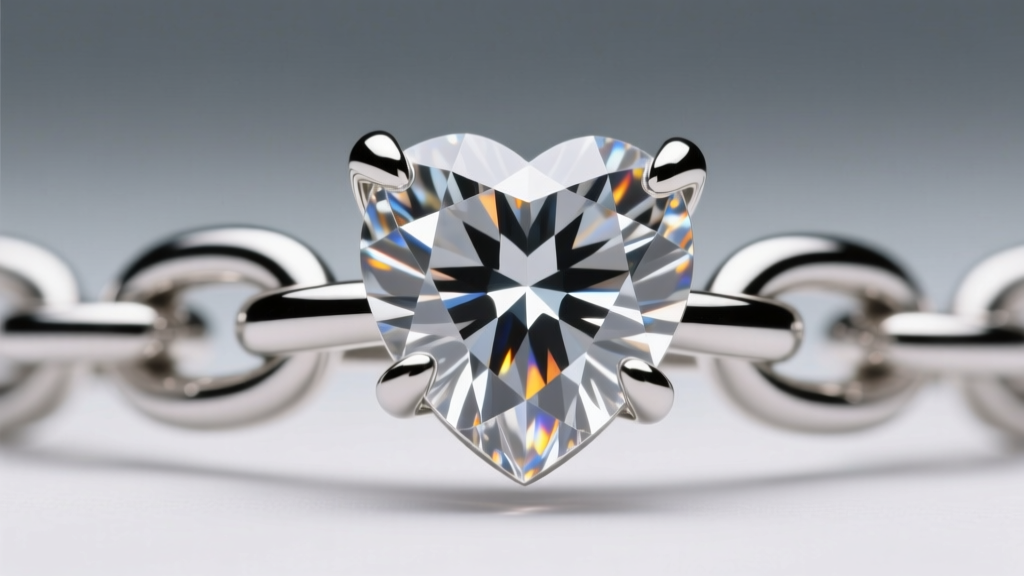
The structural vulnerability of a heart diamond lies in its pointed tip (the culet area) and the sharp inner cleft. A standard four-prong setting used for round diamonds is entirely inadequate and dangerous for heart cuts. If a prong shifts or wears down, the exposed tip is almost guaranteed to chip against daily wear.
- The 5-Prong or 6-Prong Requirement: A proper heart diamond tennis necklace must utilize at least five prongs per stone. One prong must securely cup the bottom tip, two should secure the upper lobes, and two should grip the outer wings. This distributes tension evenly and shields the most fragile points of the stone.
- Bezel Settings: While full bezel settings offer maximum protection for the diamond tips, they obscure the outline of the heart, diminishing the romantic silhouette and reducing the stone's light return by up to 15%. Half-bezel settings are a viable compromise but are rarely used in continuous tennis strands due to manufacturing complexity.
- Metal Selection: Platinum (950 grade) is the undisputed standard for high-carat tennis necklaces. Its high density and tensile strength resist the stretching that plagues lighter gold alloys. If you prefer 18k white gold, ensure the rhodium plating is factored into your long-term maintenance budget, as the friction against the neck will wear the plating down over 12 to 18 months.
Pricing Guide: Natural vs. Lab-Grown Diamonds
The pricing of a heart diamond tennis necklace scales exponentially with Total Carat Weight (TCW). Matching dozens of heart-cut diamonds for color, clarity, and exact physical dimensions requires sorting through thousands of stones, which incurs a premium over standard round-brilliant strands. Below is a realistic 2026 market pricing matrix for G-H color, VS1-VS2 clarity strands set in 18k white gold or platinum.
| Total Carat Weight (TCW) | Lab-Grown Price Range | Natural Earth-Mined Price Range | Avg. Metal Weight (Platinum) |
|---|---|---|---|
| 5.00 - 6.00 CTW | $2,800 - $4,500 | $18,000 - $26,000 | 14 - 16 grams |
| 8.00 - 10.00 CTW | $4,800 - $7,500 | $35,000 - $55,000 | 18 - 22 grams |
| 12.00 - 15.00 CTW | $8,000 - $12,500 | $65,000 - $95,000+ | 24 - 30 grams |
Note: As detailed in Blue Nile's diamond shape education guide, fancy shapes like the heart cut often cost 15-25% less per carat than round brilliants in the natural market, but the premium for perfectly matched tennis strands offsets much of this discount.
Structural Integrity: Clasps and Failure Modes
The most common point of failure in a heart diamond tennis necklace is not the diamonds themselves, but the clasp assembly and the soldered jump rings. A 10-carat platinum tennis necklace can easily weigh over 25 grams. The constant gravitational pull and the kinetic friction of walking create immense shear stress on the clasp.
The Mandatory Figure-8 Safety Clasp
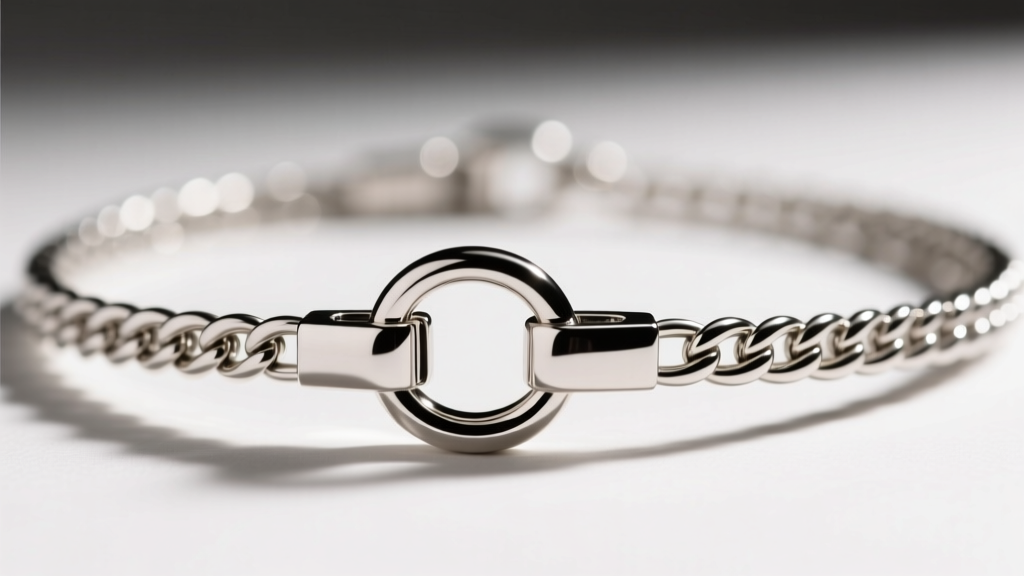
Never purchase a heavy tennis necklace secured solely by a lobster clasp or a standard push-box clasp. The piece must feature a primary locking box clasp equipped with a secondary figure-8 safety wire. This secondary wire, hinged on one side and snapping into a groove on the other, ensures that if the primary internal tongue bends or fails, the necklace remains draped around your neck rather than falling to the floor.
Solder Fatigue and Chain Stretch
In continuous heart strands, the diamonds are linked via tiny metal jump rings. Over years of wear, these rings can experience 'solder fatigue,' where the microscopic solder joints develop hairline fractures. Furthermore, if the metal links are too thin, they will physically stretch, causing the necklace to lose its rigid, uniform drape and instead sag awkwardly. When inspecting a piece, hold it taut and look for any gaps between the diamond settings. The links should sit flush against one another with zero lateral wiggle room.
Styling and Neckline Pairing
The intricate silhouette of a heart diamond tennis necklace demands careful styling to avoid visual clutter. Because the continuous line of hearts creates a heavy, ornate border, it pairs best with clean, unembellished necklines.
- The Sweetheart Neckline: A natural pairing, but ensure the necklace sits at least half an inch above the fabric's edge to prevent the metal from snagging on the garment.
- Deep V-Necks: A 16-inch choker length heart strand creates a stunning geometric contrast against a deep, plunging V-neck, drawing the eye horizontally across the collarbone before the neckline drops.
- Off-the-Shoulder: This is arguably the most elegant canvas for a continuous heart strand, as the bare skin provides a high-contrast, distraction-free background that allows the sharp clefts and brilliant facets to command attention.
Ultimately, a heart diamond tennis necklace is a triumph of precision jewelry making. By insisting on strict length-to-width ratios, demanding 5-prong settings, and verifying the presence of a figure-8 safety clasp, you ensure that your investment remains as structurally sound as it is visually breathtaking.


