Heart Emerald Necklace Value Guide: 2026 Pricing & Buying Tips
Discover how to evaluate a heart emerald necklace in 2026. Learn pricing tiers, grading secrets, and setting tips to maximize your jewelry budget.

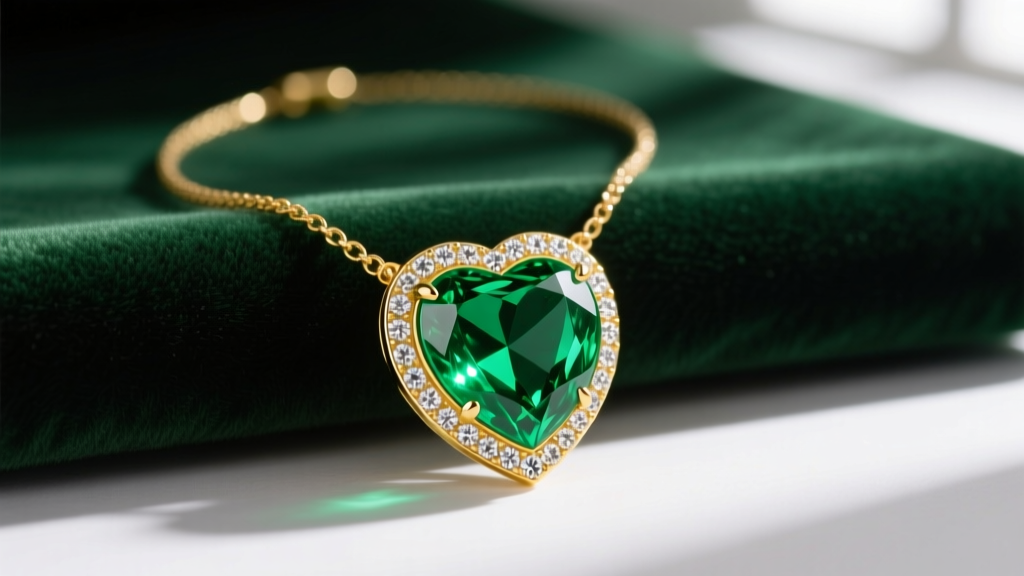
The heart emerald necklace is a timeless symbol of affection, blending the romantic silhouette of a heart cut with the lush, verdant allure of beryl. However, navigating the market for this specific gemstone requires a highly discerning eye. Unlike diamonds, emeralds are evaluated on an entirely different axis of value, heavily influenced by geographic origin, clarity treatment levels, and the unique structural vulnerabilities inherent to the heart cut. As we move through 2026, the colored gemstone market has seen significant shifts, with premium Colombian and Zambian specimens commanding record premiums, while high-quality lab-grown alternatives offer unprecedented budget flexibility. This comprehensive value assessment will dissect exactly what you are paying for when purchasing a heart emerald pendant, ensuring your investment aligns with true gemological worth.
The Anatomy of Value: Grading the Emerald
When assessing the budget and value of any emerald jewelry, color is the undisputed king. The most prized hue is a highly saturated, medium-dark bluish-green, often referred to in the trade as "Muzo green" (named after the legendary Colombian mining district). According to the Gemological Institute of America (GIA), color accounts for up to 70% of an emerald's total market value. When assessing a heart-shaped stone specifically, ensure the color is evenly distributed; the cleft (the dip at the top of the heart) often traps color, creating a dark, muddy "bow-tie" effect if the pavilion is cut poorly.
Clarity in emeralds is entirely different from diamonds. Emeralds are classified as Type III gemstones, meaning visible inclusions are expected and even celebrated. The French term jardin (garden) describes the moss-like, three-phase inclusions typical of natural emeralds. The true value determinant is not the absence of inclusions, but the treatment used to mask them. Traditional cedar oiling is an accepted, centuries-old industry practice to improve apparent clarity by filling surface-reaching fissures. However, stones treated with modern epoxy resins, Opticon, or polymers suffer a massive depreciation in resale value and long-term stability. Always demand a lab report from a top-tier institution (GIA, AGL, or Gübelin) that specifies "Minor" or "None" for clarity enhancement. As noted in the GIA's comprehensive guide on emerald treatments, undisclosed fracture filling is the most common pitfall for budget-conscious buyers.
The Heart Cut Challenge: Symmetry and Fragility
Cutting a heart-shaped emerald is a high-risk endeavor for lapidaries. The heart cut requires a deep pavilion to maintain color saturation, but the cleft—the inward V-shape at the top of the heart—is a notorious structural weak point. Because emeralds rank 7.5 to 8 on the Mohs scale but possess high brittleness due to internal stress and natural inclusions, a sharp V-prong is mandatory to protect this cleft.
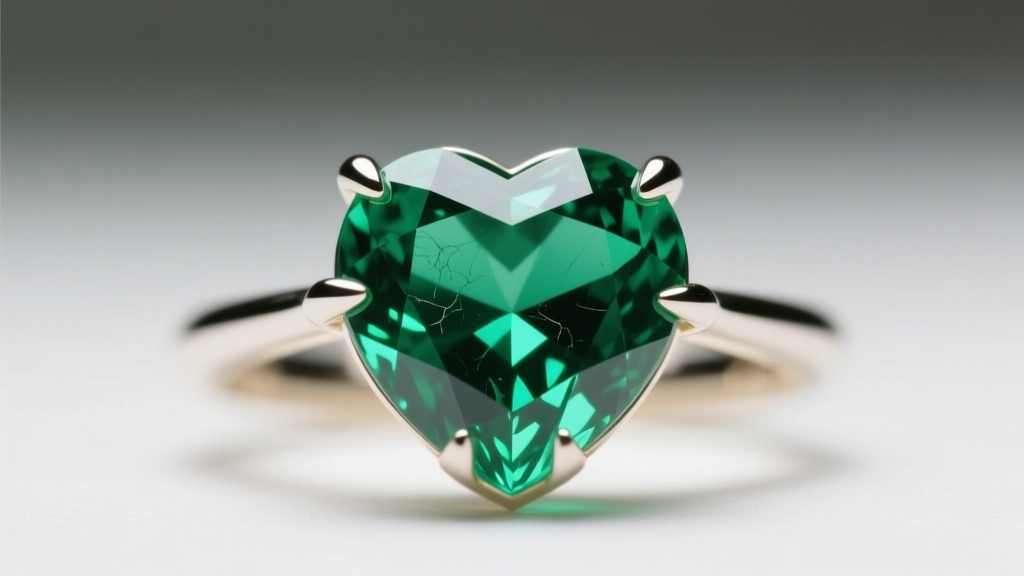
If you are evaluating a heart emerald necklace set with standard round prongs at the cleft, walk away immediately. The risk of chipping during the setting process or from a minor impact during daily wear is exceptionally high. Furthermore, the two lobes of the heart must be perfectly symmetrical. Asymmetry is a common flaw in budget-tier stones where cutters prioritize carat weight retention over aesthetic balance, resulting in a lopsided heart that looks distorted when worn as a pendant.
2026 Market Pricing Tiers: What Your Budget Actually Buys
To accurately assess value, we must segment the 2026 market into distinct pricing tiers. The following table outlines what you can expect regarding carat weight, origin, and setting materials at various price points for a natural heart emerald necklace.
| Budget Tier | Price Range (USD) | Center Stone Carat | Origin & Quality | Treatment Level | Chain & Setting Material |
|---|---|---|---|---|---|
| Entry-Level | $300 - $800 | 0.50 - 1.00 ct | Zambian (Commercial) | Moderate to Heavy Oiling | 10k/14k Gold Vermeil, Prong Set |
| Mid-Range | $1,200 - $3,500 | 1.00 - 2.50 ct | Zambian/Brazilian (Good) | Minor Oiling | Solid 14k Gold, V-Prong Set |
| Premium | $5,000 - $15,000+ | 2.00 - 4.00 ct | Colombian (Fine/Vivid) | Minor to None | Solid 18k Gold w/ Diamond Halo |
Value Analysis: The jump from the mid-range to the premium tier is exponential. This premium is driven entirely by the Colombian origin, the scarcity of stones over 2 carats with only minor oiling, and the inclusion of high-clarity melee diamonds in the halo setting. For the best balance of durability, rich color, and budget efficiency, the mid-range Zambian stones offer the highest "wearability-to-cost" ratio.
Lab-Grown vs. Natural: The Budget Connoisseur's Alternative
If your heart is set on a flawless, 3-carat vivid green heart emerald necklace, but your budget caps at $1,500, the 2026 lab-grown market is your ultimate solution. Hydrothermal lab-grown emeralds possess the exact same chemical composition (Be3Al2(SiO3)6) and physical properties as their mined counterparts. Unlike flux-grown synthetics, which can sometimes exhibit tell-tale platinum inclusions from the crucible, hydrothermal stones mimic the natural growth environment, resulting in authentic-looking jardin.
A 2-carat hydrothermal lab heart emerald set in solid 14k gold will typically retail between $800 and $1,200. While they lack the geological romance and investment retention of a natural Colombian stone, they offer superior clarity, zero fracture-filling risks, and exceptional durability for everyday pendants. If your primary goal is aesthetic impact and daily wearability without the anxiety of damaging a $10,000 stone, lab-grown is the mathematically superior choice.
Chain Selection and Hardware: The Hidden Costs
A common trap in budget assessment is ignoring the chain and bail. A heavy, 3-carat heart emerald pendant requires a robust chain to prevent catastrophic failure. Delicate cable chains (under 1.2mm in thickness) will easily snap under the dynamic, swinging weight of a large pendant. For stones over 1.5 carats, look for box chains or wheat chains in 1.5mm to 2.0mm thicknesses, secured with a solid lobster claw clasp rather than a fragile spring ring.
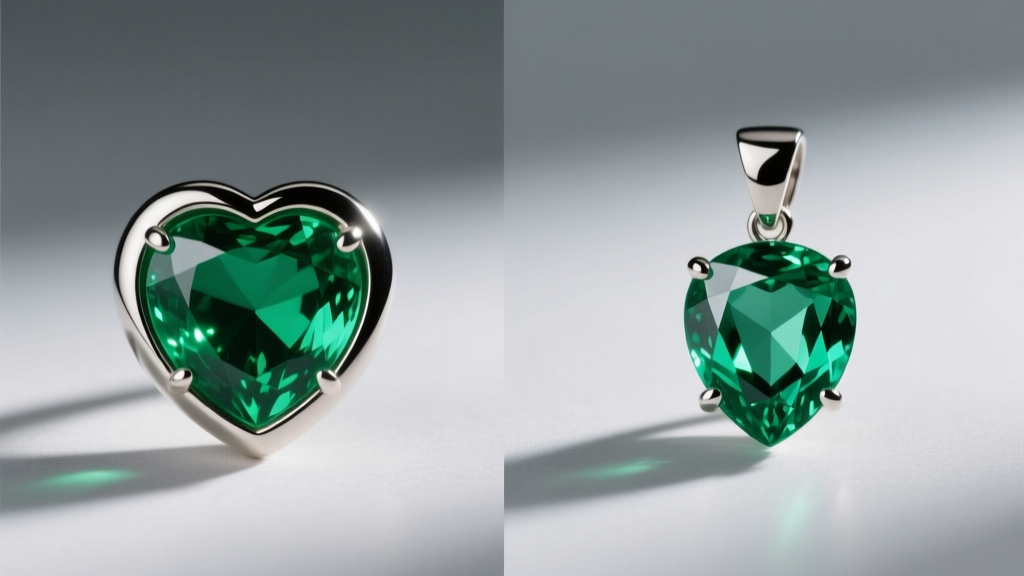
Additionally, inspect the bail (the loop connecting the pendant to the chain). Solid gold bails with a reinforced, soldered jump ring add $100 to $200 to the manufacturing cost but prevent the loss of your gemstone. Avoid glued bails or hollow-cast hardware, which are highly prevalent in the sub-$500 tier and prone to snapping under tension.
Red Flags and Value-Killing Flaws
When evaluating a heart emerald necklace in person or via high-resolution video, watch out for these specific value-killers:
- Windowing: If the stone is cut too shallow to preserve carat weight, light will leak through the bottom, creating a washed-out, transparent "window" in the center of the heart. This destroys the stone's color saturation and value.
- Dyed Beryl: Extremely cheap "emeralds" (often under $100) are usually pale beryl that has been fracture-filled with green dye. This is easily detected by a jeweler using a microscope or Chelsea color filter.
- Asymmetrical Lobes: A poorly cut heart will have one lobe larger or rounder than the other. While slight asymmetry is common in antique cuts, modern stones should be perfectly mirrored.
Final Verdict: Maximizing Your Investment
When purchasing a heart emerald necklace, value is not merely about securing the lowest price per carat. It is the precise intersection of vibrant, responsibly treated color, symmetrical cutting, and a setting that acknowledges the gemstone's inherent fragility. Prioritize minor-oil Zambian stones for the best balance of durability and rich color in the mid-range tier, and always insist on third-party gemological certification for any natural purchase exceeding $2,000. By understanding the structural and gemological nuances of the heart cut, you can confidently navigate the 2026 market and secure a pendant that is both emotionally resonant and financially sound.


