Selecting a Heart Necklace Pink Sapphire or Morganite: Expert Guide
Discover the technical specs behind a heart necklace pink sapphire or morganite pendant. Learn gem grading, rose gold alloys, and chain mechanics.

The Gemological Spectrum of Pink Heart Pendants
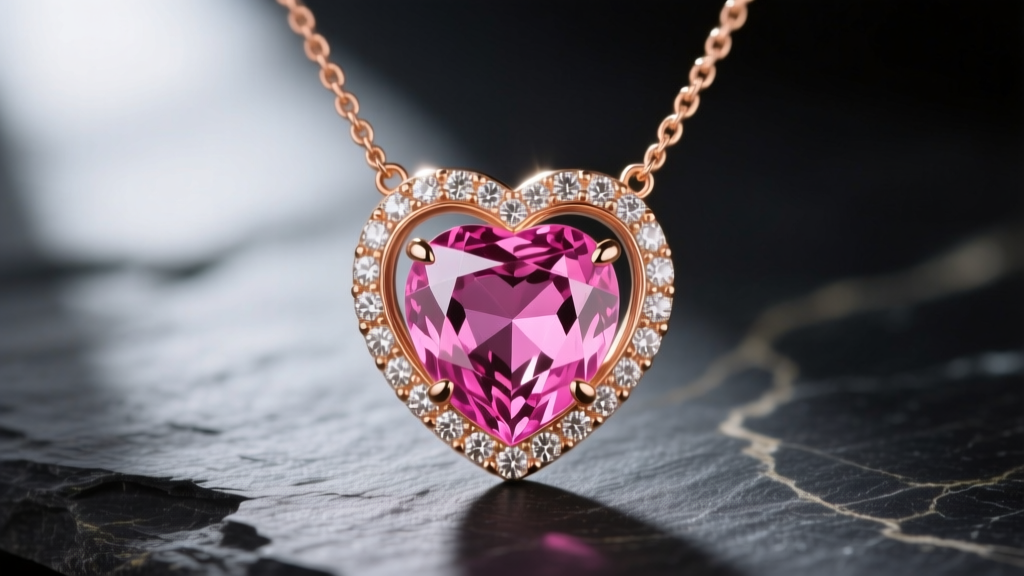
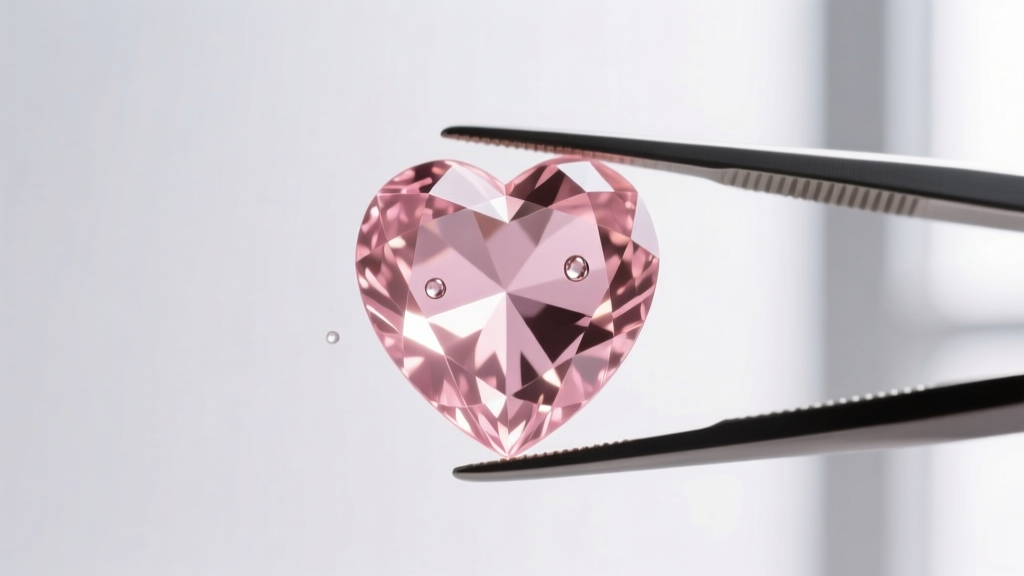
When consumers search for a heart necklace pink gemstone or enamel piece, they are often met with a sea of mass-produced, low-grade jewelry. However, from a gemological and metallurgical perspective, sourcing a high-quality pink heart pendant requires a deep understanding of crystal structures, alloy compositions, and mechanical stress points. The heart cut is one of the most technically demanding fancy shapes in lapidary arts, often sacrificing up to 45% of the rough crystal weight to achieve perfect symmetry and a sharp inferior cleft.
In this technical deep dive, we deconstruct the anatomy of premium pink heart necklaces, focusing on the two most prominent gemological contenders—pink sapphire and morganite—alongside the metallurgical realities of rose gold and enamel applications.
Pink Sapphire (Corundum) Technical Specs
Pink sapphires derive their coloration from trace amounts of chromium and titanium within the corundum crystal lattice. According to the GIA Pink Sapphire Encyclopedia, the boundary between a pink sapphire and a ruby is defined by specific tonal and saturation thresholds, which can vary slightly between gemological laboratories. For a heart-shaped pendant, a saturation level of 'Medium-Light' to 'Medium' is ideal, as overly dark stones will appear muddy once set in a closed-bezel or deep gallery setting.
- Refractive Index: 1.762 to 1.770, providing excellent brilliance when the pavilion facets are cut to precise 40.8-degree angles.
- Mohs Hardness: 9, making it highly resistant to scratching, though the sharp bottom point of the heart shape remains a structural vulnerability.
- Treatment Disclosure: Over 80% of pink sapphires are heat-treated or lattice-diffused with beryllium. Unheated stones command a 200% to 400% price premium.
Morganite (Beryl) Cleavage and Inclusion Risks
Morganite, colored by manganese, offers a softer, peach-pink aesthetic. However, it presents unique setting challenges. As detailed in the GIA Morganite Profile, morganite is part of the beryl family (Mohs 7.5 to 8) and possesses distinct basal cleavage. When a lapidary cuts a heart shape, the deep cleft at the top and the sharp point at the bottom become high-stress zones. If the jeweler does not employ a specialized V-prong at the inferior point, everyday thermal shock or minor impacts can cause the stone to fracture along its cleavage planes.
Metallurgy: Rose Gold Alloys and Enamel Durability
The visual warmth of a pink heart necklace is frequently amplified by pairing it with rose gold or utilizing vitreous enamel. Understanding the exact metallurgical breakdown is crucial for long-term wearability and skin biocompatibility.
Rose Gold Copper-to-Silver Ratios
Rose gold is not a naturally occurring metal; it is an alloy where copper is introduced to the pure gold base to create the pink/red hue. The exact ratio drastically alters both the color and the metal's physical properties.
| Alloy Grade | Gold Content | Copper Content | Silver/Zinc Content | Durability & Oxidation Risk |
|---|---|---|---|---|
| 14k Rose Gold | 58.5% | ~20.5% | ~21.0% | Higher tensile strength; higher risk of copper oxidation and galvanic corrosion in chlorinated water. |
| 18k Rose Gold | 75.0% | ~22.2% | ~2.8% | Richer pink hue; softer metal; lower allergy risk but prone to micro-scratching on the high-polish surfaces. |
Consumers must be warned that wearing high-copper 14k rose gold chains in swimming pools or hot tubs can lead to rapid galvanic corrosion, weakening the chain links at the solder joints.
Vitreous vs. Cold Enamel for Pink Inlay
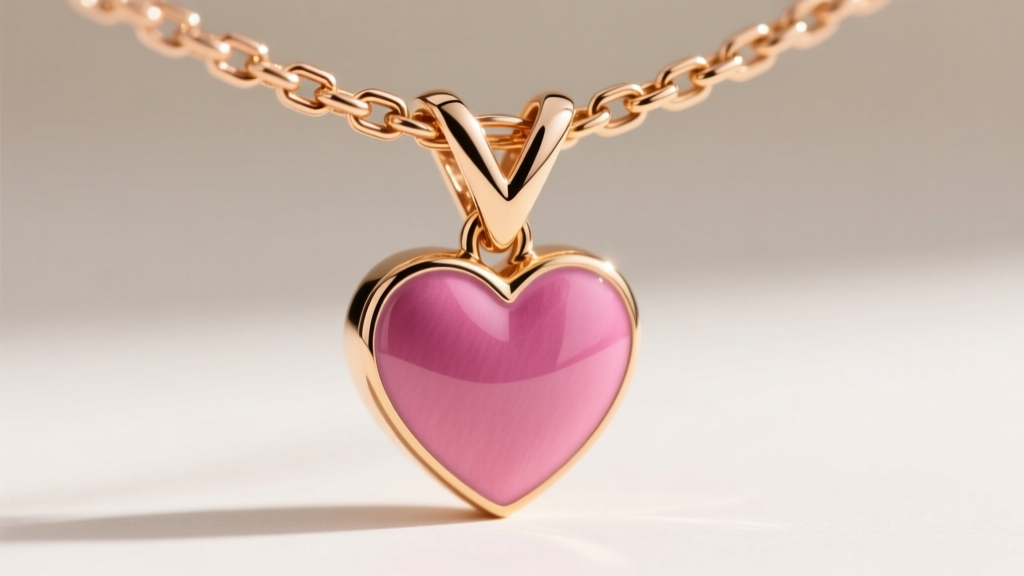
If the 'pink' in your heart necklace is achieved via enamel rather than a gemstone, the manufacturing method dictates the piece's lifespan. Vitreous enamel consists of silica-based glass frit fused to the metal substrate at temperatures exceeding 1400°F. It is entirely UV-stable and scratch-resistant, but it will shatter if the pendant is dropped on a hard surface. Conversely, cold enamel (an epoxy-based resin) is highly impact-resistant but will inevitably yellow and degrade after 5 to 7 years of UV exposure and contact with cosmetic chemicals like perfumes and lotions.
Chain Mechanics and Bail Engineering
A heavy heart pendant creates a pendulum effect, concentrating kinetic stress directly on the bail and the chain's jump rings. Selecting the correct chain gauge and bail type is non-negotiable for structural integrity.
Gauge Thickness and Tensile Strength
For a solid gold or large-carat morganite heart pendant weighing over 4 grams, standard 0.8mm cable chains are mechanically insufficient. The lateral friction of the bail will eventually saw through the soft gold links. We recommend the following specifications based on pendant weight:
- Pendants under 3 grams: 1.0mm Box Chain (Tensile strength ~12 lbs). The interlocking square links resist twisting and distribute weight evenly.
- Pendants 3 to 8 grams: 1.2mm to 1.5mm Wheat Chain (Tensile strength ~25 lbs). The woven, directional links provide exceptional structural redundancy.
- Pendants over 8 grams: 2.0mm Rope Chain with laser-welded links. Traditional soldered rope chains will pull apart under heavy pendulum stress.
Failure Modes of Heart Pendant Bails
The bail is the critical bridge between the chain and the stone. Mass-market jewelry frequently utilizes 'pinch bails'—spring-loaded mechanisms that grip the stone's drill hole or cleft with tiny metal teeth. Under the dynamic load of a swinging heart pendant, pinch bails routinely fail, resulting in lost stones. A properly engineered heart necklace must feature a soldered V-bail or a hidden halo bail that is laser-welded directly to the metal gallery, bypassing the gemstone entirely and transferring the kinetic load to the metal setting.
Pricing Framework and Authentication
Navigating the pricing of a premium pink heart necklace requires an understanding of carat weight brackets and treatment disclosures. Because the heart shape yields high rough-wastage, the price per carat jumps exponentially once the stone exceeds 1.50 carats.
'When evaluating fancy shaped corundum, symmetry and the precision of the cleft are just as critical as color saturation. A poorly proportioned heart cut will exhibit severe light leakage, regardless of the stone's inherent gemological quality.' — GIA Gem Encyclopedia
Expected Market Pricing (2026 Benchmarks)
- AAA Morganite (1.50ct - 2.50ct): $150 to $350 per carat. Look for stones with 'eye-clean' clarity; visible liquid inclusions near the cleft severely compromise structural integrity.
- Heated Pink Sapphire (1.00ct - 2.00ct): $800 to $2,200 per carat. Ensure the setting uses a V-prong at the bottom point to protect against chipping.
- Unheated Pink Sapphire (1.00ct+): $3,500 to $8,000+ per carat. Must be accompanied by a reputable laboratory report (GIA, AGL, or Gübelin) explicitly stating 'No indications of heating'.
Conclusion: Engineering the Perfect Pink Heart
A true luxury heart necklace pink sapphire or morganite piece is a triumph of lapidary precision and metallurgical engineering. By prioritizing V-prong settings, selecting high-tensile box or wheat chains, and verifying the exact copper content of the rose gold alloy, you ensure that the piece is not only visually captivating but structurally equipped to withstand decades of daily wear. Always demand full treatment disclosure and insist on soldered bails to protect your investment from catastrophic mechanical failure.