A Heart Necklace with a Key: The Ultimate Buying Guide
Discover how to choose the perfect heart necklace with a key. Learn about metal grades, chain types, lock mechanisms, and pricing in our expert guide.

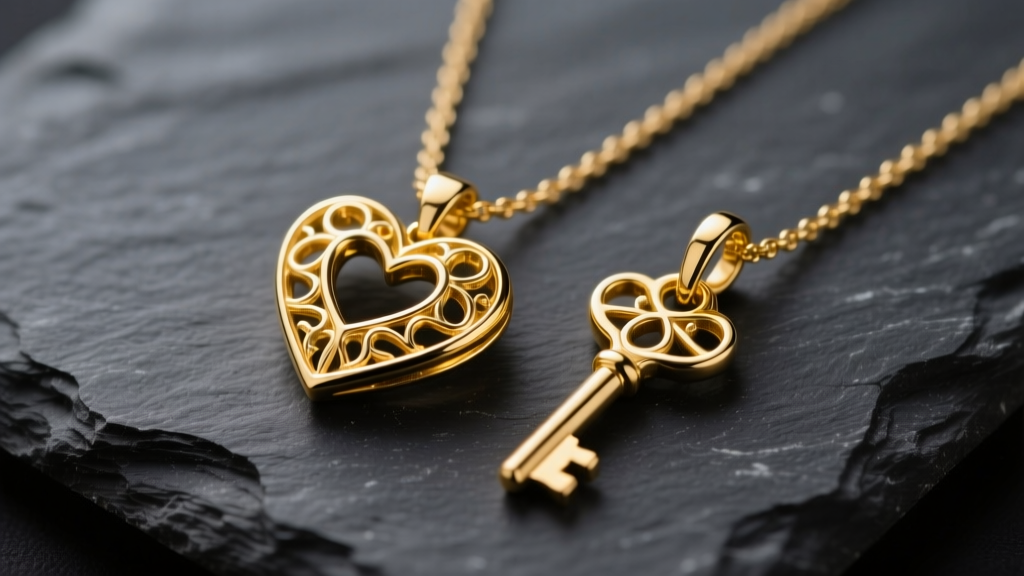
The Enduring Allure of the Heart and Key Motif
The concept of giving a loved one the "key to your heart" is a romantic trope that has transcended centuries of jewelry design. However, shopping for a heart necklace with a key requires more than just an appreciation for symbolism; it demands a keen eye for metallurgy, structural engineering, and chain dynamics. Whether you are looking for a functional locket that physically unlocks or a decorative piece where the key is permanently affixed, understanding the nuances of jewelry craftsmanship will ensure your investment stands the test of time.
In this comprehensive buying guide, we break down the exact specifications, material grades, and mechanical features you must evaluate before making a purchase in today's market.
Decoding Metal Grades: Durability Meets Aesthetics
The longevity of your pendant relies entirely on the metal alloy used. Pure metals are rarely used in jewelry due to their malleability, meaning the alloy composition dictates both the color and the tensile strength of the piece.
Sterling Silver (925) and Rhodium Plating
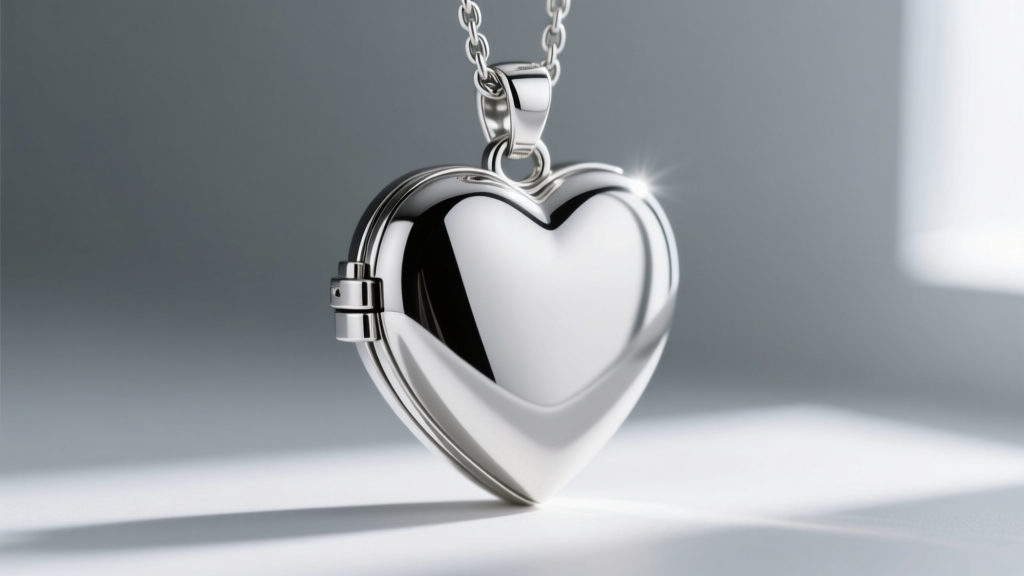
Sterling silver consists of 92.5% pure silver and 7.5% copper or zinc. While it offers a brilliant white luster, the copper content makes it highly susceptible to oxidation and tarnishing when exposed to ambient sulfur and skin acidity. If you are buying a silver heart necklace with a key, ensure it features a rhodium flash plating. Rhodium is a platinum-group metal that provides a temporary, highly reflective barrier against tarnish. Be aware that on functional keys, the friction of inserting and removing the key will eventually wear this plating away, requiring periodic re-plating by a jeweler.
Solid Gold: The Vickers Hardness Factor
When selecting gold, buyers often assume a higher karat is always better. However, according to the Gemological Institute of America (GIA), higher gold purity actually decreases the metal's structural hardness. This is a critical consideration for a heart necklace with a key, particularly if the key is functional.
- 18k Gold (75% pure): Features a rich, warm color and high hypoallergenic properties, but sits lower on the Vickers hardness scale (approx. 125 HV). It is prone to scratching and bending if the key is used frequently.
- 14k Gold (58.5% pure): The industry standard for functional jewelry. With a Vickers hardness of roughly 135-140 HV, 14k gold provides the necessary rigidity to ensure the key's teeth do not warp when turning inside a locket mechanism.
Platinum (950 Pt)
Platinum is the pinnacle of durability. Unlike gold, which loses microscopic layers of metal when scratched, platinum merely displaces. A platinum key and heart set will develop a soft patina over time but will never wear thin, making it ideal for heirloom-quality lockets.
Chain Selection: Tensile Strength and Drape
A heavy solid gold heart and key pendant will quickly snap a delicate chain. The bail (the loop connecting the pendant to the chain) creates a friction point that weakens softer chains over time. Below is a structural comparison of popular chain styles to help you match the chain to your pendant's weight.
| Chain Style | Tensile Strength | Tangle Factor | Best Use Case |
|---|---|---|---|
| Box Chain | High | Low | Heavy solid gold lockets and functional keys. |
| Cable Chain | Medium | Medium | Lightweight, decorative heart and key pendants. |
| Rope Chain | High | Low | Layering; provides a textured, vintage aesthetic. |
| Snake Chain | Very Low | High (Hair catching) | Not recommended for pendants; prone to kinking. |
Expert Tip: Always opt for a chain equipped with a lobster clasp rather than a spring-ring clasp. Lobster clasps feature a solid internal spring mechanism that is significantly less likely to fail under the pendulum weight of a metal key.
Lock Mechanics: Functional vs. Decorative Pendants
Before purchasing, you must determine the mechanical intent of the necklace. The market is flooded with "dummy" keys—decorative pieces where the key is soldered directly into the center of the heart or hangs beside it on a fixed jump ring.
The Engineering of a Functional Locket
If you want a heart locket that physically opens with the accompanying key, you are buying a piece of micro-engineering. High-quality functional lockets utilize a friction hinge paired with an internal click-lock mechanism. When the key is inserted and turned 90 degrees, it retracts a microscopic brass or steel pin, allowing the heart to swing open on a seamless piano hinge.
Warning: Never force a functional key. If the key meets resistance, the internal tumblers or pin are likely misaligned. Forcing it will snap the key's shaft, rendering the locket permanently sealed. Always consult a professional jeweler for internal mechanism repairs.
Pricing Tiers and Market Benchmarks (2026 Outlook)
As we navigate the 2026 jewelry market, fluctuations in precious metal commodities have shifted pricing brackets. Here is what you should expect to pay for a quality heart necklace with a key, based on current market valuations and craftsmanship tiers.
- Entry-Level ($75 - $200): Typically crafted from 925 sterling silver or 10k gold. The key is almost always decorative (non-functional). Stones, if present, are usually cubic zirconia or lab-created white sapphires. Brands in this tier include Pandora and mass-market mall jewelers.
- Mid-Tier ($400 - $1,200): Solid 14k gold construction. You will find functional lockets with reliable hinge mechanisms in this bracket. May feature semi-precious stones like garnet, amethyst, or low-carat-weight natural diamond accents (I1-I2 clarity).
- Luxury & Heirloom ($2,500 - $10,000+): 18k gold or 950 Platinum. Features precision Swiss-style click-lock mechanisms, hidden bails, and high-clarity natural or premium lab-grown diamonds (VS1+). Independent master jewelers and heritage houses like Tiffany & Co. or Cartier dominate this space.
Styling and Layering Frameworks
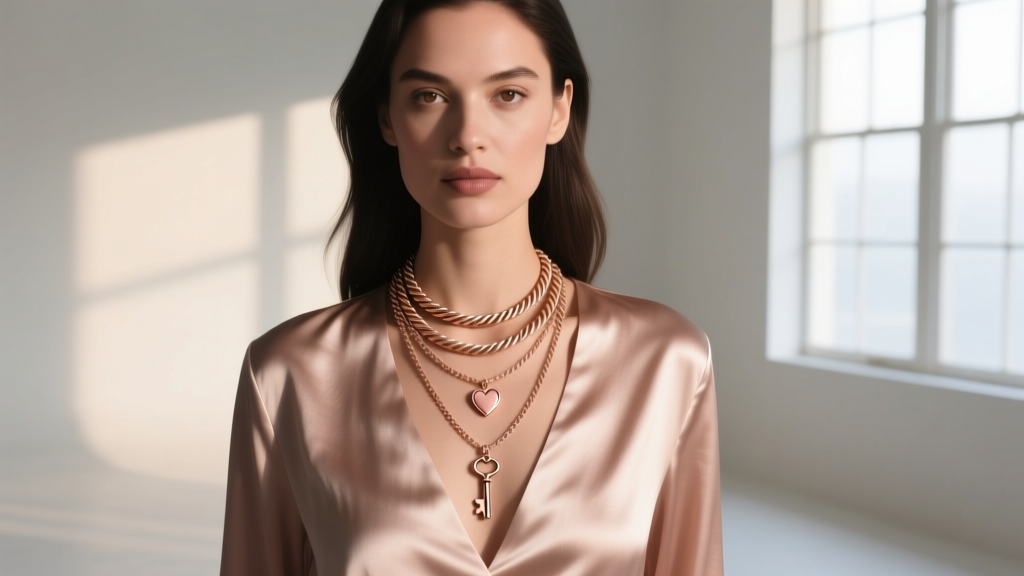
The heart and key motif is inherently sentimental, which can sometimes skew the styling toward overly juvenile if not balanced correctly. To modernize the look, employ the asymmetrical layering technique.
Pair your 16-inch heart and key necklace with an 18-inch minimalist bar pendant or a single solitaire diamond on a fine cable chain. This breaks up the visual weight of the heart, grounding the romantic motif with sharp, contemporary geometric lines. For evening wear, a 14k yellow gold heart and key layered over a dark silk blouse creates a striking contrast that highlights the metal's warm undertones.
Authentication and Long-Term Care
When receiving your necklace, immediately verify the hallmark stamps. According to Jewelers of America, legitimate precious metals must bear a quality mark (e.g., 14k, 585, 750, 925) and a registered maker's mark or trademark. If your pendant lacks a maker's mark, its provenance and metal purity are unverifiable.
For maintenance, avoid ultrasonic cleaners if your heart pendant features porous gemstones like opals, pearls, or turquoise, as the high-frequency vibrations can cause internal fracturing. Instead, use a soft-bristled baby toothbrush with a few drops of mild dish soap and lukewarm water to gently clear skin oils and lotions from the key's teeth and the locket's hinge.


