The Heart of the Ocean Necklace: 2026 Budget & Value Guide
Evaluate the true value of the Heart of the Ocean necklace in 2026. Compare materials, pricing tiers, and setting mechanics before you buy.

The Legacy and the Market: Why Prices Vary So Wildly
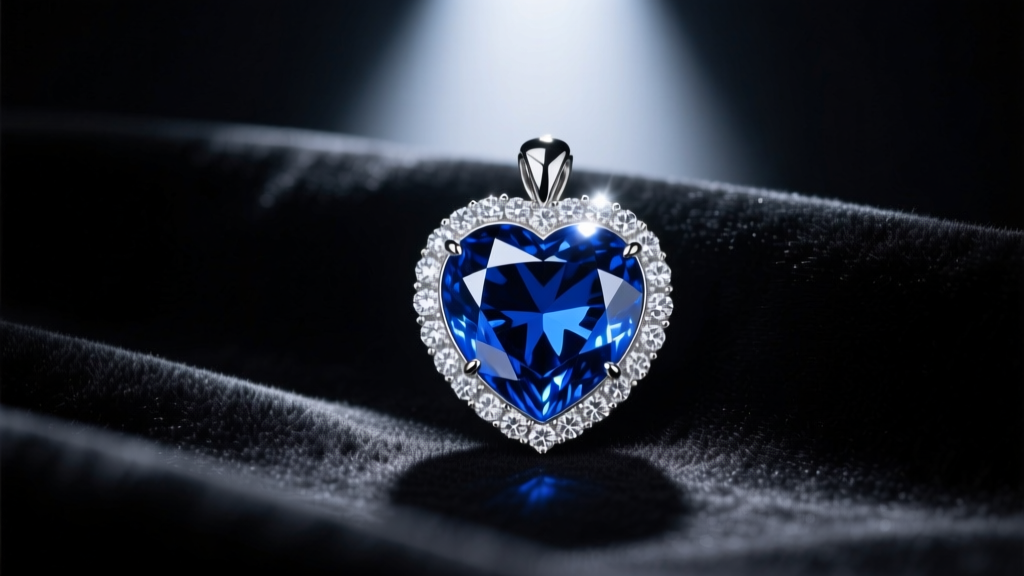
When James Cameron’s Titanic premiered in 1997, the world became obsessed with the Heart of the Ocean. While the movie prop was a tanzanite heart surrounded by cubic zirconia, the legendary piece created by Asprey & Garrard for the film's premiere featured a staggering 171-carat Ceylon sapphire and 103 diamonds, eventually selling for $1.4 million. Today, the market for the heart of the ocean necklace is a chaotic landscape spanning $30 costume replicas to $25,000+ fine jewelry investments. As we navigate the 2026 jewelry market, the explosion of lab-grown gemstones has completely disrupted traditional pricing models, making it easier than ever to acquire a visually identical piece for a fraction of the historical cost. However, this accessibility has also birthed a wave of deceptive marketing. Understanding the exact material grades, setting mechanics, and structural failure modes is critical before you invest your money.
Material Breakdown: What You Are Actually Paying For
The value of any sapphire heart pendant is dictated by its chemical composition and optical properties. Natural blue sapphires are a variety of corundum (aluminum oxide, Al₂O₃), deriving their iconic blue hue from trace amounts of iron and titanium. In 2026, lab-created sapphires possess the exact same chemical and physical properties but are grown in controlled environments, eliminating the 'silk' (rutile needle inclusions) found in many natural stones.
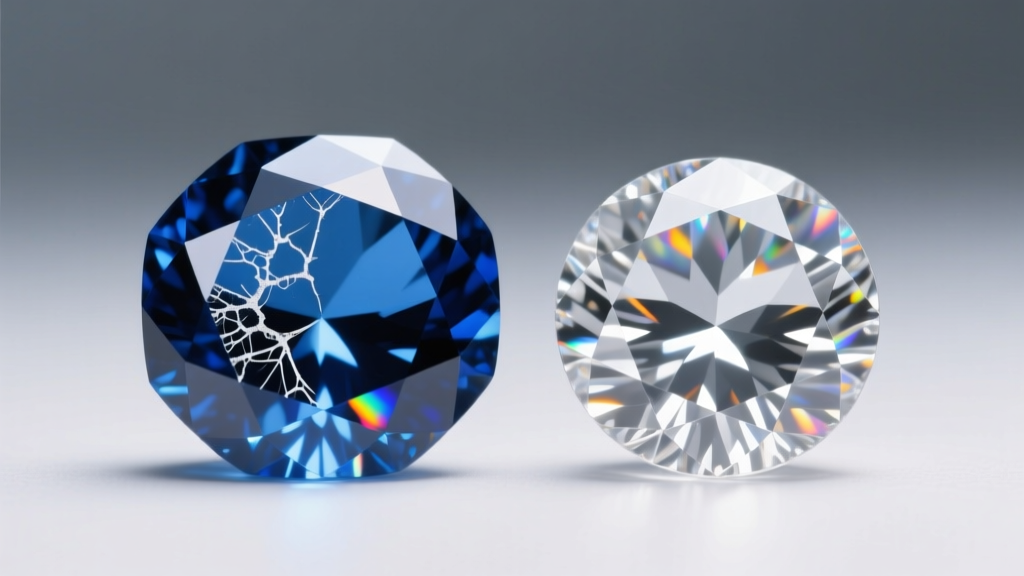
According to the Gemological Institute of America (GIA), the primary value factors for sapphires are color saturation, clarity, and cut. A heart-shaped cut is notoriously difficult to execute; a poorly cut heart will suffer from 'extinction' (dark, lifeless areas) or a 'bow-tie' effect across the center cleft.
| Material Grade | Mohs Hardness | 2026 Avg. Price (5-Carat Eq.) | Durability & Risk Profile |
|---|---|---|---|
| Blue Glass / Crystal | 5.5 - 6.0 | $15 - $40 | High scratch risk; chips easily upon impact. |
| Cubic Zirconia (CZ) | 8.0 - 8.5 | $20 - $60 | High dispersion (sparkle); can become cloudy over time with skin oils. |
| Lab-Created Sapphire | 9.0 | $150 - $450 | Exceptional durability; identical optics to natural; best value proposition. |
| Natural Ceylon Sapphire | 9.0 | $3,500 - $15,000+ | Investment grade; requires certification (GIA/GRS) to verify origin. |
The 2026 Pricing Tiers: From Costume to Fine Jewelry
To accurately assess the budget required for the heart of the ocean necklace, we must categorize the market into three distinct tiers. Each tier serves a different use case, from theatrical cosplay to generational heirlooms.
Tier 1: The Theatrical Replica ($30 - $150)
This tier dominates online marketplaces and museum gift shops. The center stone is typically a machine-pressed blue glass or a low-grade CZ, set in brass or zinc alloy with a thin flash of rhodium plating. Value Assessment: Poor long-term value. The rhodium plating will wear off within 3 to 6 months of regular wear, exposing the base metal which will oxidize and cause skin discoloration. Buy this only for occasional costume wear.
Tier 2: The Semi-Fine Bridge ($250 - $850)
This is the smartest tier for the modern buyer. It features a high-quality lab-created sapphire (often Verneuil or flux-grown) set in solid 925 sterling silver or 10k/14k white gold. Value Assessment: Excellent. You are paying for genuine precious metals and a gemstone that will not scratch or cloud. In 2026, many semi-fine jewelers are upgrading their silver settings with heavy platinum plating to prevent tarnishing, extending the lifespan of these pieces significantly.
Tier 3: The Fine Jewelry Investment ($4,500 - $25,000+)
Reserved for natural, unheated Ceylon or Kashmir sapphires surrounded by natural diamond halos, set in 18k white gold or 950 platinum. Value Assessment: High intrinsic value, but subject to the volatility of the natural gemstone market. Always demand a GIA or GRS origin report. If the seller cannot provide one, walk away.
Red Flags and Appraisal Pitfalls
The Federal Trade Commission (FTC) strictly regulates jewelry marketing, yet deceptive terminology remains rampant in the replica market. Watch out for these specific red flags when shopping:
- The 'Sapphire Crystal' Scam: If a listing uses the term 'sapphire crystal' to describe the blue stone, it is almost certainly blue glass or synthetic spinel. 'Sapphire crystal' is a term used for watch faces, not gemstones.
- Hollow-Back Settings: Many mid-tier replicas use hollowed-out backs to save on metal weight. These trap soap, lotion, and dead skin, leading to severe irritation and a dull appearance that cannot be cleaned without ultrasonic damage.
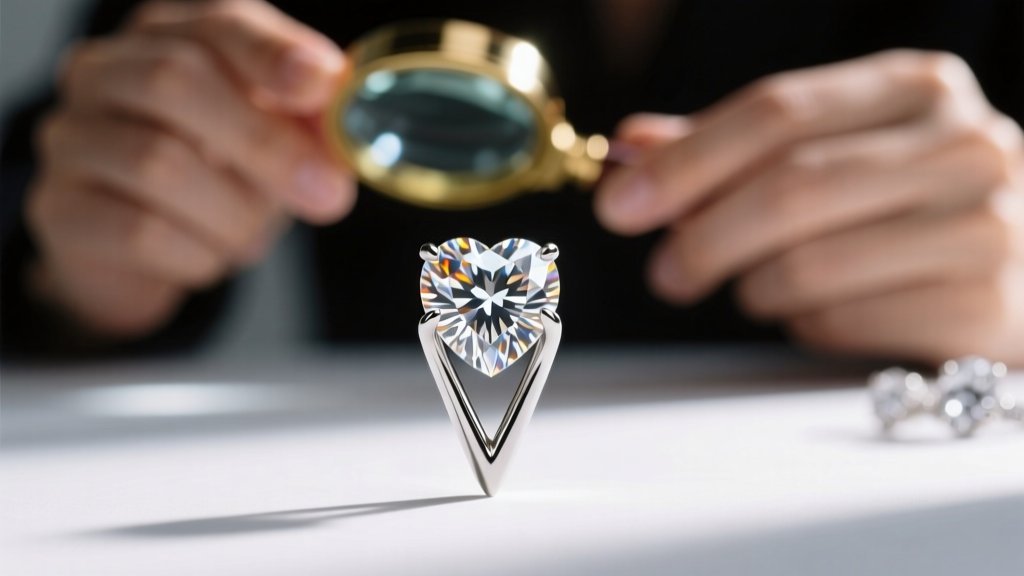
- Missing V-Prongs: The bottom tip (culet) of a heart-shaped stone is a structural weak point. A standard round prong leaves the tip exposed. If the setting does not feature a specialized V-prong at the bottom cleft, the stone is highly likely to chip if dropped or bumped against a hard surface.
"A heart-shaped gemstone without a protective V-prong at the inferior tip is a structural liability. Always inspect the culet protection before purchasing any heart-cut pendant." — Master Jeweler Bench Note
Chain and Setting Mechanics: Hidden Costs
The pendant is only half the equation. A 15mm sapphire heart surrounded by a diamond halo can easily weigh between 8 and 14 grams. Most budget necklaces are paired with flimsy 0.8mm cable chains that have a breaking strength of under 2 pounds. This is a catastrophic failure point waiting to happen.
For a pendant of this weight and profile, you must upgrade to a chain with a minimum gauge of 1.5mm. A solid box chain or a wheat chain in 14k white gold or platinum provides the necessary tensile strength to support the pendant without stretching the jump ring or snapping the links. Furthermore, ensure the bail (the loop connecting the pendant to the chain) is soldered shut or features a secure screw mechanism. Open bails will eventually warp under the pendulum motion of daily wear, leading to the loss of the pendant.
Final Verdict: Maximizing Your Budget
If your goal is to capture the breathtaking aesthetic of the heart of the ocean necklace without absorbing the premium of natural corundum, the Tier 2 Semi-Fine Bridge is your optimal target. Allocate $400 to $700 for a lab-created sapphire set in solid 14k white gold with a V-prong setting and a 1.5mm wheat chain. This specific configuration guarantees the visual gravity, structural integrity, and lifelong durability required for a piece of this caliber, ensuring your investment remains as timeless as the legend that inspired it.


