Expert Guide: Buying a Heart With Cross Necklace in Gold
Discover expert metallurgical insights, chain gauges, and casting techniques for selecting a durable, high-quality heart with cross necklace.

The Structural Anatomy of a Heart With Cross Necklace
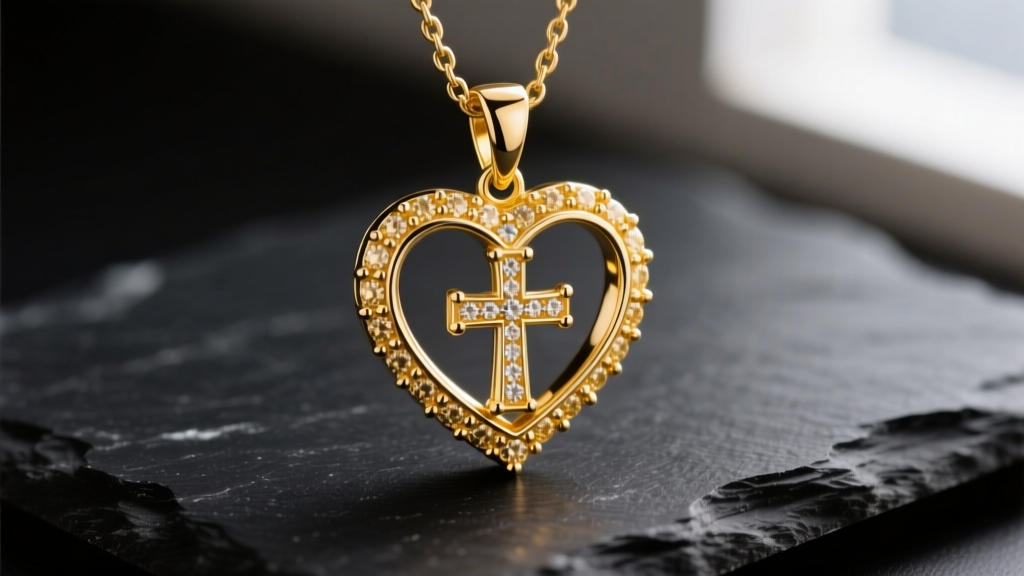
When evaluating fine jewelry, the intersection of distinct geometric shapes presents unique engineering challenges. A heart with cross necklace is a prime example of this. The organic, sweeping curves of the heart motif contrast sharply with the rigid, perpendicular lines of the cross. From a manufacturing perspective, this intersection creates a central stress point that dictates how the pendant must be cast, finished, and worn.
Modern jewelers utilize CAD/CAM (Computer-Aided Design and Computer-Aided Manufacturing) milling to prototype these pendants. This allows for precise calculation of metal distribution, ensuring the cross acts as a structural rib rather than a fragile appendage. However, the physical casting method remains critical. Die-striking compresses the metal's grain structure, yielding a denser, harder pendant ideal for lightweight, high-volume production. Conversely, lost-wax casting—favored for intricate, heavy, or custom heart with cross necklace designs—can introduce microscopic porosity if the flask temperatures and centrifugal forces are not meticulously calibrated. Porosity at the intersection of the cross and the heart's cleft can lead to micro-fractures over years of daily wear.
Metallurgical Breakdown: Choosing the Right Alloy
The longevity of your pendant is directly tied to its metallurgical composition. Pure gold (24k) is far too malleable for a piece with protruding elements like a crossbar, which are prone to bending. Therefore, alloying metals such as copper, silver, zinc, and palladium are introduced to alter the Vickers Hardness (HV) and tensile strength. According to the Gemological Institute of America (GIA), the specific ratio of these alloys not only determines the color but also the work-hardening capabilities of the final piece.
| Metal Alloy | Vickers Hardness (HV) | Tensile Strength (MPa) | Structural Best Use |
|---|---|---|---|
| 14k Yellow Gold | 130-150 HV | ~500 MPa | Everyday durability, resists bending on the crossbar |
| 18k Yellow Gold | 110-125 HV | ~350 MPa | Rich color, hypoallergenic, requires slightly thicker casting |
| 950 Platinum | 110-130 HV | ~300 MPa | Heavy pendants, superior prong security for gemstones |
| Sterling Silver (925) | 60-70 HV | ~250 MPa | Budget-friendly, requires rhodium flashing to prevent tarnish |
For a heart with cross necklace intended for daily wear, 14k gold offers the optimal balance of richness and structural rigidity. Platinum, while denser and heavier, possesses a unique property: it displaces rather than flakes when scratched, making it highly forgiving for intricate filigree work where the cross overlays the heart.
Chain Gauge Engineering and Bail Mechanics
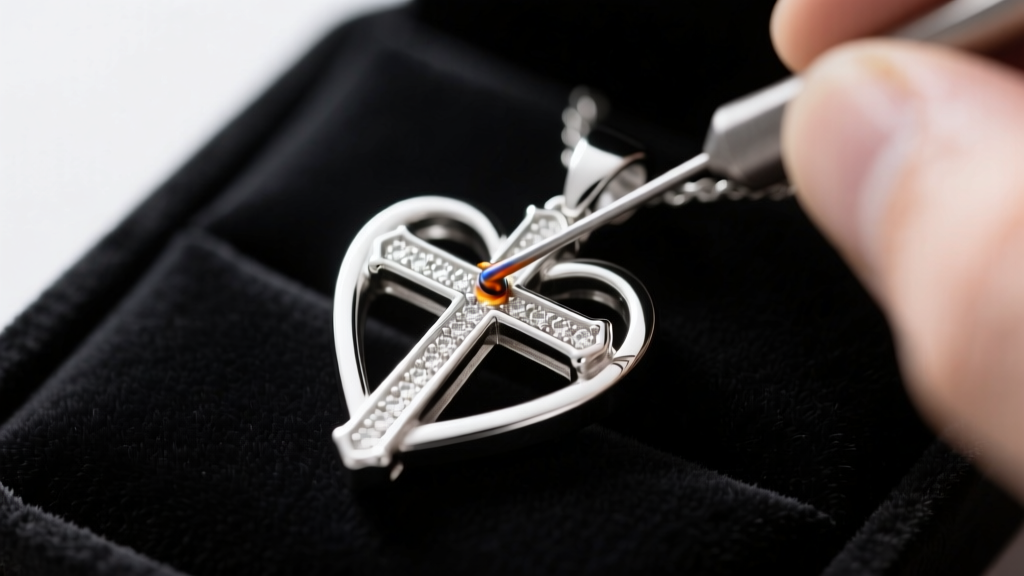
A pendant is only as secure as the chain that supports it. The weight distribution of a heart with cross necklace is inherently bottom-heavy due to the tapered point of the heart. This kinetic profile requires a chain that can withstand lateral torque without suffering from link deformation.
A standard 18-inch 1.0mm cable chain will rapidly degrade if paired with a solid 8-gram pendant. The friction between the bail and the chain links will eventually wear through the metal. For pendants weighing between 4 and 10 grams, a 1.5mm to 2.0mm box chain or wheat chain is highly recommended. These styles offer multi-directional flexibility and high tensile strength. Furthermore, the clasp must be proportionate; a 5mm lobster clasp is vastly superior to a standard spring-ring clasp, which features a delicate internal spring prone to failure under the pendulum-like motion of a heavier pendant.
The bail—the loop connecting the pendant to the chain—also requires scrutiny. Hidden bails (soldered behind the pendant) offer a seamless aesthetic but limit the maximum chain thickness that can pass through. Standard soldered ring bails provide greater versatility but introduce a secondary solder joint that must be inspected for structural integrity.
Gemstone Integration: Pave vs. Channel Settings
When diamonds or colored gemstones are incorporated into the design, the setting technique must accommodate the dual geometry of the motif. Micro-pave settings along the crossbar require precise bead raising. If the alloy is too soft, or if the beads are inadequately burnished, the stones will loosen. For the curved perimeter of the heart, a channel setting or a continuous bezel provides superior security compared to shared-prong settings, which can snag on textiles.
Expert Insight: When examining a heart with cross necklace, always inspect the reverse side of the intersection. A recessed or "scooped" back reduces metal weight and manufacturing costs, but it also creates a pocket for skin oils and lotions, accelerating tarnish in silver alloys and weakening the structural rib of the cross.
If the design features a center stone at the exact intersection of the cross and the heart, a bezel setting is the most technically sound choice. Prongs at this central junction can disrupt the visual continuity of the cross lines and are highly susceptible to impact damage.
Quality Control and Troubleshooting Micro-Fractures
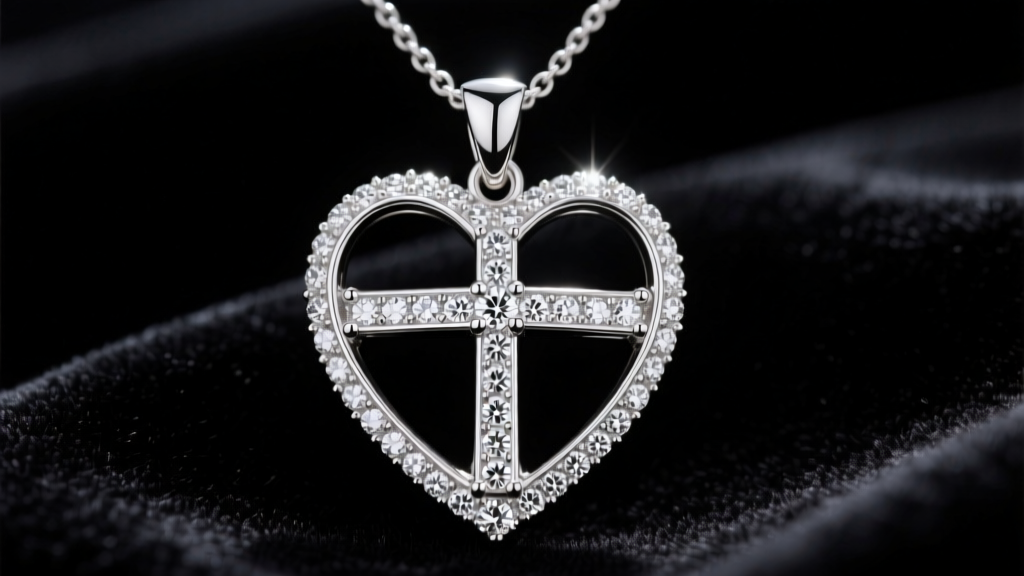
Before purchasing or finalizing a custom commission, conduct a rigorous quality control inspection. Use a 10x jeweler's loupe to examine the following critical areas:
- The Sprue Mark: In cast pieces, the sprue (the channel through which molten metal enters the mold) is typically located at the bottom point of the heart or the top of the cross. Ensure this area has been filed flush and polished smoothly, with no visible pitting.
- Solder Joints: If the cross is a separate casting soldered onto the heart base, look for clean, flowing solder lines. Laser welding is vastly superior to traditional torch soldering for this intersection, as it prevents heat distortion and preserves the temper of the surrounding metal.
- Porosity Check: Inspect the flat surfaces of the cross for tiny, pinhole-like divots. These indicate gas porosity from the casting process and will compromise the polish and structural density over time.
Maintenance and Long-Term Care
Proper maintenance extends the life of complex pendants. While ultrasonic cleaners are excellent for removing debris from diamond settings, they can be detrimental to a heart with cross necklace if the piece features fracture-filled gemstones or if the casting has undetected internal porosity, which can trap cleaning solutions and cause internal oxidation. For routine cleaning, a mild surfactant solution (warm water and a few drops of phosphate-free dish soap) applied with a soft-bristled baby toothbrush is the safest method. Pay special attention to the underside of the crossbar, where lotions and dead skin cells accumulate, masking the metal's luster and accelerating galvanic corrosion in lower-karat alloys.
By understanding the metallurgical properties, structural engineering, and setting mechanics behind these pieces, you can confidently select a heart with cross necklace that is not only symbolically profound but built to endure generations of wear. For further reading on precious metal properties and durability, consult the GIA's comprehensive guides on platinum and gold alloys.


