Expert Care & Cleaning Guide for a Hebrew Chai Necklace
Learn expert cleaning and maintenance tips for your Hebrew Chai necklace. Protect gold, silver, and enamel details to keep the symbol of life shining.

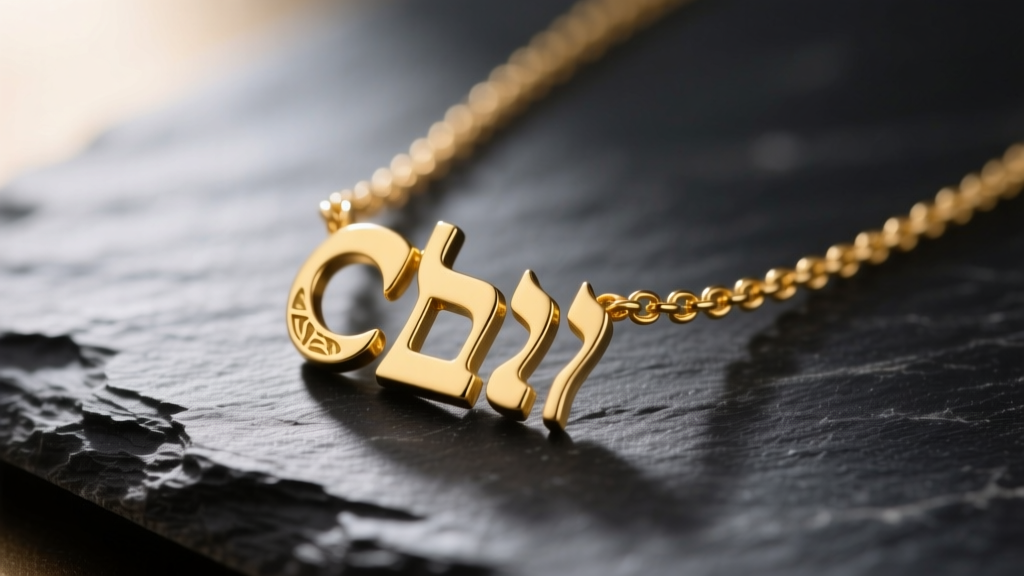
The Unique Anatomy of a Hebrew Chai Necklace
The Chai (חי) symbol, translating to 'life' in Hebrew, is a profound emblem of faith, vitality, and spiritual grounding. Worn close to the heart, a Hebrew Chai necklace is far more than a simple fashion accessory; it is a deeply personal anchor. However, from a jeweler's perspective, the intricate geometry of the Chet (ח) and Yud (י) letters creates unique vulnerabilities. The negative space, sharp interior angles, and frequent use of delicate suspension bridges in the design make these pendants prone to trapping sebum, cosmetic lotions, and dead skin cells. Furthermore, the structural integrity of the smaller Yud letter requires specialized handling to prevent bending or warping during routine maintenance.
Unlike solid, unbroken pendants like a simple gold disc or a plain cross, a Hebrew Chai necklace demands a meticulous, multi-step care regimen. Whether your piece is a vintage 14k yellow gold heirloom, a modern rhodium-plated white gold design, or a sterling silver pendant with cold enamel accents, understanding the metallurgy and structural stress points of your jewelry is the first step toward preserving it for generations.
Material-Specific Cleaning Protocols
Before applying any cleaning solution, you must identify the exact material composition of your pendant and chain. The Jewelers of America emphasizes that treating a metal alloy with the wrong chemical agent can cause irreversible surface damage or accelerate oxidation.
14k and 18k Solid Gold Chai Pendants
Gold is highly resistant to tarnish, but it is not immune to buildup. 14k gold contains 58.5% pure gold, with the remainder being alloy metals like copper, silver, and zinc. These alloys can react to chlorine and harsh household cleaners, leading to a condition known as 'stress corrosion cracking' over time. For solid gold Chai necklaces, avoid any cleaner containing ammonia or bleach. Instead, rely on a neutral pH, phosphate-free dish soap diluted in distilled water to break down body oils without attacking the alloy matrix.
Sterling Silver and Oxidized Finishes
Sterling silver (925) is an alloy containing 92.5% silver and 7.5% copper. It is the copper that reacts with sulfur compounds in the air and on the skin to form silver sulfide—the black tarnish that frequently accumulates in the tight inner corners of the Chet. If your Hebrew Chai necklace features an intentional oxidized (blackened) finish to highlight the lettering, you must avoid silver dip solutions and abrasive polishing cloths. These products will strip the intentional patina, leaving the pendant looking flat and unnaturally bright. Use only a damp microfiber cloth and a soft brush for oxidized silver.
Enamel and Gemstone-Set Variations
Many contemporary Hebrew Chai pendants incorporate vitreous (glass-fused) or cold (epoxy-based) enamel to add vibrant blues, whites, or blacks to the design. According to the Gemological Institute of America (GIA), ultrasonic cleaners are strictly forbidden for enameled jewelry. The high-frequency vibrations can shatter vitreous enamel or cause cold enamel to peel away from the metal backing. Similarly, if your Yud features a prong-set diamond, sapphire, or delicate opal inlay, ultrasonic waves can loosen the prongs or fracture moisture-rich stones like opals and emeralds.
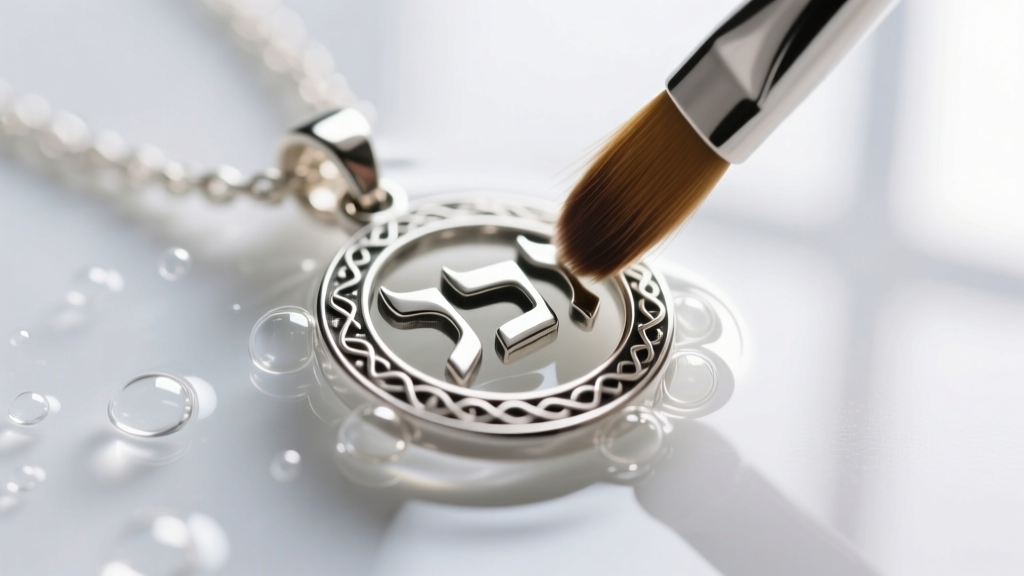
Step-by-Step Deep Cleaning Routine
For a standard solid gold or non-oxidized sterling silver Hebrew Chai necklace without fragile gemstones, follow this professional-grade deep cleaning routine every four to six weeks.
- The Preparation: Mix three drops of phosphate-free, mild dish soap (such as Dawn or a dedicated jewelry wash) into a small glass bowl of lukewarm distilled water. Avoid tap water, as the dissolved minerals and chlorine can leave hard water spots on the metal.
- The Soak: Submerge the necklace entirely. Allow it to soak for exactly 3 to 5 minutes. This softens the hardened sebum and cosmetic residue trapped in the negative space of the Hebrew letters without degrading the metal.
- Targeted Agitation: Using an extra-soft baby toothbrush (with bristles no thicker than 0.1mm), gently brush the interior cutouts of the Chet and the underside of the bail. Brush in a circular motion, applying zero downward pressure to avoid bending delicate gold prongs or scratching high-polish surfaces.
- The Rinse: Rinse the pendant under a gentle stream of lukewarm distilled water. Ensure the drain is securely plugged or use a mesh strainer to prevent catastrophic loss.
- Drying and Polishing: Pat the necklace dry with a lint-free microfiber cloth. Do not air-dry, as evaporation will leave mineral deposits. Finish by lightly buffing the high-polish edges with a dedicated jewelry polishing cloth.
Common Failure Modes and How to Prevent Them
Beyond surface dirt, mechanical wear is the primary enemy of fine jewelry. Understanding the specific failure modes of a Hebrew Chai necklace will help you intervene before a repair is necessary.
Bail Friction and Thinning
The bail is the loop that connects the pendant to the chain. Because the Chai pendant is often top-heavy, the bail experiences constant friction against the chain links. Over 3 to 5 years of daily wear, a 1.2mm cable chain can act like a microscopic saw, thinning the bottom of a soft 14k gold bail. Inspect the bail's interior curve every six months. If you see a deep groove, take it to a jeweler to have a new soldered bail attached before the pendant snaps off.
Prong Snagging and Sweater Catching
The sharp exterior corners of the Chet and the protruding nature of the Yud make these pendants notorious for catching on knitwear, lace, and towels. This snagging exerts lateral torque on the pendant. If your Chai features gemstone accents, this torque can lift the prongs, risking stone loss. Always remove your necklace before dressing or undressing, and never pull the pendant if it snags; instead, carefully untangle the fabric fibers from the metal.
Rhodium Degradation on White Gold
If your Hebrew Chai necklace is crafted from white gold, it is likely plated with a 0.1-micron layer of rhodium to achieve a bright, silvery-white finish. Aggressive rubbing with standard silver polishing cloths or frequent use of chemical dips will strip this plating, exposing the naturally yellowish-white alloy beneath. To preserve the rhodium flash, limit polishing to a soft, untreated microfiber cloth and have the piece professionally re-plated every 18 to 24 months.
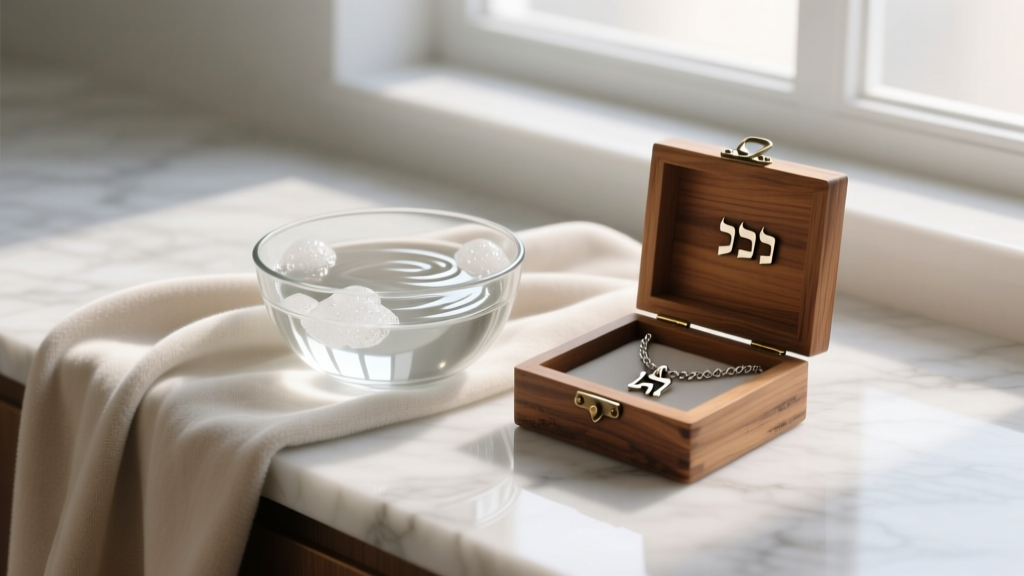
Maintenance Schedule & Essential Tool Kit
Consistency is the hallmark of proper jewelry preservation. Use the following framework to maintain your necklace's structural and aesthetic integrity.
| Maintenance Task | Frequency | Tools Required | Warning / Pro-Tip |
|---|---|---|---|
| Surface Wipe Down | Weekly | Untreated microfiber cloth | Never use tissue paper or paper towels; they contain wood pulp that causes micro-scratches on gold and silver. |
| Deep Soak & Brush | Monthly | Distilled water, mild soap, baby toothbrush | Ensure the water is lukewarm, never hot, to protect any soldered joints or enamel inlays. |
| Bail & Prong Inspection | Bi-Annually | 10x Jeweler's Loupe | Look for deep grooves in the bail or visible gaps between gemstone prongs and the metal culet. |
| Professional Ultrasonic | Annually | Jeweler's ultrasonic & steam cleaner | Only safe for solid gold/silver without enamel, pearls, opals, or fracture-filled stones. |
Proper Storage Techniques for Longevity
How you store your Hebrew Chai necklace when it is not being worn is just as critical as how you clean it. Tossing the pendant into a communal jewelry box is a recipe for disaster. The sharp angles of the Hebrew letters can easily scratch adjacent pearls or softer gemstones like turquoise, while the chain can become hopelessly tangled in the pendant's negative space.
Store your necklace in an individual, soft-lined compartment or a dedicated polyethylene zip-lock bag. Polyethylene is chemically inert and will not off-gas chemicals that harm metals. For sterling silver Chai necklaces, place a 3M anti-tarnish strip inside the storage bag. These strips absorb airborne sulfur compounds and hydrogen sulfide, effectively halting the chemical reaction that causes silver sulfide tarnish before it can begin. Keep the storage box in a cool, dry environment, avoiding humid areas like bathroom counters where fluctuating temperatures and moisture accelerate oxidation.
When to Seek Professional Jeweler Intervention
While routine cleaning and careful storage will handle 90% of your maintenance needs, certain issues require the expertise of a master jeweler. Do not attempt DIY repairs using household adhesives or pliers.
- Cracked Solder Joints: If the Yud is attached to the Chet via a delicate soldered bridge and you notice a visible hairline fracture or movement, stop wearing the necklace immediately. A jeweler can re-flow the solder using a laser welder, which prevents heat damage to surrounding gemstones.
- Chain Kinks and Stretching: If your box chain or rope chain develops a severe kink near the clasp or the bail, attempting to pull it straight will weaken the metal links, leading to a future snap. A jeweler has specialized mandrels and tools to realign the links safely.
- Deep Scratches and Refinishing: If the high-polish surface of your pendant has accumulated a web of deep scratches that a polishing cloth cannot remove, a professional can perform a multi-stage buffing and polishing process to restore the mirror finish without compromising the crisp edges of the Hebrew lettering.
The Jeweler's Maxim: 'A necklace is only as strong as its weakest link, and its beauty is only as lasting as its care.' Treat your Hebrew Chai necklace not just as an object of adornment, but as a living artifact. By respecting the metallurgy and honoring the intricate design with mindful maintenance, you ensure that this symbol of life continues to shine brilliantly for decades to come.


