Troubleshooting a Vintage Richelieu Jewelry Pearl Necklace
Learn how to authenticate, clean, and repair common issues with a vintage Richelieu jewelry pearl necklace, from flaking nacre to broken clasps.

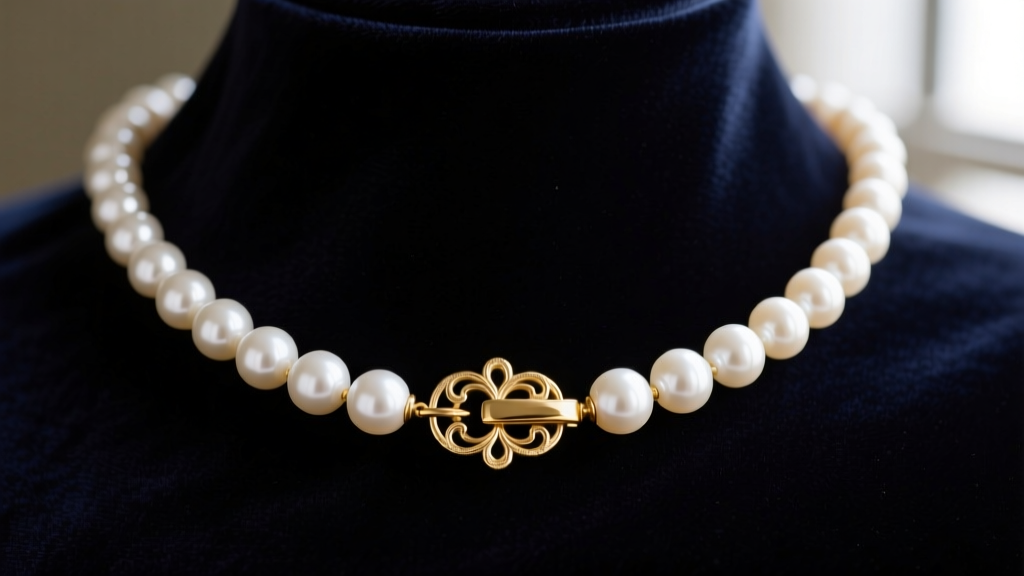
The Anatomy of Mid-Century Richelieu Pearls
Founded in the 1890s and reaching its zenith in the mid-20th century, Richelieu was a titan of American costume jewelry. When you acquire a vintage Richelieu jewelry pearl necklace, you are not just holding a fashion accessory; you are holding a piece of mid-century manufacturing history. However, these pieces present unique restoration challenges. Unlike fine jewelry, Richelieu pearls are faux. They consist of a solid glass core coated in Essence d'Orient—a luminescent mixture derived from guanine crystals (extracted from fish scales) suspended in a lacquer binder. The findings, including the clasps and jump rings, are typically cast brass or copper with a thin gold or rhodium electroplate.
In the 2026 vintage market, a mint-condition graduated Richelieu pearl necklace from the 1950s or 1960s can command between $150 and $350. However, decades of wear, fluctuating humidity, and contact with skin oils lead to specific failure modes. Troubleshooting these issues requires an understanding of vintage metallurgy and faux pearl chemistry, rather than standard fine jewelry repair techniques.
Troubleshooting Flaking and Peeling Faux Nacre
The most heartbreaking issue a collector will face is the flaking of the pearl coating. Because the guanine-lacquer mixture is organic and applied in microscopic layers, it is highly susceptible to degradation from acidic skin pH, cosmetics, and high humidity.

The "Essence d'Orient" Failure Mode
When a Richelieu pearl begins to peel, it reveals the clear or opalescent glass bead underneath. Do not attempt to glue the flakes back down. Cyanoacrylate (super glue) will cloud the surrounding lacquer and create a permanent, cloudy blemish. Furthermore, you cannot chemically "melt" the edges back together as you might with certain plastics.
- Isolation: Immediately remove the flaking beads from the strand to prevent the sharp edges of the glass from scratching adjacent, healthy pearls.
- Professional Pearl Dipping: The only true restoration method is "pearl dipping." Specialty restoration jewelers strip the remaining coating and re-dip the glass core in a modern synthetic pearl essence. Expect to pay $8 to $12 per bead for this service.
- Sourcing Replacements: If dipping is cost-prohibitive, search for "donor" Richelieu necklaces on auction sites. Richelieu frequently used standard 6mm, 8mm, and 10mm glass cores, making it possible to cannibalize broken strands for intact beads.
Fixing Tarnish and Verdigris on Brass Findings
Verdigris—the crusty, pale-green buildup on vintage clasps and jump rings—is copper(II) acetate. It forms when the copper alloys in Richelieu's brass findings react with acetic acid (from sweat) and moisture. If left untreated, verdigris will pit the metal and eventually cause the clasp to snap.
Safe Removal Techniques
Never submerge a Richelieu necklace in liquid tarnish removers. Chemicals like Tarn-X will instantly strip the thin gold electroplate and dissolve the pearl essence. Instead, use mechanical removal and targeted solvents.
| Cleaning Agent | Effect on Brass Findings | Effect on Pearl Essence |
|---|---|---|
| Dry Wooden Toothpick | Safe; gently scrapes away crusty verdigris without scratching gold plate. | Completely safe; keeps moisture away from the bead. |
| Isopropyl Alcohol (99%) | Safe for spot-cleaning grease; does not remove tarnish. | Dangerous; can dissolve the lacquer binder in the pearl coating. |
| Renaissance Wax | Excellent; seals the brass against future moisture and oxidation. | Safe if applied carefully with a micro-brush, avoiding the bead. |
| Baking Soda Paste | Highly abrasive; will strip gold plating and expose raw brass. | Catastrophic; alkaline abrasives will permanently dull the pearls. |
Expert Tip: After mechanically removing verdigris with a wooden toothpick, apply a microscopic layer of Renaissance Micro-Crystalline Wax to the clasp using a cotton swab. This creates a moisture barrier that prevents the green corrosion from returning, which is critical if the necklace will be worn against the skin.
Restringing: Thread vs. Wire for Heavy Glass Beads
One of the most common structural failures in a vintage Richelieu jewelry pearl necklace is a snapped string. Mid-century stringers often used cotton or early synthetic threads. Because Richelieu's glass pearls are significantly heavier than real cultured pearls or lightweight plastic beads, gravity and the weight of the necklace cause traditional thread to stretch, fray, and eventually snap.
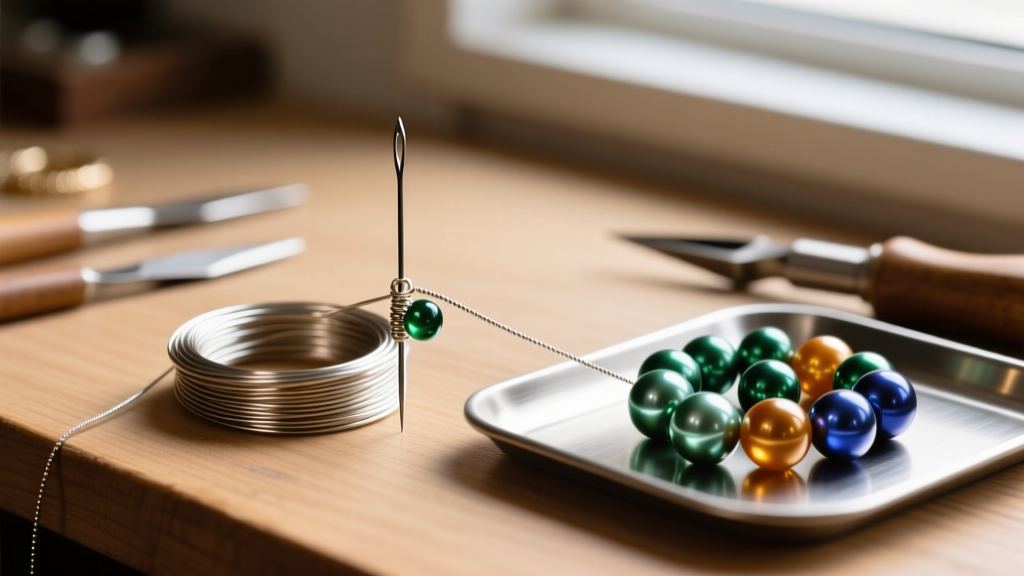
Modern Restringing Specifications
When restringing a heavy vintage faux pearl necklace, abandon traditional silk thread. According to modern jewelry fabrication standards outlined by resources like the Fire Mountain Gems Encyclopedia, heavy glass beads require the tensile strength of micro-fused stainless steel beading wire.
- Wire Gauge: For standard 8mm Richelieu pearls, use a 49-strand, 0.018-inch diameter beading wire. For larger 10mm to 12mm graduated beads, step up to a 0.024-inch gauge to prevent the wire from kinking under the bead's weight.
- French Wire (Gimp): Never loop the beading wire directly through the metal clasp ring. The friction of the brass will eventually saw through the steel wire. Always thread a 2mm piece of coiled French wire (gimp) over the wire at the clasp connection point to protect it from metal-on-metal abrasion.
- Crimping: Use sterling silver or gold-filled 2x2mm crimp tubes, securing them with a crimping plier to create a folded, rounded fold rather than flattening them, which can create sharp edges that cut the wire.
Clasp Mechanism Failures and Tension Loss
Richelieu utilized several distinct clasp styles, most notably the J-hook, the barrel clasp, and the fold-over box clasp. Over decades of use, the tension in these base-metal clasps degrades.
If a fold-over clasp no longer "clicks" securely shut, the internal tension tab has been compressed. Do not use standard steel jewelry pliers to bend it back, as the hardened steel teeth will mar the soft gold-plated brass. Instead, use nylon-jaw pliers to gently squeeze the outer walls of the box clasp inward by a fraction of a millimeter. This restores the friction fit without damaging the electroplate. If the J-hook has stretched open, gently tap it against a jeweler's steel block with a rawhide mallet to reshape the curve without thinning the metal.
Authenticating the Richelieu Signature
Because Richelieu pearls are highly sought after, the market is flooded with misattributed pieces. Authenticating your necklace requires looking beyond the pearls themselves. According to the archival records maintained by the Vintage Fashion Guild, Richelieu's hallmarks evolved over the decades.
- 1950s - 1960s: Look for the copyright symbol (©) followed by "Richelieu" stamped directly onto the hangtag or the back of the clasp. Many pieces from this era feature a distinctive J-hook clasp with a small, soldered safety chain.
- 1970s - 1980s: The brand often used a fold-over box clasp stamped with "Richelieu" in a serif font. During this era, they also produced "pearl chokers" with a rigid metal collar rather than a strung strand.
- The Hangtag: Original pieces often arrived with a small, foil-stamped cardboard hangtag tied to the clasp with a cotton string. While rare to find intact, the presence of an original, correctly aged tag is a strong indicator of authenticity and adds a 20% to 30% premium to the resale value.
By understanding the specific materials and manufacturing techniques used by this historic brand, you can successfully troubleshoot, restore, and preserve a Richelieu jewelry pearl necklace for future generations, maintaining both its structural integrity and its mid-century charm.


