Restore and Protect Your Enamel Pendant Necklace: Expert Fixes
Is your enamel pendant necklace chipped or fading? Discover expert troubleshooting, repair options, and daily care tips to restore your jewelry.

The Anatomy of Enamel Damage: Why Pendants Chip and Fade
An enamel pendant necklace is a striking fusion of metallurgy and glasswork, but its very composition makes it uniquely vulnerable to daily wear. Unlike solid gemstones or pure metals, enamel is essentially a composite material. When you notice your pendant losing its luster, chipping at the edges, or suffering from chain breakage, you are witnessing the physical limits of this composite structure. To effectively troubleshoot and restore your jewelry, you must first understand the specific type of enamel used in your piece and the mechanical forces acting upon it.
Vitreous vs. Cold Enamel: Identifying Your Pendant's Material
The repair protocol for your necklace depends entirely on whether the enamel is vitreous (hot) or cold (epoxy). Vitreous enamel is powdered glass fused to a metal base at extreme temperatures (typically 1400°F to 1600°F). It is highly durable, scratch-resistant, and colorfast, but it is inherently brittle. Cold enamel, conversely, is a modern jeweler's epoxy or resin poured into metal recesses and cured at room temperature or low heat. While cold enamel is less prone to shattering upon impact, it is highly susceptible to UV degradation, chemical discoloration, and peeling.
| Enamel Type | Firing Temp | Durability Profile | Repairability | Average Price Range |
|---|---|---|---|---|
| Vitreous (Hot) | 1400°F - 1600°F | Scratch-proof, shatters on hard impact | Difficult; requires kiln re-firing | $150 - $2,500+ |
| Cold (Epoxy/Resin) | Room Temp - 200°F | Impact-resistant, scratches and yellows easily | Moderate; can be patched or repoured | $40 - $400 |
| Guilloché (Translucent) | 1400°F+ | Extremely fragile, prone to cracking over engraved metal | Expert-only; high risk of base metal melting | $500 - $5,000+ |
Troubleshooting Common Enamel Pendant Necklace Issues
When your necklace fails, it is rarely a random event. By analyzing the specific failure mode, you can implement targeted solutions to salvage the piece and prevent future damage.
Issue 1: Micro-Chipping and Edge Flaking
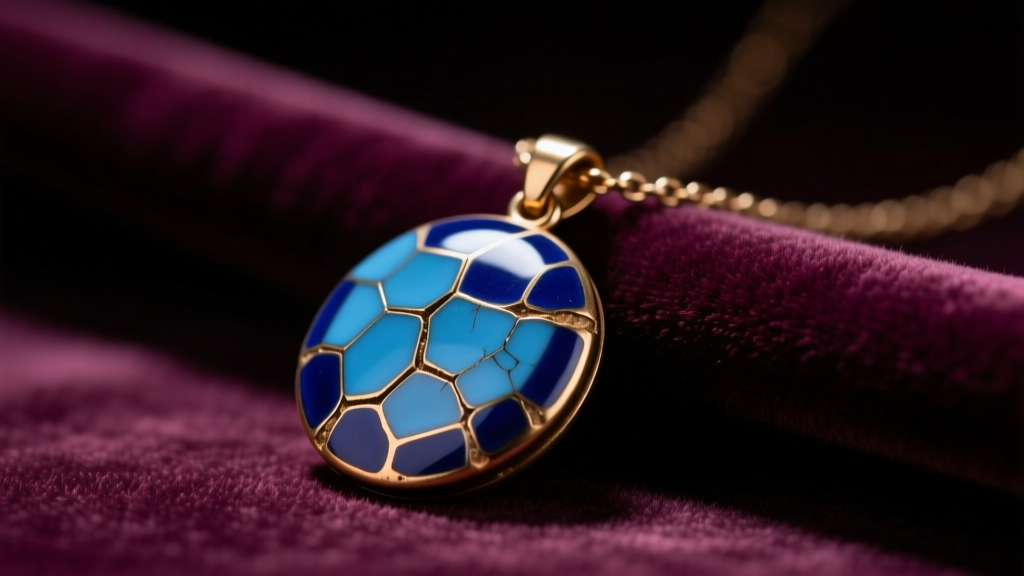
The Problem: You notice tiny, crescent-shaped divots missing from the edges of your pendant, or a spiderweb fracture radiating from the center. This is almost exclusively a vitreous enamel issue. Because glass and metal expand and contract at different rates (the coefficient of thermal expansion), sudden temperature changes—like stepping out of a hot shower into cold air—can cause the glass to pop off the metal base. Furthermore, striking the pendant against a granite countertop or steering wheel creates kinetic shockwaves that shatter the glass layer.
The Fix: Unfortunately, you cannot 'glue' vitreous glass back together seamlessly. If the chip is on the edge, a master jeweler can sometimes use a diamond burr to gently file and smooth the metal bezel down to the new enamel line, creating a deliberate, polished border. If the fracture is central, the piece must be sent to a specialist who can carefully pick out the shattered glass, clean the base metal, and re-fire a new layer of enamel in a kiln.
Issue 2: Discoloration and Cloudiness
The Problem: Your once-vibrant pendant now looks milky, yellowed, or dull. If your piece is cold enamel, prolonged exposure to UV light and contact with cosmetics (perfumes, lotions, hairspray) causes a chemical breakdown of the epoxy resin, leading to irreversible yellowing. If your piece is vitreous, cloudiness is usually a surface-level issue caused by hard water minerals, soap scum, or skin oils trapped in micro-fissures.
The Fix: For vitreous enamel, create a cleaning solution using 3 drops of pH-neutral dish soap (like Dawn) in 8 ounces of distilled water. Soak the pendant for exactly 5 minutes, then gently agitate with a baby-soft toothbrush. Rinse with distilled water and pat dry with a lint-free microfiber cloth. Never use ammonia, bleach, or commercial silver dips, as these will permanently etch the glass surface. For yellowed cold enamel, the resin must be carefully dug out by a jeweler and repoured.
Issue 3: Chain and Bail Wear from Heavy Enamel Pendants
The Problem: Enamel is dense. A solid brass or sterling silver pendant heavily loaded with thick enamel can easily weigh between 12 and 25 grams. If this weight is suspended on a delicate 0.9mm rope chain or a hollow cable chain, the constant friction will saw through the chain links or wear down the interior of the pendant's bail (the loop it hangs from).
The Fix: Upgrade your chain to match the pendant's mass. For enamel pendants weighing over 10 grams, always use a solid 1.2mm to 1.5mm box chain or a solid wheat chain. These styles distribute weight evenly and resist kinking. Additionally, inspect the bail. If the bail is unlined sterling silver, the friction from a steel or brass chain will eventually wear a hole through it. Have a jeweler solder a 14k or 18k gold 'bail insert' inside the loop to act as a sacrificial, wear-resistant barrier.
Step-by-Step Restoration: Can You Fix Chipped Enamel at Home?
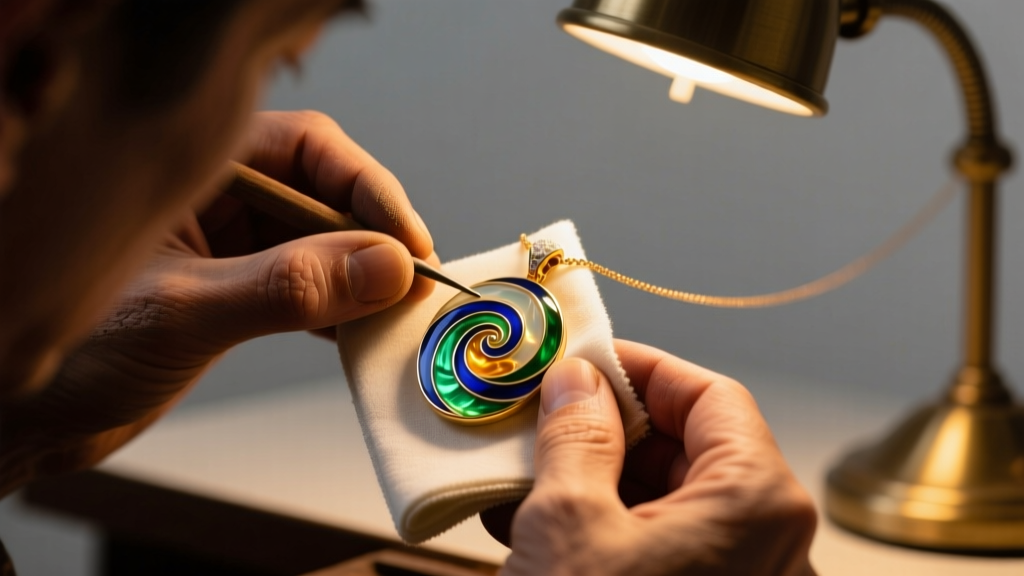
While major restorations should be left to professionals according to guidelines from the Jewelers of America, you can perform cosmetic triage on minor cold-enamel chips at home. Here is a professional-grade troubleshooting framework for DIY patching:
- Step 1: Clean the Wound. Use a cotton swab dipped in 99% isopropyl alcohol to degrease the chipped area. Any skin oil left in the divot will prevent the patch from adhering.
- Step 2: Color Match. Purchase a tin of Gilder's Paste or a high-quality jeweler's two-part epoxy pigment. Mix the pigment on a glass palette, testing it against the pendant under both natural daylight and warm indoor lighting, as epoxy shifts color as it cures.
- Step 3: Application. Using a fine-tipped dental tool or a sharpened bamboo skewer, press the pigmented epoxy into the chip. Overfill it slightly, as resin shrinks by about 2-5% during the curing process.
- Step 4: Wet Sanding. Once fully cured (wait 24 hours), use 2000-grit wet/dry sandpaper with a drop of water to gently level the patch flush with the surrounding enamel. Finish with a jeweler's polishing cloth.
Note: Never attempt to use superglue (cyanoacrylate) for enamel repair. Superglue cures brittle, clouds over time, and will leave a white, frosty residue that ruins the optical clarity of adjacent enamel.
The Hidden Culprit: Missing Counter-Enamel
One of the most overlooked structural failures in enamel jewelry is warping. When a jeweler applies vitreous enamel to the front of a copper or silver disc and fires it, the glass pulls on the metal as it cools, causing the pendant to bow inward like a bowl. To counteract this tension, high-quality pieces feature 'counter-enamel'—a layer of enamel on the back of the pendant to balance the physical stress. If you purchase a vintage or mass-produced enamel pendant necklace that lacks counter-enamel, the metal base is highly prone to warping over time, which will inevitably cause the front enamel to crack and pop off. When shopping for high-end enamel, always flip the piece over; a bare, oxidized back is a red flag for future structural failure.
Preventative Maintenance and Storage Protocols
Proper storage is the most effective troubleshooting tool for preventing enamel damage before it starts. The Gemological Institute of America (GIA) emphasizes that composite jewelry requires specific environmental controls to maintain its integrity.
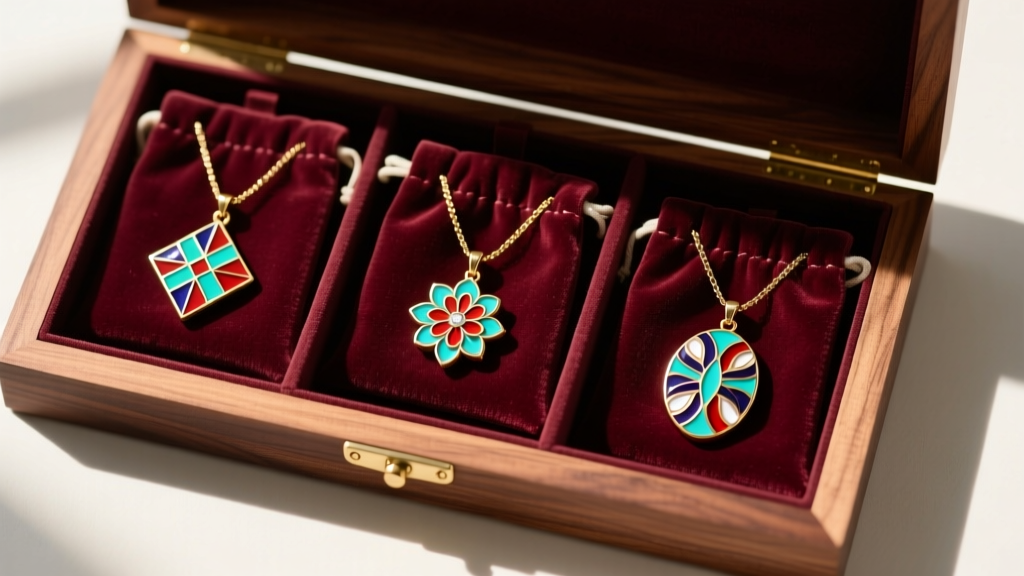
- Isolate Your Pendants: Never toss an enamel pendant into a communal jewelry box. Vitreous enamel is harder than gold and silver (rating around 5.5 to 6.5 on the Mohs scale), meaning it will scratch your other jewelry, while the metal bezels of other pieces can chip the enamel. Store each necklace in an individual, anti-tarnish flannel pouch.
- Control the Climate: Cold enamel and resin-based pendants are highly sensitive to humidity and heat. Store them in a climate-controlled room (ideally 65°F to 75°F with 40-50% humidity). Avoid leaving them in a car glovebox or a bathroom where steam cycles occur daily.
- The 'Last On, First Off' Rule: Your enamel pendant necklace should be the last item you put on after applying cosmetics, perfumes, and hairspray, and the first item you take off when returning home. This minimizes chemical exposure to the enamel surface and the chain clasp.
When to Retire or Repurpose Your Pendant
Not every enamel pendant necklace can be saved. If a vitreous enamel piece has suffered multiple fractures across its surface, the underlying metal base has likely fatigued or warped beyond repair. Re-firing a piece with a compromised base metal will result in the metal melting or the new enamel immediately cracking upon cooling. In these cases, consult a custom jeweler about repurposing the piece. The damaged enamel can be carefully removed, and the original metal frame can be reset with a custom-cut slice of agate, onyx, or mother-of-pearl, preserving the sentimental value and the original chain while giving the pendant a new, more durable life.


