The Honeycomb Necklace Trend: 2026 Geometric Jewelry Guide
Discover the 2026 honeycomb necklace trend. Explore biomimetic geometric designs, material innovations, and expert styling tips for hexagonal pendants.

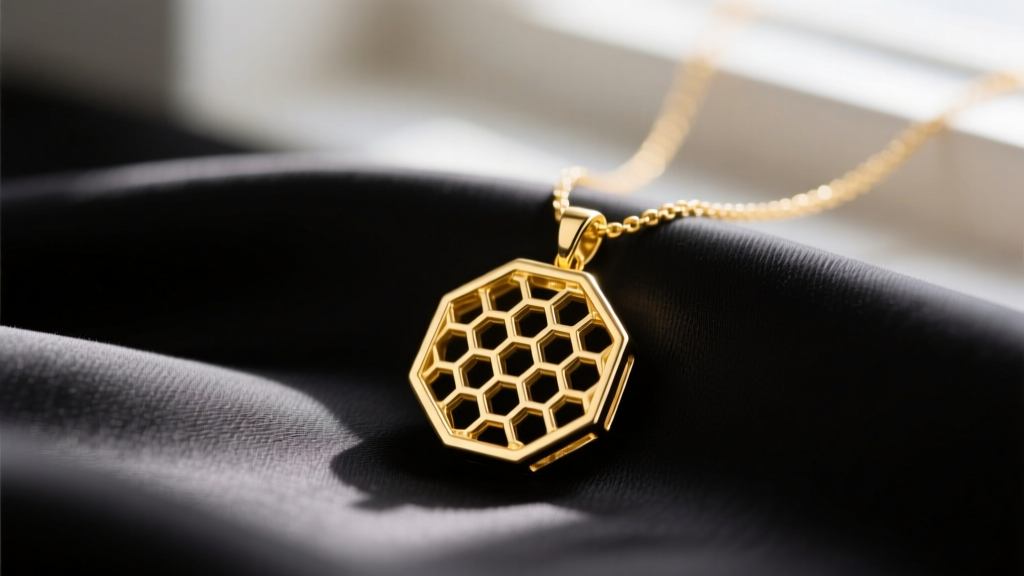
The Biomimetic Revolution: Why Hexagons are Dominating 2026
The jewelry landscape in 2026 has decisively shifted away from the minimalist, barely-there chains of the early 2020s, embracing instead structural, architecturally driven motifs. At the forefront of this geometric renaissance is the honeycomb necklace. Far from being a mere novelty or a fleeting seasonal fad, the hexagonal lattice has cemented itself as a staple in both high jewelry and avant-garde fashion circles. This guide explores the engineering, material science, and styling frameworks behind the year's most compelling biomimetic trend.
Nature is the ultimate engineer, and modern jewelers are taking note. The honeycomb structure—scientifically known as a hexagonal tessellation—offers the highest ratio of enclosed area to perimeter. In jewelry design, this translates to a pendant or chain link that appears substantial and visually complex while remaining remarkably lightweight on the collarbone. According to trend analysts at Forbes Jewelry, the contemporary consumer is gravitating toward pieces that signify resilience, interconnectedness, and structural integrity. The honeycomb motif perfectly captures this zeitgeist.
Structural Integrity Meets Lightweight Wearability
A common complaint with oversized geometric pendants is neck strain. A solid gold hexagonal pendant measuring 30mm across can easily weigh upwards of 15 grams. By utilizing a honeycomb lattice, designers can reduce the metal volume by up to 60% without sacrificing the visual footprint of the piece. Furthermore, advancements in CAD (Computer-Aided Design) and DMLS (Direct Metal Laser Sintering) have allowed designers to create micro-lattice structures that were physically impossible to cast using traditional lost-wax methods just five years ago. We are now seeing honeycomb links with walls as thin as 0.4 millimeters, crafted in Grade 5 titanium and 18k recycled gold, meaning a dramatic statement pendant can weigh a mere 4 to 5 grams.
Material Breakdown: What to Look for in a Honeycomb Necklace
When investing in a geometric lattice piece, the choice of metal dictates both the longevity and the price point. The intricate crevices of a honeycomb design can be prone to trapping skin oils and environmental pollutants, making metal porosity and tarnish resistance critical factors.
| Material | Durability & Tarnish Resistance | Price Range (USD) | Best For |
|---|---|---|---|
| 18k Recycled Yellow Gold | Excellent; highly resistant to tarnish, soft enough for intricate casting | $800 - $2,500+ | Heirloom investments, everyday luxury |
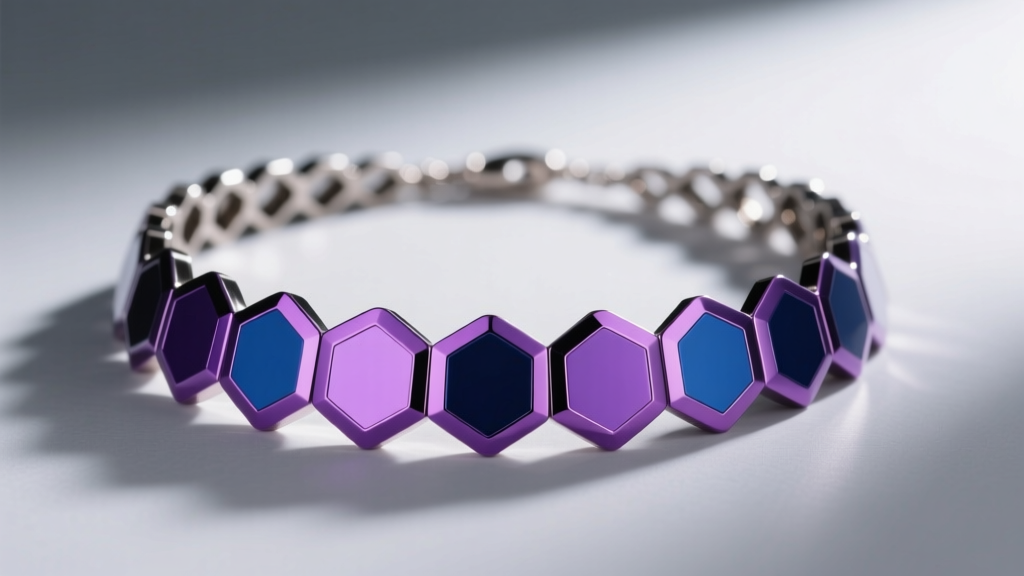
| Grade 5 Titanium (Ti-6Al-4V) | Superior strength-to-weight ratio; hypoallergenic; can be anodized | $250 - $700 | Avant-garde fashion, colorful anodized finishes |
| Sterling Silver (Rhodium Plated) | Moderate; requires 1.0-micron rhodium flash to prevent crevice tarnish | $120 - $350 | Entry-level luxury, trend-focused styling |
| Platinum 950 | Unmatched density and natural white luster; extremely difficult to cast in micro-lattices | $2,000 - $5,000+ | Bespoke high jewelry, diamond pavé settings |
Styling Framework: Pairing Honeycomb Pendants with Necklines
The visual weight of a honeycomb necklace requires strategic styling. Because the hexagonal pattern is inherently busy and highly detailed, it can easily clash with complex clothing patterns or competing jewelry. The golden rule for 2026 is negative space: let the lattice breathe.
- The Asymmetrical Neckline: A one-shoulder top or dress creates a diagonal line that perfectly offsets the rigid symmetry of the hexagons. Opt for an 18-inch chain to let the pendant rest just above the clavicle.
- The Deep V-Neck: Ideal for matinee-length (22 to 24-inch) honeycomb pendants. The vertical plunge of the neckline elongates the torso, while the geometric pendant acts as a definitive focal point.
- The Square Neck: The horizontal line of a square neckline mirrors the flat top and bottom edges of a hexagon. Pair this with a shorter 16-inch choker-style honeycomb chain for a cohesive, architectural look.
- What to Avoid: High ruffled collars, halter tops with complex straps, and busy houndstooth or tartan fabrics. These will visually swallow the intricate metalwork of the necklace.
Gemstone Integration: The Pavé Hexagon
A major subset of the 2026 honeycomb trend involves integrating lab-grown diamonds into the vertices of the hexagonal lattice. According to the Gemological Institute of America (GIA), the precision of modern laser cutting allows for melee diamonds (ranging from 0.01 to 0.03 carats) to be flush-mounted directly into the intersecting nodes of the honeycomb. This technique, known as bead setting within a micro-lattice, creates a 'floating' sparkle effect without disrupting the flat geometric plane of the pendant.
When purchasing a diamond-set honeycomb necklace, always request a loupe inspection of the nodes. The metal walls surrounding the stones must be at least 0.8mm thick to ensure the beads have enough structural support to hold the diamonds securely over time. Prong settings are generally avoided in micro-lattices as they require vertical clearance that ruins the sleek, architectural silhouette of the honeycomb.

Care and Maintenance for Lattice Jewelry
The very complexity that makes a honeycomb necklace visually stunning also makes it a magnet for debris. Lotions, perfumes, and dead skin cells easily accumulate in the hexagonal cells, dulling the metal's reflective properties and potentially degrading the alloy over time.
The Ultrasonic Cleaning Warning
While ultrasonic cleaners are the industry standard for cleaning solid gold and diamond jewelry, they pose a significant risk to certain honeycomb designs. If your necklace features tension-set stones, delicate 3D-printed titanium lattices with walls thinner than 0.5mm, or oxidized (blackened) recesses meant to provide contrast, the high-frequency vibrations of an ultrasonic bath can fracture the metal or strip the intentional patina.
The Manual Cleaning Protocol
Instead, adopt a gentle manual cleaning routine. Mix a few drops of phosphate-free dish soap into a bowl of lukewarm distilled water. Submerge the necklace for exactly three minutes to loosen oils. Using a specialized jewelry brush with ultra-soft goat-hair bristles, gently agitate the soapy water inside each hexagonal cell. Rinse thoroughly under a gentle stream of distilled water, and immediately dry with a microfiber cloth. Never air-dry a lattice necklace, as hard water spots will become trapped in the microscopic crevices and require professional polishing to remove.
Proper Storage to Prevent Bail Fractures
Finally, always store your honeycomb necklace flat in a felt-lined tray. Hanging a heavy geometric pendant on a standard jewelry tree can cause stress fractures at the bail (the loop connecting pendant to chain) over time, especially if the bail is soldered directly to a thin lattice wall. By laying the piece flat, you distribute the gravitational stress evenly across the entire hexagonal structure, ensuring the longevity of your investment.
The honeycomb necklace is more than a passing aesthetic; it is a triumph of modern jewelry engineering. By marrying biomimetic geometry with advanced metallurgical techniques, designers have created a category of neckwear that is as intellectually fascinating as it is visually striking. Whether you opt for the warm, traditional luxury of 18k gold or the futuristic edge of anodized titanium, understanding the structural and stylistic nuances of the hexagon will ensure your investment remains a cornerstone of your jewelry wardrobe for years to come.


