Hourglass Necklace Care: Expert Cleaning & Maintenance
Learn expert care, cleaning, and maintenance tips for your hourglass necklace. Protect delicate glass vials and metal settings from damage.

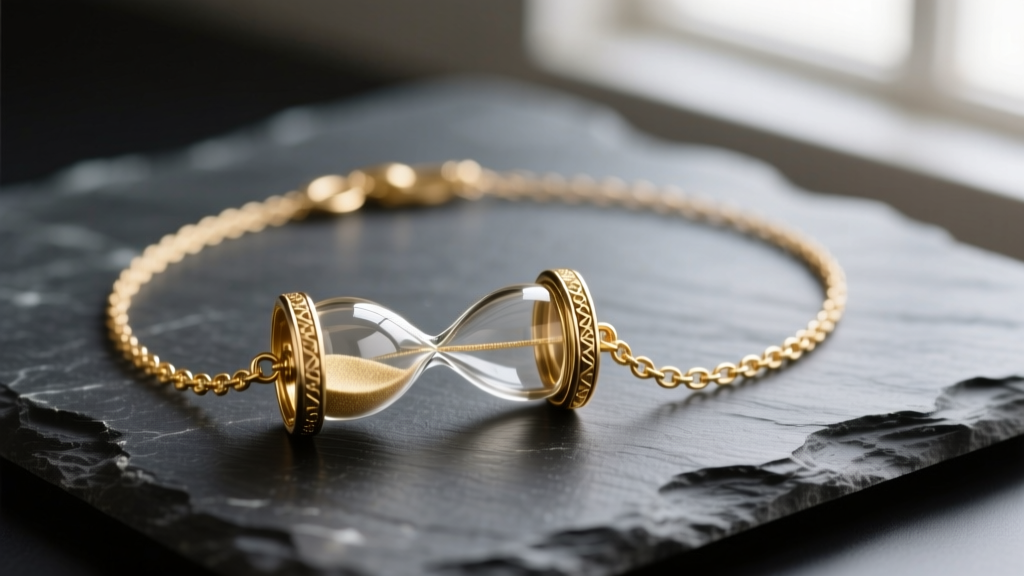
The Anatomy of an Hourglass Necklace: Why Special Care is Needed
An hourglass necklace is more than just a piece of jewelry; it is a miniature kinetic sculpture. Unlike solid metal pendants or faceted gemstones, these unique pieces combine fragile glass vials, delicate internal mechanisms (like kinetic sand, liquid, or micro-glitter), and intricate metal bezels. This multi-material construction requires a highly specialized approach to cleaning and maintenance. What works for a standard diamond pendant could easily shatter the glass or degrade the seals of an hourglass design.
To properly care for your jewelry, you must first understand its components. The glass vials are typically made from either borosilicate glass (which is highly resistant to thermal shock and scratches, ranking around 6 on the Mohs hardness scale) or soda-lime glass (which is more affordable but significantly more prone to micro-fractures and clouding). The metal frameworks are usually crafted from 925 sterling silver, brass, or 14k/18k gold vermeil. The seals holding the glass and metal together are often composed of UV-cured jewelry resin or specialized epoxies, which can degrade when exposed to harsh chemical solvents or prolonged ultrasonic vibrations.
Daily Wear and Preventative Maintenance
The most effective maintenance strategy is preventative. The golden rule of jewelry wear—"last on, first off"—is absolutely critical for hourglass necklaces. The chemicals found in everyday cosmetics are the primary enemies of both the metal hardware and the resin seals.
- Avoid Chemical Exposure: Perfumes, hairsprays, and lotions contain alcohols and volatile organic compounds (VOCs) that can slowly dissolve the UV resin seals over time, leading to leaks or moisture ingress. Always apply your cosmetics and allow them to dry completely before putting on your necklace.
- Manage Sweat and pH Levels: Human sweat has an average pH of 4.5 to 7.0, but it also contains salts and urea. When sweat accumulates on sterling silver or brass hardware, it accelerates the oxidation process, leading to rapid tarnishing. If you wear your hourglass necklace during a warm day, wipe the metal components with a dry, lint-free cloth immediately upon removal.
- Protect from Impact: Even borosilicate glass will shatter if dropped on a hard surface like porcelain or granite. Always remove your necklace before engaging in physical activities, changing clothes, or sleeping to prevent the pendant from swinging and striking hard objects.
Step-by-Step Cleaning Guide for Metal and Glass
When your necklace loses its luster, it is time for a careful cleaning. Never use commercial jewelry dips, ammonia-based cleaners, or ultrasonic machines. According to the Gemological Institute of America (GIA), ultrasonic cleaners use high-frequency cavitation bubbles that can easily cause micro-fractures in delicate glass vials and completely strip gold vermeil plating.
Cleaning the Metal Hardware (Bezels and Chains)
For sterling silver and brass components, tarnish (silver sulfide) is inevitable. To clean the metal without damaging the adjacent glass or resin seals, use a high-quality jeweler's polishing cloth, such as a Sunshine cloth. These cloths are impregnated with micro-abrasives and anti-tarnish agents that lift oxidation through gentle friction.
If the chain requires a deeper clean, prepare a lukewarm bath of distilled water and a few drops of pH-neutral dish soap (like Dawn). Submerge only the metal chain, avoiding the glass pendant entirely. Use a soft-bristled baby toothbrush to gently agitate dirt from the chain links. Rinse with distilled water and pat dry immediately with a microfiber towel. For gold vermeil, avoid polishing cloths entirely, as the micro-abrasives will wear away the thin 2.5-micron gold layer. Instead, rely solely on the mild soap bath and a soft cloth.
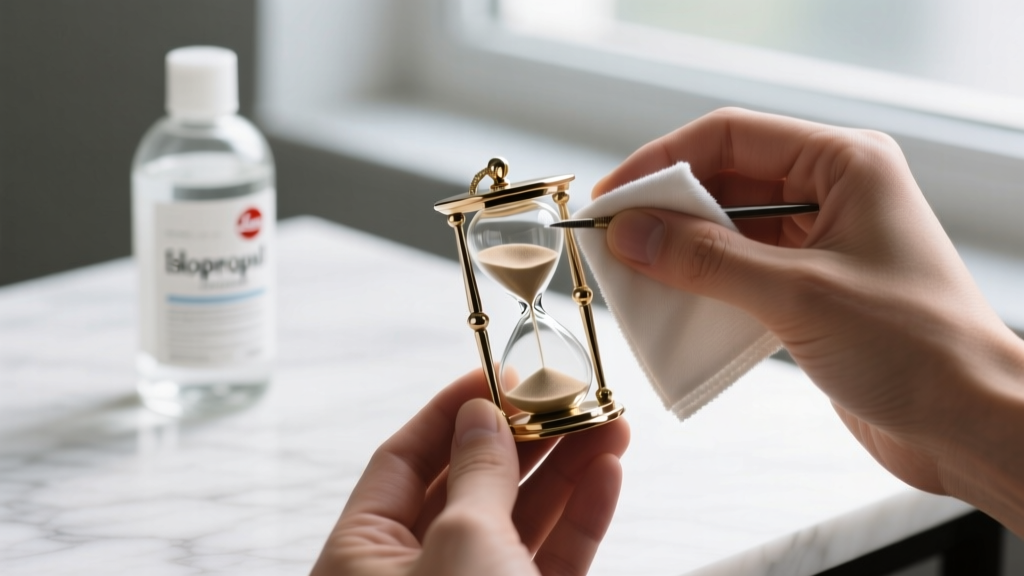
Polishing the Glass Vial
The glass vial of an hourglass necklace frequently accumulates sebum (skin oils) and fingerprint residue, which dulls its transparency. To restore the glass's clarity, dampen a corner of a clean, optical-grade microfiber cloth with 70% isopropyl alcohol. Gently buff the glass in small, circular motions. The alcohol will cut through the oils and evaporate rapidly without seeping into the metal crevices or compromising the resin seals. Never use paper towels or tissues, as the wood pulp fibers will leave microscopic scratches on the glass surface over time.
Troubleshooting Common Hourglass Necklace Issues
Because of their kinetic nature, hourglass necklaces present unique functional issues that standard jewelry does not. Below is a troubleshooting matrix for the most common problems encountered by collectors and daily wearers.
| Issue | Root Cause | Expert Solution |
|---|---|---|
| Sand stuck to the glass walls | Static electricity buildup generated by friction against clothing. | Gently rub the outside of the glass vial with an unscented dryer sheet or use an anti-static camera lens brush to discharge the static. |
| Cloudy or foggy glass interior | Seal failure allowing ambient humidity to enter the vial. | Do not attempt DIY repairs. Take the piece to a professional jeweler who specializes in kinetic pendants for a vacuum resealing. |
| Metal bezel turning skin green | Copper oxidation in brass or low-karat alloys reacting to sweat. | Clean the metal with a polishing cloth and apply a micro-thin layer of clear jeweler's lacquer (like ProtectaClear) to the back of the bezel. |
| Gold vermeil fading to silver | Mechanical wear and tear stripping the gold micron layer. | Send the pendant to a professional electroplating service to re-plate the bezel with a fresh 2.5-micron layer of 14k or 18k gold. |
Proper Storage Techniques to Prevent Tarnish and Breakage
How you store your hourglass necklace is just as important as how you clean it. Tossing it into a communal jewelry box is a recipe for tangled chains, scratched glass, and heavy tarnish. As noted in the Tiffany & Co. Care Guide, proper storage environments significantly extend the life of precious metals and delicate components.
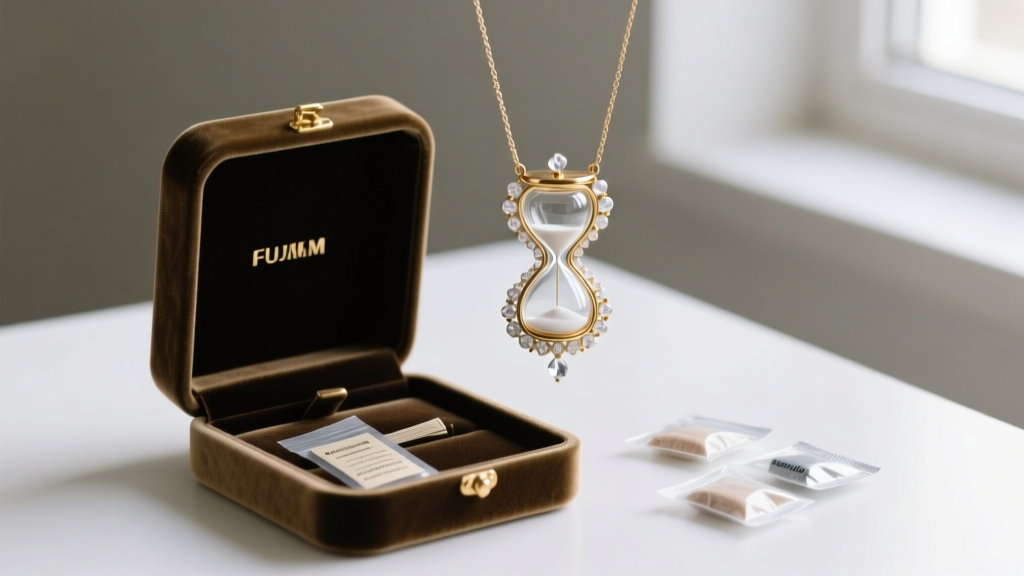
For optimal preservation, store your hourglass necklace in an individual, soft-lined velvet pouch or a dedicated compartment in a jewelry box. To combat tarnish, place a 3M anti-tarnish strip inside the storage container. These strips absorb sulfur compounds and hydrogen sulfide from the ambient air, effectively preventing silver and brass from oxidizing for up to six months.
If you live in a high-humidity environment (above 60% relative humidity), include a small, jewelry-safe silica gel desiccant packet in the storage box. Moisture is the catalyst for both metal tarnish and the degradation of the internal kinetic sand. However, ensure the silica packet does not directly touch the glass vial to prevent any potential abrasion.
When to Seek Professional Jewelry Repair
While routine cleaning and polishing can be handled at home, certain issues require the steady hand of a professional bench jeweler. If your hourglass necklace experiences a compromised seal (evidenced by condensation inside the glass or sand that no longer flows freely), do not attempt to open the bezel yourself. The tension springs and micro-gaskets require specialized tools to reassemble.
Expert Insight: Never use superglue or household epoxies to repair a loose glass vial. Household adhesives emit cyanoacrylate vapors as they cure, which will permanently fog the inside of the glass vial, ruining the visual effect of the hourglass. Always rely on a professional who uses UV-cured, optically clear jewelry resins in a controlled environment.
By understanding the unique material science behind your hourglass necklace and adhering to these specialized cleaning protocols, you can ensure that both the metal and the kinetic elements remain pristine for years to come. Treat the piece with the respect its intricate engineering demands, and it will remain a captivating focal point in your jewelry collection.


