How Much Gold Is In A Necklace? Purity & Weight Troubleshooting
Discover exactly how much gold is in a necklace. Learn to calculate pure gold weight, troubleshoot fake hallmarks, and verify karat purity like an expert.


When buyers, sellers, and pawnbrokers ask, "how much gold is in a necklace?", they are usually confronting a deceptive metric. A necklace stamped "14K" that weighs 30 grams does not contain 30 grams of pure gold. Furthermore, the physical volume of the chain might suggest a much heavier weight if the piece is hollow or electroformed. Troubleshooting the actual gold content requires separating total gram weight from karat purity, identifying manufacturing traps like hollow links, and verifying authenticity beyond surface-level hallmarks.
The Core Problem: Karat Purity vs. Actual Gold Weight
To accurately determine the gold content of any necklace, you must first understand the alloy matrix. Pure gold (24K) is too soft for durable jewelry chains, so it is alloyed with metals like copper, silver, zinc, and nickel. The karat system dictates the ratio of pure gold to these base metals. As detailed by the Gemological Institute of America (GIA), the karat stamp represents a fraction of 24 parts. Therefore, a 14K necklace is 14 parts gold and 10 parts alloy. If you are trying to calculate melt value, insurance replacement cost, or intrinsic asset value, you must isolate the pure gold weight from the alloy weight.
How to Calculate Exactly How Much Gold Is In A Necklace
The mathematical formula for isolating pure gold is straightforward, but it requires a precise digital jeweler's scale (accurate to 0.01 grams) and a verified karat rating.
The Formula: Total Gram Weight × Karat Purity Multiplier = Pure Gold Weight.
For example, if you have a 25.4-gram 14K Cuban link chain:
- Total Weight: 25.4g
- 14K Multiplier: 0.583 (58.3%)
- Calculation: 25.4 × 0.583 = 14.80 grams of pure 24K gold.
Karat Purity & Multiplier Troubleshooting Chart
| Karat Stamp | Purity Percentage | Decimal Multiplier | Common Alloy Metals |
|---|---|---|---|
| 24K | 99.9% | 0.999 | None (Pure Gold) |
| 22K | 91.6% | 0.916 | Copper, Silver |
| 18K | 75.0% | 0.750 | Copper, Silver, Zinc |
| 14K | 58.3% | 0.583 | Copper, Silver, Nickel |
| 10K | 41.7% | 0.417 | Copper, Nickel, Zinc |
Troubleshooting Suspicious Hallmarks and Fake Stamps
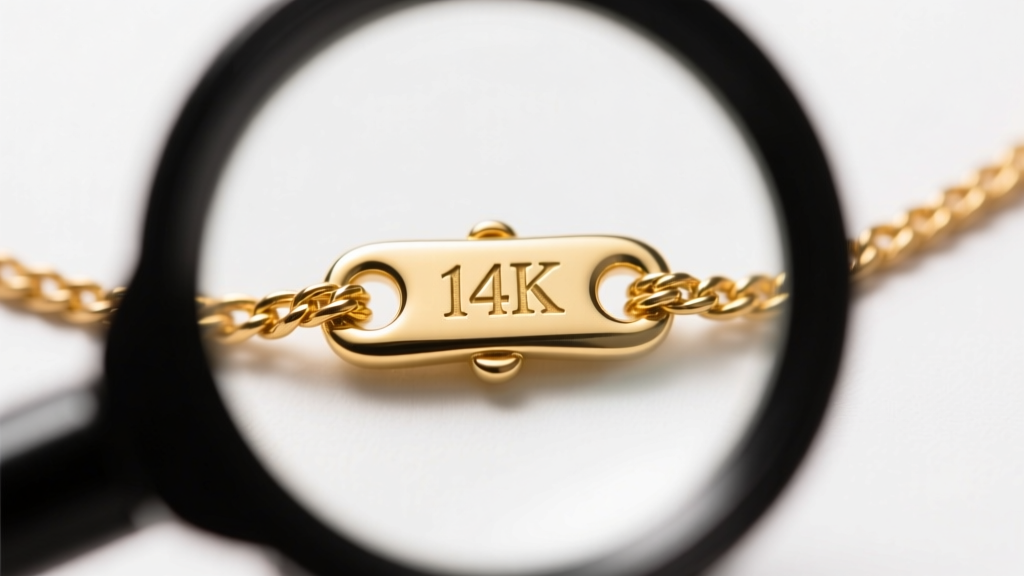
Hallmarks can be forged, rubbed off, or misapplied. According to the Federal Trade Commission (FTC) Jewelry Guides, it is illegal to sell a piece with a karat stamp unless it is accompanied by a registered trademark, though this rule is frequently violated in secondary markets. If you suspect a hallmark is fake, you must perform destructive or non-destructive metallurgical testing.
The Acid Streak Test
The most accessible troubleshooting method for solid gold is the touchstone and nitric acid test. You rub the necklace against a black basalt touchstone to leave a metallic streak, then apply a drop of acid formulated for a specific karat (e.g., 14K acid).
- If the streak disappears immediately: The necklace is base metal or heavily gold-plated.
- If the streak turns brown or green: The piece is a lower karat than the acid being used (e.g., testing a 10K chain with 14K acid).
- If the streak remains bright and unaffected: The gold matches or exceeds the karat rating of the acid.
The Magnet Test Caveat
Expert Warning: Gold is diamagnetic and will not stick to a magnet. However, almost all lobster clasps and spring-ring clasps contain a tiny internal steel spring. If your necklace clings slightly to a magnet at the clasp, do not immediately assume the chain is fake. Snip the clasp off and test the chain links directly to avoid this common amateur troubleshooting error.
The Specific Gravity Water Displacement Test
If you need to verify if a necklace is solid gold without using acid, use the Specific Gravity (SG) test. Pure gold has an SG of 19.32. 14K gold typically sits around 13.5, and 18K around 15.5. By weighing the necklace in the air, and then weighing it suspended in distilled water, you can calculate its density. If a chain stamped "18K" yields an SG of 8.0, you are looking at a heavily plated tungsten or brass fake, as the internal core is dragging down the density ratio.
The "Hollow Chain" Trap: Why Your Necklace Feels Too Light
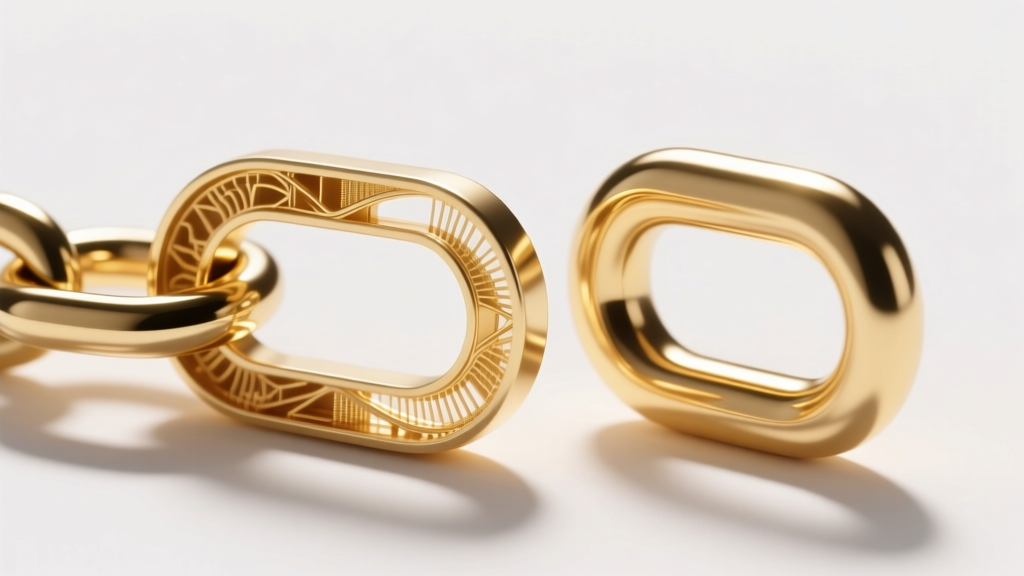
One of the most frustrating troubleshooting scenarios occurs when a consumer buys a massive, thick-rope or Cuban link necklace, only to find it weighs a fraction of what its volume suggests. This is the result of electroforming. Manufacturers create a 3D-printed or wax core, coat it in a conductive layer, and electroplate a microscopic shell of 10K or 14K gold over it. The core is then melted or dissolved out, leaving a hollow gold tube.
How to troubleshoot hollow chains:
- The Weight-to-Volume Ratio: A solid 10mm Cuban link chain should weigh roughly 45-55 grams for a 20-inch length. If it weighs 8 grams, it is hollow.
- The Sound Test: Solid gold has a dense, dull "clink" when dropped on a glass counter. Hollow electroformed chains produce a higher-pitched, slightly tinny rattle.
- The Crush Vulnerability: Hollow chains are notoriously fragile. If a thick link easily dents under moderate thumb pressure, the gold shell is likely less than 0.2mm thick.
Verifying Gold Plated vs. Solid Gold Necklaces
If you are troubleshooting a piece that lacks a karat stamp, or features stamps like "HGE", "GP", or "Vermeil", you are dealing with surface-level gold.
- Gold Plated (GP): A microscopic layer of gold (usually less than 0.5 microns) over brass or copper. The pure gold content is virtually zero and holds no melt value.
- Heavy Gold Electroplate (HGE): Slightly thicker than standard plating (minimum 2.5 microns), but still fundamentally a base-metal core.
- Gold Vermeil: A thick layer of gold (minimum 2.5 microns) plated over a Sterling Silver base. While the gold content is minimal, the underlying silver holds intrinsic scrap value.
To troubleshoot plated necklaces, inspect the high-friction areas (the back of the clasp, the links near the pendant bail). If you see a silver or copper hue bleeding through the yellow surface, the piece is plated.
Summary Checklist for Gold Verification
Before buying, selling, or appraising a gold necklace, run through this expert troubleshooting checklist:
- Weigh the piece on a calibrated 0.01g scale (remove non-gold pendants first).
- Inspect the hallmark with a 10x jeweler's loupe for crispness and manufacturer trademarks.
- Perform a magnet test on the chain links, avoiding the clasp spring.
- Execute an acid streak test on an inconspicuous link to verify the karat stamp matches the core metal.
- Calculate the pure gold weight using the decimal multiplier chart to determine true intrinsic value.
By applying these metallurgical and mathematical troubleshooting steps, you eliminate the guesswork and definitively answer how much gold is actually in your necklace.


