How to Clean Your Chain Necklace: Safe Home Methods
Learn how to clean your chain necklace safely at home. Discover expert methods for gold, silver, and platinum chains without damaging delicate links.

The Science of Chain Tarnish and Grime Buildup
Before diving into the mechanics of how to clean your chain necklace, it is vital to understand what you are actually removing. Chain necklaces sit directly against the skin, making them prime collectors of sebum (natural skin oils), dead epidermal cells, and cosmetic polymers from lotions or perfumes. Over time, this organic matter creates a microscopic film that dulls the metal's light reflection. Furthermore, environmental sulfur in the air reacts with the copper alloys present in 14k gold and 925 sterling silver, creating silver sulfide—the dark, stubborn layer we commonly call tarnish. Understanding this chemical reality is the first step toward effective, damage-free jewelry maintenance.
Identify Your Metal: The Crucial First Step
The most common mistake beginners make is applying a universal cleaning method to every chain they own. According to guidelines published by the Jewelers of America, treating gold-plated or vermeil chains with the same aggressive methods used for solid platinum will strip the finish entirely. Always check your chain's hallmark (e.g., 750 for 18k gold, 925 for sterling silver, or PT950 for platinum) before proceeding.
| Metal Type | Composition | Cleaning Tolerance | Primary Risk Factor |
|---|---|---|---|
| 14k / 18k Solid Gold | Gold alloyed with copper/silver/zinc | High | Harsh chemicals can pit the alloy metals. |
| 925 Sterling Silver | 92.5% Silver, 7.5% Copper | Medium | Prone to rapid sulfur tarnish and scratching. |
| Platinum (PT950) | 95% Platinum, 5% Ruthenium/Iridium | Very High | Develops a natural patina; highly durable. |
| Gold Vermeil / Plated | Sterling silver or brass base with thin gold layer | Very Low | Soaking or brushing will strip the gold layer. |
Step-by-Step: How to Clean Your Chain Necklace (Solid Gold & Platinum)
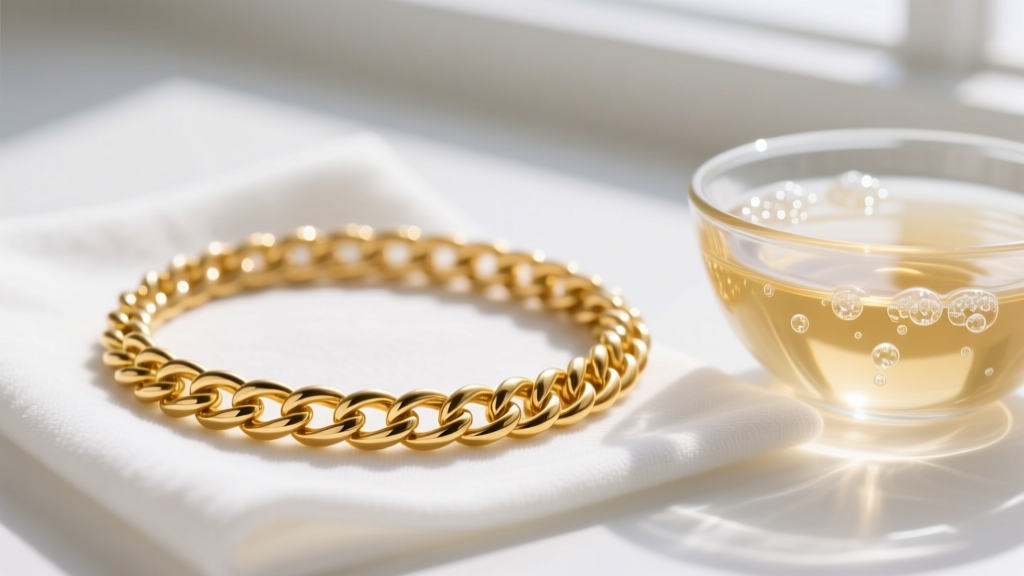
For solid gold and platinum chains, a gentle surfactant bath is the gold standard. You will need distilled water (tap water contains chlorine and dissolved minerals that can leave micro-spots), a pH-neutral dish soap like Dawn Ultra, and an extra-soft baby toothbrush with 0.1mm bristles.
- The Soak: Mix three drops of pH-neutral dish soap into one cup of distilled water warmed to approximately 85°F (29°C). Submerge your chain and let it soak for 15 to 20 minutes. This allows the surfactants to break down the lipid bonds of skin oils.
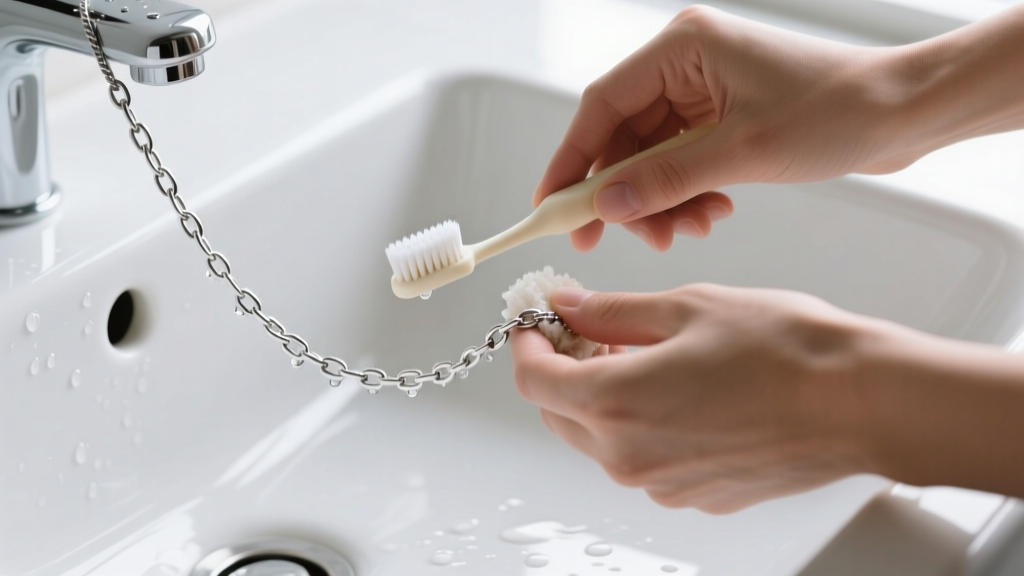
- The Agitation: Remove the chain and lay it flat on a clean, lint-free surface. Using the extra-soft toothbrush, gently stroke the chain in the direction of the links. Never scrub in circular motions, as this can bend delicate jump rings.
- The Rinse: Rinse the chain thoroughly under a gentle stream of lukewarm distilled water to remove all soap residue.
The Electrochemical Rescue: Restoring Sterling Silver
If your sterling silver chain has developed heavy, dark tarnish, mechanical polishing with a cloth will only remove a micro-layer of the silver itself. Instead, utilize an electrochemical redox reaction that converts silver sulfide back into pure silver without removing any metal mass.
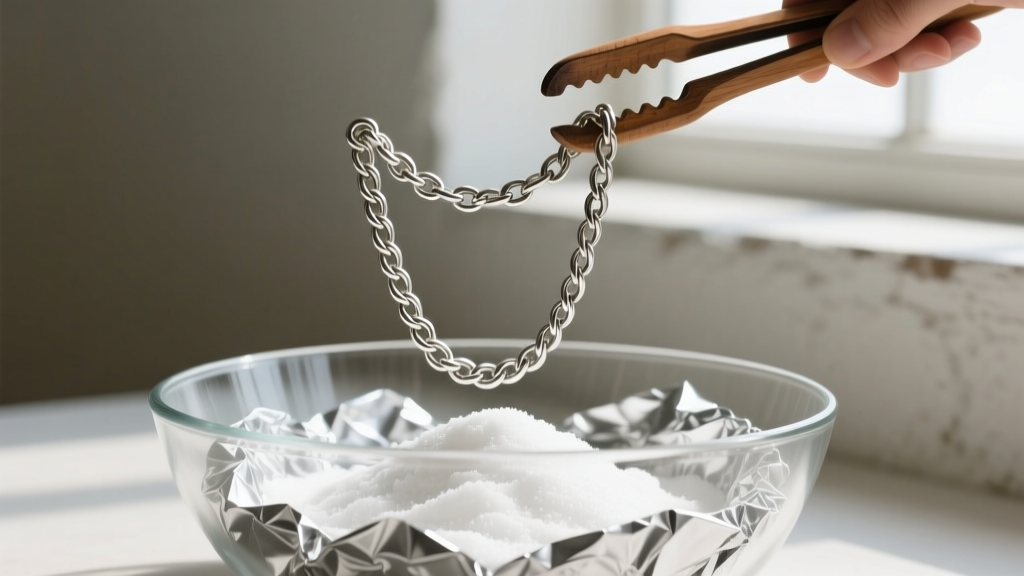
The Silver Dip Method: Line a glass bowl with aluminum foil (shiny side up). Place your tarnished silver chain on the foil. Add one tablespoon of baking soda and one tablespoon of non-iodized salt. Pour one cup of boiling water over the mixture. You will see bubbling and smell a faint sulfur (rotten egg) odor. After exactly three minutes, remove the chain with wooden or plastic tongs, rinse in distilled water, and pat dry.
This method is highly effective for cable, curb, and box chains. However, the American Gem Society warns against using chemical dips or electrochemical baths on oxidized silver jewelry, as it will strip the intentional dark detailing from the crevices.
Handling Delicate Weaves: Herringbone, Snake, and Rope Chains
Not all chain weaves are created equal when it comes to cleaning. The physical architecture of your necklace dictates the level of care required.
- Herringbone Chains: These flat, fluid chains are notoriously prone to kinking. Never use a toothbrush on a herringbone chain, as the bristles can catch the edge of a flat link and permanently bend it. Rely solely on the soaking method and a soft microfiber cloth for wiping.
- Rope Chains: The twisted, spiral nature of rope chains traps lotion and dead skin deep inside the crevices. If your rope chain is solid, it can withstand a 30-minute soak and gentle brushing. If it is a hollow rope chain, avoid ultrasonic cleaners entirely, as the high-frequency vibrations can crush the thin, hollow metal walls.
- Snake Chains: The tightly interlocked, smooth plates of a snake chain leave virtually no room for debris to hide, making them the easiest to wipe clean. However, they are highly susceptible to snapping if bent backward during the cleaning process. Always support the full length of the chain when moving it.
Dangerous DIY Hacks to Avoid at All Costs
The internet is flooded with well-meaning but destructive jewelry cleaning hacks. To preserve the structural integrity and finish of your necklaces, strictly avoid the following:
- Toothpaste: Toothpaste contains hydrated silica, an abrasive compound designed to strip plaque from enamel. On jewelry, this acts like liquid sandpaper, leaving micro-scratches on gold and completely stripping the rhodium plating off white gold chains.
- Bleach and Chlorine: Chlorine reacts violently with the copper and silver alloys in karat gold. A brief exposure to household bleach or heavily chlorinated pool water can cause the alloy metals to dissolve, leaving the chain brittle and prone to snapping under its own weight.
- Baking Soda Pastes: While baking soda dissolved in water is safe for the silver foil method, creating a thick paste and rubbing it on your chain will cause severe micro-abrasions due to the crystalline structure of the powder.
Professional Drying and Anti-Tarnish Storage
How you dry and store your chain is just as critical as how you wash it. Never air-dry a chain necklace by hanging it, as water droplets will pool in the clasp mechanism and jump rings, leading to localized oxidation. Instead, lay the chain flat on a highly absorbent microfiber cloth and gently pat it dry. Use a cotton swab to wick away any remaining moisture from inside the lobster clasp.
For long-term storage, avoid tossing your chains into a communal jewelry box where they can tangle and scratch one another. Store each chain individually in a ziplock bag with a small silica gel desiccant packet to control ambient humidity. For sterling silver chains, invest in Pacific Silvercloth or specialized anti-tarnish paper strips, which actively absorb airborne sulfur compounds before they can reach your metal. By mastering these precise, material-specific techniques, you will ensure your chain necklaces retain their structural integrity and brilliant luster for decades.


