How to Clean a Silver Necklace: Expert Chemistry & Care Guide
Master how to clean a silver necklace with our expert guide. Explore the chemistry of tarnish, electrochemical baths, and safe polishing techniques.

The Chemistry of Silver Tarnish: Why Your Necklace Turns Black
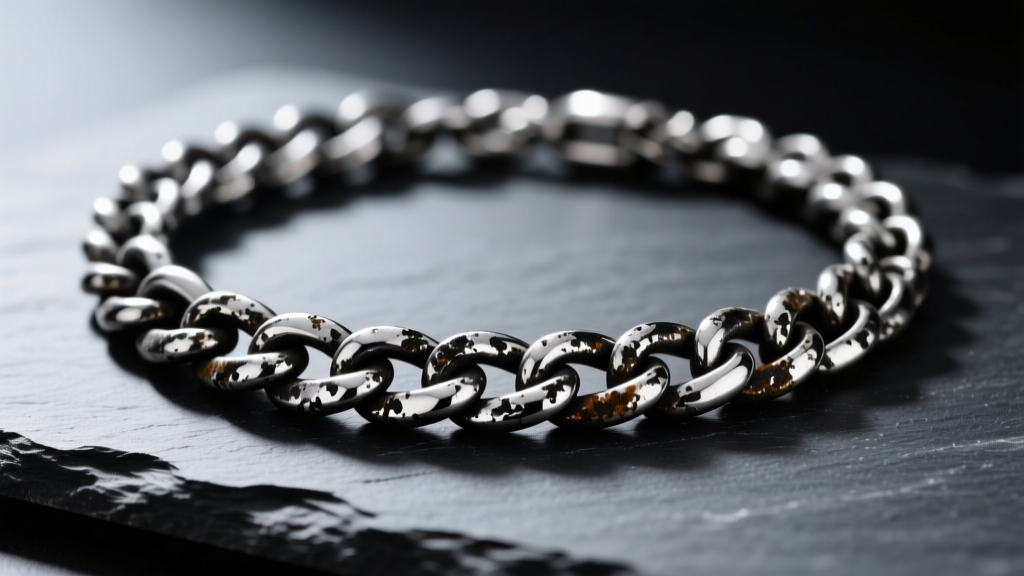
When learning how to clean a silver necklace, the first step is understanding the exact chemical compound you are trying to remove. Contrary to popular belief, silver does not rust or oxidize in the same way iron does. The black, gray, or yellowish film that accumulates on your sterling silver chains and pendants is primarily silver sulfide (Ag2S). According to the Smithsonian Magazine, this chemical reaction occurs when silver is exposed to hydrogen sulfide (H2S) gas present in the atmosphere. Sources of H2S include wool, rubber bands, certain paints, and even high-humidity environments.
Because the copper alloyed into sterling silver is highly reactive to sulfur, the tarnish layer can grow rapidly. A yellowish hue indicates a very thin layer of silver sulfide (approximately 10-20 nanometers thick), while a deep black color indicates a much thicker, more mature layer of sulfide buildup. Understanding this gradient is critical because it dictates whether you need a gentle mechanical wipe or a full electrochemical reduction bath.
Identifying Your Silver Alloy: 925 vs. 999 vs. Argentium
Before applying any cleaning solution, you must identify the metallurgical composition of your necklace. The The Royal Mint notes that different silver alloys react uniquely to both environmental sulfur and chemical cleaners. Using an aggressive abrasive on fine silver will ruin its finish, while using a mild dip on heavily oxidized sterling silver might leave a cloudy residue.
| Alloy Grade | Purity | Secondary Metal | Tarnish Susceptibility | Cleaning Tolerance |
|---|---|---|---|---|
| Fine Silver (999) | 99.9% | 0.1% Trace | Low | High chemical tolerance, but extremely soft (scratches easily) |
| Sterling Silver (925) | 92.5% | 7.5% Copper | High (Copper reacts to sulfur) | Medium (Tolerates mild abrasives and electrochemical baths) |
| Argentium (935/960) | 93.5-96% | Germanium | Very Low (Forms protective barrier) | Low (Avoid harsh chemicals; use only microfiber) |
The Electrochemical Aluminum Foil Method (Deep Tarnish Removal)
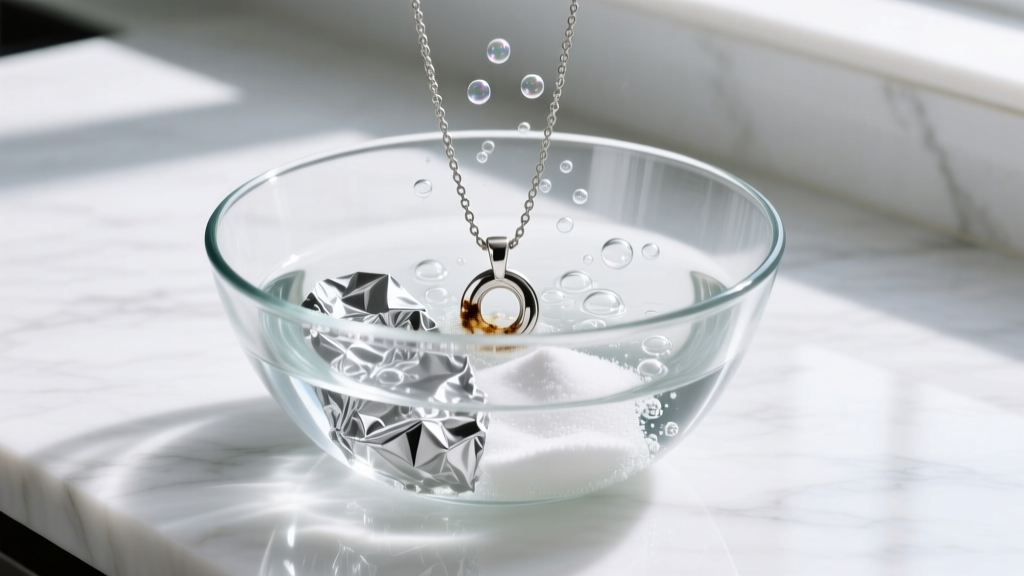
For heavily tarnished 925 sterling silver necklaces—especially intricate chains like rope, box, or wheat weaves where mechanical polishing cannot reach the crevices—the electrochemical reduction method is the gold standard. This process does not remove the silver sulfide by abrasion; instead, it chemically converts the silver sulfide back into pure silver.
The Scientific Process
By creating a galvanic cell using aluminum foil as the sacrificial anode and a hot electrolyte solution, you force a redox reaction. The aluminum has a higher oxidation potential than silver. When submerged in the electrolyte, the aluminum gives up its electrons to the silver sulfide, breaking the sulfur-silver bond. The sulfur binds to the aluminum, and the pure silver is left behind on your necklace.
Step-by-Step Protocol
- Prepare the Vessel: Line a glass or ceramic bowl (never use metal bowls) with heavy-duty aluminum foil, shiny side up.
- Create the Electrolyte: Add 1 tablespoon of baking soda (sodium bicarbonate) and 1 tablespoon of non-iodized salt (sodium chloride) per cup of water.
- Activate the Solution: Pour boiling water into the bowl to dissolve the salts. The water must be near boiling (above 90°C/194°F) to provide the activation energy required for the reaction.
- Submerge the Necklace: Drop the silver necklace into the solution, ensuring it makes direct physical contact with the aluminum foil. This physical connection is mandatory for the electron transfer.
- Monitor the Reaction: You will notice bubbling and a distinct sulfur (rotten egg) smell. Leave the necklace in the bath for 3 to 5 minutes.
- Rinse and Dry: Remove the necklace with plastic tongs, rinse thoroughly under distilled water to halt the reaction, and dry immediately with a lint-free microfiber cloth.
Expert Warning: Never use this electrochemical method on necklaces featuring rhodium plating, intentional antique patinas, or glued-in gemstones. The boiling water will dissolve jewelry adhesives, and the reaction will strip the rhodium flash. The Gemological Institute of America (GIA) strongly advises against submerging porous stones in any chemical bath.
Mechanical Polishing: When to Use Abrasives and When to Avoid Them
While the aluminum bath is excellent for intricate chains, it leaves the silver in a matte, unpolished state. To achieve a high-shine mirror finish, mechanical polishing is required. However, every time you polish a silver necklace, you are physically removing a microscopic layer of metal.
Professional jewelers use jeweler's rouge (iron oxide) applied to muslin wheels to polish silver. For at-home maintenance, you should use a treated silver polishing cloth impregnated with micro-abrasives and anti-tarnish agents. When rubbing a pendant or a thick chain link, use long, linear strokes rather than circular motions. Circular polishing creates visible micro-scratches that catch the light and dull the overall appearance of the metal over time.
The Danger of Commercial Silver Dips
Many commercial liquid silver dips rely on thiourea, a highly toxic and corrosive organosulfur compound. While thiourea strips tarnish in seconds, it etches the surface of the silver at a microscopic level, creating a rough topography that actually accelerates future tarnishing. Furthermore, if the necklace is not rinsed perfectly, residual thiourea will cause severe, pitted corrosion within weeks. Expert jewelers universally recommend avoiding liquid dips in favor of electrochemical baths or mechanical polishing.
Gemstone and Patina Preservation: Critical Warnings
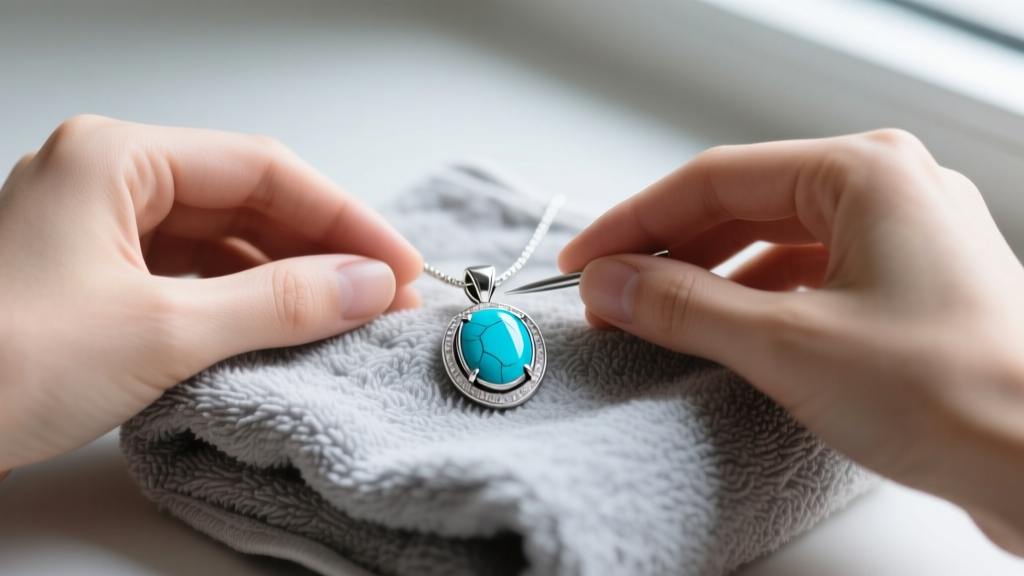
If your silver necklace features gemstones, you must categorize them by porosity and Mohs hardness before attempting any cleaning. Porous organic and semi-precious stones—such as pearls, opals, turquoise, lapis lazuli, malachite, and coral—will absorb chemical solutions, leading to irreversible discoloration, cracking, or dissolution.
For necklaces incorporating these stones, the only safe cleaning method is to isolate the silver. Use a Q-tip dipped in a mild solution of warm water and phosphate-free dish soap to carefully clean the silver settings, avoiding the stones entirely. Alternatively, use a specialized silver polishing wand that allows for precise, targeted application of micro-abrasives to the metal bezels without touching the gemstone.
Additionally, many modern and artisan silver necklaces feature intentional oxidation. Jewelers use liver of sulfur (potassium sulfide) to blacken the recessed areas of a pendant, creating high contrast against the polished high points. Submerging an oxidized necklace in an aluminum foil bath or using a liquid silver dip will strip this intentional patina, leaving the piece looking flat and washed out. For oxidized silver, use a polishing cloth only on the raised, high-relief areas of the design.
Preventative Storage Protocols
The most effective way to manage silver tarnish is to prevent the sulfidation reaction from occurring in the first place. Storing your silver necklaces correctly is just as important as knowing how to clean them.
- Anti-Tarnish Strips: Place 3M anti-tarnish strips inside your jewelry box. These strips contain copper particles that act as a sacrificial metal, absorbing ambient hydrogen sulfide before it reaches your silver. Replace them every 6 months.
- Pacific Silvercloth: Store necklaces in pouches made of Pacific Silvercloth, a specialized cotton fabric embedded with microscopic silver particles that capture sulfur gases.
- Humidity Control: Tarnish requires moisture to catalyze the chemical reaction. Store your jewelry in a room with a relative humidity below 50%, and include silica gel desiccant packets inside airtight storage containers.
- Avoid Polymer Contact: Never store silver necklaces in plastic zip-lock bags made of PVC or polyvinyl chloride, as these plastics off-gas sulfur compounds that will rapidly blacken your jewelry.
By understanding the underlying chemistry of silver sulfide and utilizing targeted, scientifically backed cleaning methods, you can safely restore your necklaces to their original brilliance without compromising the structural integrity of the metal or the safety of the gemstones.


