How to Clean and Care for Your Women Gold Cross Necklace
Learn expert cleaning and maintenance tips for your women gold cross necklace. Discover safe washing methods, storage hacks, and karat care.


A women gold cross necklace is more than just a piece of jewelry; it is a timeless symbol of faith, heritage, and personal style. Whether it is a delicate 18k gold pendant passed down through generations or a modern, diamond-accented 14k piece you wear daily, gold requires specific maintenance to retain its luster. Unlike platinum or titanium, gold is a relatively soft, reactive precious metal that demands a tailored care regimen. In this comprehensive guide, we break down the metallurgical realities of gold jewelry and provide a professional-grade protocol for cleaning, polishing, and storing your cross necklace.
Understanding Your Gold Cross: Karat Grades and Vulnerabilities
To properly care for your necklace, you must first understand its metallurgical composition. Pure gold (24k) is entirely resistant to tarnish, but it is far too soft for daily wear—it would bend and scratch within days. Therefore, jewelers alloy gold with metals like copper, silver, zinc, and nickel to increase durability. According to the Gemological Institute of America (GIA), it is these alloyed metals, not the gold itself, that are vulnerable to environmental damage.
- 10k Gold (41.7% pure): Highly durable but contains a high percentage of alloy metals, making it the most susceptible to tarnishing and oxidation when exposed to sweat and sulfur.
- 14k Gold (58.5% pure): The industry standard for daily-wear cross necklaces. It offers an excellent balance of rich color and structural integrity, though the copper content can react to harsh chemicals.
- 18k Gold (75.0% pure): Prized for its deep, warm yellow hue and hypoallergenic properties. However, its higher gold content makes it softer and more prone to micro-scratches and surface dulling.
The Daily Wear Threat Matrix: What Damages Gold Pendants
Many owners accidentally degrade their jewelry through everyday habits. The Federal Trade Commission (FTC) notes that consumer misuse is the leading cause of premature wear in fine jewelry. Below is a breakdown of common environmental threats and their specific chemical impacts on your gold cross.
| Environmental Threat | Chemical Reaction / Physical Impact | Preventative Action |
|---|---|---|
| Chlorine (Pools/Cleaners) | Causes stress corrosion cracking by attacking the copper/zinc alloys, leading to brittle prongs and chain links. | Always remove your necklace before swimming or using household bleach. |
| Cosmetics & Perfumes | Alcohols and aerosols leave a filmy residue that traps dead skin cells, dulling the high-polish finish. | Adopt the "last on, first off" rule. Apply perfume and let it dry before putting on your jewelry. |
| Human Sweat (Sulfur) | Sulfur in perspiration reacts with silver and copper alloys, creating a dark silver sulfide or copper oxide tarnish layer. | Wipe the pendant and chain with a dry microfiber cloth after heavy exertion or hot days. |
| Hard Water / Tap Water | Calcium and magnesium deposits leave microscopic hard water spots that scatter light, reducing brilliance. | Use distilled water for deep cleaning; avoid wearing the piece in hard-water showers. |
Step-by-Step Cleaning Protocol for Gold Cross Necklaces
Forget abrasive DIY hacks involving baking soda or toothpaste. These substances have a Mohs hardness that can easily scratch 14k and 18k gold, leaving permanent micro-abrasions. Instead, follow this professional jeweler-approved washing method.

Step 1: The pH-Neutral Soak
Plug your sink drain to prevent catastrophic loss. In a glass or ceramic bowl (avoid metal bowls that can cause galvanic reactions), mix one cup of lukewarm distilled water with three drops of pH-neutral liquid dish soap (such as original Dawn). Submerge your women gold cross necklace and let it soak for 5 to 10 minutes. This softens accumulated sebum, lotions, and environmental dust without shocking any potential gemstone settings.
Step 2: Targeted Agitation
Remove the necklace from the bath. Using an extra-soft baby toothbrush (adult toothbrushes are too stiff and will scratch the gold), gently brush the pendant. Pay special attention to the bail (the loop connecting the cross to the chain) and the crevices on the back of the cross. These areas are high-friction zones that trap the most debris. Brush in gentle, circular motions rather than harsh back-and-forth strokes.
Step 3: The Distilled Rinse and Safe Drying
Rinse the necklace thoroughly under a gentle stream of lukewarm distilled water to remove all soap residue. To dry, lay the piece on a clean, lint-free microfiber cloth and gently pat it dry. Never use paper towels or tissues. Paper products contain wood pulp fibers that act like microscopic sandpaper on high-polish gold, creating a web of fine scratches over time.
Polishing and Restoring Luster Safely
If your cross pendant has lost its mirror-like shine due to minor surface scratches, washing alone will not restore it. You will need to polish the metal. For solid gold crosses without gemstones, use a specialized jeweler's polishing cloth impregnated with fine red rouge (iron oxide).
Expert Warning: If your gold cross features pave diamonds, milgrain detailing, or a matte/satin finish, do not use a rouge cloth. The abrasive compounds will strip the matte texture and can grind down the tiny prongs holding pave stones in place, leading to stone loss.
For gem-set crosses, the Blue Nile care guidelines recommend using only a soft, untreated flannel cloth to gently buff the gold surrounding the stones, avoiding direct friction on the settings themselves.
Proper Storage to Prevent Chain Tangling and Scratches
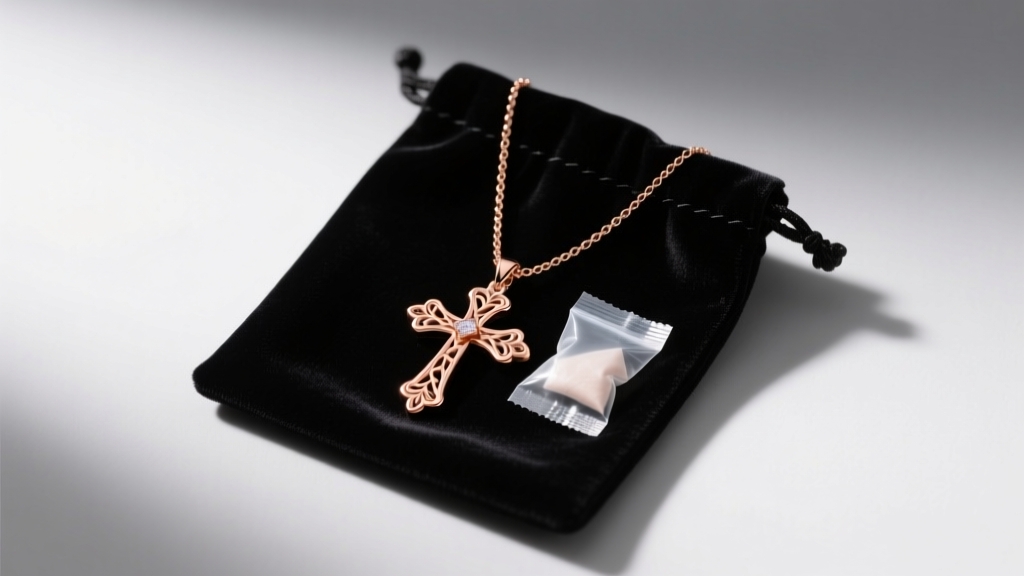
How you store your necklace when it is not around your neck is just as critical as how you clean it. Gold is easily scratched by other jewelry, and the delicate chains (like cable or box chains) are notorious for tangling, which can lead to kinking and structural weakness.
- Isolate the Piece: Store your women gold cross necklace in its own soft velvet or flannel pouch. Never toss it into a communal jewelry box where diamond rings or harder gemstones can scratch the gold.
- Control the Climate: Tarnish is accelerated by humidity. Place a small silica gel packet inside your jewelry box or storage drawer to absorb excess moisture from the air.
- Use Anti-Tarnish Strips: For 10k and 14k gold crosses, which contain higher alloy levels, invest in 3M anti-tarnish strips. These strips absorb airborne sulfur compounds before they can react with the copper and silver in your gold alloy.
- Hang or Lay Flat: If storing outside a pouch, hang the necklace on a velvet-lined jewelry stand to prevent the chain from knotting. If laying flat, ensure the clasp is left unfastened and the chain is laid out in a gentle curve, not crumpled.
When to Seek Professional Jeweler Maintenance
While home care is excellent for surface cleaning, certain maintenance tasks require professional equipment and expertise. You should take your gold cross necklace to a certified bench jeweler once every 12 to 18 months for a comprehensive check-up.
A professional will utilize an ultrasonic cleaner (which is generally safe for plain solid gold but requires caution for gem-set pieces) and a high-speed buffing wheel to remove deeper scratches that a home rouge cloth cannot address. More importantly, the jeweler will inspect the bail for thinning. The bail experiences constant friction against the chain; if it wears through, you will lose the pendant. They will also check the structural integrity of the chain links and the spring tension of the lobster clasp, ensuring your cherished piece remains secure for decades to come.


