How to Layer Necklace Chains: 2026 Trend Analysis
Discover how to layer necklace chains like a pro in 2026. Expert tips on lengths, mixed metals, chain textures, and anti-tangling techniques.
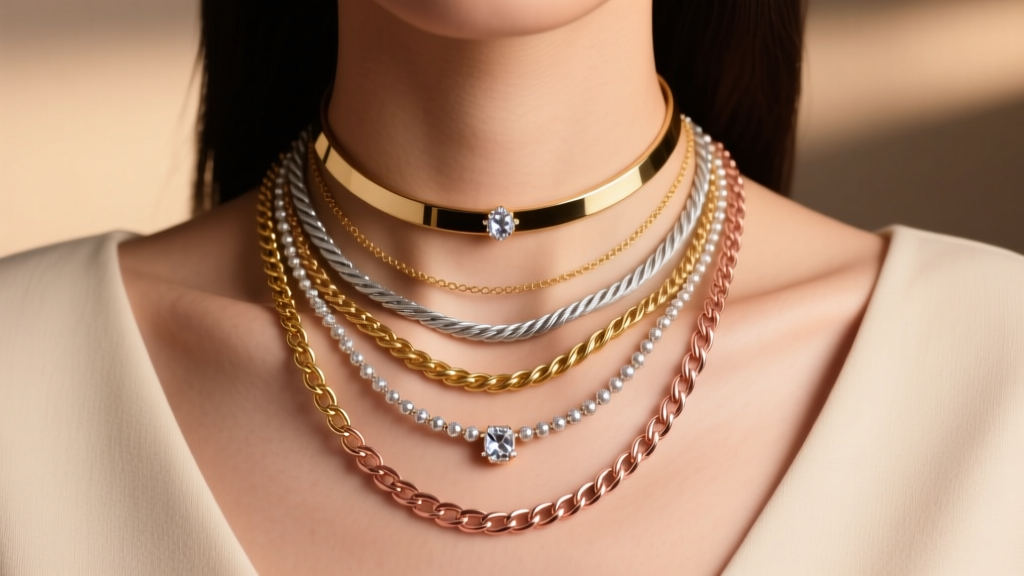

The Evolution of the Necklace Stack: 2026 Trends
If you are searching for how to layer necklace chains effectively, you must first unlearn the rules of the past decade. The ubiquitous 'dainty trilogy'—three identical 1mm cable chains in matching yellow gold—has officially been retired. As we navigate the 2026 jewelry landscape, the prevailing aesthetic is 'curated structuralism.' This approach relies on high-contrast textures, deliberate mixed metallurgy, and asymmetric weight distribution. Modern layering is no longer about simply stacking delicate pieces; it is an exercise in architectural styling, combining heavy curb links with fluid rope chains and integrating unexpected hardware. According to recent industry analyses, consumers are moving away from fragile, uniform stacks toward durable, multi-gauge compositions that serve as the focal point of an outfit rather than a subtle afterthought.
The Mathematics of Layering: Lengths and Gauges
The most common failure in necklace layering is tangling, which is fundamentally a physics problem. When chains of similar gauge (thickness) and link size are worn together, their friction coefficients and flexibility cause them to braid and knot. To prevent this, you must adhere to the 2-Inch Separation Framework and vary your chain gauges by at least 1.5mm between layers.
According to Blue Nile's comprehensive necklace length guide, understanding standard measurements is critical for achieving the correct visual cascade. However, standard lengths must be adapted for layering to ensure distinct visual tiers.
The 2026 Chain Matrix: Length, Gauge, and Profile
| Layer Position | Ideal Length | Gauge Thickness | Recommended Chain Style | Visual Function |
|---|---|---|---|---|
| Base (Choker) | 14' - 15' | 1.5mm - 2.0mm | Wheat or Box Chain | Anchors the stack, sits flush on the collarbone |
| Mid (Princess) | 17' - 18' | 0.9mm - 1.2mm | Cable or Paperclip Link | Provides negative space and delicate contrast |
| Outer (Matinee) | 22' - 24' | 3.5mm - 5.0mm | Curb, Cuban, or Rope | Delivers visual weight and structural focal point |
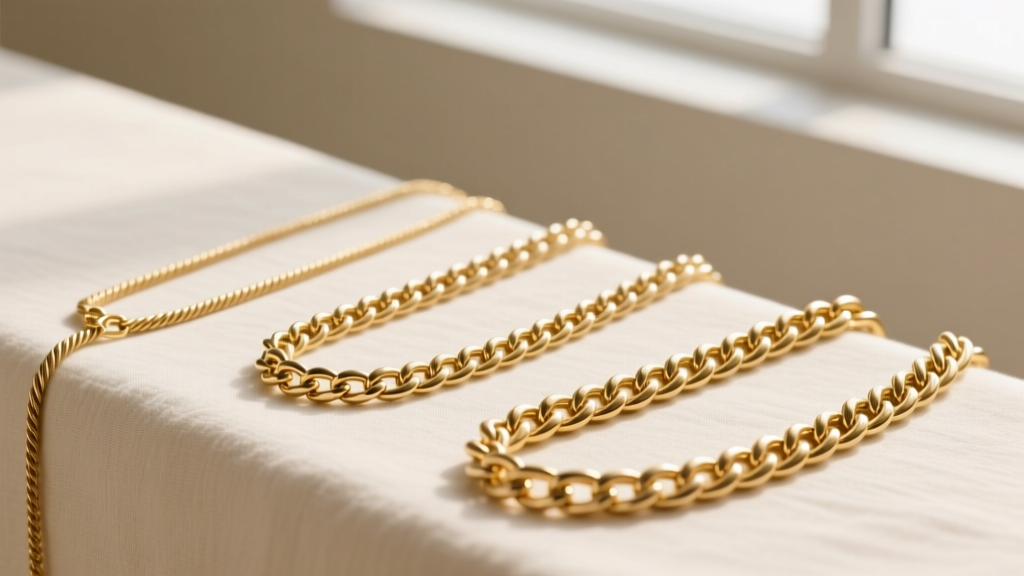
By assigning a distinct gauge and link geometry to each tier, the chains physically repel one another. A rigid 4mm curb chain will not knot around a fluid 1mm wheat chain because their bending radii are fundamentally incompatible.
Mastering Mixed Metals and Textures
The 2026 trend cycle has completely dismantled the old taboo against mixing gold and silver. However, successful mixed-metal layering requires a 'bridge piece' to unify the stack. If you are combining 14k yellow gold with rhodium-plated 925 sterling silver, your mid-layer or pendant should incorporate both tones. Oxidized silver is particularly dominant this year; its darkened crevices provide a vintage, high-contrast backdrop that makes polished gold elements pop.
Understanding Metallurgy and Friction Wear
When layering, chains are in constant motion, rubbing against each other. This friction wear is the enemy of plated jewelry. The Federal Trade Commission (FTC) strictly regulates jewelry marketing, and as noted in the FTC Jewelry Guides, gold vermeil must have a minimum thickness of 2.5 microns over a sterling silver base. While 2.5 microns is sufficient for a single pendant, daily friction from a three-chain stack will wear through vermeil in a matter of months, exposing the silver beneath and creating a patchy aesthetic.
Expert Rule for 2026: Reserve gold vermeil for isolated, single-strand pieces. For layered stacks, invest in solid 10k/14k gold, or high-quality 14/20 gold-filled chains. Gold-filled materials feature a mechanically bonded layer of gold that is 50 to 100 times thicker than vermeil, easily withstanding the friction of daily multi-chain wear.
Solving the Tangling Problem: Hardware and Clasps
Beyond varying gauges, the hardware you choose dictates the functionality of your stack. The traditional spring-ring clasp is inadequate for managing three separate chains. The modern solution lies in specialized layering hardware.
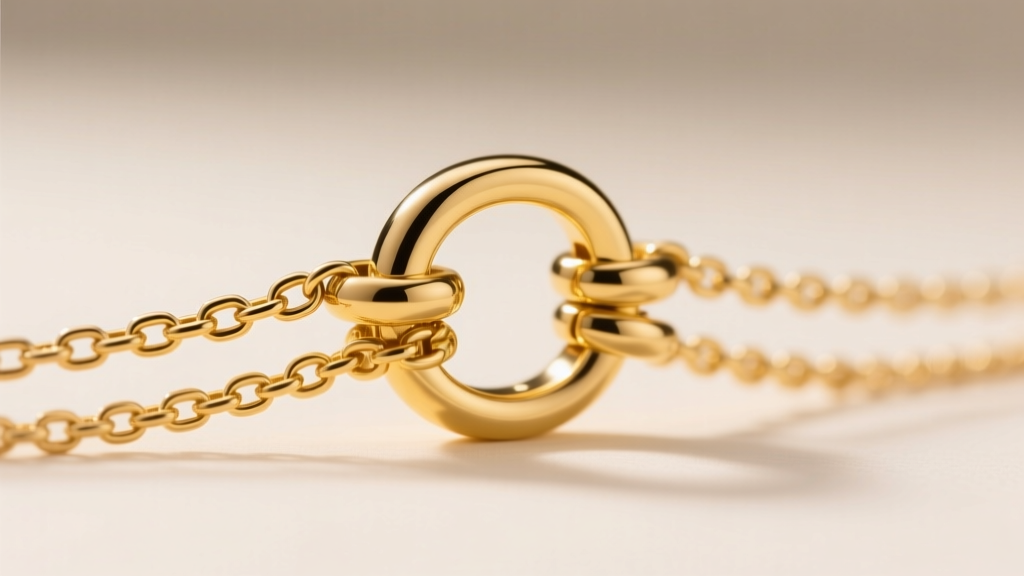
- Magnetic Spacer Clasps: These 14k or 18k gold tubes feature internal magnets and multiple attachment loops. You secure all your chains to one side of the clasp, allowing them to hang freely from a single, unified point at the nape of the neck. This eliminates back-of-neck tangling entirely.
- Toggle Converters: Using a heavy, oversized toggle ring as a front-facing closure allows you to loop multiple chains through a single bar. This not only secures the layers but turns the clasp into a deliberate, industrial-chic design element.
- Diamond-Cut Links: When selecting chains, opt for 'diamond-cut' variations. This manufacturing technique involves faceting the metal links to catch the light. Because diamond-cut links have slightly sharper edges, they are marginally less prone to sliding into one another and knotting compared to smooth, polished links.
Neckline Pairing Guide for Layered Stacks
A masterfully layered stack can be visually ruined if it fights with the architecture of your clothing. The 2026 styling framework dictates that the outermost layer of your necklace stack must either perfectly parallel the neckline or intentionally break it.
The V-Neck and Plunging Necklines
For deep V-necks, utilize a 24-inch or 26-inch lariat or heavy rope chain as your outer layer. The pendant or terminal link should sit exactly one inch above the apex of the V-neck, creating a continuous, elongating vertical line. Avoid chokers with deep V-necks, as they visually truncate the neck.
The Crew Neck and High Collars
Crew necks demand a 'bib' approach. Keep your layers tight and high: a 14-inch choker, a 16-inch collar, and an 18-inch chain that rests precisely on the fabric's ribbed collar. In this scenario, mixed metals (like a silver choker layered with a gold collar) work brilliantly to break up the solid block of the shirt's fabric.
The Button-Down Shirt
The ultimate 2026 power move is the 'inside-out' layer. Wear a 14-inch choker and an 18-inch chain underneath the collar of an unbuttoned silk or linen shirt, but allow the 24-inch matinee chain to drape over the fabric on the outside. This creates a dynamic interplay between the jewelry and the garment, showcasing advanced styling prowess that goes far beyond simply throwing on a few chains.
Final Thoughts on Curated Layering
Learning how to layer necklace chains in the modern era requires treating your jewelry box like a toolkit. By prioritizing gauge variance, investing in friction-resistant metals like solid 14k gold or 14/20 gold-filled, and utilizing magnetic spacer hardware, you elevate your stack from a messy afterthought to a deliberate, high-fashion statement. The goal for 2026 is not to wear more jewelry, but to engineer your jewelry to work in perfect, tangle-free harmony.


