How to Pick Guitar Necklace Pendants: Beginner Guide
Learn how to pick guitar necklace pendants that match your style. Explore materials, bail types, chain gauges, and pricing in our beginner guide.

The Intersection of Music and Jewelry
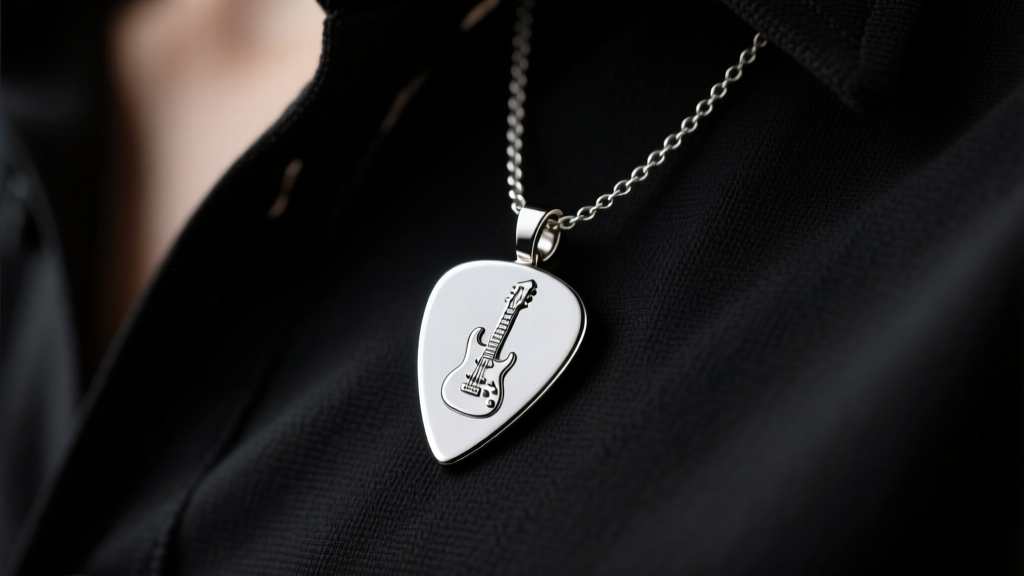
For musicians and music lovers alike, jewelry is often an extension of their creative identity. When you set out to pick guitar necklace styles that resonate with your personal aesthetic, you are navigating a unique niche that bridges functional musical accessories and everyday fashion. A guitar pick pendant is more than just a novelty item; when crafted with the right materials and paired with the correct chain, it becomes a sophisticated, subtle nod to your passion. However, the market is flooded with cheap, mass-produced trinkets that tarnish quickly or break under daily wear. This beginner-friendly explainer will equip you with the metallurgical knowledge, sizing frameworks, and structural insights needed to invest in a high-quality piece that lasts.
Material Selection: Beyond Basic Plastic
The foundation of any durable necklace is its base material. While authentic celluloid or Delrin picks are great for playing, they require specialized jewelry settings to survive as pendants. For standalone metal pendants, you should focus on three primary jewelry-grade alloys.
316L Stainless Steel: Often labeled as surgical steel, 316L is highly resistant to corrosion and tarnish. It is the ultimate workhorse material for daily wear, especially for musicians who sweat on stage. It is hypoallergenic and typically ranges from $20 to $40 for a quality pendant.
925 Sterling Silver: Comprising 92.5% pure silver and 7.5% copper, sterling silver offers a brilliant, luxurious luster. However, the copper content means it will oxidize and tarnish over time, requiring regular polishing. Expect to pay between $45 and $90 for solid cast designs.
Grade 5 Titanium (Ti-6Al-4V): Aerospace-grade titanium is exceptionally lightweight, incredibly strong, and 100% hypoallergenic. It will not react with skin acids or stage sweat. Because it is harder to machine, titanium pendants sit at a premium, usually ranging from $60 to $120.
| Material | Durability | Tarnish Resistance | Average Price Range |
|---|---|---|---|
| 316L Stainless Steel | High | Excellent | $20 - $40 |
| 925 Sterling Silver | Medium | Poor (Requires Polish) | $45 - $90 |
| Grade 5 Titanium | Very High | Excellent | $60 - $120 |
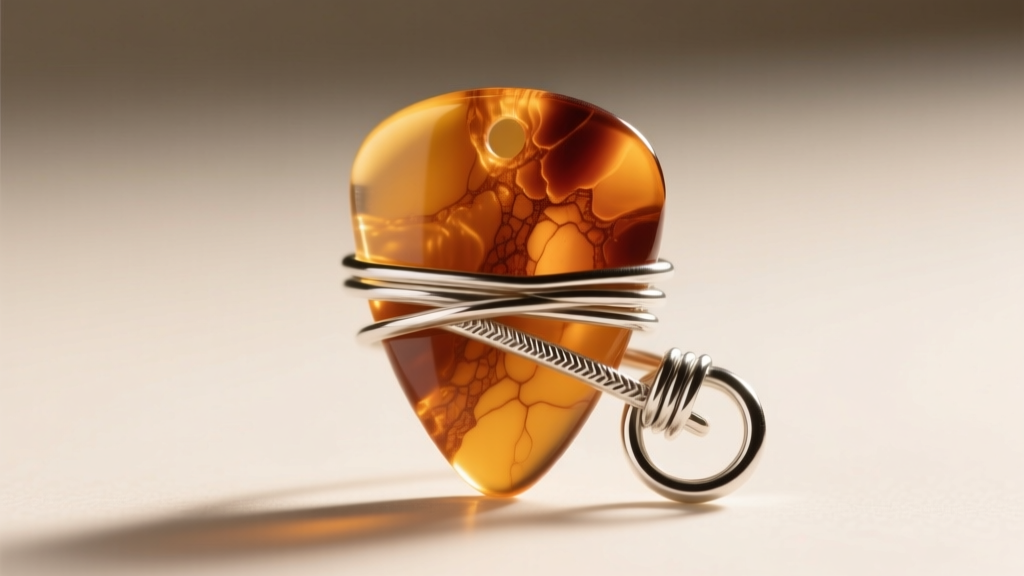
| Wrapped Celluloid | Low (Fragile) | N/A (Depends on Wrap) | $25 - $50 |
For a deeper understanding of how authentic pick materials behave, Sweetwater's Guitar Pick Guide offers excellent insights into the chemical makeup of traditional Tortex and celluloid picks, which is vital if you plan to have a real pick custom-wrapped for a necklace.
Bail Mechanics and Common Failure Modes
The bail is the critical junction that connects the pendant to the chain. Understanding bail mechanics is where most beginners make costly mistakes, leading to lost pendants and broken chains.
Drilled vs. Pinch vs. Wire Wrap
Drilled Hole: Many metal picks come with a simple 2mm or 3mm drilled hole at the top. While clean and minimalist, passing a chain directly through a drilled hole creates friction. If the hole is not lined with a protective metal jump ring, a steel chain will eventually act like a saw, cutting through softer metals or acrylics.
Pinch Bail: Common for cast metal picks, a pinch bail clamps onto the top edge of the pendant using small prongs. This preserves the pick's original shape without drilling. However, if the prongs are not seated tightly, the pendulum motion of walking can cause the bail to slide off.
Wire Wrap: For authentic, fragile acrylic or wood picks, a hand-wrapped sterling silver or brass wire bail is mandatory. Wrapping distributes the tension across the shoulders of the pick, preventing the dreaded 'tear-out' failure mode where the chain rips through the plastic.
Clasp Fatigue and Upgrades
Do not trust the stock clasp on budget necklaces. A standard 4mm lobster clasp will easily snap under the kinetic weight of a solid brass or steel pick pendant. Always inspect the clasp; if it is under 5mm, replace it. Upgrade to a 7mm or 9mm stainless steel spring ring or a heavy-duty lobster clasp to ensure structural integrity. You can source professional-grade findings and clasps from reputable jewelry suppliers like Rio Grande, which sets the industry standard for chain gauges and clasp tensile strength.
Chain Gauges, Styles, and Drop Lengths
The chain you select dictates both the comfort and the visual weight of the necklace. Gauge (the thickness of the wire) must be balanced with the weight of the pick.
- 1.0mm - 1.2mm Cable Chain: Best for lightweight, hollow-backed metal picks or thin wrapped acrylics. It sits discreetly on the skin but will kink if subjected to heavy pulling.
- 1.5mm Box Chain: The ideal middle ground. The square links lay flat, resist kinking, and provide enough tensile strength to hold solid 925 silver picks comfortably.
- 2.0mm Rope Chain: Highly textured and incredibly strong. The twisted links are excellent at hiding skin oils and dirt, making them perfect for heavy, oversized metal pendants.
Finding Your Drop Length
Length determines where the pendant rests on your body, which is crucial for styling with different necklines.
- 18 Inches (Collarbone): Sits high, ideal for smaller frames or wearing under an unbuttoned collar. Keeps the pick visible but close to the neck.
- 20 Inches (Sternum): The universal standard for men and taller women. It rests perfectly on the upper chest, allowing the pick to be displayed over a standard crew-neck t-shirt.
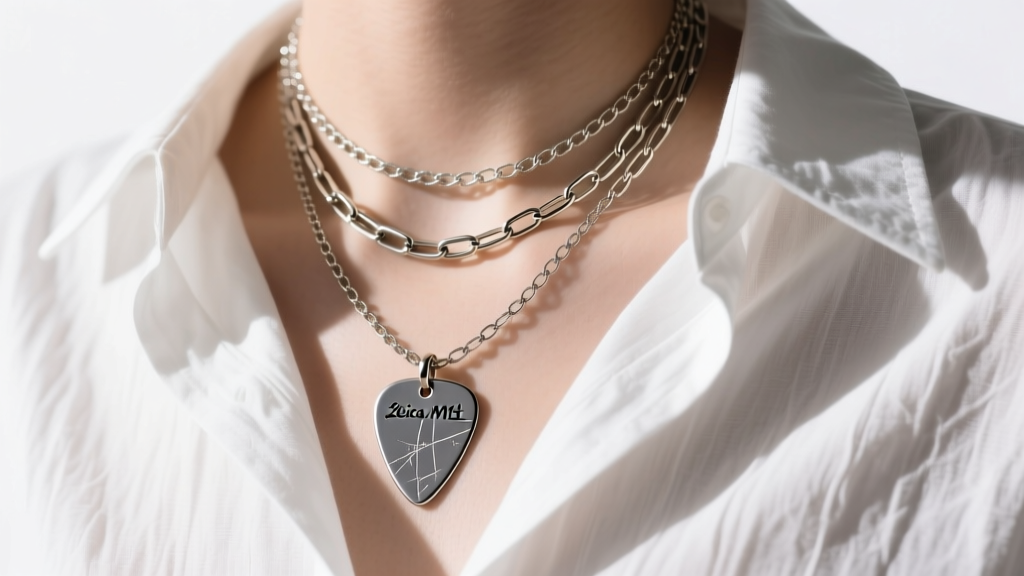
- 22 to 24 Inches (Lower Chest): Reserved for streetwear and layering. A 22-inch pick necklace pairs beautifully with a longer, 24-inch minimalist bar chain for a staggered, textured look.
Engraving and Personalization Tips
Because guitar picks have a broad, flat canvas, they are prime candidates for custom engraving. If you opt for 316L stainless steel or titanium, ensure the jeweler uses a fiber laser rather than a rotary diamond drag engraver. Fiber lasers create deep, high-contrast marks on hard metals without removing significant material, which could weaken a thin pick. For 925 silver, rotary engraving works beautifully and can be filled with black enamel for readability.
Consider engraving the tuning of your favorite alternate guitar tuning (like DADGAD or Drop D), a meaningful lyric snippet, or the date of your first live gig. Keep the font size above 6pt to ensure the text remains legible as the metal naturally wears down over years of friction against your clothing.
Long-Term Care and Maintenance
Maintenance routines depend entirely on your chosen material. For 316L stainless steel and Grade 5 titanium, care is virtually nonexistent; a simple wipe with a microfiber cloth and warm soapy water will remove accumulated sebum and environmental dirt. Avoid using harsh chemical dips, as they can dull the brushed or matte finishes often applied to music-themed jewelry.
If you chose 925 sterling silver, you must manage oxidation. Store the necklace in an anti-tarnish ziplock bag with a silica gel packet when not in use. When tarnish appears, use a specialized silver polishing cloth impregnated with jeweler's rouge. Never use toothpaste or baking soda pastes, as the abrasive particles will create micro-scratches on the silver's surface, accelerating future tarnishing by trapping moisture in the scratches. By respecting the metallurgy and structural limits of your jewelry, your guitar pick necklace will remain a staple of your wardrobe for decades.


