How to Authenticate and Restore a Vintage Sun Necklace
Learn how to authenticate, safely clean, and perfectly layer a vintage sun necklace with our expert step-by-step restoration and styling guide.

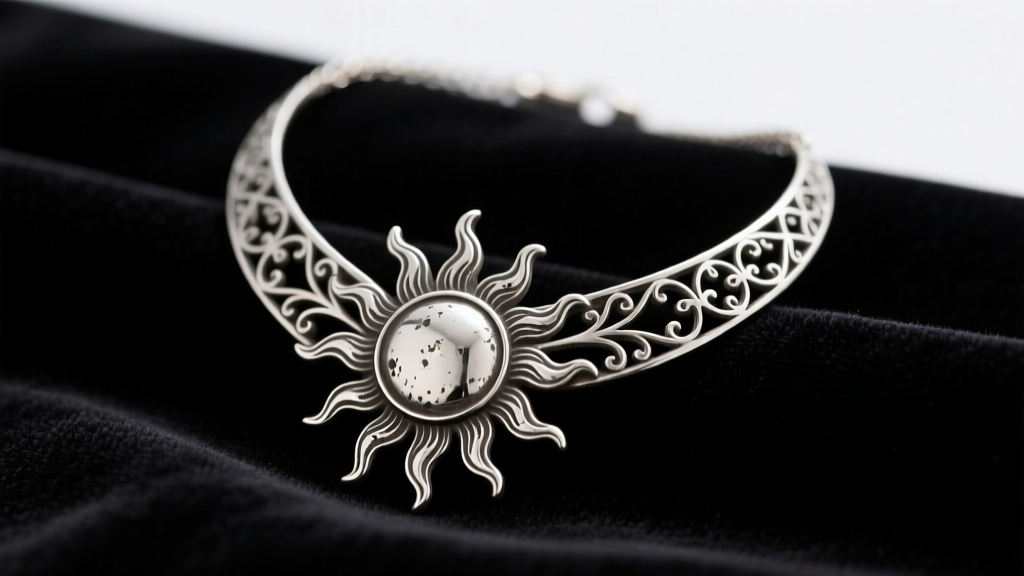
The Resurgence of Astrological Estate Jewelry
The resurgence of 1970s bohemian and astrological motifs has pushed the vintage sun necklace to the top of 2026's most coveted estate jewelry lists. Characterized by their intricate ray detailing, central cabochon stones, and heavy metallic presence, these pieces are more than just accessories; they are wearable artifacts of mid-century counter-culture and artisan metalsmithing. However, navigating the secondary market for these items requires a trained eye. Modern reproductions often masquerade as mid-century originals, and improper cleaning can strip decades of valuable patina in seconds.
Whether you have inherited a heavy brass sunburst pendant or just scored a sterling silver Taxco piece at an estate sale, this comprehensive guide will walk you through the exact steps to authenticate, restore, and style your vintage sun necklace without compromising its structural integrity or historical value.
Step 1: Authenticating Your Vintage Sun Necklace
Before applying any polishing compounds or swapping out chains, you must determine the exact origin and material of your piece. The most highly sought-after vintage sun necklaces originate from the Taxco region of Mexico, dating between the 1950s and 1970s. According to the Lang Antiques University, Mexican silver hallmarks evolved significantly during this era, transitioning from simple '925' stamps to the inclusion of the Mexican Eagle mark and specific registry numbers (e.g., TC-123).
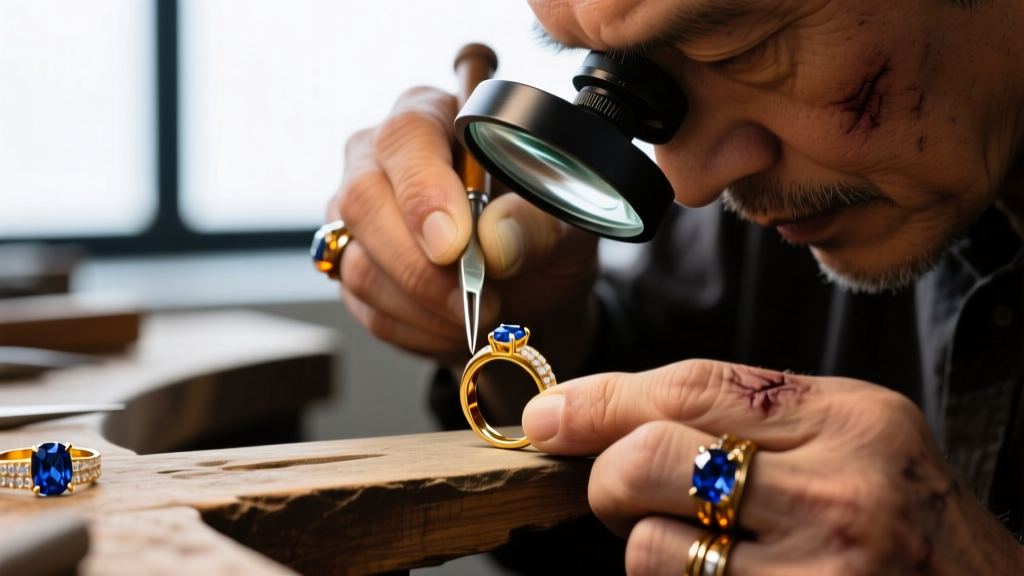
To verify authenticity, examine the piece under a 10x jeweler's loupe and look for the following indicators:
- Casting Porosity vs. Die-Struck Crispness: Authentic mid-century pieces were often die-struck or meticulously hand-soldered, resulting in crisp, sharp sun rays. Cheap 1980s reproductions often exhibit 'porosity'—tiny pinholes in the metal caused by trapped gas during low-quality slip casting.
- Seam Lines and Sprue Marks: Run your fingernail along the edge of the sunburst. If you feel a distinct vertical ridge, it is likely a modern cast reproduction where the mold halves met.
- Jump Ring Construction: Vintage pieces typically feature soldered jump rings or thick, work-hardened wire loops. Modern fakes often use thin, easily pried-open split rings.
Step 2: Assessing Metal Composition and Condition
Vintage sun pendants were crafted in a variety of base and precious metals, each requiring a radically different approach to restoration. A 2-inch solid brass sun pendant can weigh upwards of 25 grams, while a hollow-backed silver-plated version might weigh less than 8 grams. Understanding your metal is critical to avoiding irreversible chemical damage.
| Metal Type | Typical Weight (2" Pendant) | Patina Profile | Cleaning Risk Level |
|---|---|---|---|
| Sterling Silver (925) | 12 - 18 grams | Black/Dark Grey Silver Sulfide | Low (if no soft stones) |
| Solid Brass / Bronze | 18 - 28 grams | Verdigris (Green) / Dark Brown | Medium (requires acid neutralization) |
| Copper | 15 - 22 grams | Deep Brown / Red Oxidation | Medium (prone to spotting) |
| Silver-Plated Base Metal | 8 - 12 grams | Flaking / Copper Bleed-Through | High (abrasives strip plating) |
Step 3: Safe Restoration and Cleaning Techniques
The most common mistake collectors make with a vintage sun necklace is treating the entire piece as a uniform metal surface. Many 1970s sunburst designs feature a central bezel-set cabochon, such as turquoise, lapis lazuli, or moonstone. Turquoise is highly porous and ranks only 5 to 6 on the Mohs hardness scale. Submerging it in liquid silver cleaners or using ultrasonic machines will cause the stone to fracture, change color, or detach from its bezel entirely.
The Ion-Exchange Method for Sterling Silver
For sterling silver pieces without porous gemstones, skip the abrasive polishes. Instead, use an electrochemical reaction that converts silver sulfide (tarnish) back into pure silver without removing any metal mass.
- Line a glass bowl with aluminum foil, shiny side up.
- Place the silver sun pendant on the foil, ensuring direct contact.
- Sprinkle 2 tablespoons of baking soda and 1 tablespoon of non-iodized salt over the piece.
- Pour boiling water into the bowl until the pendant is submerged. You will immediately smell sulfur (like rotten eggs) as the tarnish transfers to the aluminum.
- After 3 minutes, remove with wooden tongs, rinse in distilled water, and pat dry with a microfiber cloth.
Expert Warning: Never use commercial liquid dips like Tarn-X on vintage jewelry. These products contain thiourea, a toxic chemical that strips away the intentional oxidation (antiquing) in the crevices of the sun rays, leaving the piece looking flat, bright white, and distinctly modern. This immediately devalues the item in the vintage market.
Restoring Brass and Copper Sunbursts
For brass or copper vintage sun necklaces, create a gentle paste using equal parts lemon juice, baking soda, and a drop of mild dish soap. Apply the paste using a soft-bristled toothbrush, working it into the rays. Let it sit for no more than five minutes, then rinse thoroughly. Any residual acid left in the crevices will cause aggressive 'verdigris' (green corrosion) to form over time, which can degrade the metal structurally.
Step 4: Re-stringing and Chain Upgrades
Vintage sun pendants are notoriously heavy. A solid brass or thick silver piece weighing 20+ grams will easily snap a standard 0.8mm chain or break a vintage spring-ring clasp over time. Upgrading the hardware is a necessary step in the restoration process.
According to the Fire Mountain Gems Chain Guide, the tensile strength of a chain is dictated by its wire gauge and link structure. For a heavy sun pendant, you need a chain that offers both structural support and aesthetic harmony.
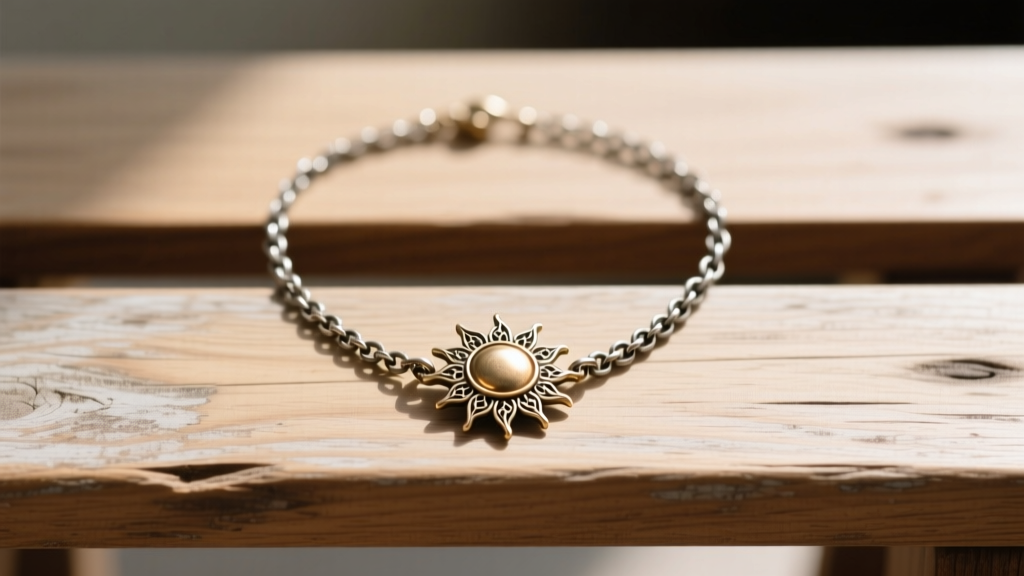
- Chain Style: Opt for a Rolo or Wheat chain. These interlocking, multi-dimensional links distribute weight evenly and resist kinking, unlike Snake or Box chains which can permanently crease under heavy pendants.
- Wire Gauge: Choose a chain with a minimum wire thickness of 1.5mm (approx. 14-gauge). Anything thinner will stretch and deform under the pendulum-like swinging motion of a heavy sunburst.
- Clasp Upgrade: Discard the vintage spring-ring clasp. Upgrade to a 5mm or 7mm solid sterling silver lobster clasp, which features a stronger internal spring and a wider hook to prevent accidental unclasping.
Step 5: Styling and Layering Frameworks
A vintage sun necklace is a bold, statement-making piece. The intricate geometry of the sunburst demands space to breathe, but in 2026, the trend leans heavily into curated, multi-strand layering. The key to layering a wide sun pendant (typically 1.5 to 2.5 inches in diameter) is to utilize varying chain textures and precise length differentials to avoid tangling.
The 3-Point Astrological Layering System
To properly style your restored piece without overwhelming your neckline, follow this specific length and texture framework:
- The Anchor (16 inches): Start with a delicate, minimalist chain close to the collarbone. A 1.0mm sterling silver Snake chain or a simple 14k gold-filled bead chain works perfectly. This provides a high-contrast backdrop for the heavier vintage piece.
- The Focal Point (18 to 20 inches): This is where your vintage sun necklace sits. The 2-to-4-inch drop ensures the sunburst rests squarely on the sternum, drawing the eye downward and elongating the neck. Ensure the bail (the loop connecting the pendant to the chain) is large enough to slide freely over the chain links.
- The Elongator (24 to 26 inches): Finish the stack with a long, lightweight chain featuring small gemstone beads (like labradorite or onyx) or a simple lariat. This bottom layer frames the sun pendant and ties the entire aesthetic together.
When wearing this stack, pair it with a deep V-neckline, a square-neck bodysuit, or an unbuttoned linen shirt. Avoid high crew necks or turtlenecks, as the wide rays of the sun pendant will sit awkwardly against the fabric and fail to lay flat against the skin.
Preserving Your Piece for the Next Generation
Restoring a vintage sun necklace is an exercise in preservation. By taking the time to properly authenticate the hallmarks, utilizing non-destructive electrochemical cleaning methods, and upgrading the structural hardware to support the pendant's weight, you ensure the piece remains wearable for decades to come. Treat your vintage jewelry not just as a fleeting fashion trend, but as a piece of metallurgical history that deserves expert care and intentional styling.


