How to Style and Source an Authentic Ancient Greek Necklace
Learn how to source, authenticate, and style an ancient Greek necklace. Discover Hellenistic metalwork, granulation techniques, and modern pairings.

The Enduring Allure of Hellenistic Metalwork
In 2026, the jewelry market is experiencing a definitive shift away from mass-produced, stamped base metals toward historically significant, artisanal craftsmanship. At the forefront of this revival is the ancient Greek necklace. Far from the costume jewelry often found in tourist shops, authentic Hellenistic jewelry—and its museum-grade replicas—represents a masterclass in metallurgy, symbolism, and proportion. Whether you are a collector seeking a genuine antiquity, a historian commissioning a bespoke replica, or a style enthusiast looking to integrate classical motifs into a modern wardrobe, understanding the anatomy of these pieces is critical. This step-by-step guide will walk you through decoding materials, authenticating craftsmanship, and styling these timeless artifacts for contemporary wear.
Step 1: Decoding Materials and Ancient Techniques
To truly appreciate an ancient Greek necklace, you must first understand the materials and techniques that defined the Hellenistic period (323–31 BC). Greek goldsmiths did not have access to modern soldering torches or CAD casting. Instead, they relied on ingenious, labor-intensive methods that modern artisans are only now beginning to perfectly replicate.
Granulation and Colloidal Soldering
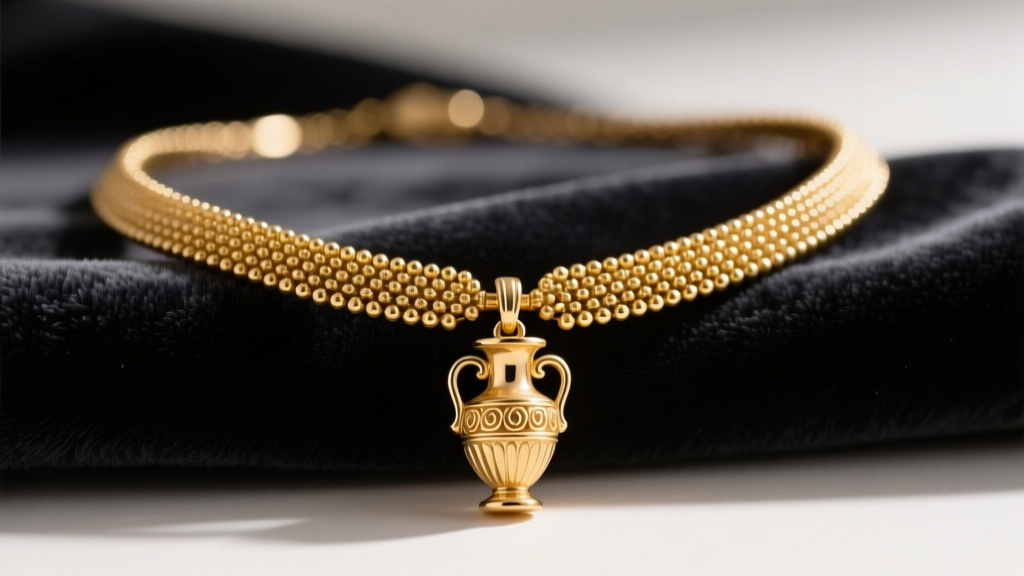
Granulation is the hallmark of high-end classical jewelry. This technique involves fusing microscopic spheres of gold to a base sheet without melting the underlying structure. The Greeks achieved this using a colloidal hard-soldering process, mixing copper salts with an organic glue (like hide glue). When heated in a reducing fire, the glue carbonized, and the copper salt lowered the melting point of the gold just enough to fuse the spheres seamlessly. When inspecting a piece, use a 10x jeweler's loupe. If you see pooled, shiny modern solder at the base of the granules, it is a modern cast imitation. True granulation will show a clean, almost shadow-like fusion point.
Electrum vs. High-Karat Gold
While pure 24k gold was used for funerary wreaths, wearable ancient Greek necklaces were often crafted from electrum (a natural alloy of gold and silver) or 22k gold alloyed with copper for tensile strength. According to the Gemological Institute of America (GIA), historical electrum typically contains between 20% and 50% silver, giving the metal a distinct pale, greenish-gold luminescence that pairs beautifully with modern neutral wardrobes.
| Category | Material & Karat | Price Range (2026) | Best For |
|---|---|---|---|
| True Antiquity | 22k-24k Gold, Electrum | $15,000 - $150,000+ | Investors, Museum Archives |
| Museum-Authorized Replica | 18k-22k Gold, Hand-Granulated | $1,200 - $6,500 | Collectors, Heirloom Gifting |
| Artisanal Interpretation | 14k-18k Gold, Cast & Finished | $350 - $1,500 | Everyday Luxury, Styling |

Step 2: Sourcing and Authenticating Your Piece
Sourcing an ancient Greek necklace requires navigating a market flooded with misleading terminology. Terms like "Greek key" or "Hellenistic style" are frequently slapped onto cheap, machine-stamped brass. To source a piece with genuine historical integrity, follow this authentication checklist:
- Check the Repoussé Work: Authentic classical pendants (like amphorae or Gorgoneions) were crafted using repoussé—hammering the metal from the reverse side. Look at the back of the pendant. It should be concave and show subtle tool marks, not flat and smooth like a modern cast.
- Examine the Chain Links: Hellenistic chains were predominantly woven wheat chains, intricate rope chains, or loop-in-loop chains. Machine-made curb chains or standard cable chains attached to a "Greek" pendant are immediate red flags for mass-produced costume jewelry.
- Verify Provenance or Artisan Lineage: For antiquities, demand paperwork from established auction houses or dealers registered with the Art Loss Register. For replicas, seek out jewelers based in Athens or Florence who specialize in historical metallurgy, or purchase directly from institutions like The Metropolitan Museum of Art.
- Weight and Drape: High-karat gold and electrum are dense. A proper loop-in-loop chain should have a fluid, liquid-like drape that conforms to the collarbone, rather than holding a rigid, circular shape.
Step 3: Decoding Hellenistic Motifs
Choosing the right pendant is about more than aesthetics; it is about wearing a piece of classical philosophy and mythology. The motifs found on an ancient Greek necklace served as talismans, declarations of status, or offerings to the gods.
The Herakles Knot (Reef Knot)
Perhaps the most iconic and versatile motif, the Herakles knot symbolizes strength, protection, and unbreakable bonds. In antiquity, it was heavily associated with marriage and was often incorporated into bridal girdles and necklaces. Today, an 18k gold Herakles knot serves as a sophisticated, gender-neutral centerpiece that rivals the modern love knot in both meaning and elegance.
The Gorgoneion and Apotropaic Amulets
The face of Medusa (Gorgoneion) was not merely decorative; it was an apotropaic device designed to ward off evil and negative energy. Hellenistic goldsmiths mastered the terrifying yet beautiful symmetry of the Gorgoneion, often framing it with intricate filigree. It remains a powerful, conversation-starting motif for contemporary collectors who appreciate jewelry with a fierce, protective edge.
Floral and Faunal Wreaths
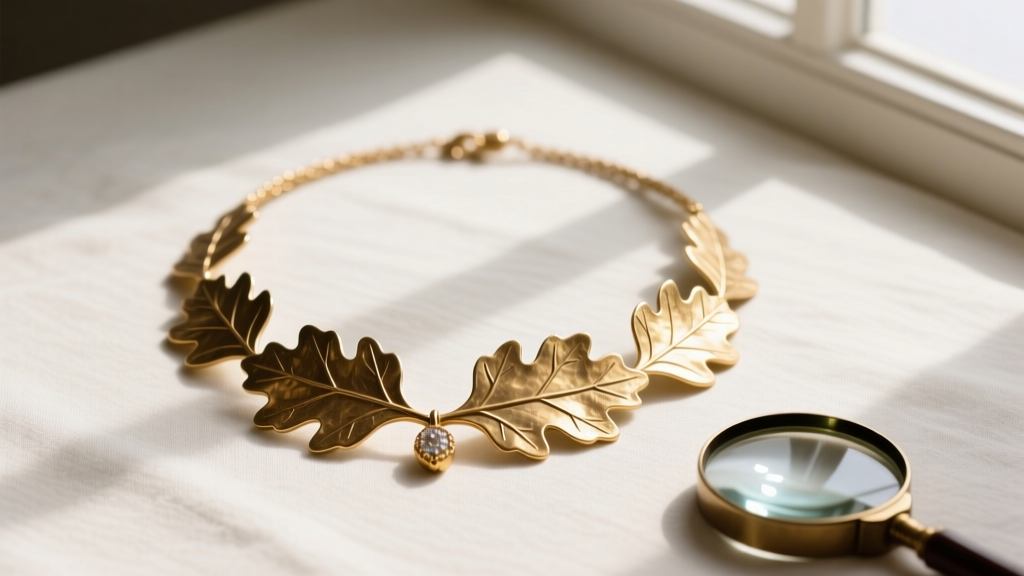
Oak leaves, acorns, and myrtle berries were commonly strung into delicate, asymmetrical collars. These pieces mimicked the laurel and oak wreaths awarded to athletes and civic leaders. When sourcing a leaf-motif necklace, ensure the leaves feature chased veining on the front and a matte, sandblasted finish to replicate the historical texture of hammered gold.
Step 4: Styling the Ancient Greek Necklace Today
Integrating a historically accurate piece into a 2026 wardrobe requires an understanding of proportion and neckline architecture. The Greeks favored jewelry that interacted with the drape of their garments, and this principle remains true today.
Neckline Pairings
The most historically resonant way to wear an ancient Greek necklace is with draped fabrics. A cowl-neck silk blouse, an asymmetrical one-shoulder gown, or a deeply draped linen tunic provides the perfect canvas. The jewelry should rest against the skin or the soft folds of the fabric, mimicking the classical statues housed in The British Museum. Avoid pairing heavy, granulated Hellenistic collars with stiff, high-collared garments or busy, modern geometric prints, which will clash with the organic, fluid lines of the metalwork.
The Art of Classical Layering
While layering is a modern trend, the Greeks often wore multiple strands of varying lengths simultaneously. To achieve a historically grounded layered look, start with a 14-inch loop-in-loop choker featuring a small Herakles knot. Add a 20-inch wheat chain with a repoussé amphora pendant, and finish with a 28-inch strand of simple, polished electrum beads. Keep the metals within the same color family—mixing bright yellow 22k gold with pale electrum creates a rich, museum-cabinet aesthetic that feels intentional and deeply curated.
Care and Preservation of Repoussé Jewelry
Caring for an ancient Greek necklace—or a high-end museum replica—requires abandoning modern cleaning conveniences. The techniques used to create these pieces are highly vulnerable to contemporary jewelry maintenance methods.
Expert Warning: Never place a granulated or repoussé ancient Greek necklace in an ultrasonic cleaner. The high-frequency vibrations can easily fracture the delicate colloidal solder joints, causing microscopic gold spheres or hammered floral motifs to detach and be lost forever.
Instead, clean your piece using a solution of lukewarm distilled water and a single drop of pH-neutral castile soap. Use a makeup brush with ultra-soft natural bristles to gently sweep away oils and cosmetics from the crevices of the filigree and granulation. Rinse briefly in distilled water (never tap water, as chlorine and minerals can react with the silver content in electrum) and pat dry with a lint-free microfiber cloth. Store the necklace flat in an acid-free tissue-lined box to prevent the delicate loop-in-loop chain from kinking or stretching under its own weight.
Final Thoughts on Classical Elegance
Sourcing and styling an ancient Greek necklace is an exercise in wearing history. By prioritizing authentic techniques like granulation and repoussé, understanding the profound symbolism of Hellenistic motifs, and styling these pieces with draped, fluid fabrics, you elevate your jewelry collection from mere accessory to wearable art. Whether you invest in a museum-authorized 22k gold replica or carefully hunt for a genuine antiquity, the classical elegance of Greek metalwork remains as captivating today as it was over two millennia ago.


